Tag Archives: Apologetics

What if you only had four minutes to defend Israel’s attack on the Canaanites?

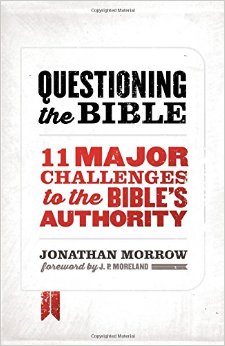
Questioning the Bible by Jonathan Morrow
“Questioning the Bible” by Jonathan Morrow

Jonathan Morrow is giving you just four minutes to respond to a well-known challenge to belief in the Christian God.

Can you handle it?

If not, here is a podcast to help you get ready.

Description:

Is the God of the Old Testament violent and bloodthirsty? Did God really command genocide? Why did Israel attack the Canaanites? These are just a few of the tough questions I tackle in this episode of the think Christianly podcast. Learn how to respond to one of the most challenging and emotional objections to Christianity in under 10 minutes.

Summary:

  • quotes Richard Dawkins to set up the objection
  • response: does God have the authority to give and take life?
  • response: after the Fall, things in the world are not the way they are supposed to be
  • response: Old Testament commands for the Jews to judge other nations are specific to them in that time
  • response: “genocide” and “ethnic cleansing” are not accurate descriptions of the attack on Canaan
  • response: the attack on the Cannanites takes place in the context of redeeming the whole world

Here is the Christian Post article he was interviewed for, where he had to answer:

Jonathan Morrow, author of Questioning the Bible: 11 Major Challenges to the Bible’s Authority, says readers are often perplexed by Old Testament scripture because “sometimes we just picture a God where anger and love can’t co-exist.” Yet he explains, “We all have seen people who have been taken advantage of and that makes us angry [because] we love them. So those emotions can co-exist.”

[…]Along that same line, Morrow clarifies that God’s instructions to the Israelite army in Deuteronomy 20 to destroy the people occupying the land of Canaan is “about judgment, not genocide.”

“The Bible teaches clearly that all people are sinful and in rebellion, kind of living in open rebellion against God, and God is just to judge anyone,” says Morrow. “But in this particular case with the Canaanites, there’s several things going on there, but one of those things was the wickedness of the people which was well documented – child sacrifices to Moloch and others, and bestiality and a lot wickedness.”

He says this judgment was necessary because “Israel’s national survival was crucial so that the Messiah – we would know Jesus as the Messiah – and God’s saving purposes of redemption to the world could one day be born because if the Messiah was supposed to come through the lineage of Israel and Israel co-mingled with this wicked people and was ultimately destroyed, that promise of hope and blessing to the whole world could not have been realized.”

[…]Morrow recognizes that Old Testament questions are particularly challenging. “We live in a sound bite culture and so this is one of those questions where it kind of gets thrown out for people, why does God command genocide, and that’s really easy to say and then it takes some time to respond to because there’s some context.”

Morrow says his sound bite answer is: “These passages are about judgment; they’re not about genocide.”

However, he encourages believers to find out the asker’s real interest in this question. “I would ask them, you know, it sounds like this is a pretty emotional question for you, why is that. Let them talk about it some so you can better understand because that’s the goal. We’re not just trying to win an argument; we’re trying to understand and help people.”

It the asker is after truth, Morrow advises Christians to “ask them … are you interested in kind of walking through and getting kind of messy about looking at the evidence for this because I’d love to share that with you, and sometimes they’ll go, ‘yeah, that’ll be great.'”

Other times, Morrow says, the asker is simply looking for “space and distance from God and this question allows them to put space between them and God.”

By the way, Morrow and McDowell’s basic apologetics book – “Is God Just a Human Invention?” – is my first pick when mentoring new people in apologetics.

UPDATE: J.W. Wartick has reviewed the 11 Questions book on his blog.

Do college students care about truth? What do they think truth is?

What is truth?
What is truth?

If I want to understand what college students think about truth, I ask my friend Eric Chabot. He is the Ratio Christi ninja at Ohio State University. He can tell you more about what college kids think about ultimate issues than probably anyone else you know.

Here is his latest blog post at Think Apologetics.

He introduces the topic like this:

Over the last ten years I have done outreach on a major college campus (The Ohio State University which has 56,000 students). I have had hundreds of spiritual conversations with students and direct an apologetics ministry called Ratio Christi Student Apologetics Alliance. It is no secret that many apologists have written books on the Truth question. In other words, the statement “we are living in postmodern times” has almost become cliche in today’s society. Hence, because of the impact of post-modernism, many seem to assume that college students are not interested in objective truth. So the supposed fallout is that people are not asking whether Christianity is true. Given my experience on the campus, I will respond to this issue. So the good news is that I am truly speaking from personal experience.

I will go ahead and give some definitions of truth here.

Eric likes to complain about pragmatism most, so he quotes a definition of the pragmatic view of truth:

#1 Truth is not “what works.” One popular theory is the pragmatic view of William James and his followers that truth is what works. According to James, “Truth is the expedient in the way of knowing. A statement is known to be true if it brings the right results. It is the expedient as confirmed by future experience.” That this is inadequate is evident from its confusion of cause and effect. If something is true it will work, at least in the long run. But simply because something works does not make it true. This is not how truth is understood in court. Judges tend to regard the expedient as perjury. Finally, the results do not settle the truth question. Even when results are in, one can still ask whether the initial statement corresponded to the facts. If it did not, it was not true, regardless of the results.

And here are a couple more definitions that he encounters from the college kids:

#5 Truth is not “what feels good.” The popular subjective view is that truth gives a satisfying feeling, and error feels bad. Truth is found in our subjective feelings. Many mystics and new age enthusiasts hold versions of this faulty view, though it also has a strong influence among some experientially oriented Christian groups. It is evident that bad news can be true. But if what feels good is always true, then we would not have to believe anything unpleasant. Bad report cards do not make a student feel good, but the student refuses to believe them at his or her academic peril. They are true. Feelings are also relevant to individual personalities. What feels good to one may feel bad to another. If so, then truth would be highly relative. But, as will be seen in some detail in the next article, truth cannot be relative. Even if truth makes us feel good—at least in the long run—this does not mean that what feels good is true. The nature of truth does not depend on the result of truth.

#6 Truth is not “what is existentially relevant.” Following Soren Kierkegaard and other existential philosophers, some have insisted that truth is what is relevant to our existence or life and false if it is not. Truth is subjectivity. Kierkegaard said: truth is livable. As Martin Buber stated, truth is found in persons, not in propositions. However, even if truth is existential in some sense, not all truth fits into the existential category. There are many kinds of truth, physical, mathematical, historical, and theoretical. But if truth by its very nature is found only subjectively in existential relevance, then none of these could be truth. What is true will be relevant, but not everything relevant is true. A pen is relevant to an atheist writer. And a gun is relevant to a murderer. But this does not make the former true nor the latter good. A truth about life will be relevant to life. But not everything relevant to one’s life will be true.

So what do students think?

The most popular view today seems to be #1 (a pragmatic view of truth) and then coming in second place is a tie between #5 and #6 (“Truth is what feels good” and “Truth is what is existentially relevant”).

Many, many, students are viewing the Christian faith as something that helps them have a better life. In other words, they are not asking whether it is objectively true. Comments like “I don’t see what difference Jesus would make in my life” and “I don’t think it is relevant whether God exists or Jesus is the Son of God” are somewhat common.

This shouldn’t be surprising given our entire culture is built on pragmatism. After all, people go to college to get a job that will work for them and help them get a good job. Furthermore, the Church has been embracing pragmatism for a long time. John MacArthur wrote an article called Church Pragmatism a long time ago. Not much has changed.

I don’t think there’s anything wrong with getting a good job when you’re finished college, as long as when you get that job you proceed to study everything else that matters. This is especially important for Christian men, who shoulder the load of providing for a family and the people around them. But I get his point.

The rest of Eric’s post offers a solution for how Christians can deal with pragmatism. My solution is to investigate their overall worldview and then introduce evidence that conflicts with their stated beliefs. For example, the kalam cosmological argument and the cosmic fine-tuning argument. It works better if you really can speak about the scientific or historical evidence for Christianity with authority. Just say to them that it’s fine with you if they want to believe things that aren’t truth because they are comfortable with them, but sometimes that will have disastrous consequences. The best way to puncture the self-confidence that pragmatic people have is to show them that at least some of their beliefs are flat out false. They can say that they don’t care, but at least they can’t say that what they believe is true.

William Lane Craig: find a wife who is interested in your field of study or ministry


Marriage and family
Marriage and family

Blake sent me this question and answer from Dr. William Lane Craig’s Reasonable Faith web site.

The question is this:

Dear Dr. Craig,

As one who has recently discovered the realm of apologetics in the past couple years, you were one of the first I had come to know, and it has been a pleasure reading some of your material and watching your debates. I am currently only a junior in college and am studying philosophy and religious studies and love it, and hope to attend seminary in the future and get my masters in apologetics, God willing.

My question for you is not necessarily a theological or philosophical question but a question that I am hoping I could get some pastoral advice from you about that I feel you are perhaps the best suited to answer. I recently got married this past summer to an amazing woman I met at a one year bible college I attended a couple years ago and it has been great. But between transferring to a new (secular) school and being constantly busy with school and work I feel like my relationship with God is constantly on the backburner, as I am not getting into the word nearly as much as I used to and my prayer life is nearly nonexistent, and because of this my relationship with my wife is not where it should be either.

I love my major and I love my wife, but they don’t seem to overlap very well, as my studies are normally more time intensive than hers and also she see’s my talking about it more as an annoyance than anything. I guess why I am writing you is because I am getting so spiritually burnt out and need advice on how to ignite/maintain my relationship with God and keep a healthy relationship with my wife and if having an aspiration of being an apologist is worth it. Not only does everyone else not see why I have picked the path I have because they see philosophy as impractical and I won’t be able to support a family with such an aspiration, but the path itself is difficult as I do not have many other fellow Christians in my classes and so I am being practically scorned in all directions. I often ask myself if it is worth it and if I should find some other path that would be more conducive to married life and family life that her and I hope to start in the foreseen future.

Dr. Craig is there a light at the end of the tunnel? Even if I make it through my undergraduate years, will seminary be any easier? I hope to seek out a spiritual mentor in the future but am still getting acquainted with our new local church and would love to have some direction until then. Thanks for your help and your great ministry!

Wesley

I just want to quote the first part of Dr. Craig’s answer, then I’ll comment briefly below.

Obviously, Wesley, not knowing you or your wife, I cannot counsel you adequately. Indeed, I’d urge you to treat this crisis with the utmost seriousness by finding a pastoral counselor or older married couple whom you both trust who can advise you on how to go forward.

Before I respond to your concerns, Wesley, I want to alert other readers to the importance of what Wesley has to say. He has married a woman, who, though “amazing,” does not share his interest in or burden for philosophy and apologetics and so finds his talking about such things an annoyance. I strongly urge those of you who are single to make having a shared interest in your field of study and ministry a top criterion in selecting a spouse. It doesn’t matter how beautiful she is or what a great cook she is if she has no interest in your field of study and so sees talking about things that you are passionate about as an annoyance.

That’s enough Dr. Craig – now it’s time for my comments (which disagree with his in places).

First of all, if you are thinking of studying philosophy or New Testament, etc. then you either need to do it full-time and give up marriage and family, or do it part-time and make your main job a STEM job. I have a friend who has actually done the “full time STEM, part-time philosophy/New Testament” plan, and he has 3 Masters degrees (done part-time) and is completing a PhD (part-time) – and has not a stitch of debt. He is in his 30s. He does not intend to marry, so he is more focused on getting these degrees than saving up for his marriage. His first priority is to put points on the scoreboard, and he doesn’t see marriage as a way to help him do that.

Second, if you are a man with a plan whom God has invested with certain resources – degrees, finances, good health, etc. – then you cannot throw it all away for the wrong woman. Talk to the woman you want to marry, and see if she:

  1. has cultivated characteristics that are useful in a wife and mother (chastity, sobriety, self-denial, hard work, frugality, etc.)
  2. has rejected feminism and understands the roles, responsibilities and needs of men, women and children
  3. accepts that the purpose of the relationship is to pool resources and cooperate in order to serve God better – not her and not you
  4. accepts that following a plan is a produces better results than chasing culturally-determined notions of happiness
  5. is able to identify threats to Christianity in the culture and has studied and prepared to respond to them
  6. is able to acknowledge and understand what her husband is trying to achieve and respect his preparations and plans

One positive way to learn how to make good decisions about women is to take some time out to study economics, politics, etc. and develop a marriage plan that has realistic measurable goals and a realistic interim steps to reach them. That project plan enables you to prepare yourself for marriage and your male roles (provider!) by getting the right skills and resources. And it also allows you to lead a woman so that she can develop herself to be ready for marriage to you. I hope that she would already have done a lot of the work by herself, (chastity, STEM degree, debt-free, good job, apologetics, conservative politics), before she even meets you. Then what’s left is just the final alterations to each of you so the fit is hand in glove.

I have always believed that I could lead any woman and make her more suitable for being a good wife and mother, no matter how badly she had screwed up her life before. So long as she takes responsibility for her own decisions, does not blame anyone else for her mistakes, and is willing to grow. That is the only way that she will be a suitable helper and the mother of effective, influential children. I think the women I have mentored would agree that however far we got, I left them better than when I found them. But some women do not want to be better, and that’s the kind you need to avoid in order to avoid squandering your resources that God has entrusted to you to produce a return for him.

A good marriage cannot be finessed with emotions and intuitions and pursuing fun and thrills. It cannot be undertaken by people who refuse to grow up. It takes planning and work. You can’t go to an Olympic ski jump, put on skis for the first time and slide down the ramp and stick the landing the first time. You have to train and practice first – a lot.

Nobody ever showed up at the Olympics and got a gold medal by doing what was easy and fun at every opportunity, throughout their teens and 20s.

My courting questions would have been very useful for detecting whether a woman is willing to develop herself so that she will be a good wife and mother. I don’t think that the wife described in the original question above would have passed any of these questions. It’s not the time to start asking these questions after you are already married, either. It was a huge mistake to be swayed by appearance, youth and fun. It was the man’s mistake – he chose her. Don’t you make the same mistake as this guy.