Tag Archives: Apologetics

Robin Collins and atheist Peter Millican discuss the fine-tuning of the universe for life

British Spitfire and German Messerschmitt Me 109 locked in a dogfight

You might remember Peter Millican from the debate he had with William Lane Craig. I ranked that debate as one of the 3 best I have ever seen, along with the first Craig  vs Dacey debate and the second Craig vs Sinnott-Armstrong debate.

Details:

Science has revealed that the fundamental constants and forces of the cosmos appear to be exquisitely fine-tuned to allow a universe in which life can develop. Is God the best explanation of the incredibly improbable odds of the universe we live in being a life-permitting one?

Robin Collins is a Christian philosopher and a leading advocate of the argument for God from cosmic design. Peter Millican is an atheist philosopher at Oxford University. They debate the issues.

From ‘Unbelievable?’ on ‘Premier Christian Radio’, Saturday 19th March 2016.

The debate:

MP3 file is available on the Unbelievable web site.

As usual when the atheist is an expert, there is no snark or paraphrasing in the summary.

Summary

Brierley: What is the fine-tuning argument?

Collins: the fine-tuning is structure of the universe is extremely precisely set to allow the existing of conscious, embodied agents who are capable of moral behavior. There are 3 kinds of fine-tuning: 1) the laws of nature (mathematical formulas), 2) the constants of physics (numbers that are plugged into the equations), 3) the initial conditions of the universe. The fine-tuning exists not just because there are lots of possibilities, but there is something special about the actual state of affairs that we see. Every set of laws, parameters and initial conditions is equally improbable, but the vast majority of permutations do not permit life. The possible explanations: theism or the multiverse.

Brierley: How improbable are the numbers?

Collins: Once case is the cosmological constant (dark energy density), with is 1 part in (10 raised to 120th power). If larger, the universe expands too rapidly for galaxies and stars to form after the Big Bang. If smaller, the universe collapses in on itself before life could form. Another case is the initial distribution of mass energy to give us the low entropy we have that is necessary for life. The fine-tuning there is 1 part in (10 raised to the 10th power raised to the 123rd power).

Brierley: What do you think of the argument?

Millican: The argument is worth taking very seriously. I am a fan of the argument. The other arguments for God’s existence such as the ontological and cosmological arguments are very weak. But the fine-tuning argument has the right structure to deliver the conclusion that theists want. And it is different from the traditional design argument tended to focus on biological nature, which is not a strong argument. But the fine-tuning argument is strong because it precedes any sort of biological evolution. Although the design is present at the beginning of the universe, it is not visible until much later. The argument points to at least deism, and possibly theism. The argument is not based on ignorance, it is rooted in “the latest results from the frontiers of science” (his phrase).

Brierley: Is this the best argument from natural theology?

Collins: The cosmological argument makes theism viable intuitively, but there are some things that are puzzling, like the concept of the necessary being. But the fine-tuning argument is decisive.

Brierley: What’s are some objections to the fine-tuning argument?

Millican: The argument is based on recent physics, so we should be cautious because we maybe we will discover a natural explanation.

Brierley: Respond to that.

Collins: The cosmological constant has been around since 1980. But the direction that physics is moving in is that there are more constants and quantities being discovered that need to be fine-tuned, not less. Even if you had a grand unified theory, that would have to be have the fine-tuning pushed into it.

(BREAK)

Millican: Since we have no experience of other laws and values from other universes, we don’t know whether these values can be other than they are. Psychologically, humans are prone to seeing purpose and patterns where there is none, so maybe that’s happening here.

Brierley: Respond to that.

Collins: It is possible to determine probabilities on a single universe case, for example using multiple ways of calculating Avogadro’s number all converging on the same number makes it more probable.

Millican: Yes, I willing to accept that these constants can take on other values, (“principle of indifference”). But maybe this principle be applied if the improbability were pushed up into the theory?

Collins: Even if you had a grand theory, selecting the grand theory from others would retain the improbability.

Brierley: What about the multiverse?

Millican: What if there are many, many different universes, and we happen to be in the one that is finely-tuned, then we should not be surprised to observe fine-tuning. Maybe a multiverse theory will be discovered in the future that would allow us to have these many universes with randomized constants and quantities. “I do think that it is a little bit of a promissary note”. I don’t think physics is pointing to this right now.

Brierley: Respond to that.

Collins: I agree it’s a promissary note. This is the strongest objection to the fine-tuning argument. But there are objections to the multiverse: 1) the fine-tuning is kicked back up to the multiverse generator has to be set just right to produce universes with different constants, 2) the multiverse is more likely to produce a small universe with Boltzmann brains that pop into existence and then out again, rather than a universe that contains conscious, embodied intelligent agents. I am working on a third response now that would show that the same constants that allow complex, embodied life ALSO allow the universe to be discoverable. This would negate the observer-selection effect required by the multiverse objection.

Brierley: Respond to that.

Millican: I don’t see why the multiverse generator has to be fine-tuned, since we don’t know what the multiverse generator is. I’m not impressed by the Boltzmann brains, but won’t discuss. We should be cautious about inferring design because maybe this is a case where we are seeing purpose and design where there is none.

Brierley: Can you negate the discoverability of the universe by saying that it might be psychological?

Collins: These things are not psychological. The selected value for the cosmic microwave background radiation is fine-tuned for life and for discoverability. It’s not merely a discoverability selection effect, it’s optimal for discoverability. If baryon-photon value were much smaller, we would have known that it was not optimal. So that judgment cannot be explained by

Millican: That’s a very interesting new twist.

Brierley: Give us your best objection.

Millican: I have two. 1) Even if you admit to the fine-tuning, this doesn’t show a being who is omnipotent and omnisicient. What the fine-tuning shows is that the designer is doing the best it can given the constraints from nature. If I were God, I would not have made the universe so big, and I wouldn’t have made it last 14 billion years, just to make one small area that supports life. An all-powerful God would have made the universe much smaller, and much younger. 2) The fine-tuning allows life to exist in other solar systems in other galaxies. What does this alien life elsewhere mean for traditional Christian theology? The existence of other alien civilizations argues against the truth of any one religion.

Brierley: Respond to those.

Collins: First objection: with a finite Creator, you run into the problem of having to push the design of that creature up one level, so you don’t really solve the fine-tuning problem. An unlimited being (non-material, not composed of parts) does not require fine-tuning. The fine-tuning is more compatible with theism than atheism. Second objection: I actually do think that it is likely that are other universes, and life in other galaxies and stars, and the doctrine of the Incarnation is easily adaptable to that, because God can take on multiple natures to appear to different alien civilizations.

Other resources (from WK)

If you liked this discussion, be sure and check out a full length lecture by Robin Collins on the fine-tuning, and a shorter lecture on his very latest work. And also this the Common Sense Atheism podcast, featuring cosmologist Luke Barnes, who answers about a dozen objections to the fine-tuning argument.
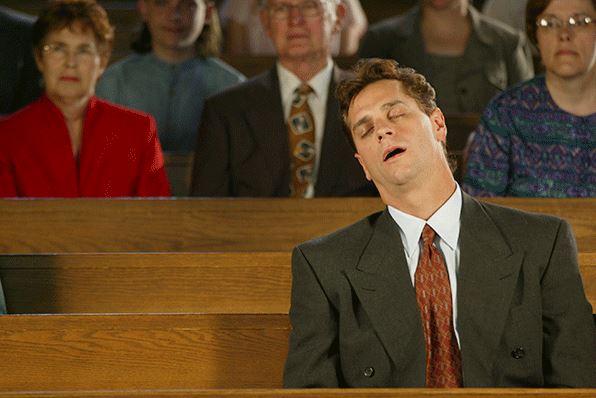
Trying to make Christianity entertaining makes people think that it’s fake

Church sucks, that's why men are bored there
Church sucks, that’s why men are bored there

My friend Bruce shared this article from the leftist The Atlantic on Facebook. It’s written by Larry Taunton of Fixed Point Foundation.  Larry surveyed some people who had left the church, and I thought it was worth it to look at this case of Phil.

Larry writes:

“Church became all about ceremony, handholding, and kumbaya,” Phil said with a look of disgust. “I missed my old youth pastor. He actually knew the Bible.”

[…]Phil was in my office as part of a project that began last year. Over the course of my career, I have met many students like Phil. It has been my privilege to address college students all over the world, usually as one defending the Christian worldview. These events typically attract large numbers of atheists. I like that. I find talking to people who disagree with me much more stimulating than those gatherings that feel a bit too much like a political party convention, and the exchanges with these students are mostly thoughtful and respectful.

[…]A smart, likable young man, he sat down nervously as my staff put a plate of food before him. Like others after him, he suspected a trap. Was he being punk’d? Talking to us required courage of all of these students, Phil most of all since he was the first to do so. Once he realized, however, that we truly meant him no harm, he started talking — and for three hours we listened.

Now the president of his campus’s SSA [Secular Student Alliance], Phil was once the president of his Methodist church’s youth group. He loved his church (“they weren’t just going through the motions”), his pastor (“a rock star trapped in a pastor’s body”), and, most of all, his youth leader, Jim (“a passionate man”). Jim’s Bible studies were particularly meaningful to him. He admired the fact that Jim didn’t dodge the tough chapters or the tough questions: “He didn’t always have satisfying answers or answers at all, but he didn’t run away from the questions either. The way he taught the Bible made me feel smart.”

Listening to his story I had to remind myself that Phil was an atheist, not a seminary student recalling those who had inspired him to enter the pastorate. As the narrative developed, however, it became clear where things came apart for Phil. During his junior year of high school, the church, in an effort to attract more young people, wanted Jim to teach less and play more. Difference of opinion over this new strategy led to Jim’s dismissal. He was replaced by Savannah, an attractive twenty-something who, according to Phil, “didn’t know a thing about the Bible.” The church got what it wanted: the youth group grew. But it lost Phil.

An hour deeper into our conversation I asked, “When did you begin to think of yourself as an atheist?”He thought for a moment. “I would say by the end of my junior year.”

I checked my notes. “Wasn’t that about the time that your church fired Jim?”

He seemed surprised by the connection. “Yeah, I guess it was.”

A couple of years ago, I was talking to a woman who grew up in a Christian home that was very focused on externals. There was a lot of bullying to get her to comply with expected Christian behavior, although the expected Christian behavior was often arbitrary, and had nothing to do with Christianity and more with just appearing “nice”. There was no discussion of the evidence, no talking through objections. No focus on truth at all. She was always very curious about me, and how come I didn’t drink, and how come I was able to stay a virgin through college, grad school, to the present day when many people who were raised in the church fell away from it in college. My answer was simple. I never grew up in a Christian home so I was never bullied into acting like a Christian beyond what I was convinced of myself. There was no rebellion, I just took my time and proved everything out before I had to act any particular way.

I didn’t ever have to go to church. I didn’t go to church until  was comfortable going, and I would say that I still am not comfortable in church – ever. If I felt bored in church, I read an apologetics book, and I did this openly. If I didn’t like the words of a song, then I didn’t sing. I liked to read apologetics books from the beginning, and when I talked to church Christians, I just classified the ones who didn’t read apologetics as non-Christians – as fakes. So I never felt like there was anything wrong with me because I didn’t sing, pray, read the Bible or do more church stuff. To me, if you didn’t like apologetics, you were a fake and you were faking behaviors that you had no way of verifying. Apologetics is the baseline activity of church, and only fakers try to skip over it. Knowing the truth about God comes before acting as if God is real and God has a specific character and will for us. From the existence of God, we move on to the accuracy of the Bible, and on to theology, and then and only then do we start the outward behaviors of a Christian. If you skip to the behaviors, that is unnatural – like acting a part of a doctor when you have never been to medical school. It’s morally wrong to try to pretend to be something you are not.

Bruce commented this above the post:

When authentic conviction is lacking in your words and actions–or your “zeal” lacks the requisite knowledge to back it up–your teenager knows it.

Right. Young people in the church can tell when old people are more interested in feelings and posing. All they have to do is ask you how much you have done to study whether the things you believe are true. If you have read more devotional literature than you have read apologetics, then you’re a fraud. And that, more than anything, is what causes young people to step away from a two-way relationship with God.

My friend Stephen Bedard tweeted this, recently:

“Frankly, I find it hard to understand how people today can risk parenthood without having studied apologetics.” – William Lane Craig

I think you have to blame parents and the pastors when young people reject Christianity.  They are the ones who focus on outward behaviors, feelings and rituals instead of frank discussions about truth where reason and evidence are center stage.

If I had to rely on deciding what Christianity was from looking at people in the church, or from looking to my parents or peers, I would never be where I am today. I can barely tolerate church, especially the singing. I generally don’t like pastors. Pastors who think that simply speaking the words of the Bible out loud will magically cause a person listening to become a Christian. Pastors who assume the Bible is true without ever arguing for the truth of it. Pastors who never connect their preaching to historical context, historical evidence, philosophical arguments or scientific evidence. Pastors who try to make me feel things. Pastors who never mention current events or public policy. Christianity ought to be more like engineering or lab work if you want to appeal to young people – testable, repeatable, practical. Think back to math class, and how teachers would insist that students show their work, instead of just writing the answer down. Instead of just saying “the Bible says”, pastors and parents really need to show young people their work – how did they arrive at their worldview? It’s not respectable to be ignorant about these things – there should be no respect in the church for people who put piety above truth.

William Lane Craig lectures on failure in the Christian life

I have a key that will unlock a puzzling mystery

I found this audio on Brian Auten’s Apologetics 315 web site.

Here is the MP3 file.

And here is my summary.

Intro:

  • the topic of failure is not one that is often discussed by Christians
  • failure #1: failure in the Christian life which is the result of sin
  • failure #2: when a Christian is defeated while trying to serve God
  • the consequences for failure #1 can be worse for the Christian
  • the consequences for failure #2 can be worse for the world as whole
  • how is it possible for a person to fail when they are obeying God? (#2)
  • how can it be that God can call someone to a task then let them fail?
  • failure is not persecution – persecution is normal for Christians
  • failure is not trials – testing is normal for Christians to grow

Bill’s failure:

  • Bill had submitted all the coursework for his second doctoral degree
  • but he had to pass a comprehensive oral examination
  • he failed to pass the comprehensive exam
  • Bill and Jan and his supporters had all prayed for him to pass
  • how could God allow this to happen?

Solution to the problem:

  • God’s will for us may be that we fail at the things we try in life
  • there are things that God may teach us through failure
  • Bill learned that human relationships are more important than careers
  • we need to realize that “success” in life is not worldly success
  • true success is getting to know God well during your life
  • and failure may be the best way to get to know God well
  • it may even be possible to fail to know God while achieving a lot
  • the real measure of a man is loving God and loving your fellow man

Practical:

  • give thanks to God regardless of your circumstances
  • try to learn from your failure
  • never give up

The ending of Bill’s story:

  • Bill spent an entire year preparing for a re-take of his exam
  • Bill was awarded his second doctorate “magna cum laude” (with great distinction)
  • Bill learned that American students are not well prepared for exams
  • the year of studying remedied his inadequate American education
  • in retrospect, he is thankful for the failure – he learned more

If you like this, you should pick up Craig’s book “Hard Questions, Real Answers“, which has a chapter on this problem.