Tag Archives: Agnosticism

Does atheism mean “a lack of belief in God”?

First, let’s see check with the Stanford University Encyclopedia of Philosophy.

Excerpt:

‘Atheism’ means the negation of theism, the denial of the existence of God.

Stanford University is one of the top 5 universities in the United States, so that’s a solid definition. To be an atheist is to be a person who makes the claim that, as a matter of FACT, there is no intelligent agent who created the universe. Atheists think that there is no God, and theists think that there is a God. Both claims are objective claims about the way the world is out there, and so both sides must furnish forth arguments and evidence as to how they are able to know what they are each claiming.

Philosopher William Lane Craig has some thoughts on atheism, atheists and lacking belief in God in this reply to a questioner.

Question:

In my discussions with atheists, they  are using the term that they “lack belief in God”. They claim that this is different from not believing in God or from saying that God does not exist. I’m not sure how to respond to this. It seems to me that its a silly word-play and is logically the same as saying that you do not believe in God.
What would be a good response to this?
Thank you for your time,

Steven

And here is Dr. Craig’s full response:

Your atheist friends are right that there is an important logical difference between believing that there is no God and not believing that there is a God.  Compare my saying, “I believe that there is no gold on Mars” with my saying “I do not believe that there is gold on Mars.”   If I have no opinion on the matter, then I do not believe that there is gold on Mars, and I do not believe that there is no gold on Mars.  There’s a difference between saying, “I do not believe (p)” and “I believe (not-p).”   Logically where you place the negation makes a world of difference.

But where your atheist friends err is in claiming that atheism involves only not believing that there is a God rather than believing that there is no God.

There’s a history behind this.  Certain atheists in the mid-twentieth century were promoting the so-called “presumption of atheism.” At face value, this would appear to be the claim that in the absence of evidence for the existence of God, we should presume that God does not exist.  Atheism is a sort of default position, and the theist bears a special burden of proof with regard to his belief that God exists.

So understood, such an alleged presumption is clearly mistaken.  For the assertion that “There is no God” is just as much a claim to knowledge as is the assertion that “There is a God.”  Therefore, the former assertion requires justification just as the latter does.  It is the agnostic who makes no knowledge claim at all with respect to God’s existence.  He confesses that he doesn’t know whether there is a God or whether there is no God.

But when you look more closely at how protagonists of the presumption of atheism used the term “atheist,” you discover that they were defining the word in a non-standard way, synonymous with “non-theist.”  So understood the term would encompass agnostics and traditional atheists, along with those who think the question meaningless (verificationists).  As Antony Flew confesses,

the word ‘atheist’ has in the present context to be construed in an unusual way.  Nowadays it is normally taken to mean someone who explicitly denies the existence . . . of God . . . But here it has to be understood not positively but negatively, with the originally Greek prefix ‘a-’ being read in this same way in ‘atheist’ as it customarily is in . . . words as ‘amoral’ . . . . In this interpretation an atheist becomes not someone who positively asserts the non-existence of God, but someone who is simply not a theist. (A Companion to Philosophy of Religion, ed. Philip Quinn and Charles Taliaferro [Oxford:  Blackwell, 1997], s.v. “The Presumption of Atheism,” by Antony Flew)

Such a re-definition of the word “atheist” trivializes the claim of the presumption of atheism, for on this definition, atheism ceases to be a view.  It is merely a psychological state which is shared by people who hold various views or no view at all.  On this re-definition, even babies, who hold no opinion at all on the matter, count as atheists!  In fact, our cat Muff counts as an atheist on this definition, since she has (to my knowledge) no belief in God.

One would still require justification in order to know either that God exists or that He does not exist, which is the question we’re really interested in.

So why, you might wonder, would atheists be anxious to so trivialize their position?  Here I agree with you that a deceptive game is being played by many atheists.  If atheism is taken to be a view, namely the view that there is no God, then atheists must shoulder their share of the burden of proof to support this view.  But many atheists admit freely that they cannot sustain such a burden of proof.  So they try to shirk their epistemic responsibility by re-defining atheism so that it is no longer a view but just a psychological condition which as such makes no assertions.  They are really closet agnostics who want to claim the mantle of atheism without shouldering its responsibilities.

This is disingenuous and still leaves us asking, “So is there a God or not?”

So there you have it. We are interested in what both sides know and what reasons and evidence they have to justify their claim to know. We are interested in talking to people who make claims about objective reality, not about themselves, and who then go on to give reasons and evidence to support their claims about objective reality. There are atheists out there that do make an objective claim that God does not exist, and then support that claim with arguments and evidence. Those are good atheists, and we should engage in rational conversations with them. But clearly there are some atheists who are not like that. How should we deal with these “subjective atheists”?

Dealing with subjective atheists

How should theists respond to people who just want to talk about their psychological state? Well, my advice is to avoid them. They are approaching religion irrationally and non-cognitively – like the person who enters a physics class and says “I lack a belief in the gravitational force!”.  When you engage in serious discussions with people about God’s existence, you only care about what people know and what they can show to be true. We don’t care about a person’s psychology.

Dealing with persistent subjective atheists

What happens when you explain all of that to a subjective atheist who continues to insist that you listen to them repeat over and over “I lack a belief in God, I lack a belief in God”? What if you tell them to make the claim that God does not exist, and then support it with arguments and evidence, but instead they keep leaving comments on your blog telling you again and again about their subjective state of mind: “I lack a belief in cupcakes! I lack a belief in icebergs!” What if they keep e-mailing you and threatening to expose you on Twitter for refusing to listen to them, or denounce you via skywriting: “Wintery Knight won’t listen to me! I lack a belief in crickets!”. I think at this point you have to give up and stop talking to such a person.

And that’s why I moderate and filter comments on this blog. There are uneducated people out there with access to the Internet who want attention, but I am not obligated to give it to them. And neither are you. We are not obligated to listen to abusive people who don’t know what they are talking about. I do post comments from objective atheists who make factual claims about the objective world, and who support those claims with arguments and evidence. I am not obligated to post comments from people who refuse to make objective claims or who refuse to support objective claims with arguments and evidence. And I’m not obligated to engage in discussions with them, either.

Positive arguments for Christian theism

Atheist Massimo Pigliucci gives helpful advice on how to be a skeptic

From Rationally Speaking blog, some good tips from a skeptic named Massimo Pigliucci on how to be skeptical. (H/T Ratio Christi Ohio State University via J Warner Wallace)

Excerpt:

I have been an active member of the self-described Community of Reason since about 1997. By that term I mean the broad set encompassing skeptics, atheists and secular humanists (and all the assorted synonyms thereof: freethinkers, rationalists, and even brights). The date is easily explainable: in 1996 I had moved from Brown University — where I did my postdoc — to the University of Tennessee, were I was appointed assistant professor in the Departments of Botany and of Ecology & Evolutionary Biology. A few months after my arrival in Knoxville, the extremely (to this day) unenlightened TN legislature began discussing a billthat would have allowed school boards to fire teachers who presented evolution as a fact rather than a theory (it is both, of course). The bill died in committee (though a more recent one did pass, go Volunteers!), in part because of the efforts of colleagues and graduate students throughout the State.

It was because of my local visibility during that episode (and then shortly thereafter because I began organizing Darwin Day events on campus, which are still going strong) that I was approached by some members of a group called “The Fellowship of Reason” (now the Rationalists of East Tennessee). They told me that we had much in common, and wouldn’t I want to join them in their efforts? My first thought was that an outlet with that name must be run by cuckoos, and at any rate I had a lab to take care of and tenure to think about, thank you very much.

But in fact it took only a couple more polite attempts on their part before I joined the group and, by proxy, the broader Community of Reason (henceforth, CoR). It has been one of the most meaningful and exhilarating decisions of my life, some consequences of which include four books on science and philosophy for the general public (counting the one coming out in September); columns and articles for Skeptic, Skeptical Inquirer, Free Inquiry, The Philosopher’s Magazine and Philosophy Now, among others; and of course this blog and its associated podcast. I made many friends within the CoR, beginning with Carl Ledendecker of Knoxville, TN (the guy who originally approached me about the Fellowship of Reason), and of course including the editor and writers of Rationally Speaking.

But… yes, there is a “but,” and it’s beginning to loom large in my consciousness, so I need to get it out there and discuss it (this blog is just as much a way for me to clarify my own ideas through writing and the feedback of others as it is a channel for outreach as an academic interested in making some difference in the world). The problem is that my experience (anecdotal, yes, but ample and varied) has been that there is quite a bit of un-reason within the CoR.

He’s got a little list, he’s got a little list:

The list, incidentally, features topics in no particular order, and it would surely be nice if a sociology student were to conduct a systematic research on this for a thesis…

Click this link and read the full list. You will find yourself in agreement with much of what he says. In fact, this observation that skeptics can believe weird things was even highlighted in the Wall Street Journal a while back, and I wrote about it.

Just look at some of the items:

Philosophy is useless armchair speculation. So is math. And logic. And all theoretical science.

The notion of anthropogenic global warming has not been scientifically established, something loudly proclaimed by people who — to the best of my knowledge — are not atmospheric physicists and do not understand anything about the complex data analysis and modeling that goes into climate change research.

Science can answer moral questions. No, science can inform moral questions, but moral reasoning is a form of philosophical reasoning. The is/ought divide may not be absolute, but it is there nonetheless.

Science has established that there is no consciousness or free will (and therefore no moral responsibility). No, it hasn’t, as serious cognitive scientists freely admit.

Feminism is a form of unnecessary and oppressive liberal political correctness. Oh please, and yet, rather shockingly, I have heard this “opinion” from several fellow CoRers.

Feminists are right by default and every attempt to question them is the result of oppressive male chauvinism (even when done by women). These are people who clearly are not up on readings in actual feminism (did you know that there have been several waves of it? With which do you best connect?).

All religious education is child abuse, period. This is a really bizarre notion, I think. Not only does it turn 90% of the planet into child abusers, but people “thinking” (I use the term loosely) along these lines don’t seem to have considered exactly what religious education might mean (there is a huge variety of it), or — for that matter — why a secular education wouldn’t be open to the same charge, if done as indoctrination (and if it isn’t, are you really positive that there are no religious families out there who teach doubt? You’d be surprised!).

About the author:

Massimo Pigliucci (born January 16, 1964) is the chair of the Department of Philosophy at CUNY-Lehman College.[1] He is also the editor in chief for the journal Philosophy & Theory in Biology. Pigliucci was born in Monrovia, Liberia, although he was raised in Rome, Italy. He has a doctorate in genetics from the University of Ferrara, Italy, a Ph.D. in botany from the University of Connecticut, and a Ph.D. in philosophy of science from the University of Tennessee. He is a fellow of the American Association for the Advancement of Science and of the Committee for Skeptical Inquiry.

Massimo Pigliucci even debated William Lane Craig in 2001 at the University of Georgia:

Here’s the review of their previous 1998 debate from Common Sense Atheism:

Craig vs. Pigliucci
Another typical debate in which Craig’s skills totally smash his opponent. Atheists seem to think they need not prepare for a debate with Craig because he is just another wacko with an invisible friend who grants him magical wishes. I think they are all surprised by how plausible Craig can make such an absurd idea sound.

If you can’t see the video, read the debate transcript at Leadership University or download the MP3 from Apologetics 315 (where else?). I would love to have such an intelligent skeptic as my friend, and you will too after you read his post. This is a must-read. You MUST READ IT. It is a great joy to have skeptics like Dr. Pigliucci out there, and I think that we should respect them and pray for them. These are the ones like Anthony Flew who interact with us in debates, and they can be persuaded if we have the right evidence and arguments to convince them.

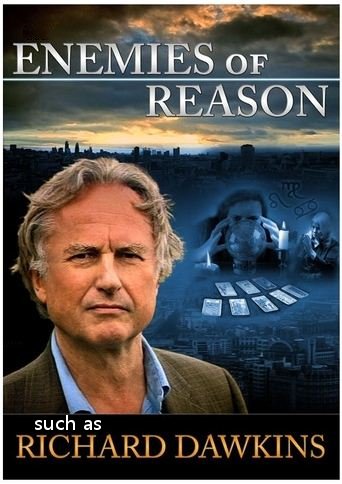
Coward Richard Dawkins flees from yet another debate, this time in Scotland

Will this fundamentalist Imam ever debate his religion?
Will this fundamentalist charlatan ever debate?

(Image from Glenn Peoples)

Richard Dawkins has decided to visit Scotland, and the Free Church of Scotland (the so-called “Wee Frees”) decided to challenge him to a debate. (H/T Dina)

Excerpt:

The Free Church of Scotland has challenged Richard Dawkins, the world-famous atheist, to a debate on his next visit to the Outer Hebrides.

Professor Dawkins is headlining Faclan, the Hebridean Book Festival, on the Isle of Lewis where he is scheduled to promote his book the God Delusion on Friday 2 November.

Despite calls of a boycott from a member of the Lord’s Day Observance Society, Stornoway Free Church minister Reverend Iver Martin (pictured below), who is minister of one of the biggest congregations on the island, said he welcomed the visit as an opportunity for debate.

[…]“The Free Church of Scotland endorses freedom of discussion and the exchange of argument.

“However, with Richard Dawkins presenting a particularly one-sided narrative, I would hope that there would be opportunity for fair, even handed, reasoned debate at which both sides of the theistic argument can be heard.”

Would Richard Dawkins, champion of militant fundamentalist atheism, rise to the challenge of debating his views in a public forum?

Of course not: (H/T Dina)

A Scottish Church leader has labeled evolutionary biologist and famed atheist Richard Dawkins a “snob” over his decision to turn down a debate on religion. Dawkins has refused a debate invitation for the faith-themed Faclan Hebridean Book Festival in Scotland in November.

The Rev David Robertson, a Free Church minister in Dundee, responded to Dawkins’ decision to avoid debate by saying that he does not believe the atheist to be a “coward,” but sees him as a “elitist snob, who once told me he would consider debating with me if I was the Archbishop of Canterbury, the Pope or Chief Rabbi.”

Robertson added: “Dawkins considers, like so many of his fellow new atheists, that there is no debate and they, and they alone, have the truth. Ironically, such arrogance and intolerance of others is the very definition of the fundamentalism that Dawkins professes to hate. I suspect that Richard Dawkins’ problem is that he is not a good debater.”

Yes, that’s it exactly. He cannot bear to hear other viewpoints other than his own. He is not intelligent enough to prove what he asserts in private to a skeptical audience in public. That’s why he doesn’t debate in public. He would prefer to preach in private to those who accept his dogma, and to receive their praise and adulation – and their money!

If Dawkins did agree to have his ideas tested in a debate, it would be a good thing if whoever was doing the testing asked him why he affirms the moral goodness of adultery and infanticide, as well as asking him what he means by his desire to “destroy Christianity“, especially given that he refuses to debate with Christians like William Lane Craig. Does he mean something similar to what his fellow atheists like Stalin and Mao meant, i.e. – mass murder? Or does he mean something else? It would be a good question to ask, anyway.

I don’t want anyone to think that atheism is some sort of immature, non-cognitive tantrum that consists largely of insulting Christians and giggling like children who have discovered a new curse word. There are serious atheistic scholars, and they do debate. Richard Dawkins is not a serious scholar, and he does not debate his views. He is therefore very much like those sweating, foam-flecked televangelists you see bloviating on the telly on Sunday mornings. All bluster, no substance.