Condoleezza Rice is the Thomas and Barbara Stephenson Senior Fellow on Public Policy at the Hoover Institution, professor of political economy in the Stanford Graduate School of Business, and professor of political science at Stanford University.
From January 2005 to 2009, she served as the sixty-sixth secretary of state of the United States. Before serving as America’s chief diplomat, she served as assistant to the president for national security affairs (national security adviser) from January 2001 to 2005.
Rice joined the Stanford University faculty as a professor of political science in 1981 and served as Stanford University’s provost from 1993 to 1999. She was a senior fellow at the Hoover Institution from 1991 to 1993 and returned to the Hoover Institution after serving as provost until 2001. As a professor, Rice won two of the highest teaching honors: the 1984 Walter J. Gores Award for Excellence in Teaching and the 1993 School of Humanities and Sciences Dean’s Award for Distinguished Teaching.
She has authored and coauthored several books, including Extraordinary, Ordinary People: A Memoir of Family (2010), Germany Unified and Europe Transformed: A Study in Statecraft (1995), with Philip Zelikow, The Gorbachev Era (1986), with Alexander Dallin, and Uncertain Allegiance: The Soviet Union and the Czechoslovak Army (1984).
Rice served as a member of the boards of directors for the Chevron Corporation, the Charles Schwab Corporation, the Transamerica Corporation, and the International Advisory Council of J.P. Morgan. She was a founding board member of the Center for a New Generation, an educational support fund for schools in East Palo Alto and East Menlo Park, California, and was vice president of the Boys and Girls Club of the Peninsula. In addition, she has served on several local and national boards of foundations and charitable organizations.
She currently serves on the board of C3, an energy software company, and Makena Capital, a private equity firm. In addition, she is a member of the boards of the Commonwealth Club, the Aspen Institute, the John F. Kennedy Center for the Performing Arts, and the Boys and Girls Clubs of America. She is a fellow of the American Academy of Arts and Sciences.
Rice earned her bachelor’s degree in political science, cum laude and Phi Beta Kappa, from the University of Denver in 1974; her master’s degree from the University of Notre Dame in 1975; and her PhD from the Graduate School of International Studies at the University of Denver in 1981.
Lawrence O’Donnell does not have a PhD in International Studies, nor was he ever Secretary of State or National Security Adviser. He should just shut up.
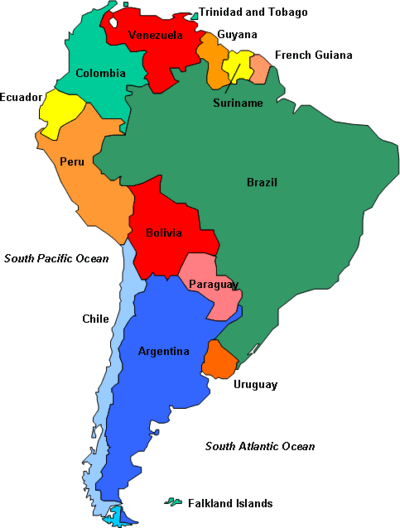
As the U.S. languishes, Chile posted a head-turning 15.2% yearly gain in GDP in March, and forecasts for the year are rising. Why can’t we do that here?
A year ago, Chile lay in rubble, victim of the world’s fifth most powerful earthquake. So Chile’s 15.2% growth is a big bounce from a bad setback.
But it shouldn’t be dismissed as an anomaly. It’s a showy number, but not the only one.
The same day Chile released its data, Goldman Sachs raised its 2011 growth forecast for the country to 6.4% from 6%. In its annual regional business index, Latin Business Chronicle ranked Chile as having the best business climate in Latin America in 2011.
Such numbers are so alien to the U.S. in the economically debilitated Obama era, it makes sense to look at what Chile has done.
First, Chile’s policies for long-term growth were put into effect in the 1980s by the group of Milton Friedman-inspired economists known as the Chicago Boys.
Under them, Chile’s pension privatization cost nothing and left the country with no net debt. The private funds now hold assets worth 90% of GNP ($185 billion) — capital used to develop the country. Already, Chile’s education and infrastructure are the best in Latin America as a result.
Second, there’s free trade, of which Chile is a global champion, signing at least 58 treaties to gain access to 2 billion customers.
That’s a big reason Chile is close to full employment and is scrambling to attract growth-hungry U.S. entrepreneurs — and getting them.
[…]Bamrud says Chile has been turning heads with investors the past year and a half because of its emphasis on improving its corporate environment, its tax regime and its economic freedom, all of which rate highly.
“Chile has always been held out as a model for Latin America, but the reality is … it’s now a model for the U.S.,” he said.
Corporate taxes are the second lowest in Latin America at 18%, behind Paraguay’s 10%. The Latin average is 28%.
Meanwhile, Goldman Sachs’ chief economist for Latin America, Alberto Ramos, says Chile has wisely fostered growth by reducing the size of government and not printing too much money.
In 2011, it cut government spending to 5% of GDP, or $700 million, more than its projected 5.5%. So GDP has room to grow 6.4%, rather than 6% as first estimated.
Chile is doing the exact opposite of the socialist Barack Obama. Chile is cutting government spending, removing tariffs, enacting free trade deals, and cutting corporate taxes. Businesses and investors are moving there, and there are not enough people to work at all the jobs that are being created. Meanwhile, in Venezuela, communist dictator Hugo Chavez just reported 0.6% gain in the last quarter of 2010.
May Day — socialists’ paean to class warfare — evokes memories of Soviet tanks in Red Square and leftist radicals rioting. But Chile celebrates the actual empowerment of workers.
May 1 marks the 30 years since Chile became the first nation to privatize its social security system. By turning workers into investors, the move solved an entitlement crisis much like the one America faces today.
“I like symbols, so I chose May Day as the birth date of Chile’s ‘ownership society’ that allowed every worker to become a small capitalist,” wrote Jose Pinera, former secretary of labor and social security and the architect of this pension revolution. He is now a senior fellow at the Cato Institute in Washington, D.C.
What he designed has succeeded beyond all expectations. Yet Congress remains reluctant to adopt anything like it, despite efforts by Presidents Bill Clinton and George W. Bush to partially privatize an American system.
Instead of paying a 12.4% Social Security tax as we do here, Chilean workers must pay in 10% of their wages (they can send up to 20%) to one of several conservatively managed and regulated pension funds. From the accumulated savings, they get a life annuity or make programmed withdrawals (inheriting any funds left over).
Over the last three decades these accounts have averaged annual returns of 9.23% above inflation. By contrast, U.S. Social Security pays a 1% to 2% (theoretical) return, and even less for new workers.
[…]In 2005, New York Times reporter John Tierney worked out his own Social Security contributions on the Chilean model and found that his privatized pension would have been $53,000 a year plus a one-time payout of $223,000. The same contributions paid into Social Security would have paid him $18,000.
The biggest threat to American solvency is the growth in entitlement spending on Medicare, Medicaid and Social Security. The Democrats are stubbornly opposed to reforming these benefits, because they like the idea of transferring wealth from children, who cannot vote, to people who depend on government hand-outs, who can vote. And the best part of their scheme is that young people can be easily indoctrinated by the public schools to believe that have their future mortgaged away to buy votes is a good idea. It’s really very sad and unfair to young people.
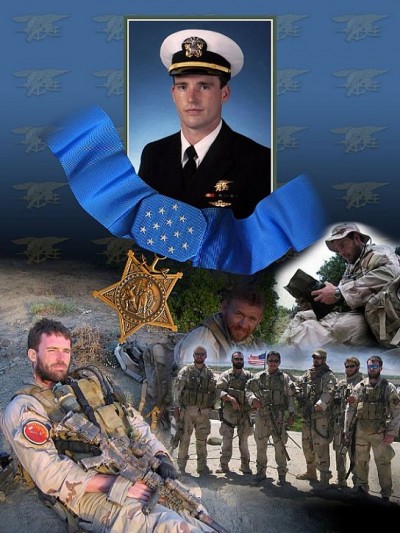
Engaged in a frenzied firefight and outnumbered by the Taliban, Navy Lt. Michael Murphy made a desperate decision as he and three fellow SEALs fought for their lives on a rocky mountainside in Afghanistan’s Kunar Province in 2005.
In a last-ditch effort to save his team, Murphy pulled out his satellite phone, walked into a clearing to get reception and called for reinforcements as a fusillade of bullets ricocheted around him. One of the bullets hit him, but he finished the call and even signed off, “Thank you.”
Then he continued the battle.
Dan Murphy, the sailor’s father, said it didn’t surprise him that his slain son nicknamed “The Protector” put himself in harm’s way. Nor was he surprised that in the heat of combat his son was courteous.
“That was Michael. He was cool under fire. He had the ability to process information, even under the most difficult of circumstances. That’s what made him such a good SEAL officer,” Murphy said.
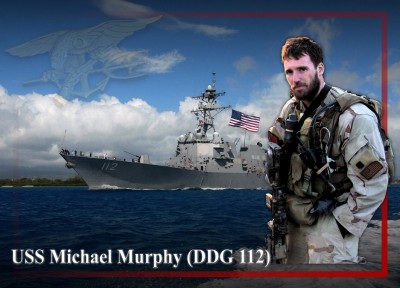
A warship bearing the name of the Medal of Honor recipient will be christened Saturday — on what would have been Murphy’s 35th birthday — at Bath Iron Works, where the destroyer is being built.
Murphy, who was 29 when he died, graduated from Pennsylvania State University and was accepted to multiple law schools, but decided he could do more for his country as one of the Navy’s elite SEALS — special forces trained to fight on sea, air and land — the same forces that killed Osama bin Laden this week in Pakistan.
[…]Murphy, of Patchogue, N.Y., earned his nickname after getting suspended in elementary school for fighting with bullies who tried to stuff a special-needs child into a locker and for intervening when some youths were picking on a homeless man, said Dan Murphy, a lawyer, former prosecutor and Army veteran who served in Vietnam.
Maureen Murphy said he thought he was too young to take a desk job as a lawyer. Instead, he went to officer candidate school, the first step on his journey to become a SEAL officer. He was in training during the Sept. 11 attacks, which shaped his views.
His view was that there are “bullies in the world and people who’re oppressed in the world. And he said, ‘Sometimes they have to be taken care of,'” she said.
On June 28, 2005, the day he was killed, Murphy was leading a SEAL team in northeastern Afghanistan looking for the commander of a group of insurgents known as the Mountain Tigers.
What happened to Murphy?
The Operation Red Wings reconnaissance team rappelled down from a helicopter at night and climbed through rain to a spot 10,000 feet high overlooking a village to keep a lookout. But the mission was compromised the following morning when three local goat herders happened upon their hiding spot.
High in the Hindu Kush mountains, Murphy and Petty Officers Marcus Luttrell of Huntsville, Texas; Matthew Axelson of Cupertino, Calif.; and Danny Dietz of Littleton, Colo.; held a tense discussion of the rules of engagement and the fate of the three goat herders, who were being held at gunpoint.
If they were Taliban sympathizers, then letting the herders go would allow them to alert the Taliban forces lurking in the area; killing them might ensure the team’s safety, but there were issues of possible military charges and a media backlash, according to Luttrell, the lone survivor.
Murphy, who favored letting the goat herders go, guided a discussion of military, political, safety and moral implications. A majority agreed with him.
An hour after the herders were released, more than 100 Taliban armed with AK-47 assault rifles and rocket-propelled grenades opened fire, attacking from higher elevation, and maneuvering to outflank the SEALs, said Gary Williams, author of “Seal of Honor,” a biography of Murphy.
[…]As the only survivor, Luttrell has pangs of regret for voting to go along with Murphy, his best friend; he now believes the team could’ve survived if the goat herders were killed.
He wasn’t willing to kill unarmed civilians. That’s the difference between the United States and the Muslim terrorists. It’s a moral difference. Michael Murphy was a good man. He used guns and violence to protect others, and he was not willing to kill unarmed civilians.
The Medal of Honor is awarded by the President in the name of Congress to a person who, while a member of the Army, distinguishes himself or herself conspicuously by gallantry and intrepidity at the risk of his or her life above and beyond the call of duty while engaged in an action against an enemy of the United States; while engaged in military operations involving conflict with an opposing foreign force; or while serving with friendly foreign forces engaged in an armed conflict against an opposing armed force in which the United States is not a belligerent party. The deed performed must have been one of personal bravery or self-sacrifice so conspicuous as to clearly distinguish the individual above his comrades and must have involved risk of life. Incontestable proof of the performance of the service will be exacted and each recommendation for the award of this decoration will be considered on the standard of extraordinary merit.
I once read an entire book on Medal of Honor award winners in World War II. It’s hard to read those stories, because these people who won the award did amazing acts of bravery, courage and self-sacrifice, but then most of them DIED. The stories almost always end in sadness and grief. Here’s the one that really stuck with me as an example.
On a happier note, what kind of ship do you think would suit Michael Murphy? A merchantman? Hell, no!
The Arleigh Burke Class destroyers are equipped with the Aegis combat system which integrates the ship’s sensors and weapons systems to engage anti-ship missile threats.
The Aegis system has a federated architecture with four subsystems – AN/SPY-1 multifunction radar, command and decision system (CDS), Aegis display system (ADS) and the weapon control system (WCS). The CDS receives data from ship and external sensors via satellite communications and provides command, control and threat assessment. The WCS receives engagement instruction from the CDS, selects weapons and interfaces with the weapon fire control systems.
[…]Lockheed Martin is developing the Aegis ballistic missile defence (BMD) capability for the Aegis combat system to engage ballistic missiles with the SM-3 missile. 15 Arleigh Burke destroyers have been fitted with the Aegis BMD system, which provides the capability for long-range surveillance, tracking and engagement of short and medium-range ballistic missiles. The system received US Navy certification for full deployment in September 2006. Work was completed on the 15 destroyers at the end of 2008 and the vessels, with three Ticonderoga cruisers, form the Aegis BMD fleet. On 30 July 2009 the Aegis BMD system was successfully tested by the US Navy on the USS Hopper (DDG 70).Aegis BMD is the main sea-based component of the US ballistic missile defence system.
The weapons control systems include a SWG-1A for Harpoon, SWG-3 for Tomahawk, mk99 mod 3 missile fire control system, GWS34 mod 0 gun fire control system and mk116 mod 7 fire control system for anti-submarine systems.
Only two warships that I know of have the AEGIS system. The DDG Arleigh Burke and the CG Ticonderoga. They are extremely rare and special – just like Michael Murphy.
Michael Murphy was a real hero. It makes me sad that he is gone. But his spirit will live on in the new warship that bears his name.