Top ten foreign policy and national security issues for 2012

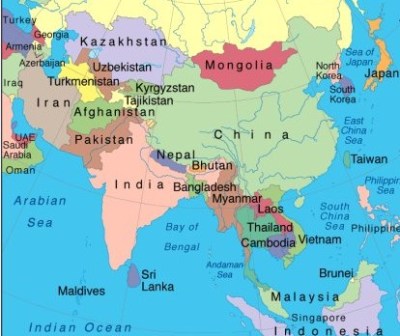
Map of Asia
Map of Asia

From the American Enterprise Institute.

Here’s the list:

  1. Iran, and the American retreat from Iraq
  2. Dealing with Islam and China in South Asia
  3. America’s strategy for Pakistan
  4. Defense spending priorities
  5. American support for Israel
  6. The Islamization of Turkey
  7. Collapse of the European economies
  8. Demographic crisis in Europe
  9. Demographic crisis in Russia
  10. Strategy for the Middle East

They have one article linked for each topic, so I chose the Islamization of Turkey.

Full text:

Turkey was a key American ally throughout the Cold War. As one of only two NATO countries to share a border with the Soviet Union, Turkey proved pivotal not only to the defense of Europe but also for American interests in Asia. The Turkish army fought alongside U.S. troops in Korea. Americans embraced Turkey not only for its strategic role, but also for its values. The Turkish government was decidedly Western-leaning. Turkey may have been majority Muslim, but most Turks saw their future tied more to the West than the Middle East.

Over the past nine years, however, Turkey has changed. No longer can Turkey be called a democracy. The Pew Global Attitudes Project now ranks Turkey as the most anti-American country it surveys. Reporters Without Frontiers ranks Turkish press freedom below even Zimbabwe and Venezuela. Turkey has imprisoned more journalists than even China and Iran. As Prime Minister Recep Tayyip Erdoğan has sought to Islamize society, Turkish women have lost both their equality and safety: The murder rate of women has increased 1,400 percent since Erdoğan’s Justice and Development Party took power.

Erdoğan has reoriented Turkey’s foreign policy as well. Turkey now not only embraces the Arab world, but it allies itself with its more radical factions: Turkey endorses Hamas, Hezbollah, Sudan’s genocidal dictator Omar al-Bashir, and the Islamic Republic of Iran. Whereas a decade ago, the alliance between Turkey and Israel stabilized the Eastern Mediterranean, today diplomats worry that Turkey’s antagonism toward both Israel and Cyprus could lead to military conflict in the region. In September 2010, Turkey raised eyebrows at the Pentagon when it held secret war games with the Chinese air force without first alerting Washington. Because Turkey increasingly is the obstacle to NATO consensus, its future in the defensive alliance may now be open to question.

Any new president will be faced with serious decisions regarding Turkey. Should Turkey remain in NATO? If so, should the United States share its next generation F-35 Joint Strike Fighters, Predators, and AWACS aircraft with Turkey? Lastly, if Erdoğan fulfills his promise to use the Turkish navy to challenge Israel’s blockade of Gaza, leading to a fight between two traditional American allies, on whose side will the White House be, and what actions would the new president take?

This is a primer, so the articles are fairly short. Just enough to give you background information on the hot spots that the next President will have to deal with. Can you think of any issues they left out? I think that we should also be concerned with the drug cartels in Mexico, the continuous sabre-rattling from Venezuela, threats to our Asian allies from China, and whether we still need to have so many troops in Europe and South Korea.

It’s good for Christians to have some awareness of national security and foreign policy issues. It only takes an hour to read a few articles and to have some understanding of the issues we are facing, so that we can discuss them with others and vote properly. There’s going to be a foreign policy debate for the GOP primary on November 22, 2011, so it would be good for us to study up so we can understand what they are talking about.

Mitt Romney’s political views on gay marriage, abortion and global warming

ECM sent me this article about Mitt Romney’s political views from the Washington Post.

Excerpt:

Mitt Romney was firm and direct with the abortion rights advocates sitting in his office nine years ago, assuring the group that if elected Massachusetts governor, he would protect the state’s abortion laws.

Then, as the meeting drew to a close, the businessman offered an intriguing suggestion — that he would rise to national prominence in the Republican Party as a victor in a liberal state and could use his influence to soften the GOP’s hard-line opposition to abortion.

He would be a “good voice in the party” for their cause, and his moderation on the issue would be “widely written about,” he said, according to detailed notes taken by an officer of the group, NARAL Pro-Choice Massachusetts.

“You need someone like me in Washington,” several participants recalled Romney saying that day in September 2002, an apparent reference to his future ambitions.

Romney made similar assurances to activists for gay rights and the environment, according to people familiar with the discussions, both as a candidate for governor and then in the early days of his term.

[…]Melissa Kogut, the NARAL group’s executive director in 2002, recalled Wednesday that as she and other participants in the meeting began to pack their belongings to leave after the 45-minute session, Romney became “emphatic that the Republican Party was not doing themselves a service by being so vehemently anti-choice.”

The abortion rights supporters came away from the meeting pleasantly surprised. Romney declined to label himself “pro-choice” but said he eschewed all labels, including “pro-life.” He told the group that he would “protect and preserve a woman’s right to choose under Massachusetts law” and that he thought any move to overturn the landmark Roe v. Wade decision would be a “serious mistake for our country.”

“We felt good about the interview. He seemed genuine,” said Nicole Roos, the NARAL official who took the notes and shared them with a reporter.

Same-sex marriage:

Romney’s approach to reassuring the left was first evident in 1994, when he tried to unseat Sen. Edward M. Kennedy (D) by offering himself as an unconventional Republican in the mold of the popular and socially liberal Gov. William Weld.

In a widely publicized letter to the Log Cabin Republicans, a gay group, he touted himself as a stronger advocate on gay rights issues than the liberal lion himself.

In an Aug. 25, 1994, interview with Bay Windows, a gay newspaper in Boston, he offered this pitch, according to excerpts published on the paper’s Web site: “There’s something to be said for having a Republican who supports civil rights in this broader context, including sexual orientation. When Ted Kennedy speaks on gay rights, he’s seen as an extremist. When Mitt Romney speaks on gay rights he’s seen as a centrist and a moderate.

“It’s a little like if Eugene McCarthy was arguing in favor of recognizing China, people would have called him a nut. But when Richard Nixon does it, it becomes reasonable. When Ted says it, it’s extreme; when I say it, it’s mainstream.”

In his campaign for governor eight years later, he publicly opposed gay marriage. But he again courted Log Cabin Republicans, meeting with them at a gay bar in Boston and sitting for another interview with Bay Windows, leaving some in the community with a vaguer impression of his stance.

In that interview, he called himself the “token Republican” who could use the power of his office to push lawmakers toward supporting certain domestic-partner benefits. He singled out the speaker of the state House at the time, who opposed legislation on that issue.

“I will support and endorse efforts to provide those domestic partnership benefits to gay and lesbian couples,” Romney said.

One participant in the Log Cabin session said Romney simply seemed opposed to the word “marriage” being used for same-sex couples.

“I certainly inferred from that that he didn’t have a problem with me as long as I called it something other than the M-word,” said Boston businessman Richard Babson.

Another participant, who spoke on the condition of anonymity, said that Romney “left the impression of being friendly to the concept of some sort of same-sex union and not being vehemently opposed to gay marriage.”

Global warming:

On the environment, Romney seemed interested in carving out an agenda largely in line with the state’s most fervent activists on the left.

After he took office in 2003, some state employees and activists were nervous about how the new governor would approach the climate-change issue. Massachusetts had already reached an agreement with other Northeastern states and some Canadian provinces on a plan to limit greenhouse gas emissions.

Romney surprised them by taking a hands-on approach, personally helping craft a “Massachusetts Climate Protection Plan” that he unveiled in 2004.

He reorganized the state government to create the Office of Commonwealth Development — with the former president of the liberal Conservation Law Foundation, Douglas Foy, as its head — to better coordinate climate work and sustainable-growth activities among different agencies.

As he worked on the plan, according to people familiar with the process, he even overruled some objections by his chief of staff, who criticized the plan as potentially too left-leaning.

Romney backed incentives for buying efficient vehicles, tougher vehicle emissions rules and mandatory cuts in emissions linked to global warming.

The plan not only called for reducing the state’s overall greenhouse gas emissions to 1990 levels by 2010 and cutting them another 10 percent by 2020, but it said that “to eliminate any dangerous threat to the climate . . . current science suggests this will require reductions as much as 75-85 percent below current levels.”

[…]Beyond the state climate plan, Romney repeatedly pushed to promote clean energy and cut the use of fossil fuels.

In March 2003 he pledged to buy up to $100 million worth
of electricity from renewable sources. That month, he declared, “the global warming debate is now pretty much over.”

That’s his record as governor. Why should we listen to his speeches now when we have his record as governor to tell us what the man really believes?

I previously posted videos of Mitt Romney explaining his views on abortion, gun control, gay rights, socialized medicine, stem cell research, etc.

What you need to know: videos about the Borde-Guth-Vilenkin theorem (BGV theorem)

Did you all read my summary of the excellent debate between William Lane Craig and Peter Millican? That was probably the best debate I have seen in since 2005. Millican knew all about Craig’s argument from the Big Bang cosmology and he proposed a dozen challenges to Craig’s premises. But Craig was able to establish the beginning of the universe by appealing to something called the Borde-Guth-Vilenkin theorem. This theorem is new – but it is worth learning about.

First, let’s review Craig’s cosmological argument:

A1) The origin of the universe

  1. The universe began to exist.
  2. If the universe began to exist, then the universe has a transcendent cause.
  3. The universe has a transcendent cause.

The origin of the universe is confirmed by philosophical arguments and scientific evidence.

There cannot be an actual infinite number of past events, because mathematical operations like subtraction and division cannot be applied to actual infinities.

The Borde-Guth-Vilenkin (BGV) proof shows that every universe that expands must have a space-time boundary in the past. That means that no expanding universe, no matter what the model, cannot be eternal into the past.

Even speculative alternative cosmologies do not escape the need for a beginning.

The cause of the universe must be transcendent and supernatural. It must be uncaused, because there cannot be an infinite regress of causes. It must be eternal, because it created time. It must be non-physical, because it created space. There are only two possibilities for such a cause. It could be an abstract object or an agent. Abstract objects cannot cause effects. Therefore, the cause is an agent.

So he appealed to the Bord-Guth-Vilenkin theorem right from the start in order to guarantee a space-time boundary in the past – i.e., a beginning of the universe, which is his premise 1.

Ok, now let’s take a look at the videos.

The Borde-Guth-Vilenkin theorem, explained

Part 1:

Part 2:

Millican tried to argue that there was a way to get a beginning in an eternal universe if the universe was contracting. I’m guessing he means that the new universe would begin to exist within some outside hyper-universe.

But Craig had a response:

Further study

If you would like to read a nice LONG article about Craig’s cosmological argument, just check this post I wrote a while back. And it even contains a nice peer-reviewed paper that Craig wrote for an Astrophysics journal – and the abstract is online on Springer! Now put your Evil Hat on and think with me – think of the fun you could have by sending that paper to all your atheist friends. Send them the abstract on Springer, and send them the full text of the article. Then send them the link to my summary of the Craig-Millican debate which has the audio. If that doesn’t rehabiliate God’s reputation and honor in their eyes, then nothing will. At the very least, they should be ready to accept that atheism is not as well supported by science, which is exactly the way that God intended things to be.

What does the Bible say in Psalm 19:1-6:

 1 The heavens declare the glory of God;
the skies proclaim the work of his hands.
2 Day after day they pour forth speech;
night after night they reveal knowledge.
3 They have no speech, they use no words;
no sound is heard from them.
4 Yet their voice[b] goes out into all the earth,
their words to the ends of the world.
In the heavens God has pitched a tent for the sun.
5 It is like a bridegroom coming out of his chamber,
like a champion rejoicing to run his course.
6 It rises at one end of the heavens
and makes its circuit to the other;
nothing is deprived of its warmth.

And in Romans 1:20:

20 For since the creation of the world God’s invisible qualities—his eternal power and divine nature—have been clearly seen, being understood from what has been made, so that people are without excuse.

And in Hebrews 11:3:

 3 By faith we understand that the universe was formed at God’s command, so that what is seen was not made out of what was visible.

Indeed. And it’s our job to make his glory know to the unbeliever – using good science.