
Video and summary of the Cain-Gingrich Lincoln-Douglas-style debate in Texas

Here’s the video of the debate.

And some reactions below.

Jeff G. from Protein Wisdom:

First, let me say that I very much liked the format — and my wife, whom I made watch it with me (SEXUAL HARASSMENT!) said after that she learned a whole lot more than she thought she would. The format was far more useful for vetting a potential President than is the soundbite format the mainstream media prefers — the end result of the latter being that an activist press gets to shape both the debate and the field by way of their “moderation” and their control over the length and breadth of answers, and as a result, it has become more important for a candidate to learn 30-second canned answers and fend off gotcha questions than it is that he or she can offer and then defend ideas that require more time to explain.

[…]What most impressed me — and perhaps this is merely because it is something I’ve been writing on for years — was that the entire debate exposed a truly conservative / classical liberal governing strategy for the long term: solutions offered were not only practical, from the standpoint of economics and fiscal sanity, but as importantly they outlined in broad strokes a plan to change the political and civil culture, creating in the aggregate a paradigm shift away from statism and back toward individual ownership and autonomy, self-reliance, and limited government as an inevitable result of the rebirth of personal responsibility and economic accountability.

That is is to say, what Gingrich and Cain both posited repeatedly last evening were solutions that empowered the individual to make choices, to see clearly the flow of money for services and goods, and to feel the effects of big government by allowing them to recognize how the government’s centralized administration of programs through the bureaucracies is a poorly-run, wasteful, and largely unaccountable middle stage that, in addition to being ineffectual, is also completely unnecessary.

[…]So while others take away from last night’s debate yet another supposed gotcha moment — which of course plays into old paradigms and explains why election cycle after election cycle we in the GOP nominate polished career politicians whose most impressive attributes are that they can remain largely gaffe free and can effectively pander — what I took away is that, finally, we are seeing what conservatism means and how it can and should be applied to thinking through problems to their solutions, and how its reintroduction into the culture can, as a function of sheer momentum, turn back the tide of statism that threatens to turn the US into a post-Constitutional soft tyranny.

I don’t care how much a particular candidate has memorized to meet the demands of a thirty-second answer to a loaded question from Anderson Cooper or Chris Wallace; we give the media far too much power by allowing them to shape our political culture. Instead, I want to see a set of core convictions — adherence to the Declaration and Constitution and the unalienable rights of the individual — and an overarching strategy for its implementation.

Last night, I was greatly pleased with what I saw.

And John Hayward from Human Events:

As it turned out, Cain and Gingrich had substantially fewer disagreements than Lincoln and Douglas did.  In fact, they had only minor differences of opinion on how to go about implementing their reforms.  Both were firmly in agreement on the importance of block-granting Medicaid funds to the states, abolishing ObamaCare in favor of market-based health care reforms, and providing a way for younger workers to opt out of Social Security and into privately owned accounts.  Cain, of course, believes Social Security privatization will require his 999 Plan as a runway in order to achieve takeoff, as the 999 Plan does away with payroll taxes.

Neither candidate began a response with an express or implied cry of “You’re wrong!” or engage in the sort of verbal frenzy that ends with heated accusations about the sinister forces providing Mitt Romney with lawn care services.  These two were so collegial that I couldn’t help thinking they’d look great on a ticket together.  Cain had the most riotously funny line of the evening when, given an opportunity to ask a single question of his opponent, he thought for a moment and inquired: “If you were Vice President of the United States, what would you want the President to assign you to do first?”

[…]The most strongly emphasized Big Idea from Gingrich tonight was the fallacy of allowing Big Government to measure its own performance, and predict the future costs and benefits of tax and spending policies, when its predictions of cost and benefit have never come anywhere near reality.  (Cain buttressed this point by relating the amazing history of Medicare, originally sold to the public with a price tag of $6 billion, and projected to cost no more than $12 billion by 1990.  The actual cost of the program in 1990 was $109 billion.)

[…]Another major point from Gingrich was the absurdity of money-for-nothing welfare-state programs.  “Nobody should get something for nothing unless they have a very severe disability,” he declared.  “If you’re an able-bodied person, and you’re getting something for nothing, we’re pretty stupid for giving it to you.”  Among the tough-love proposals he suggested was attaching a mandatory training requirement to unemployment benefits.  As he noted with both acid and accuracy, people could be earning college degrees in the time they’ve been sitting around and waiting for Barack Obama to create jobs.

[…]Cain strongly believes in the importance of moving Americans from “entitlement to empowerment.”  Block granting both money and responsibility for programs like Medicaid to the states is part of this strategy, as is the creation of a private account option for Social Security recipients.  “People spend other people’s money recklessly than they spend their own,” he observed, brilliantly condensing much of the Obama disaster into a single sentence.

Looking back on his transition from private-sector business success into the politics, Cain made the interesting observation that it’s “dangerous” for businessmen to stay out of public debates, confident they can mitigate the damage from legislation with good lobbyists somewhere down the line.  When the government becomes as large and intrusive as ours has, politics must be practiced defensively.  It’s really not possible for a high-level businessman to declare himself uninterested in the affairs of government, because the government is most certainly interested in him.

I would like to see MORE debates like this – something more like what William Lane Craig does where people get 20 minutes for an opening speech. Cain and Gingrich both seem to have a dislike of the media, and that’s a good thing. I don’t like Gingrich as the nominee for president, because of his habit of trying to appear as a centrist by dealing with people like Nancy Pelosi. But I would be supportive of a Cain/Gingrich ticket. Heck, I’ve read Newt’s “Winning the Future” a half-dozen times. He’s a smart guy – he just needs to be in a supporting role.
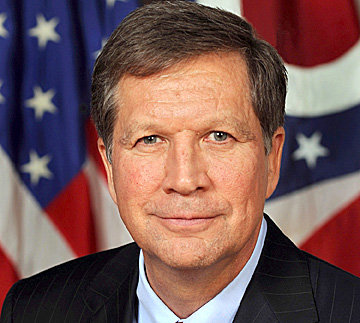
John Kasich signs pro-life parental consent bill

Gov. John Kasich
Gov. John Kasich

John Kasich, Republican governor of Ohio has signed another pro-life bill into law.

Excerpt:

Governor John Kasich of Ohio has signed into law a bill meant to strengthen the parental consent law in place that prohibits teens from getting an abortion without their parents’ consent is moving along in the legislative process.

House Bill 63 and Senate Bill 8 would revise Ohio’s current judicial bypass provision in the parental consent on abortion law. This bill will strengthen current law by requiring a “clear and convincing evidence” standard, require judges to specifically inquire about the minor’s understanding of the possible physical and emotional complications of an abortion, and require judges to question how much the minor has been prepped to respond to such questions.

[…]“We thank Governor Kasich, Senate President Tom Niehaus, and Speaker Bill Batchelder who continue to advance life-saving policies,” said Mike Gonidakis, Executive Director of Ohio Right to Life. “H.B. 63 strengthens parents’ ability to care for their children and prevents lawyers and others from taking mom and dad’s place when their child needs them most.”

[…]In July, Kasich signed into law a bill to ban late-term abortions in Ohio — something Gonidakis applauded.

“2011 has been a banner year for significant and responsible pro-life legislation.  Ohio is witnessing the blessings of having the most pro-life Governor and General Assembly in our state’s history working together to save lives,” said Gonidakis.

This is good news for pro-lifers voters in Ohio. Ohio voters were careful to choose a pro-life candidate for governor, and now they are reaping the rewards for all of their hard work. The important thing is to choose the right candidate – someone who means business on social issues.

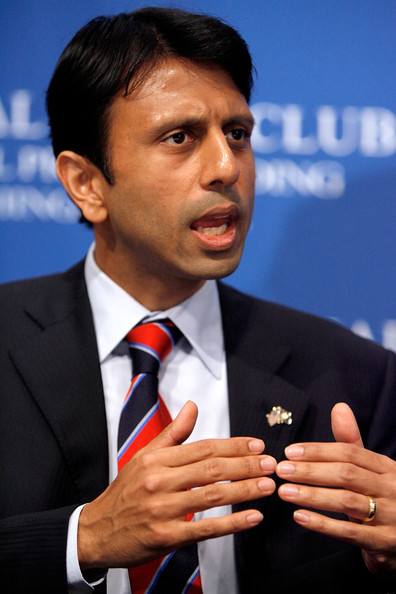
Bobby Jindal cuts Louisiana budget by 25%… and gets re-elected in landslide?

Gov. Bobby Jindal
Gov. Bobby Jindal

From the Philadelphia Inquirer.

Excerpt:

One gubernatorial election ended early this fall, when Louisiana Gov. Bobby Jindal won the state’s blanket primary Oct. 22. Under Louisiana’s system, all candidates of all parties are listed on the ballot, and if no one gets 50 percent, the top two finishers go to a runoff. Jindal blew past the threshold with 66 percent.

Jindal’s reelection was unusual in several respects. The only previous time the state has not had a runoff was his election in 2007. He is only the fourth Republican governor in the last 125 years in Louisiana, and one of those four switched over from the Democrats in office. Jindal’s best-known challenger this year was a schoolteacher, who raised less than 1 percent of the incumbent’s campaign treasury. The Democratic State Central Committee declined to endorse any candidate running on its party label.

But perhaps most unbelievable is that Jindal faced no serious competition after cutting state spending more than 25 percent. In January 2008, the state had a budget of $34.3 billion. This summer, Jindal signed into law a budget spending $25 billion. As governors from Harrisburg to Trenton to Columbus to Madison have learned, cutting a state’s budget is difficult enough; doing so without a significant backlash seems a politically impossible task.

A key part of Jindal’s story is recognizing that he took the helm of a state that had hit bottom: Decades of mismanagement and corruption had taken their toll even before Hurricane Katrina wreaked such devastation and exposed such colossal unresponsiveness in state government. The state, recognizing the bitter fruit of its traditions of colorful corruption, was ready to take a chance on a then-37-year-old Indian American congressman who speaks roughly 100 words per minute. The state was willing to try a new approach to governing; how much worse could it be?

Privatization played a big role in Jindal’s reinvention of state government, with private contractors taking over state-run operations for a lesser cost. The companies often hired the state workers who would often be the centerpiece of opponents’ criticism.

His administration privatized the state’s Office of Risk Management. Then the state’s Division of Administration privatized claims management and loss prevention in the self-insurance program, saving $20 million over five years. The Department of Health and Hospitals privatized six inpatient, residential-treatment programs around the state, saving $2.5 million. Separately, patients were moved from state-operated institutions that cost $600 or more per patient per day to community-based services and private group homes that average $191 per day, saving an additional $23.8 million.

Consolidation was another key element: The state’s Department of Revenue shrank from eight offices statewide to three. The Department of Children and Family Services consolidated its offices from 157 to 90, saving a total of $2.7 million.

But some of Jindal’s cuts are the old-fashioned kind. The state sold 1,300 vehicles from its fleet of automobiles. Louisiana’s Transportation Department shut down a ferry that was used by only 7,200 drivers per year, saving the state roughly three-quarters of a million dollars.

In fiscal 2011, Louisiana eliminated more than 3,500 full-time government positions. Add the 6,363 previous reductions during Jindal’s term, and that means a total of almost 9,900 full-time positions reduced since he took the oath, a savings of almost $600 million. Louisiana now has the lowest level of full-time state government employees in almost 20 years.

“You change people’s expectations and you make structural changes,” Jindal said, while racing around the state about three weeks before the election. “The most important is this cultural change, to say government is not the answer to everything. In a weird way, I want the office of governor to be less important than it is. What I mean by that is, there was an old joke that kids in Louisiana don’t grow up wanting to be president; they grow up wanting to be governor. You should want them to want to business leaders or doctors or teachers.”

Some cuts were more noticeable to the public, but Louisianans found shorter hours and workweeks at state facilities more palatable than complete shutdowns or higher taxes: Historic sites are now open five days a week instead of seven, pools at a half dozen state parks were closed on Mondays and Tuesdays this summer, and entrance stations at all state parks had shorter hours. Finally, 54,000 rank-and-file state workers are going without a raise for the second consecutive year.

Jindal’s first term was marked by several high-profile crises he successfully managed – Hurricane Gustav and the response to the BP oil spill, along with the Obama administration’s six-month moratorium on all drilling in the Gulf of Mexico – but the state’s economy has generally chugged along: Louisiana’s unemployment rate is 7.1 percent, two percentage points lower than the national average, and a comparably booming economy makes cuts in state spending much easier to take.

“If you have a good-paying job with benefits, you wouldn’t need the state to do so many things for you,” Jindal says. “You become less dependent, and that diminishes the role of the state and so you need fewer state employees, and it’s a virtuous cycle. You can lower taxes and lower government spending.”

Louisiana is a swing state. If Bobby Jindal can cut government spending in a swing state and get re-elected with 66% of the vote, then we do have hope that the American people will do the right thing. Maybe we just need to hit bottom with Obama so that we realize that competence does matter after all. We have a deep, deep bullpen for future elections. Governors like Scott Walker (Wisconsin), Rick Scott (Florida) and John Kasich (Ohio)would be excellent presidential candidates.  And of course we have Marco Rubio and soon-to-be senators Josh Mandel and Ted Cruz waiting in the wings.