New study: cohabitation produces far inferior outcomes to marriage

This study is from the American College of Pediatricians.

The Stream writes about the study:

The American College of Pediatricians recently published a paper, Cohabitation, which cautions adolescents and young adults about the negative consequences of cohabitation for both themselves and their children, and urges parents to teach their children about the advantages of waiting until marriage.

More young people are now first cohabiting than are marrying without prior cohabitation, yet research shows that, rather than being a stepping-stone to a healthy marriage, living together before marriage (cohabitation) makes couples more likely to break-up and more likely to divorce if they do marry. It results in lower marital satisfaction and increased negative communication.  Cohabiting couples spend less time together; men are more likely to spend their time on personal pleasure than do married men.

Commitment failure:

Cohabiting couples are now less likely to later marry than 40 years ago. Controlling for other factors that increase risk of divorce, marriages preceded by cohabitation are still 50 percent more likely to end in divorce.  (Some recent studies challenge this, but are scientifically flawed and omit the raw data.)  Also 27 percent of cohabitations dissolve without marriage in the first three years.

Domestic violence:

Cohabiters commit increased violence against their partner. Women are nine times more likely to be killed by a cohabiting partner than by their husband. Severe violence is four times as common among cohabiting couples; any violence is nearly 50 percent more common among couples cohabiting before marrying and doubled among couples continuing to cohabit after five years.

Alcohol abuse:

Men who cohabit without marrying in 5 to 10 years have more than double the rate of alcohol abuse as married men; women who cohabit without marrying have 4 to 7 times the rate of alcohol abuse as married women.

Infidelity:

Cohabiters, both men and women, have rates of infidelity in the preceding year more than triple that of married spouses. Among the married, those cohabiting prior to marriage were 50 percent more likely to be unfaithful as those marrying without cohabiting.

Poverty:

Poverty is more common among cohabitating women and their children. Their male partners have both a higher unemployment rate (15 percent vs 8 percent), and work less hours if employed.

Abortion:

Cohabitating women are ten times more likely to have an abortion than married women, and suffer from its associated mortality and morbidity. In fact, 89 percent of women who have had abortions have at one time cohabited; 40 percent have lived with three or more men. Abortion also puts future children at risk, especially from extremely premature birth.

Harm to children:

Children who survive also suffer due to parental cohabitation.  They have increased risk of losing a parent to divorce or separation, possibly multiple times.  Children born of cohabiting parents are over four times more likely to suffer separation of their parents by their third birthdays (49 percent) than those born to married parents (11 percent).

[…]Nearly one-third of couples enter into cohabitation with a child from a previous relationship, as do half of those cohabitating for six years or longer. Children living with a parent and unmarried partner (live-in boyfriend) have 20 times the risk of sexual abuse and eight times the risk of all maltreatment compared to children living with married biological parents.  Even if the couple marries, stepchildren have over eight times the risk of sexual abuse and triple the overall risk of abuse of neglect. Girls living with a stepparent had 60 percent higher risk of being raped than girls living with their biological parents.

Depression:

Women in cohabiting relationships have more depression than married women, and poorer responsiveness to their children’s emotional needs.  Children whose mothers are depressed have increased cortisol responses to stress (which may explain their increased hypertension in adulthood). Children with unmarried mothers are half as likely to be breastfed, leading to higher rates of asthma, pneumonia, ear and intestinal infections, diabetes, obesity, and lower intelligence.

Please believe me when I say that you should click through to the Stream and read the entire article.

So what do I want to say about this in my 500 words? Well, I want to say that the cohabitation issue is a good opportunity for us to reason about whether there should be any rules around sexuality and relationships.

Our culture is absolutely poisoned right now with a kind of feelings-oriented non-judgmentalism that prevents debate. Everything has been reduced to people feeling “offended” and using the power of government to stifle debate. Nowhere is this more evident than on the university campus, which is the source of the problem. This hyper-tolerance and emotional non-judgmentalism leaves people open to making poor decisions that cause self-destruction and harm to others. As a result, young people are blindly accepting a script for sexuality and relationships from the culture, e.g. – Hollywood, celebrities, and ideologically-driven academics. A script made by professional story-tellers insulated from the consequences of their ideas.

As Christians, we seem to have so much trouble talking to young people about rules around sexuality and relationships. So many young people think that premarital sex is benign. That cohabitation is no big deal. And that redefining marriage cannot be opposed. Christian parents and pastors are not preparing themselves to discuss these things with young people. If there is a battle of ideas, and one side shows up with a bunch of feelings and lies, that side still wins – if the other side doesn’t show up at all. Don’t be so focused on your career and your own self that you fail your children by failing to discuss and debate with them about the issues. Don’t assume that just because your children look OK on the surface that there are not serious questions underneath.

There is so much I could say about this problem of talking to young people. As I argued in a previous post, I truly believe that apologists should not neglect these social / cultural / fiscal issues. We have to study them and know how to argue for our values using secular arguments and evidence, such as you see in the study above. Once young people have decided that Christian teachings on sexuality (e.g. – chastity, courting) are primitive and irrational, or worse, then getting them to accept Christianity becomes that much harder. And that goes double for marriage. If they think that cohabitation, no-fault divorce, same-sex marriage and gay adoption are opposed for no other reason than blind prejudice or even hatred, then we’ve lost before we even begin to make our first philosophical argument. We have to use a combined arms approach.

Let’s attack! Now is the time!
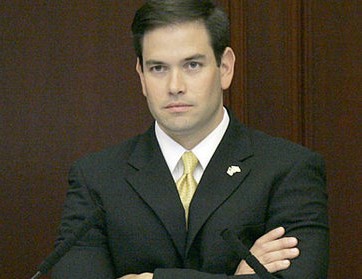
Florida senator Marco Rubio will compete in the GOP presidential primary

Florida Senator Marco Rubio

Here’s a profile of Marco Rubio posted by Rachel Alexander at The Stream.

She writes:

On Monday night, Florida Senator Marco Rubio became the third major Republican candidate to announce he was officially running for president, after Senators Ted Cruz and Rand Paul. He made the announcement from the Freedom Tower in downtown Miami, considered the Ellis Island of Florida, where Cuban refugees seeking political asylum from Castro’s communist regime were processed by the federal government in the ’60s and early ’70s. It made a powerful statement, that the son of refugees is now running for president.

Rubio’s parents came to America before the Castro regime, and took menial jobs. He told the cheering crowd, “My father stood behind a small portable bar in the back of a room so that tonight I could stand behind this podium in front of this room.”

Rubio has been an outspoken critic of Obama’s efforts to relax relations with Cuba, and takes a hawkish approach to foreign policy. Earlier this year, he published the book American Dreams, which lays out how to rise to success economically in the U.S.

The youngest candidate in the race, Rubio reached out to younger voters in his speech, saying, “This election is not just about what laws we will pass, it is a generational choice about what kind of country we will be.”

He has lots of experience and a track record we can analyze:

A lawyer, Rubio worked his way up through the political system, serving in the Florida House from 2000 to 2008 and eventually becoming Speaker. While there he developed a reputation for pursuing innovative policy ideas and while Speaker of the Florida House, he wrote a book, 100 Innovative Ideas for Florida’s Future, which contained many ideas he implemented while Speaker.

He went on to defeat liberal Republican turned Democrat Charlie Crist in a surprising underdog campaign to become U.S. Senator in 2010, making him an instant Tea Party favorite. The New York Times magazine declared him the “first Senator from the Tea Party.”

His most exciting policy is his tax policy:

On the fiscal side of the conservative equation, Rubio’s new tax reform proposal is raising some eyebrows. Introduced with conservative stalwart Sen. Mike Lee (R-Utah), the plan would consolidate income tax rates into just two, 15 percent and 35 percent, eliminate capital gains taxes on investment income for individuals, combine all corporate tax rates to 25 percent, and resuscitate the child tax credit, which had shrunk under the Obama administration. However, individuals making as little as $75,000 would be subject to the 35 percent rate. Many conservatives prefer the more radical flat tax option advocated by Ted Cruz and Rand Paul.

Mike Lee is my favorite conservative in the Senate.

Rubio is a solid conservative in terms of voting:

He has a 98.67 percent lifetime rating from the American Conservative Union, higher than most other Republican Senators.The Pulse 2016, a new site tracking the presidential election, gave Rubio an A grade on handling the Indiana religious freedom law controversy. The site noted that during an appearance on The Five, Rubio spoke “intelligently, knowledgeably, and at length about the need to protect the rights of Christians to follow their religious convictions.”

But he doesn’t have the executive accomplishments of a Scott Walker or a Bobby Jindal, since he isn’t a governor.

This is his biggest flaw:

Since taking office, Rubio has disappointed the Tea Party once, in 2013, when he joined a bipartisan group of Democrats and moderate Republicans to propose a path to citizenship for illegal immigrants, which went further than even Jeb Bush’s plan. Bush supports a path for legal status only. Rubio’s legislation failed, and at CPAC earlier this year, he said he now would only support a path to citizenship after securing the border.

Rubio is a strong candidate, but I can’t forgive him for endorsing a path to citizenship for those who break the law coming into the United States without a work permit. I don’t even favor work permits for people who break the law, much less permanent residencies, much less citizenship. Rubio is far to the left of me on immigration. But if you take away that negative, he is a formidable candidate in the general election. He would make an extremely difficult opponent for Hillary Clinton, or whoever the Democrats choose.

I am OK with him being our candidate in the general, and I think he would be as electable as Scott Walker, my top choice. If we were just choosing positions, I agree most with Cruz, but Cruz lacks accomplishments and I don’t see intelligent policies coming out of his mouth – the kinds of policies that can move us in a conservative direction, while still appealing to independents.

But I rank Rubio fifth in my list:

  1. Gov. Scott Walker
  2. Gov. Bobby Jindal
  3. Gov. Rick Perry
  4. Sen. Ted Cruz
  5. Sen. Marco Rubio

I like Rick Santorum more than Marco Rubio, but I’m not sure if he’s running. Carly Fiorina and Ben Carson are not on my list because of lack of experience, but I would love to see them run and be present to speak at the debates – I like listening to them both. They are both stars, but maybe not ready for the Presidency.

Rand Paul is a good candidate on fiscal policy. His statements on social policy are good, but he lacks accomplishments.His foreign policy is too much like Obama’s for me. He has said some good things, but he lacks accomplishments. I don’t want any more weakness and appeasement. Paul is to the left of Cruz and Rubio on foreign policy – I don’t want him on my list. But I’d put him in charge of the Federal Reserve in an instant.

We have SO MANY good candidates, and the Democrats have picked themselves a stinker. It’s so good! I feel bad that young people are so lousy on the marriage issue, but maybe with a good leader, we can change some of their minds during the debates? Do young people even watch debates?

Gay activists target student leader Lindsey Kolb for defending religious liberty

A banner with Lindsey Kolb

Here’s the story from The College Fix.

Excerpt:

Members of the LGBT community at Missouri State University are demanding the school retaliate against a student leader for her off-campus activism against a local ordinance that could harm religious freedom.

[…]A petition posted Wednesday on Change.org, originally titled “#TakeLindseyOffCarrington” but since changed to “#AccurateRepresentationMSU,” asks the school to remove a banner from its signature building, Carrington Hall, depicting “university ambassador” Lindsey Kolb.

As of Sunday night, the petition had 873 signatures.

Providing little context for its subject or a clear articulation of its demand, the petition was posted the day after Springfield residents voted to repeal a city council ordinance that banned discrimination based on sexual orientation and gender.

Proponents of repeal have argued the ordinance did not provide substantial religious exemptions for businesses and individuals.

Removing the banner of Kolb would “send a message of cultural competence and not advertise someone who has no respect for a culture different from their own,” petition author and MSU student Connor Hayes wrote at Change.org.

Kolb told The College Fix her opponents have mischaracterized her beliefs and her faith.

“I advocated for repeal because I believe in religious freedom,” said Kolb in a statement. “A Church should not be forced to host a LGBTQ wedding. A cake shop should not be forced to make a cake for a LGBTQ couple’s wedding.”

Kolb wears many hats, according to her LinkedIn page: state chairman of the Missouri Federation of College Republicans and president of MSU’s chapter, receptionist for the dean of students and office of admissions, member of the student government cabinet, and even “campus ambassador” for a clothing brand.

What’s scary about this is the response of the gay activists:

She initially came under fire after taking issue with a satirical op-ed in The Standard by Caleb Hearon, which mocked Christians who favored of repeal of the Springfield ordinance.

“Repealing this protects religious freedom. It is my God-given right to hate whomever I want. Can I get a yee-yee?” Hearon wrote.

Caleb? What kind of name is Caleb for a secular leftist? That’s just weird.

More:

Though Hayes’ petition says its goal “is not to make Lindsey a scapegoat for the way the [Springfield ordinance repeal] vote turned out,” it continually returns to Kolb, calling her unfit to represent the university.

“Her remarks in the past do not exemplify an ethical leader by ostracizing and discriminating against current and prospective students who identify as member or ally of the LGBT+ community,” it states. “For Missouri State to continue to endorse her discriminatory views is effectively showing that they do not in fact value ethical leadership.”

Kolb told The Fix she feels “bullied” by the petition.

“The people who started this petition did not personally know me, my convictions, and completely took my views out of context,” she said.

Her opponents have taken to Twitter, using the hashtag #TakeLindseyOffCarrington and labeling her an “awful individual” and a “bigot”among other slurs.

I feel badly for her – trying to stand up for religious liberty using your real name is a disaster these days. It’s not safe. I do think that it’s extra good when a woman stands up for religious liberty, though. In my experience, women are more likely to want to hide their conservative beliefs from their peers – or even get rid of them completely in order to fit in. I feel really bad when that happens – I want to get in there and reinforce her so that she doesn’t feel pressured to change her values in order to fit in.

Look how tough Lindsey is:

And while Smart’s intervention on her behalf suggests Kolb’s banner will remain on Carrington Hall, “If it ever comes down to me having the freedom of speech and religion or having a banner on campus, I choose my faith and freedom every time,” Kolb told The Fix.

Fortunately, this story has a happy ending so far:

University President Clif Smart decried those attacking Kolb in a Wednesday night blog post.

“In the same way that discrimination will not be permitted at Missouri State, we will also not permit retaliation based on someone’s political or religious beliefs or advocacy efforts on this or any other political issue,” Smart wrote.

He said the university’s “public affairs” mission – the petition’s stated rationale for removing Kolb’s banner – “is not a weapon to be wielded when we work or study with those who have different ideas, beliefs or values than our own.”

Discouraging people from speaking openly is not what Missouri State is about, Smart continued: “We do not behave as ethical leaders when we seek to stifle free expression or punish those who advocate for particular viewpoints.”

And there is a counter-petition for you to sign to support Lindsey, as well. I posted this because my heart just went out to her trying to do the right thing and taking flak from the secular leftist mob. She is a very, very brave girl – I’m sure this experience has hurt her some. It’s scary – so many of our young people are like Crazy Caleb – even the ones raised in Christian homes. And there are so few Lindseys. The university is a very dark place right now. And yet it has so much influence in our society that we can’t abandon it, we have to keep trying to get a foothold.