Prior to certain scientific discoveries, most people thought that the universe had always been here, and no need to ask who or what may have caused it. But today, that’s all changed. Today, the standard model of the origin of the universe is that all the matter and energy in the universe came into being in an event scientists call “The Big Bang”. At the creation event, space and time themselves began to exist, and there is no material reality that preceded them.
So a couple of quotes to show that.
An initial cosmological singularity… forms a past temporal extremity to the universe. We cannot continue physical reasoning, or even the concept of spacetime, through such an extremity… On this view the big bang represents the creation event; the creation not only of all the matter and energy in the universe, but also of spacetime itself.
Source: P. C. W. Davies, “Spacetime Singularities in Cosmology,” in The Study of Time III, ed. J. T. Fraser (Berlin: Springer Verlag ).
And another quote:
[A]lmost everyone now believes that the universe, and time itself, had a beginning at the big bang.
Source: Stephen Hawking and Roger Penrose, The Nature of Space and Time, The Isaac Newton Institute Series of Lectures (Princeton, N. J.: Princeton University Press, 1996), p. 20.
So, there are several scientific discoveries that led scientists to accept the creation event, and one of the most interesting and famous is the discovery of how elements heavier than hydrogen were formed.
Nucleosynthesis: forming heavier elements by fusion
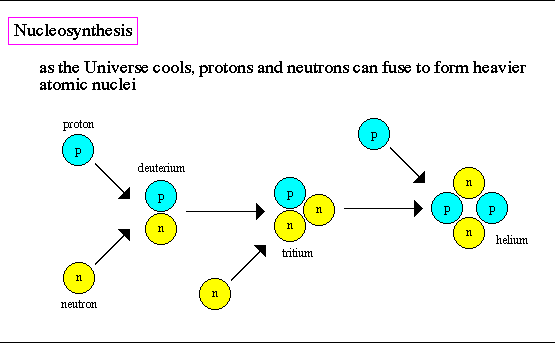
The term nucleosynthesis refers to the formation of heavier elements, atomic nuclei with many protons and neutrons, from the fusion of lighter elements. The Big Bang theory predicts that the early universe was a very hot place. One second after the Big Bang, the temperature of the universe was roughly 10 billion degrees and was filled with a sea of neutrons, protons, electrons, anti-electrons (positrons), photons and neutrinos. As the universe cooled, the neutrons either decayed into protons and electrons or combined with protons to make deuterium (an isotope of hydrogen). During the first three minutes of the universe, most of the deuterium combined to make helium. Trace amounts of lithium were also produced at this time. This process of light element formation in the early universe is called “Big Bang nucleosynthesis” (BBN).
The creation hypothesis predicts that there will be specific amounts of these light elements formed as the universe cools down. Do the predictions match with observations?
Yes they do:
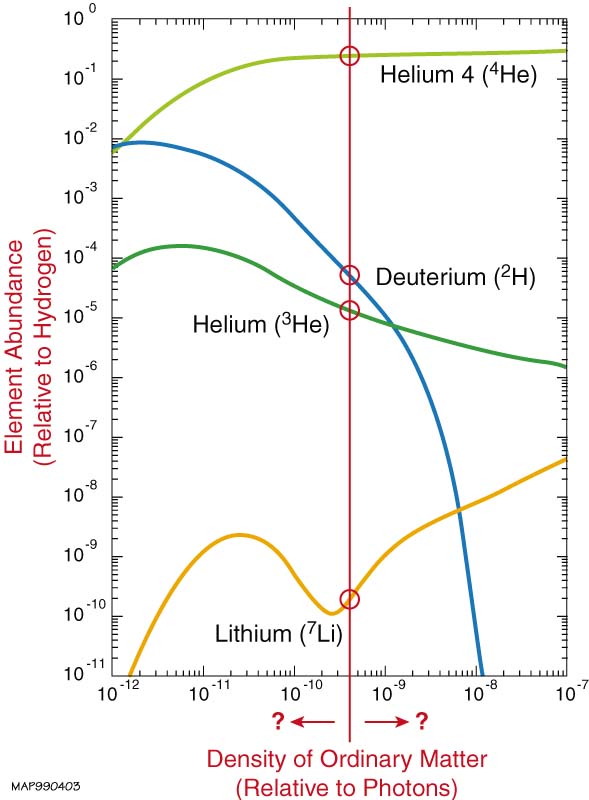
The predicted abundance of deuterium, helium and lithium depends on the density of ordinary matter in the early universe, as shown in the figure at left. These results indicate that the yield of helium is relatively insensitive to the abundance of ordinary matter, above a certain threshold. We generically expect about 24% of the ordinary matter in the universe to be helium produced in the Big Bang. This is in very good agreement with observations and is another major triumph for the Big Bang theory.
Moreover, WMAP satellite measurements of mass density agree with our observations of these light element abundances.
Here are the observations from the WMAP satellite:
And here is how those WMAP measurements confirm the Big Bang creation event:
However, the Big Bang model can be tested further. Given a precise measurement of the abundance of ordinary matter, the predicted abundances of the other light elements becomes highly constrained. The WMAP satellite is able to directly measure the ordinary matter density and finds a value of 4.6% (±0.2%), indicated by the vertical red line in the graph. This leads to predicted abundances shown by the circles in the graph, which are in good agreement with observed abundances. This is an important and detailed test of nucleosynthesis and is further evidence in support of the Big Bang theory.
“An important and detailed test”.
For completeness, we should learn how elements heavier than these light elements are formed:
Elements heavier than lithium are all synthesized in stars. During the late stages of stellar evolution, massive stars burn helium to carbon, oxygen, silicon, sulfur, and iron. Elements heavier than iron are produced in two ways: in the outer envelopes of super-giant stars and in the explosion of a supernovae. All carbon-based life on Earth is literally composed of stardust.
That’s a wonderful thing to tell a young lady when you are on a date: “your body is made of stardust”. In fact, as I have argued before, this star formation, which creates the elements necessary for intelligent life, can only be built if the fundamental constants and quantities in the universe are finely-tuned.
Now, you would think that atheists would be happy to find observations that confirm the origin of the universe out of nothing, but they are not. Actually, they are in denial.
Here’s a statement from the Secular Humanist Manifesto, which explains what atheists believe about the universe:
Religious humanists regard the universe as self-existing and not created.
For a couple of examples of how atheistic scientists respond to the evidence for a cosmic beginning, you can check out this post, where we get responses from cosmologist Lawrence Krauss, and physical chemist Peter Atkins.
You cannot have the creation of the universe be true AND a self-existing, eternal universe ALSO be true. Someone has to be wrong. Either the science is wrong, or the atheist manifesto is wrong. I know where I stand.
According to a study from the Institute for Family Studies, red counties tend to have more married adults, more children born within marriage and higher levels of children living with both biological parents than blue counties.
“The reddest counties have higher rates of family stability, which is surprising because red counties, especially in the South, tend to have higher divorce rates,” said W. Bradford Wilcox, senior fellow with the Institute for Family Studies and author of the study. “But what seems to be happening here is that non-marital childbearing has emerged as a bigger engine of family instability than divorce in America. And this brief indicates that non-marital childbearing is lower in redder counties.”
[…]Wilcox acknowledged in his report some of the most stable families do come from blue states, such as Massachusetts and Minnesota, and that, indeed, the most stable families exist in the most extreme red and blue states.
But Wilcox said the state-level data addresses only part of the equation because it does not explain the “connection between family stability and political culture” at the local level.
“At the local level, red counties typically enjoy somewhat stronger families than do blue counties on at least three measures worth considering: marriage, non-marital childbearing and family stability,” Wilcox wrote in the report.
“The bottom line: The marriage advantage in red America helps explain why children in red counties are somewhat more likely to enjoy stable families than are children in blue counties,” he added.
I’m going to guess that the reason why people in blue states have lower rates of marriage and higher out-of-wedlock birth rates is because of higher tax rates, marriage penalties at the state level, and big government welfare programs that reward single mothers. Smaller government helps economic growth and leaves money in the pockets of responsible people. It’s much easier to take the marriage track when you have more of your own money in your pocket.
I also think that Judeo-Christian values are a huge factor. People who are religious have the habit of unselfishness that is necessary to get married in the first place. Marriage is about self-sacrificially loving another sinner, and that is attractive to religious people. Marriage is not so attractive to people who think that there is no afterlife, that the purpose of life is fun, and selfishness is awesome. If you believe that this life is all there is and there is no objective morality, then there is no rational basis there for serving others when it goes against your self-interest.
Regarding that last point, about how religious people are more suited to unselfishness and cooperation, there is a new study out.
Consider this recent study from the University of Toronto, in Canada.
The abstract says:
A large literature is currently contesting the impact of religion on prosocial behavior. As a window into this discussion, I examine the close social networks of American adults and consider whether religious traditionalists are more likely than other network members to supply several basic forms of social support. Analysis of the Portraits of American Life Survey reveals three main findings. First, a majority of Americans—religious or not—count at least one perceived religious traditionalist among their close network ties. Second, American adults are more likely to receive advice, practical help, and money from ties identified as religious traditionalists than from other types of ties, a pattern that held among both kin and nonkin network ties. Finally, although perceived traditionalist network members appear especially inclined to assist highly religious people, they nevertheless offer social support to Americans across a broad spectrum of religiosity. Beyond its relevance for debates on religion and community life, this study also proposes a novel strategy to assess prosocial behavior. Asking people to recount the deeds of their network members can reduce certain self-reporting biases common to survey research and helps locate prosocial activity in concrete and meaningful social relationships.
So, people who are more religious and traditional already have the character traits to be unselfish. And what is marriage, but the promise to be unselfish, for the sake of your spouse, and eventually, for the sake of your kids?
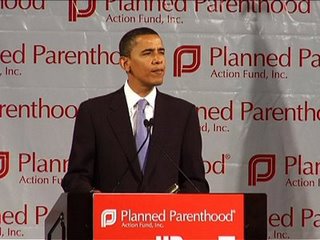
Planned Parenthood President Cecile Richards, head of the taxpayer-subsidized abortion giant currently facing a firestorm for allegedly selling body parts harvested from aborted babies, has made personal visits to the White House 39 times since President Barack Obama took office in 2009, White House records show.
According to online records on the White House website, Richards first visited the White House on Jan. 20, 2009 — the same day Obama first took office. Since then, Richards has met with Obama alone at least three times and First Lady Michelle Obama at least twice. She also met with president and his wife together another four times.
[…]In 2014 alone, Planned Parenthood, America’s largest abortion provider, received $528.4 million in taxpayer funding, according to its 2014 annual financial report. That year, the organization performed 327,653 abortions.
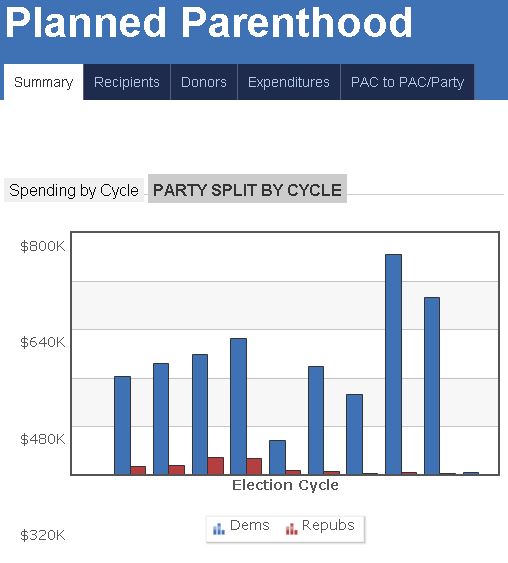
And in return, Planned Parenthood gives a boatload of money to Democrats, to help them get elected.
In the 2014 election cycle, Planned Parenthood gave 100% of their contributions to Democrats, and they are strongly backing Hillary Clinton in 2016.
That record of donations might explain why the White House is 100% behind Planned Parenthood’s organ harvesting operation.
Investors Business Daily covered the White House response to the Planned Parenthood sting videos.
Excerpt:
The White House has denounced an anti-abortion group’s videos of Planned Parenthood’s activities as “fraudulent” and circled its wagons to defend the indefensible. What kind of White House is this?
For an institution that might argue that it doesn’t have a dog in this fight, the White House sure has stepped into the Planned Parenthood baby-parts selling scandal on the side of the flesh-peddlers.
Sounding a little surreal, White House press secretary Josh Earnest firmly stood up for Planned Parenthood on behalf of the Obama administration following the release of four undercover videos from the Center for Medical Progress showing the family-planning agency’s leaders’ callous disregard for human life and its grotesque efforts to reap commercial benefit for itself.
At a White House press briefing Friday, Earnest called the videos “fraudulent,” falsely claimed that they were “heavily edited” when in fact they were released in full, and hemmed and hawed to reporter’s questions about whether President Obama had seen the videos, saying only: “I suspect someone has.”
“And where are you getting your information of the fact that it’s fraudulent, or the fact that they’re distorted and edited unfairly?” a reporter asked at Friday’s White House press briefing.
“Based on the public comments of Planned Parenthood, who has indicated that the views that are represented in the video are entirely inconsistent with that organization’s policies and with the high ethical standard that they live up to,” Earnest said, demurring again when the reporter asked if he was buying their talking points hook, line and sinker.
Yes, don’t believe your own eyes, voters. Josh Earnest is telling you that Planned Parenthood is a saintly organization, that lives up to the highest ethical standards. Keep voting Democrat, pro-life Democrats, everything is under control. You can keep your doctor, you can keep your health plan, and there is no organ harvesting for profit by Democrat special interest groups.
Obama has vowed to veto any bill that defunds Planned Parenthood. The organ harvesting must go on, and pro-life people must subsidize it, so that we are all equally guilty. It’s important that we all take part in this, so that those who are doing it can tell themselves that this is supported and condoned by taxpayers.
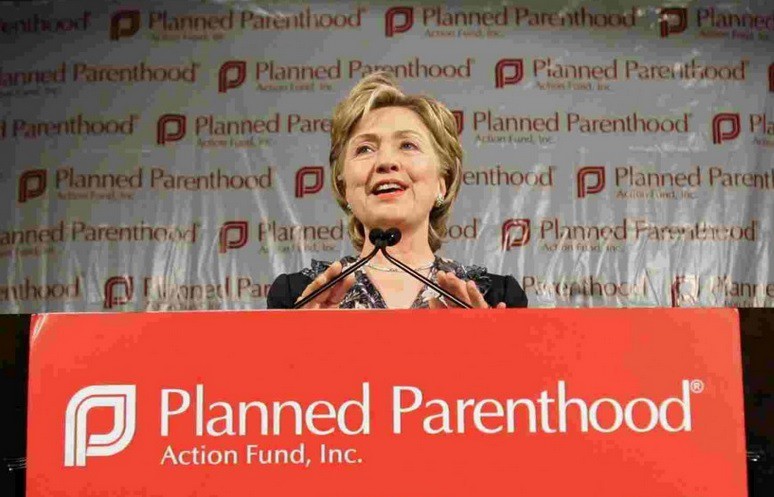
Hillary Clinton and Planned Parenthood
You might have heard that even Hillary Clinton is now saying that she found the videos “disturbing”. That’s true, but what she found “disturbing” was that someone had made the videos, not what was going on in the videos. It’s the fact that voters are seeing these videos that is disturbing to Hillary, not the organ harvesting for profit and the subsequent donations to the Democrat party.


 WINTERY KNIGHT