Why did Hillary Clinton blame the Benghazi terrorist attack on an “Internet video”?

What difference does national security make?

Who should I link to to prepare us to understand and discuss the showdown between the Benghazi Select Committee and Hillary Clinton? How about Stephen Hayes from the Weekly Standard – you can’t do better than that.

He says:

Critics of Clinton on Benghazi are most angry about the exchange she had with surviving family members at the solemn ceremony held to receive the bodies of the victims. Pat Smith, the mother of information specialist Sean Smith, who was killed in the attacks, says Clinton told her that the Obama administration would bring to justice the man who made the anti-Islam video that the administration initially blamed for the attacks. “She blamed the video just like all the rest of them did and she also told me she was going to get back to me.”

Charles Woods, father of Tyrone Woods, a NAVY Seal killed in the attacks, says Clinton told him the same thing. “She said we’re going to have the person responsible for that video arrested. I knew she was lying. Her body language, the look in her eyes…I could tell she wasn’t telling the truth.”

But contemporaneous documents and testimony from US officials who were in Libya during the attacks make no mention of the video that would become the centerpiece of the Obama administration’s public narrative about the attacks. Indeed, in messages as the attacks unfolded and in the hours and days that followed, show security and intelligence officials immediately placing blame on al Qaeda and affiliated fighters and pushing back on suggestions from Washington that the video had played a role. Senior State Department officials, including Clinton’s chief of staff, Cheryl Mills, were copied on emails indicating Ansar al Sharia had claimed responsibility for the attacks.

Michael Morell, deputy CIA director at the time of the attacks, and a loyal water-carrier for the administration on Benghazi, testified that the video was simply not part of the intelligence picture during and after the attacks. “There was no mention of the video defaming the Prophet Muhammad as a motivation for the attacks in Benghazi. In fact, there was no mention of the video at all.”

Why did Clinton promise to pursue the filmmaker after the US government understood that the attacks were not a result of an out-of-control protest over the video?

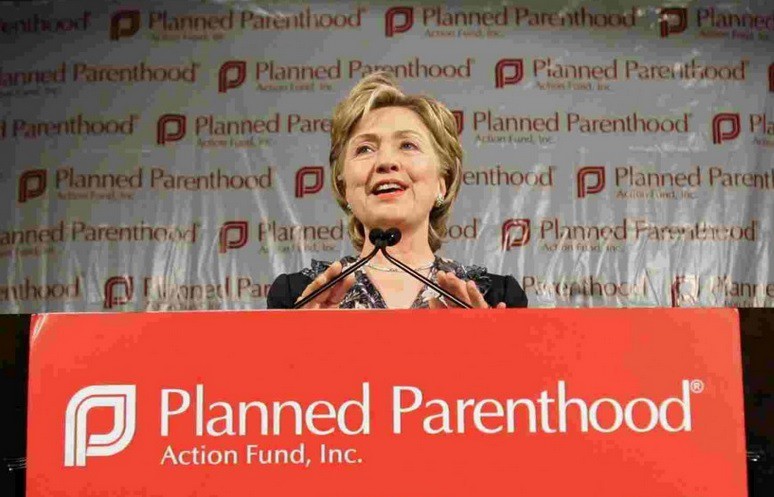
Recall that Hillary Clinton blamed the Benghazi attack on “an Internet video”:

However, we now know that the top Democrats knew from the beginning that this was a terrorist attack:

Judicial Watch announced today that on February 11, 2015, it uncovered documents from the U.S. Department of State revealing that top aides for then-Secretary of State Hillary Clinton, including her then-chief of staff Cheryl Mills, knew from the outset that the Benghazi mission compound was under attack by armed assailants tied to a terrorist group.  The documents were produced as a result of a Freedom of Information Act lawsuit against the State Department (Judicial Watch v. U.S. Department of State ((No. 1:14-cv-01511).  The documents make no reference to a spontaneous demonstration or Internet video, except in an official statement issued by Hillary Clinton.

The Benghazi Select Committee was finally able to get 1300 e-mails sent by Ambassador Stevens (after two years of asking for them). Many of those e-mails requested additional security right before the attack, and they were ignored:

Two months before the fatal 2012 terrorist attack on the U.S. compound in Benghazi, then-Ambassador Chris Stevens requested 13 security personnel to help him safely travel around Libya… but he was turned down.

In the July 9, 2012 cable, Stevens reported that, “Overall security conditions continue to be unpredictable, with large numbers of armed groups and individuals not under control of the central government, and frequent clashes in Tripoli and other major population centers.” The cable said 13 security personnel would be the “minimum” needed for “transportation security and incident response capability.”

But a congressional source said Patrick Kennedy, a deputy to then-Secretary of State Hillary Clinton, turned down the request. 

The cable sent under Stevens’ electronic signature shows that he was advocating for additional security and warning that the set-up did not meet State Department standards, as conditions deteriorated in the run-up to the attack that killed Stevens and three other Americans.

This hearing is about finding out why four people were left to die, even after repeatedly requesting additional security from the State Department. The same State Department that Hillary Clinton was in charge of. I hope we can find out why Hillary had so much time to read e-mails from Sidney Blumenthal, and apparently no time to read e-mails from Ambassador Stevens.

UPDATE: The Weekly Standard has posted a new podcast episode with Stephen Hayes on this topic.

UPDATE: Trey Gowdy’s opening statement:

Why did we need this investigation? Because previous “investigations” failed to find Ambassador Stevens’ e-mails, failed to find Hillary Clinton’s e-mails, and failed to interview people on the ground who had direct knowledge of the Benghazi security situation.

Related posts

96% of political donations by Cornell University faculty go to Democrats

Donations by Cornell University faculty
Political donations by Cornell University faculty

I’m going to introduce a lecture by Dr. George Yancey by linking to an article from the Cornell University campus newspaper. (H/T Dennis Prager)

It says:

Of the nearly $600,000 Cornell’s faculty donated to political candidates or parties in the past four years, over 96 percent has gone to fund Democratic campaigns, while only 15 of the 323 donors gave to conservative causes.

The Sun’s analysis of Federal Election Committee data reveals that from 2011 to 2014, Cornell’s faculty donated $573,659 to Democrats, $16,360 to Republicans and $2,950 to Independents. Each of Cornell’s 13 schools — both graduate and undergraduate — slanted heavily to the left. In the College of Arts and Sciences, 99 percent of the $183,644 donated went to liberal campaigns.

OK, now with that out of the way, let’s watch a 28-minute lecture from Dr. George Yancey about bias against religion in academia:

If you watch 5 minutes, then you’ll definitely stay and watch the whole thing. It’s fascinating.

Details:

Join Dr. George Yancey in an in depth discussion of the bias taking place within academia against religion in general, but more specifically Christianity. Within the discussion Dr.Yancey uses brief explanations of his previous book, Compromising Scholarship and many other excerpts of his past research as well as his forthcoming research to give us a new viewpoint on academia and religion.

I found a quick description of Dr. Yancey’s work in this New York Times article from July 2011.

It says:

Republican scholars are more likely than Democrats to end up working outside academia,as documented by Daniel Klein, an economist at George Mason University. Dr. Klein, who calls himself a classical liberal (a k a libertarian), says that the university promotes groupthink because its system of “departmental majoritarianism” empowers the dominant faction to keep hiring like-minded colleagues. And when a faculty committee is looking to hire or award tenure, political ideology seems to make a difference, according to a “collegiality survey” conducted by George Yancey.

Dr. Yancey, a professor of sociology at the University of North Texas, asked more than 400 sociologists which nonacademic factors might influence their willingness to vote for hiring a new colleague. You might expect professors to at least claim to be immune to bias in academic hiring decisions.

But as Dr. Yancey reports in his new book, “Compromising Scholarship: Religious and Political Bias in American Higher Education,” more than a quarter of the sociologists said they would be swayed favorably toward a Democrat or an A.C.L.U. member and unfavorably toward a Republican. About 40 percent said they would be less inclined to vote for hiring someone who belonged to the National Rifle Association or who was an evangelical. Similar results were obtained in a subsequent survey of professors in other social sciences and the humanities.

Dr. Yancey, who describes himself as a political independent with traditional Christian beliefs and progressive social values, advises nonliberal graduate students to be discreet during job interviews. “The information in this research,” he wrote, “indicates that revealing one’s political and religious conservatism will, on average, negatively influence about half of the search committee one is attempting to impress.”

Dr. Yancey’s research was a survey, not a field experiment, so it’s impossible to know how many of those academics who confessed to hypothetical bias would let it sway an actual decision. Perhaps they’d try to behave as impartially as the directors of graduate studies in Dr. Gross’s experiment.

The lecture is a real eye-opener. It turns out that in academia, you are likely to be viewed the same way as blacks were viewed by slave-owners, and Jews were viewed by Nazis.

We have a lot of work to do to correct these perceptions, but that’s not going to happen unless churches and Christian parents start to take the life of the mind more seriously.

UPDATE: Papa Giorgio posts the Dennis Prager audio:

Is there any downside to raising the minimum wage to $15 an hour?

They told me if I voted Republican, we'd lose jobs, and they were right!
They told me if I voted Republican, we’d lose jobs, and they were right!

This article is from the libertarian Reason.com. They’re terrible at social issues, but really really good at economics.

They write:

Raising the minimum wage like this is an idea that’s become increasingly common amongst more liberal Democratic politicians and policymakers: The city of Seattle, Washington passed a law raising its minimum wage to $15 last year, and the Los Angeles city council voted to follow suit. Soon after, New York state announced a plan to raise the minimum wage of all fast food workers to $15, and the state’s governor, Andrew Cuomo, recently said he believes it should apply to all workers.

Many of these plans start from the assumption, implicitly or explicitly, that these minimum wage hikes would be relatively cost-free, pointing to several studies seeming to show that increases in the minimum wage don’t have much effect on jobs.

Here is what the author of some of the most influential of those studies, former Obama administration economic adviser Alan B. Krueger, had to say about raising the federal minimum wage to $15 an hour in an op-ed for The New York Times last week:

15 an hour is beyond international experience, and could well be counterproductive. Although some high-wage cities and states could probably absorb a $15-an-hour minimum wage with little or no job loss, it is far from clear that the same could be said for every state, city and town in the United States.

Krueger goes on to warn of greater risk, and the potential for “severe” trade-offs, if policymakers pursue a $15 minimum wage, warning that it would go beyond what any research supports. Ultimately, he concludes, it is  “a risk not worth taking.”

Krueger wasn’t disowning his own work or abandoning his position. He still supports raising the minimum wage to $12 an hour over a period of years, which he thinks could be done with essentially no job loss.

There are some reasons to be skeptical of that claim too: The Congressional Budget Office, which generally tries to take a moderate approach to economic evidence and put its estimates right in the middle of the consensus range, found that even a more modest hike to $10.10 an hour nationally would most likely cost about a half a million jobs, and while it’s possible such a raise might produce minimal job loss, it’s equally possible that it would cost a million jobs.

Overall, as David Neumark and William Wascher have found, the bulk of the evidence from research into the minimum wage suggests that hikes tend to decrease employment.

Let’s review the facts on minimum wage.

Abstract from a National Bureau of Economic Research study:

We estimate the minimum wage’s effects on low-skilled workers’ employment and income trajectories. Our approach exploits two dimensions of the data we analyze. First, we compare workers in states that were bound by recent increases in the federal minimum wage to workers in states that were not. Second, we use 12 months of baseline data to divide low-skilled workers into a “target” group, whose baseline wage rates were directly affected, and a “within-state control” group with slightly higher baseline wage rates. Over three subsequent years, we find that binding minimum wage increases had significant, negative effects on the employment and income growth of targeted workers.

[…]Over the late 2000s, the average effective minimum wage rose by 30 percent across the United States. We estimate that these minimum wage increases reduced the national employment-to-population ratio by 0.7 percentage point.

That comes out to 1.4 million workers who lost their jobs, thanks to minimum wage mandates. And those are primarily young, unskilled workers who are affected – people trying to get a start in the workplace and build their resumes, so they can move up.

Harvard economist Greg Mankiw explains the top 14 views that a majority professional economists agree on, and here’s #12:

12. A minimum wage increases unemployment among young and unskilled workers. (79%)

This is not controversial. This is the kind of basic “how America works” economics stuff that people used to learn in their civics classes before the schools became so politicized.