Can atheists help themselves to objective morality on atheism?


A conflict of worldviews

Here’s Dr. William Lane Craig explaining why you can’t:

He presents 3 reasons why in the video, all of which are also discussed in his Defenders class:

The mention of Plato brings to mind another possible atheistic response to the first premise of the moral argument that if God does not exist, then objective moral values and duties do not exist. Plato thought that the Good just exists as a sort of self-subsistent idea, as an entity in and of itself. Indeed, it is the most real thing in reality. The Good simply exists. If you find this difficult to grasp, join the company! Nevertheless, that is what Plato believed. Later Christian thinkers, like Augustine, equated Plato’s Good with the nature of God. God’s nature is the Good, and so it was anchored in a concrete object, namely, God. But for Plato, at least, the Good just sort of existed on its own as a kind of self-existent idea.

Some atheists might say that moral values, like Justice, Mercy, Love, and Forbearance, just exist all on their own as sort of abstract moral objects. They have no other foundation; they just exist. We can call this view Atheistic Moral Platonism. According to this view, moral values are not grounded in God. They just exist all on their own.

Unintelligibility of Atheistic Moral Platonism

What might we say by way of response to Atheistic Moral Platonism? Let me make three responses. First, it seems to me that this view is just unintelligible. I simply don’t understand what it means. What does it mean, for example, to say that the moral value Justice just exists? I understand what it means to say that a person is just or that some action is just, but what does it even mean to say that in the absence of any persons or any objects at all, that Justice just exists? It is hard to understand even what this means. Moral values seem to be properties of persons, and so it is hard to understand how Justice can just exist as a sort of abstraction.

Lack of Moral Obligation on Atheistic Moral Platonism

Secondly, a major weakness of this view is that it provides no basis for objective moral duties. Let’s suppose, for the sake of argument, that moral values like Justice, Love, Forbearance, and Tolerance just exist on their own. Why would that lay any sort of moral obligation upon me? Why would the existence of this realm of ideas make it my duty to be, say, merciful or loving? Who or what lays such an obligation upon me? Why would I have the moral duty to be merciful or loving? Notice that on this view moral vices like Greed, Hatred, and Selfishness presumably also exist as abstractions. In the absence of any moral law giver, what obligates me to align my life with one set of these abstract ideas rather than with some other set of abstract ideas? There just doesn’t seem to be any basis at all for moral duty in this view. In the absence of a moral law giver, Atheistic Moral Platonism lacks any basis for moral obligation.

Improbability of Atheistic Moral Platonism

Finally, thirdly, it is fantastically improbable that the blind evolutionary process should spit forth exactly those kinds of creatures that align with the existence of this realm of abstract values.1 Remember that they have no relationship with each other at all. The natural realm and this abstract moral realm are completely separate. And yet, lo and behold, the natural realm has by chance alone evolved exactly those kind of creatures whose lives align with these moral duties and values. This seems to be an incredible coincidence when you think about it. It is almost as if the moral realm knew that we were coming! I think it is a far more plausible view to say that both the natural realm and the moral realm are under the sovereignty of a divine being, who is both the creator of natural laws that govern the physical universe and whose commands constitute the moral laws that govern our ethical duties. This is a more coherent view of reality. Theism is a more coherent view because these two realms of reality don’t fall apart in this disjointed way. They are both under the sovereignty of a single natural and moral law giver.

For those three reasons, Atheistic Moral Platonism is a less plausible view than theistic based ethics such as I have been defending.

And now, I must be mean to the atheists, because I think this me too nonsense is just ridiculous, desperate intellectual dishonesty.

I remember having a conversation with one of my IT project managers who was an atheist, and she asked me what I thought would happen to dogs when they died. I said “well they don’t have an afterlife so they just rot away when we bury them and get eaten by worms”. She was aghast and said “no they don’t, they go to Heaven”. And that’s what morality on atheism is. It’s just an appearance package that gets bolted on absolute meaninglessness and hedonism. And even if the atheist tries to make traditional decisions in their own lives, they typically push for full-on dismantling of Judeo-Christian values, especially in the sexual realm. And that spills over into abortion, divorce, same-sex marriage and government restraints on free speech, conscience and religious liberty.

Dear atheists: you cannot duct tape morality onto nihilism and have it be rational. We know you’re doing it to feel good about yourselves and to appear normal instead of wearing your nihilism openly. But your faked morality is not even close to the morality of theists, and especially not of Christian theists. Christians go against their self-interest because we imitate the self-sacrificial love of Christ, who gave himself as a ransom to save others. That makes no sense on an atheistic worldview, since this life is all you have, and there is no afterlife where your actions are in the context of a relationship with that self-sacrificial Son of God. In any case, free will doesn’t exist on atheism, so that means no moral choices regardless. These are the common sense implications of atheist first principles, and in fact that’s what you hear expressed from the finest atheist scholars: no free will, no right and wrong, no life after death.

If you want to see what atheists really think about morality, then take a look at this post featuring Matt Dillahunty, where he is asked to condemn the Holocaust as objectively wrong, and he refuses to do it. That’s intellectually consistent atheist morality right there. If the universe is an accident, and human beings evolved by accident, then there is way things ought to be, and no way we ought to act. And no one is there is no ongoing two-way relationship for our conduct to be part of, anyway. On atheism, human beings will die out individually and collectively in the heat death of the universe. Once the heat death of the universe arrives, there will be no one left to care how we lived after we’re dead – there is no one waiting for us who cares how we act towards him and towards others. Atheists can arbitrarily put any limits they want on their actions, based on what makes them feel good, and what makes people like them, perhaps taking account the arbitrary customs and conventions of the time and place they find themselves in. But it’s delusional and irrational make-believe for atheists to claim that morality is rational on their worldview.

Positive arguments for Christian theism

Survey: women explain why they avoid having children

Is it OK to tell women they are wrong?
Are women today genuinely interested in marriage and children, or do they have other plans?

This article comes from the leftist Huffington Post.

They write:

The Huffington Post and YouGov asked 124 women why they choose to be childfree. Their motivations ranged from preferring their current lifestyles (64 percent) to prioritizing their careers (9 percent) — a.k.a. fairly universal things that have motivated men not to have children for centuries. To give insight into the complex, layered decisions women make, HuffPost asked childfree readers to discuss the reasons they have chosen not to have kids and gathered 270 responses here.

They grouped the responses into 5 categories:

  1. I want to prioritize my career
  2. I don’t like children
  3. I had a bad relationship with my parents
  4. I don’t want the financial responsibility
  5. I like my life as it is

And here are some of the ones that I thought were the most interesting, and pay attention to the ones that include fear-of-missing-out travel, which I blogged about before:

Category 1:

I am a first-generation college graduate in my family. My mother was a single mom my entire childhood, and I was there to see that struggle. Being a parent, for a woman, means for life. Being a parent, for men, seems to be something very different. I understand raising children is a big life change and I don’t want to sell myself short on my potential to become something more and maybe even create change. I am childfree because I want to travel, move, pursue my career wholly and be able to push myself to be an inspiration to other women. If a child comes into my life, it won’t be until I am happy and successful in my work life, and not until I am secure with my finances and a marriage. I don’t want to one day wake up as an old woman wishing I had waited to have children so I could live my own life first, make mistakes, learn new things and find myself. Today kids are not for me.

Category 2:

I’m nearly 47; my boyfriend (domestic partner) of 17 years is nearly 50. I’ve never been pregnant and have taken every precaution to remain childfree. I tolerate other people’s children when I have to. I’m happiest when there are NO children around. I definitely don’t want them in my home. I like my life as it is. My boyfriend and I are both scientists. We also raise snakes and spiders! We like to travel. We travel to ride roller coasters (members of ACE — American Coaster Enthusiasts) and to attend rock concerts. I am also a performer in a senior winter guard. My plate overfloweth! I see no reason to procreate. I would be unhappy. Why be unhappy?

Category 3:

I have a great relationship with my husband. We have the time and money to travel, and that gives us precious memories. I had a bad relationship with my dad, and maybe I’m scared to treat my children like that. I’m very happy with my decision. I have a great relationship with myself too.

Category 4:

My spouse and I have talked in depth about having children. However, we both decided that our desire to travel the world is a financial burden in itself. If we have kids, we will never have the means to travel, and at the end of our life, we would rather be 100 percent committed to fulfilling our own realistic dreams rather than only able to provide a subpar life for a child. Comes down to the fact we are selfish, but at least we recognize this and made the choice early enough to avoid damaging a kid

Category 5:

The thought of having to do kiddie crap every weekend makes me want to shoot myself. I like having the extra money to save for retirement and not worry about braces, summer camp or college tuition. I can travel on a moment’s notice. I can give my all to my job and not have to worry about daycare, sick days, or having to leave my co workers to pick up my slack. I’m the “cool aunt” to all my nieces and nephews. I have more time to do the things that make me happy and productive. My relationship with my guy is not strained due to the constant neediness of children. I don’t want to put my body through pregnancy and childbirth. I can give my dog all the attention he needs and deserves.

If I had to choose one comment to represent the entire survey, it would be this one:

The moment you have children, you’re life ceases to be about yourself. Kids always take priority and I feel like I can do more for this world than just generate offspring.

Or maybe this one:

I honestly feel too lazy. I haven’t achieved enough, and if I had a child I would “just be a mom,” which isn’t enough for me or what I want out of life.

I think this is the real reason why young, unmarried women choose not to prepare or plan for marriage and children . Marriage and children “some day” is like planning for your retirement by winning the lottery. Marriage and children “some day” is an excuse to signal to family and friends that you will eventually want the responsibility of a husband and kids, but that you are justified in being self-centered right now.

We need to move beyond a survey to quantify this, and this U.S. Census data does that:

Childless by choice, not because of men
Childless by choice, not because of men failing to “man up”

These quotations are very troubling if you are a young man who has been serious about obtaining STEM degrees, saving money by not traveling, and making a plan to have a marriage and family that will serve God. I am seeing real hostility in young, unmarried Christian women to the idea that marriage will impose responsibilities, expectations and obligations on them. And their parents, relatives, friends and co-workers are doing nothing to detect and counter this attitude. As Lindsay argued on this blog before, the marriage / children plan is an excellent way for Christians to make a difference. It will take a lot of work, but it makes much more of a difference for the kingdom than just doing whatever makes you feel happy.

A friend of mine named Bee commented on an early version of this post::

Sad to say this but many Christian voices are encouraging Christian women to travel, date around and delay marriage and childbirth. Here are several negative voices:

Mandy Hale is a Christian woman who is mid 30’s, never married and has wasted years in travel and bad relationships. She has a large twitter following. She promotes her travel oriented, feelings oriented lifestyle.

http://thesinglewoman.net/about/

Christian counselor Stephen Arteburn tells of encouraging his daughter to travel and date around and not think about marriage until her late 20’s. Unfortunately, no one can flip a switch on their 28th birthday and quickly get married to a quality guy. Also, late marriage for women means having more than 1 or 2 children is risky.

[…]Bskillet81 found evangelical american princesses (EAP) obsessed with travel, entitlement, feelings, and personal fulfillment.

https://societyofphineas.wordpress.com/2014/11/24/evangelical-american-princess/

I just read some of Mandy’s quotes from GoodReads and she is certifiably nuts.

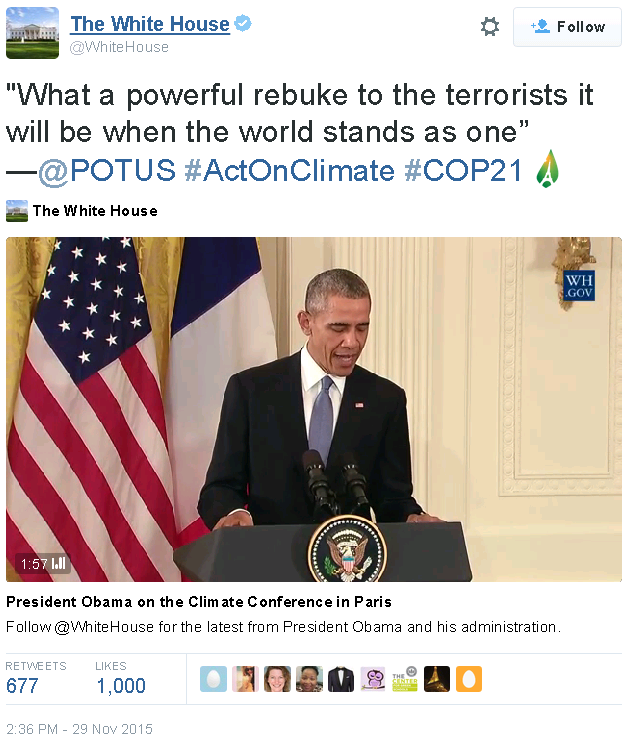
Greed drives the advocacy of organizations on climate change

Atmospheric temperature measurements though Sept 2015

This article from the The Stream is helpful.

Excerpt:

Global warming alarmism is big business. On one side you have Greenpeace, the Sierra Club, The Nature Conservancy, World Wildlife Fund, Environmental Defense Fund, The Climate Project and dozens upon dozens of other non-governmental organizations who solicit hundreds of millions from private donors and from government, and who in turn award lucrative grants to further their agenda.

You also have the Environmental Protection Agency, the National Science Foundation, the National Institute of Health, the Departments of Commerce and Agriculture, both Houses of Congress and many more government agencies, spraying global warming money at anything that moves and at staggering rates — billions of dollars.

And then you also have every major and minor university — with contributions from every department, from Critical Literature Theory to Women’s Studies — all with their hands out and eager to provide the support Greenpeace, the government and others desire. Add to that another two or three dozen think tanks which are also sniffing for grants or which support government intervention to do the impossible and stop the earth’s climate from changing.

Every scientific organization which is dependent on grant money has released a statement saying “something must be done” about global warming. They’re supported, fawned over and feted by just about every news and media agency. And don’t forget the leadership of most major organized religions have their own statements — and their hands out.

We’re not done: we still have to add the dozens of Solyndra-type companies eager to sell the government products, to get “green” subsidies or to support its global-warming agenda. Included in that list are oil companies. Oil companies?

How much money are we talking about? Billions:

Joanne Nova has documented the massive amount of money pouring from government into the pockets of individuals and groups associated with the environment. “The U.S. government has provided over $79 billion since 1989 on policies related to climate change, including science and technology research, foreign aid, and tax breaks.” $79 billion.

Now it’s important to note that when the government hands out money, they are not handing out part of their profits from the sale of useful products and services, the way a private company might. No. What government does is they borrow money from future taxpayers and add it to the national debt. That’s why our national debt has doubled under Obama and will be $20 trillion by the time he leaves office in January 2017. So, government is busy manufacturing support for government intervention and regulation of businesses and individuals using money that will be taken from future job creators and taxpayers.

Would you like to have your money back so you can support causest that you care about instead of global warming socialism? So would I. But that’s why people ought to support slimming down government and letting it only perform those minimalist duties that are laid out for it in the Constitution.