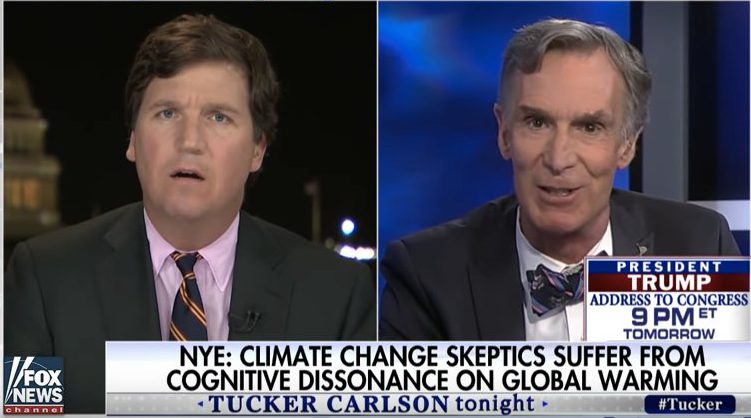
This topic came up recently in a discussion, and I wanted to be sure that all my readers were aware of how to think about the work that the presupposition of naturalism does in supporting naturalistic views of science. When I was little, way back in the 1990s, Phillip E. Johnson’s work on the definitions of science, evolution and creation were very important stuff. He was everywhere, doing lectures on university campuses and debates on the radio with Eugenie Scott. I was able to get a bunch of this audio from Access Research Network on AUDIO CASSETTES, but now that’s all obsolete.
Thankfully, I was able to find an old column written by Johnson in the Wall Street Journal, and preserved by Access Research Network.
Excerpt:
A Chinese paleontologist lectures around the world saying that recent fossil finds in his country are inconsistent with the Darwinian theory of evolution. His reason: The major animal groups appear abruptly in the rocks over a relatively short time, rather than evolving gradually from a common ancestor as Darwin’s theory predicts. When this conclusion upsets American scientists, he wryly comments: “In China we can criticize Darwin but not the government. In America you can criticize the government but not Darwin.”
That point was illustrated last week by the media firestorm that followed the Kansas Board of Education’s vote to omit macro-evolution from the list of science topics which all students are expected to master. Frantic scientists and educators warned that Kansas students would no longer be able to succeed in college or graduate school, and that the future of science itself was in danger. The New York Times called for a vigorous counteroffensive, and the lawyers prepared their lawsuits. Obviously, the cognitive elites are worried about something a lot more important to themselves than the career prospects of Kansas high school graduates.
The root of the problem is that “science” has two distinct definitions in our culture. On the one hand, science refers to a method of investigation involving things like careful measurements, repeatable experiments, and especially a skeptical, open-minded attitude that insists that all claims be carefully tested. Science also has become identified with a philosophy known as materialism or scientific naturalism. This philosophy insists that nature is all there is, or at least the only thing about which we can have any knowledge. It follows that nature had to do its own creating, and that the means of creation must not have included any role for God. Students are not supposed to approach this philosophy with open-minded skepticism, but to believe it on faith.
[…]All the most prominent Darwinists proclaim naturalistic philosophy when they think it safe to do so. Carl Sagan had nothing but contempt for those who deny that humans and all other species “arose by blind physical and chemical forces over eons from slime.” Richard Dawkins exults that Darwin “made it possible to be an intellectually fulfilled atheist,” and Richard Lewontin has written that scientists must stick to philosophical materialism regardless of the evidence, because “we cannot allow a Divine Foot in the door.”
So, if you’re having a discussion with a person who believes in naturalism – that everything in nature can be explained by material forces alone – then they will give you a stock response to all of your evidence for something outside of nature.
Origin of the universe? That’s not science
Cosmic fine-tuning? That’s not science
Origin of life? That’s not science
Cambrian explosion? That’s not science
Habitability-discoverability? That’s not science
It’s not that the people who did the science around these discoveries invoked God, and that’s why it’s not science. On the contrary, the mainstream scientists who made these discoveries scrupulously left God out of their microscopes and telescopes. These discoveries – which have only gotten worse for the naturalists as more details emerge – do not have easy naturalistic explanations. If you ask the naturalist for an explanation, they will resort to various sorts of speculations:
future science will undermine all our current knowledge
we are in an unobservable multiverse that exists eternally
aliens seeded the Earth with life, and THEY evolved
there are lots of fossils we haven’t discovered yet
there are lots of stars and planets we haven’t discovered yet
What’s the answer to this arguing from ignorance?
I think ridicule is best. You need to start by telling the full story about how these discoveries were made. Name the scientists, state the dates. Tell the whole story of how the science was done. Do this for each discovery. Then, at the end, ask them which of these scientific discoveries they deny. Ask them for naturalistic explanations of the ones they accept. Pretend to be confused, then concerned about their sanity. Finally, you should be as condescending as possible, and just explain that we can’t believe in fairies and unicorns. Explain things to them as if they were a child: we have to base our worldview on what science has revealed. We can’t hold out for Santa Claus to come down the chimney with new science that undermines all we have discovered. We have to go with the science we have today, and the science we have today says Creator and Designer. That is the best explanation of the what we know right now. And the trend is that these discoveries are becoming even MORE difficult for naturalism to account for. I guarantee you that the average rank-and-file atheist knows more about Star Wars and Star Trek lore than they do about actual scientific discoveries that threaten their beloved religion of naturalism.
Try to make your face look like Tucker Carlson:
The Tucker Carlson face conveys a mix of confusion, disappointment and horror
For God’s sake, even Richard Dawkins admitted in his debate with John Lennox that a good case can be made for a deistic God from the science we have now. If Dawkins can admit this, then you need to be extremely harsh to the village atheists.
If the word “naturalism” is all new to you, you should probably read the whole article and this longer article as well. The longer article really explains the different definitions of the words that are used in these debates. Johnson’s an excellent writer, and you will learn a lot.
Marriage stability vs sexual partners,(Teachman et al. JAMF, August 2010)
For fun, I’ve decided to publish the 2000-word first draft that I normally send to my 6 female editors, because sometimes it’s fun to let people know what I *really* think about things before my editors force me to make it sound much better and more persuasive.
We got a comment yesterday that I thought was worth a response.
Let’s start with the comment:
My husband was a Narcissist. He slept all over the county and never worked a day in this marriage. Plus, He couldn’t decide if he was straight or gay. After my son finally left home I filed for divorce. I wish I did it sooner. Now he claims to be born again and wants to stay together. When is enough, enough?
We don’t know if this woman was a Christian, was chaste, and whether the man she chose was Christian or was chaste. All we know is that the man she chose was attractive enough to easily find other women who would have sex with him despite the fact that he was married. Whatever he has, it’s something that causes women who are not married to him to have sex with him. That’s who the divorced woman chose to marry. His “charm” wasn’t from his moral character or his deep knowledge of Christian theology and apologetics.
My first response to this was to put the responsibility on the person who had chosen the bad husband. After all, I reasoned, everyone who takes a massive step like marriage is obligated to investigate who it is they are marrying.
But when I said that, I got some responses from women that said that she wasn’t responsible for her poor choice of man, and that she was an innocent victim of his magical charming powers.
Here’s Lee:
A lot of time people don’t show their worst qualities until the relationship is firmly in place, and it starts coming out slowly. It’s not always as clear cut as a woman stupidly choosing an unsuitable husband who acted unsuitable from the get-go. I mean yeah, sometimes it’s obvious early on and the woman is just stupid/ blind/broken/other. But we should be careful to not assume, and careful to not make harsh judgments from our ignorance.
If dangers like infidelity are not “obvious” then it’s not the woman’s fault that she didn’t detect it. Apparently there is no way for the woman to detect it if it’s not obvious, so she’s not responsible.
And Mary:
Narcissists are skilled at charming and persuading people that they’re really great. And they’re skilled at convincing others that their misgivings are irrational fears. Unfortunately,there are a lot of people like that. Not saying that people (men AND women, btw!) don’t just sometimes choose stupidly, for bad reasons like “hotness” and excitement. But narcissists are a whole other kettle of fish. They can come out with a completely different personality once they’ve snagged their prey.
If a bad person is “skilled at charming”, then their victim has no way of evaluating them accurately. Basically, deciding who to marry is just an activity where you talk, and decide how you feel about that person’s talk. If the person is charming, then they make you feel good, and it’s rational to marry them. A lot of women express this as “I want a man who is confident”. It’s never been explained to me how “confidence” is any evidence that the man has an ability and a past pattern of self-control and fidelity.
And Sara:
Probably because narcissists can be very charming at first and easily win people over.
[…] What I was trying to say and the article pointed out is the power of narcissists is they can put people, especially women, under a spell of sorts. They are just so slick and charming that common sense goes right out the window. They don’t think to verify all these things that seem obvious because they are so captivated.
All that’s necessary to detect a charming narcissist is “common sense”. His suitability to do husband and father roles should be “obvious” from what he says and how he makes her feel.
So, let’s take a look at some tips for avoiding these charming narcissists who can convince you to marry them just with their words and the feelings they cause.
How to avoid marrying a charming narcissist who cheats on you
Here is some advice on how to avoid marrying a charming narcissist.
1. Evaluate a person based on objective evidence instead of how they make you feel with their words
There are a lot of lies coming out of the artists, actors, celebrities, etc. in this secular leftist culture that basically say that marriage is all about you and your feelings. If you prepared for marriage by watching movies made by pedophiles in Hollywood, and listening to music made by promiscuous musicians, and reading self-help fiction written by divorced spinsters, then you are not ready to detect a charming narcissist. Marriage is a practical enterprise, with distinct roles for husbands and wives that must be performed regardless of how either spouse feels. You need to understand and evaluate what behaviors are expected of husbands and wives in a marriage, and then look for evidence that the person you want to marry can perform those behaviors.
For example, if the behavior is fidelity, then the person should be able to demonstrate chastity and self-control during the courtship, and produce references from past girlfriends / boyfriends, and have written about chastity and self-control using research sources to explain the connection between premarital sex and marital instability. If you’re choosing with your feelings, and you haven’t done an analysis of marriage roles, and partner abilities, you’re headed for a disaster.
Just so you know, when I said this to some of the pro-irresponsibility, non-judgemental women I know, their response was to laugh in my face at the idea of asking someone’s previous partners about whether they were chaste and self-controlled. And this is why people are taken by surprise by the charming talk of narcissists. Feelings-oriented people today laugh at the idea of doing any evaluation, preferring to rely on their feelings. A lot of the failure to choose wisely is just down to people not understanding how the world works, then trying to manufacture a psycho-babble rationalization of why they screwed up.
When you’re hiring someone, you do a job interview, you test their skills, you contact their references, you do a drug test, a credit check, a criminal record check. And you have other skilled people sit in on the interviews and tests, in order to make sure that the person can really do the job they are being interviewed for. The marriage evaluation should include everything that the job interview includes as a minimum. Marriage is at least as complicated as choosing to hire someone for a job. If you aren’t doing the bare minimum of evaluating their education, career and finances, then you are setting yourself up for failure.
2. Learn what it takes to make morality rational, and then determine if your candidate is capable of being moral
Because marriage deals so much with moral obligations, it’s incumbent on you to read extensively on moral issues. You yourself should have developed worldview (through study and debate) that rationally grounds the minimum requirements for moral values and duties: 1) free will, 2) consciousness, 3) objective moral values, 4) objective moral duties, 5) a divine judge, 6) life after death. Why? Because doing the right thing isn’t something that you always feel like doing. When doing the right thing goes against your feelings, you will need to have a reason to act against your own self-interest. And that reason is going to be because the world is the sort of place where morality is real, and independent of your feelings, where you are a free moral agent, and where is a divine judge and an afterlife.
At the center of the ability to rationally ground morality is the ability to know God is real rationally, and to defend his existence using objective evidence and logical arguments. If you don’t know whether God exists based on logic and evidence, how will you evaluate whether someone else knows it? If you can’t rationally ground doing the right thing when it goes against your interest, then you won’t be able to know how to ask questions and investigate in order to decide whether someone else is moral or not. Marrying someone who doesn’t believe in a moral lawgiver and a moral judge after death is as prudent to going into a city dump eating all your meals from what you find there.
In the specific case of fidelity, it’s important to remember that some people have goals and an understanding about how poor choices right now will make those goals more difficult to obtain. It’s easy to say that you want your spouse to be faithful. But what’s really needed is to measure what they are really trying to achieve in life, and whether they understand how infidelity would affect those plans. If you can’t see from their past decisions that they KNOW that 1) marriage and family are important enough to sacrifice for and 2) that they understand and apply the research that shows what decisions helps to make a marriage last (e.g. – no premarital sex), then, they don’t really have the goals and the information that you want in a marriage partner.
Conclusion
I have to end this post with the reaction from my friend Lindsay, who is one of my reliable advisors. She responded to Lee and Mary above with this:
There are ways to avoid marrying a narcissist, addict, abuser, or other bad man. However, most women don’t know how to evaluate men because no one ever told them what to watch for or that they need to focus on long term character traits and not ignore red flags. They have been actively encouraged to follow their hearts and indoctrinated in this view since they were small children. That doesn’t mean they are without blame, but they have also been let down by their families, friends, and society as a whole. Women need the eyes of family and friends on the men they date to help them see problems they might not recognize and warn them. But too often, family and friends are too uncomfortable saying something and think they are supposed to stay out of it. Our society has broken down and women do not have the protections they need.
Lindsay probably has the best and most successful marriage of anyone I know. She did everything right that I tell young women to do. Multiple STEM degrees, debt-free, years of private sector experience, married a virgin as a virgin herself right in the middle of her 23-27 year window, and is now a homeschooling mother of 3. Perfect, and did a thorough evaluation of her perfect husband Doug. Doug had done enormous amounts of work demonstrating through actions and achievements that he had the character and skills to be an excellent husband and father. Anyone who evaluated him beyond the surface level of talk and feelings and “confidence” would have found a gold mine of husband and father capability. Capabilities which are now on display in their marriage.
Note: in all truth, this is something that men do even more than women. Men choose entirely on appearance, they dirty themselves up with unchastity as if that has no effect on their ability to evaluate a woman properly, they read next to nothing about feminism and divorce, and then they cry and whine when the bad woman they married cleans them out in divorce courts. My recommendation to men is that they spend more time on education, career, finances, morality and Christianity, and less time getting drunk, watching sports, and having premarital sex. Get yourself some good advisors and get started early on evaluating young women for the roles of wife and mother. If they haven’t prepared for marriage like Lindsay did, dump them immediately, and move on to the next candidate.
Two tough rams butt heads, and may the best ram win!
The full transcript of a debate between Michael Shermer, editor of Skeptic magazine, and Greg Koukl, president of Stand to Reason. This debate occurred on Hugh Hewitt’s radio show, and was moderated by Hugh Hewitt.
HH = Hugh Hewitt GK = Greg Koukl MS = Michael Shermer
GK: Right. Actually, the big question here, Hugh, is whether it’s possible to be good without God. Now I’m not talking about whether it’s possible to be good without a belief in God. I certainly think that’s possible, but be good without God. And the answer to that question hinges entirely on precisely what you mean by good. And so I was going to give an illustration. So a man drags a young girl into the alley, he sexually abuses her, strangles here, and tosses her into the dustbin. Is that act wrong? Now I think everybody listening is going to admit it is wrong. But here is the real question. What do we mean when we say that that act of rape and abuse and murder is wrong? Are we describing the action itself, the object? Are we saying that the object, the rape, the murder, has a quality of being wrong, and therefore, wherever that rape goes, the wrongness follows it, just like your height, 6’ 2”, or whatever it is, is an objective quality of you. Wherever you go, your height follows you in the same way. Does the wrongness follow the rape? Well, if it’s a quality of the rape, if it’s an objective quality of the rape, then it does. And it doesn’t matter what people think about it, or what cultures decides, or what your evolutionary conditioning is. The rape is still wrong. The other alternative is that you’re not talking about the rape. You’re talking about yourself. You’re talking about your genetic conditioning. You’re talking about your culture’s decision about that kind of thing. And if that’s the case, then the truth of the wrongness of the rape is simply in the individual or the subject. And this is why philosophers distinguish between ethical objectivism and ethical subjectivism. Now there’s lots of different subjectivisms in ethics. But simply put, if you’re an ethical subjectivist, you’re a relativist. And actual ethics don’t exist. Ethics are an illusion. If you conclude that ethics are an illusion, there’s lots of different ways to explain it. Michael’s written a really great book, I think, called The Science Of Good And Evil. I’ve read most of it, and it’s well written, and it’s very compelling. But it’s a description about how the illusion of ethics has taken place. If you want to go that route, you’re welcome to go that route. But what you can’t do is you can’t then talk about morality as if it’s objective when your explanations are subjective. So this is a problem that I think all atheists, including Michael, have to solve. Are ethics objective or relative? And if they’re relative, then how can we make moral judgments that are meaningful on other people?
HH: Michael Shermer?
MS: Wow, let’s just get right into it. Well, I don’t think it’s quite so black and white. That is to say I think there are provisional moral truths that exist whether there’s a God or not. In other words, it’s wrong, morally, absolutely morally wrong to rape and murder. And that would be true whether there was a God or not. In other words, if…is God saying that it’s wrong because it’s really wrong, and He’s instructing us in his Holy Scripture that it’s wrong? Or is it only wrong because He said so? And if it turned out there wasn’t a God, would that make it okay? And my answer is no, it really is wrong, whether God says it’s wrong or not. That is to say I think it really exists, a real, moral standard like that. Why? Well, because first, you could ask the person who is being affected, we should always ask the moral recipient of the act, how do you feel about being raped or murdered or stolen from or lied to. And the moral actor will tell you, it doesn’t matter whether, if I could use a current example, I haven’t any idea if Tiger Woods and his wife are religious or not. But you can just ask his wife whether it was morally right or wrong, and she’ll tell you. It doesn’t matter whether there’s a God or not. It’s wrong. And so that’s the first principle. Just ask. Ask the moral recipient of whether it’s right or wrong. But I think Greg’s after something deeper, that is to say is there something even deeper still behind the moral actor’s feelings about how they’re treated. And the answer is yes, I think so. We’re a social species. We don’t live in isolation. We live as members of a group. And as such, there’s no possible way our group could survive, be cohesive, be a unit of any kind of solidarity against other groups, or against a harsh environment. If there were too much violations of social norms, that is if there were constant lying and cheating and raping and murdering, there’s no way a social group could hang together. And as such, as we all know, we’re very tribal. We’re tribal against other groups, but within our groups, we’re very pro-social, altruistic, cooperative. We have a good and evil in our nature. So to this extent, I find myself interesting often in agreement with my conservative friends on most of the things they consider morally, moral truths. That is, we share the same moral values, even though I come at it from a different perspective.
HH: Greg?
GK: Yeah, I’m actually not after something deeper here, Michael. At least to start out the discussion, I’m trying to be as simple and clear and precise as possible, because it’s very easy to weave together a bunch of things that sound persuasive, but turn out to be different things. Like for example, Darwinian evolution, which is a materialistic process, and here I mean the blind watchmaker thesis, the neo-Darwinian synthesis, natural selection working on mutations, and a kind of a cultural evolution that Michael has just referred to as we work together as a group to survive as a group. Those are two entirely different things. One is materialistic, Darwinian, the other one is intelligent design, quite frankly, where the group gets together and makes some determinations to encourage some behavior and discourage others. What I’m trying to do is to be able to answer the question that came up initially, is God necessary for morality, which Michael denies. It’s to say well, what is it that morality, that we’re trying to describe? It is either objective, and therefore an immaterial obligation that applies to certain behaviors, or it is subjective. The things that Michael described were variously subjective, evolutionary elements, subjective cultural elements, but then he affirmed that we all have good and evil in our nature, or an awareness of that. I agree with that entirely. We all are aware of those things. That’s why even if we don’t believe in God, we can still know morality and follow it. The question is what accounts for real, genuine objective morality?
HH: One minute to the break, Michael Shermer.
MS: I’m not arguing for cultural evolution. I’m actually arguing as part of our, what you described as materialistic, natural selection, Darwinian evolution, that it’s not enough to just pretend or fake being a good group member. You actually have to believe it, feel it, and live it. So what I’m arguing is that natural selected certain moral sentiments, as Adam Smith called them, moral feelings, an actual empathy, Adam Smith talked about, we actually empathize with somebody else, we can put ourselves into their shoes and feel their pain, I’m arguing that’s very real. It’s every bit as real a part of our evolutionary heritage as our eyes and our hands.
– – – –
HH: Michael Shermer, when we went to break, you were saying that evolutionary biology has produced a real morality.
MS: Yeah, I think really, Adam Smith had it right in his very first book, The Theory Of Moral Sentiments, long before Darwin, that we actually have in our biological nature, our human nature, the capacity to feel other people’s pain. He called it empathy, we think of it often either as empathy or sympathy. That is, we really do connect to other people. A lot of good research on this now, brain scans, you can show somebody a little video of somebody they know, or have feelings for, getting pricked with a pin, and the same areas of their brain light up, the pain receptors, as in the person getting the pin prick. In other words, we have an evolved tendency to really be deeply, emotionally connected to our fellow group members. And that’s why I say groups like World Vision, where you want to adopt a child, it doesn’t help to show a picture of 10,000 starving African kids. What does affect us is one child, a picture of one child with a little biography. That’s how you get people to adopt a child to donate. The reason for that is because essentially they’re tricking the brain, our brains into making that stranger an honorary family member, an honorary within group member, which is why I argue that free trade is one of the best ways of defusing normal tribal tensions between people. It makes them honorary friends, honorary members. Well, what’s going on there is we’re tricking the brain into sort of this evolutionary rule of thumb – be nice to people that are like you and that are related to you, and that you know, and that are fellow group members, and don’t do what our natural tendency is, is to be tribal and xenophobic against those other guys. And free trade is one of the best things you can do for that. So I’m arguing that’s actually tapping something deep within us.
HH: Greg Koukl?
GK: Yeah, basically, I agree with Mike completely here. We do have this tendency, and it seems to be universal among humankind. The question is, what is that tendency, actually? And what is the best way to explain it? And I see like a handful of significant problems with using evolution to explain morality. The first one is that evolution is a materialistic process. And here, I’m going back to an original point, and I don’t want people to lose it. There is no way that you can take molecules, and reorganize them in any fashion, over any length of time, and have pop out of the mixture an objective moral principle that’s immaterial, and that applies to human beings. All you’re going to get is a reorganization of the molecules. And what they can produce, and this is what Mike has done in his book, and he mentioned just s few moments ago, they can produce sentiments. They can produce feelings. They can produce behavior. But this leads us to the second problem of using evolution to explain morality, is that morality is more than sentiments, feelings and behavior. Morality entails things like motive and intention. I mean, you could have a guy walk into a garage, walk out with a hose, and is that wrong? Well, it depends. Is it his hose or somebody else’s hose? Did he intend to take the other person’s hose? Is he borrowing the hose? So we can see here are elements that are part of the moral thing that needs to be explained, that are immaterial, and therefore the Darwinian explanation can’t even in principle go there. It can’t do that job. But here’s the worst problem. Regardless of what our sentiments happen to be regarding moral actions, we can feel good or feel bad or whatever, the problem is that morality is prescriptive, not merely descriptive. That is it tells us not just what we did, but what we ought to have done in the past, and what we ought to do in the future. That is not something that any Darwinian mechanism can describe, because nothing about my biology can inveigh upon me to act a certain way for moral reasons in the future. It doesn’t tell me why I should be good tomorrow. This is a huge difference between these two views, the descriptive and the prescriptive. Prescriptive is part of morality, and can’t even, in principle, be explained by an evolutionary materialistic system.
HH: Michael Shermer, I’ll give you a start on that. We have about 45 seconds to the break, so you may want to…we’ll come back after the break and pick up. But what’s your start to that?
MS: Well, the start would be that again, let’s not think of evolution just as nature red and tooth and claw, and it’s nasty, brutish and short, but that in fact, we have this whole other social evolution. And I’m not talking about cultural evolution where we consciously make decisions, but subconsciously, because it’s in part of our nature to actually, seriously, deeply feel for other people and their actions, and the consequences of our actions, so that we actually have a sense of right and wrong that we’re born with, but then culture taps into and tweaks, one way or the other.
– – – –
HH: Michael Shermer, when we went to break, Greg had made the argument that the Darwinian model simply cannot explain immaterial concepts like morality, that there’s just no way you can rearrange the molecules to get there. You’re saying well, yes you can.
MS: Yeah, I think so, because if we think of morality as another suite of emotions that are involved with other people’s behaviors, the consequences of our actions, how we feel about them, how people feel about us when we do these things, that’s as every bit as important a biological part of our nature as anything else we talk about. So let’s take a real simple emotion. When you’re hungry, nobody does any calculations about the caloric input/output ratios of eating an apple versus an ice cream, although now it’s posted on the walls for us to see. But we just feel hungry, and we feel hungry for certain kinds of foods. The feeling of hunger is a proxy for something else. Evolution’s done the calculating for us. You need food, so we’re going to, your hypothalamus is going to secrete these certain chemicals that causes your stomach to rumble and so on. When you’re attracted to somebody else, a member of the opposite sex, nobody does the calculation by, let’s say, a man finds a woman attractive who has a .67 hip to waist ratio, and an hourglass figure, although that is pretty much universal. Nobody walks about with calipers taking measurements of who they’re going to want to date or ask out. You just look around, and you just go wow, I really find this woman attractive. It’s a feeling you have, okay? So those are kind of simple emotions, but sliding up the scale, the moral emotions are really no different. When I lie to somebody, I’ve violated a social norm, and they respond in a very angry, hostile way. So those emotions that we both share, guilt, shame, anger, disgust, involved a social relationship that whether it was a norm violation, those are the kinds of emotions that are just like hunger and sexual attraction that are built into us by nature, by evolution. Or, if you wish, this is how God created the moral sentiments, just like He created everything else in the universe, through a process of nature. I think that’s equally reasonable to argue. So I don’t see that it has to be an atheistic viewpoint versus a theistic viewpoint to get to our moral sentiments. Why couldn’t God have used evolution to create the moral sentiments as I’ve described them?
GK: Yeah, well, you don’t actually believe that, I know, Mike, so this is kind of like adding God to the soup, you know, if it makes people feel better. But the basic argument is that evolution all by itself can do the trick. And I think if your listeners are listening carefully, what they’re going to hear is Mike has just described, and if I’m being unfair to your assessment here, let me know, Mike, that moral feelings are simply that. They are sophisticated emotions that do some work for us for survival, and even on a group level. Now there’s a name for this. It’s called emotivism. A.J. Ayer, the famous atheist, offered this description of morality. It’s a relativistic scheme of morality. Morality doesn’t actually exist, Ayer argued. There is no objective right or wrong. Rape isn’t wrong itself. What happens is, we have feelings about it, and we express it in moral language, but rape isn’t really wrong. So your listeners are going to have to ask themselves the questions. When they just survey their own moral senses, and we all have access to this, do we want to believe that scientists have figured out that really what we’re doing is feeling sophisticated, complicated emotions, and that the emotions are in us, and we are not seeing anything about the action? Or does it seem like rape is wrong? Look, when I say rape is wrong, I’m talking about the rape. When I say liver is awful, I’m talking about me. I’m talking about my own tastes and preferences. It’s interesting, as Michael has given his explanation, though, that he’s doing, and I don’t know if you are aware of this, Michael, but you’re doing the very thing that I kind of warned against. You give a description of the foundations of morality that turn out to be relativistic, but then there’s a smuggling of a more objectivistic morality in the back door, like when Michael says you don’t have to do what your nature tells you to do, in other words, what you’ve been programmed by evolution to do. You can kind of rise above that. Well, now we’re talking about a morality that isn’t dictated by evolution, but a morality that we can employ through our acts of will, to rise above this kind of brutish evolutionary morality. And that sounds suspiciously like the very thing that I’m talking about here.
MS: But I don’t mean, there’s nothing to rise above by itself. Yes, we have to say rise above our tribal instincts to be xenophobic when we meet somebody who’s a stranger, who’s different from us. We all struggle against that, particularly in a black and white America, where there’s always been this underlying tension. Indeed, so culture helps us do that – education, travel, diversity of exposure to different people. That makes you a little more tolerant. Okay, but I’m not talking about that. What I’m talking about is tapping into the good part of our nature, the fact that in addition to that xenophobic tribalism we have, we also have this other side that almost never gets discussed in evolutionary…even in evolutionary circles, you’ll still hear evolutionary biologists talking about, in a way that Huxley did, and Herbert Spencer did in Darwin’s own time, that we have to somehow struggle mightily against our genes to overcome that nasty tendency we have to want to rape, kill, pillage and destroy. Well no, actually, we have this whole other side that’s just as genetically programmed into our nature. And the point of culture – education, politics, economics and so on, is to tap into the better angels of our nature as Lincoln said.
GK: Okay, here’s the question I have for you, Michael, then. You’ve identified that really, we have good and we have bad. That’s part of, under your terms, that’s part of our genetic nature, and we can choose to tap into what you call the good side. Why ever should we do such a thing if there is not a higher standard that directs our action to the better side, your words, than the bad side, your words, if really, ultimately, they are both the result of a genetic evolution, and from outside terms, neither is better than the other. Why should we do that, Michael?
MS: Yeah, well I don’t see how entering God into the equation changes that problem at all.
GK: Well, that’s the next step. What I’m trying to show is that the should comes from the outside, and if we can demonstrate that, then we can ask…