
Category Archives: Mentoring

Should Christians be motivated by the fear of missing out (FOMO)?

Bible study that hits the spot

My best friend Dina and I recently spent some time talking over some articles that we found on the culture. We specifically talked about what is motivating young people, so I wanted to write something about that.

FOMO: Fear Of Missing Out

Here’s a leftist New York Times article explaining where FOMO comes from:

It’s known as FOMO, or “fear of missing out,” and refers to the blend of anxiety, inadequacy and irritation that can flare up while skimming social media like Facebook, Twitter, Foursquare and Instagram. Billions of Twitter messages, status updates and photographs provide thrilling glimpses of the daily lives and activities of friends, “frenemies,” co-workers and peers.

[…]When we scroll through pictures and status updates, the worry that tugs at the corners of our minds is set off by the fear of regret, according to Dan Ariely, author of “Predictably Irrational” and a professor of psychology and behavioral economics at Duke University. He says we become afraid that we’ve made the wrong decision about how to spend our time.

[…]A friend who works in advertising told me that she felt fine about her life — until she opened Facebook. “Then I’m thinking, ‘I am 28, with three roommates, and oh, it looks like you have a precious baby and a mortgage,’ ” she said. “And then I wanna die.”

It’s like they want to run a race to do fun and exotic things with their peers, and not finish last.

Anyway, I want to begin this post with examples of FOMO behavior I have personally encountered.

FOMO Travel

Dina and I read and discussed this article by Alain de Botton in The European – notice the emphasis on travel and having fun, sophisticated experiences:

We’re continually being bombarded with suggestions about what we might do (go jet skiing, study in Colorado, visit the Maldives or see the Pyramids). We’re always hearing of the amazing things friends have done or are going to do: ‘there was this great bar we all went to …’; ‘she’s getting married in a little country church, then we’re having a picnic…’; ‘the sun was glinting on Sydney Harbour…’ There are endless hints of the allure of life in other places: an article about family-friendly restaurants in Brooklyn, a crime novel set in Trieste, the departure board at the airport with its list of places only a plane trip away: Moscow, Bangkok, Addis Ababa… The modern world makes sure we know at all times just how much we’re missing. It is a culture in which intense and painful doses of FOMO (Fear Of Missing Out) are almost inevitable.

What’s interesting is this – how does FOMO travel affect young, unmarried Christians?

Travel through missions work seems to be the FOMO activity of choice for at least a few young, unmarried Christians. One of my best friends who is married to another of my best friends told me about her missions trip to a European country. I asked her why she did it, since it meant lost savings, lost earnings, lost work experience, etc. (She gave up a year of earnings, and she had a great job in engineering). Her answer was that she did it for the adventure. I have a hard time hearing Jesus say that he was going to do something because he was bored and wanted an adventure. Especially when it’s $30,000 in costs, $60,000 of lost income, and lost work experience – per year. This was before the time of the Internet, though, when missionary work actually made sense. I just don’t think it’s worth spending that kind of money for the impact you make. The people I know who went on missionary trips just wanted to feel spiritual, look spiritual, and have a fun “life experience” vacation. One missionary told me that she was desperate to get away from her boring mid-Western roots.

If you really want to share Christ effectively with people in other countries, then you can start a blog and pay the tiny costs for it out of your earnings from your day job – that’s what I do. I get more people from Europe reading my blog than I could contact in a year of missionary work. I Skype with the people who are interested in Christianity from these countries (Scotland, Northern Ireland, England, Canada, etc.), as well. Meanwhile, I keep working my not-exciting job, so my savings increase, and my resume remains gap-less. This is good stewardship of finances, and self-denial prepares your character for the hard work of marriage and parenting. The Bible says that those who do not work should not eat. And Paul says that he built tents so that no one could accuse him of taking on missionary work for financial gain.

You can tell whether a person is sincere in their missionary intentions by looking at how responsible they’ve been in their decision-making. If a person has gone into debt paying for fun, thrilling activities like skydiving, ziplining, surfing, etc., then it’s FOMO travel. We must look past the spiritual smokescreen, and tell young people to grow up.

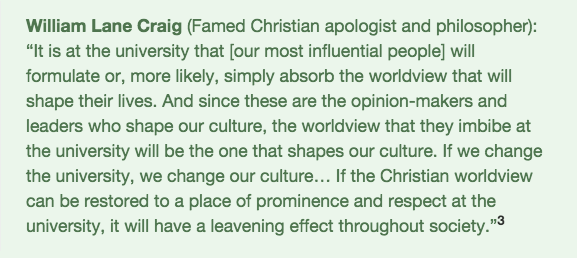
After all, if defending God’s honor was the missionary’s main goal, then the real battlefield would be the university.

Bill Craig puts it best:
If serving God is your goal, look to the university

There is already a perfectly fine university right next door – no need to fly to Europe to find one! Remember, the university that took your faith away, or maybe the faith of someone you cared about? Yeah, it’s still sitting there in your home town! And it’s still ruining the lives of thousands of young people, by peer-pressuring them into secular, liberal views – and behaviors. It seems to me that it’s better stewardship to stay here and work, then give money to groups like Reasonable Faith. And you can start a blog, teach in church and invite scholars to the local university, too. That costs almost nothing, and it produces better results.

What about Jesus?

Sometimes, it’s a good idea to look beyond the words of the Bible and reflect on the overall message of it at a higher level. When I look in the Bible, I see that Jesus went through a lot of suffering in obedience to God in order to secure the salvation of people who did not even like him. And it’s from this sacrifice on our behalf that his claim on our obedience comes. There are things that I don’t like to do that I do anyway because they work to serve God. Jesus life’s ambition was not to do things that were easy, or that made him happy. Experienced Christians do things that are not fun, because these things are right and because they solve the real problem.
Should a man go into full-time apologetics ministry if he intends to marry?

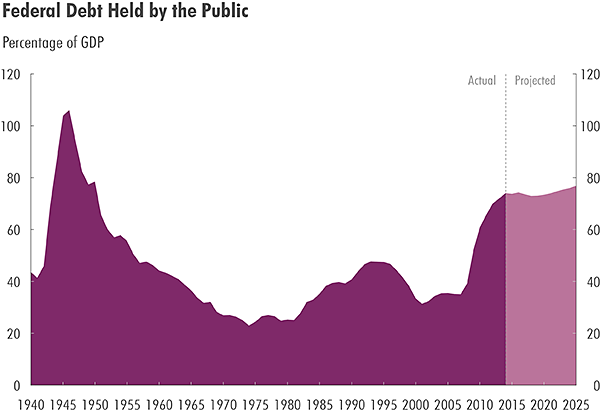
Congressional Budget Office: Debt to GDP ratio

Lydia McGrew has a post up at What’s Wrong With the World blog that is just excellent.

Excerpt:

Apologetics is wonderful and incredibly important. It’s a wonderful thing that a revival of specifically evidentialist apologetics is happening in the United States and even, to some extent, in the Anglophone world at large.

Unfortunately, this revival of interest in apologetics and in being Christian philosophers is coming at a very bad time, economically. Even if you are a genius, your chances in 2013 and following of getting a stable job by the route of going to graduate school in philosophy (or almost any area of the humanities) are pretty darned slim. If you’re not a genius, fuhgetaboutit. Nor were there ever all that many jobs in philosophy. It was always an iffy proposition, but it’s much worse now than it was even twenty years ago.

As for starting ministries, a poor economy makes it extremely hard to do that, too, because people don’t have as much disposable income to donate. Moreover, even in a more robust economy, if all the eager young apologists were to flock to start apologetics and/or campus ministries, they would be competing among themselves for a finite number of available dollars from donors. So that’s not the best idea either.

Let me speak very bluntly here: In my opinion, God doesn’t need a whole raft of impractical idealists out there getting themselves into debt or half starving (or really starving) with no idea of how in the world they are ever going to support even themselves, much less a family, out at the other end of their education. That just burdens the church with a large number of able-bodied but needy Christians who are in a seemingly unending stage of transition, “getting an education for the kingdom” or “hoping to do work for the kingdom” without a viable plan in mind or any fiscal light at the end of the tunnel.

Instead, I believe that we need an army of tentmakers. If you have a job or a marketable skill, for heaven’s sake (literally), don’t quit that job and join the ranks of starving students. Keep your day job, but enrich your mind and prepare yourself to answer people’s questions about Christianity by studying on your own time. If you have entrepreneurial abilities and the capital, start a business. That will support not only yourself but others you employ, and if successful, you will have more money to give to Christian ministries.

But even if you aren’t the entrepreneurial type or don’t have that opportunity, at least make sure (to the extent that one can in today’s world) that you can pay the rent and put food on your own table as well as supporting whatever number of additional people you plan to take on. (In other words, if you are a guy who would like to get married and have children, bear that in mind.) This will inevitably mean spending time at all that distasteful stuff like networking and making a resume. Bookish types don’t enjoy that stuff, because it seems bogus, but it can’t be helped. It will undoubtedly mean, for most people, not being full-time students beyond the undergraduate level, especially not in the humanities, not trying to become full-time academics as a life work, and not going into full-time ministry, even if you would ideally like to do one or more of those three things.

In the end, if we can have this army of tentmakers, there will be (Lord willing) money to allow some people to work in full-time ministry. But it’s going to be quite a small proportion of those who are interested or would ideally like to do so.

[…]Inevitably, the course of action I am suggesting will mean a bifurcation for many between their day job and what they are most passionately interested in. So be it. Indeed, so it has ever been in the world. What proportion of people at any moment in human history have been blessed enough to spend most of their time working on what they are most passionately interested in? The question answers itself. So I think that bifurcation has to be accepted by a great many people and that doing so will lead to what I might call a healthier “Christian economy” among committed Christians than what we could otherwise end up with.

So let’s see her advice in bullet-point form:

  • The job market for philosophers is very bad
  • A bad economy means less support money is available
  • It’s important to have a plan to fund your  ministry
  • Leverage your full-time job to fund your ministry

So I want to make two comments.

Making bad decisions because you think God is telling you to

I often find that when I talk to Christians, there is this sort of hyper-spiritualized way of deciding what to do, and I’ve written about this in one of my favorite posts. Hyper-spiritual Christians read the Bible, which is good, but then they don’t tend to also look at practical things like economics, science and public policy when making their decisions. The Bible doesn’t say much about what to study or what job to get, but there is an example of Paul working at tent-making in order to fund his ministry. So there is precedent for the idea of learning a trade and working to earn enough money to support our families, our ministry and even other people’s ministries.

I think we have an obligation to take the Bible seriously when it tells us what we can do to please God, but coming up with a plan to please God most effectively is our job. We have to make the plans to serve God. Our plans must be within the bounds of Biblical morality, but they should also reflect our knowledge of how the world really works, too. We’ll be more successful with a good plan and some hard work. It’s very easy to be deceived by our feelings about what we would like to do with our lives. And many people who listen to their feelings and find other impractical people to echo and affirm those feelings make many mistakes in life. I would advise people to be very careful about calling their feelings the voice of God speaking to them, then getting into trouble when their lack of wisdom blows up in their faces.

Christian men who want marriage without having to get a job

So that brings me to the concern that I have that I’ve been thinking about for the last week or so. I have been thinking about a couple of Christian apologists I know who are interested in marriage, but unwilling to prepare themselves to prepare for a wife and children. They are both very unaware of the economic and political challenges that they are likely to face, which makes the need to prepare financially even more pressing.

One of the Christian men is getting a BA and is in his early 30s. He says that marriage would have to come second to his ministry. He has never worked a full-time job his entire life, and considers getting a full-time job to be beneath him. The other one is in his late 20s and is in a PhD program. He wants marriage right away, but he has never worked in a real job his entire life, either. Both of these Christian apologists are in debt – they have zero assets and negative net worth. How can it be that they can even be considering marriage? Don’t they realize what a man’s role in marriage is? He is the provider, and that means that he has to have a record of steady work, saving money and being generous at sharing with others. Neither of these men have shown any ability in those areas. Neither of them seems willing to get started on a regular, full-time, private sector job. And neither seems to want to take Lydia’s advice and finance their ministry / marriage from a regular, full-time job. Neither of these students can even afford a wedding or even a wedding ring. Do they even understand what a woman needs from her husband?

So what’s the problem? I talked this over with a wise friend and she said that feminism has become so widespread in this society that a lot of men think that they can contemplate marriage without having a record of earning and saving. They don’t see that men have any distinct “provider” role in a marriage. They sort of expect to get the benefits of marriage with none of the “provider” responsibilities. Many women have also been taken in by feminism, and cannot evaluate men to see which ones are able to work and save and provide, and which ones aren’t. I don’t think young people are being taught how to apply the Bible to the practical challenges of marriage, or how to recognize the challenges of the times we live in.

What is the criterion of embarrassment, and what are some examples of it?

Sherlock Holmes and John Watson are going to take a look at the data

The criterion of embarrassment is just one of the historical criteria used to select the parts of a piece of ancient literature that is likely to be historical. Other things in the source may have happened, but we can’t know them as history. If significant parts of a text are historical, it is possible to accept it as historical until there are specific reasons to say that some part of it is NOT historical.

Here is William Lane Craig’s list of criteria for a saying or event to be historical:

  1. Historical congruence: S fits in with known historical facts concerning the context in which S is said to have occurred.
  2. Independent, early attestation: S appears in multiple sources which are near to the time at which S is alleged to have occurred and which depend neither upon each other nor a common source.
  3. Embarrassment: S is awkward or counter-productive for the persons who serve as the source of information for S.
  4. Dissimilarity: S is unlike antecedent Jewish thought-forms and/or unlike subsequent Christian thought-forms.
  5. Semitisms: traces in the narrative of Aramaic or Hebrew linguistic forms.
  6. Coherence: S is consistent with already established facts about Jesus.

The criteria is the same for liberal historians and conservative historians, although some historians weight one criteria more than others when trying to evaluate the historicity of different New Testament parts.

Here’s Christian apologist Dr. Frank Turek explaining what the criterion is, and some examples:

Franks’s a great speaker, you should watch that.

What’s amazing is that even liberal historians will give you facts that are embarrassing to the authors as “historical”.

Anyway, here are 8 examples of parts of the New Testament that exhibit the criterion of embarrassment, thanks to theologian C. Michael Patton.

  1. Jesus’ Baptism
  2. Jesus’ Family Did Not Believe
  3. John the Baptist’s Doubt
  4. The Disciples Doubted After the Resurrection
  5. Jesus Does not Know the Time of His Coming
  6. Women are the First to Witness the Resurrection
  7. Jesus Cursed a Fig Tree
  8. Death and Resurrection of Christ

I think 6 and 8 are the ones I want you to take away with you when you finish this post.

Here they are:

Women are the First to Witness the Resurrection

This is one that is often brought up. Craig Keener puts it well enough: “The witness of women at the tomb is very likely historical, precisely because it was so offensive to the larger culture — not the sort of testimony one would invent. Not all testimony was regarded as being of equal merit; the trustworthiness of witnesses was considered essential. Yet most of Jesus’ Jewish contemporaries held much less esteem for the testimony of women than for that of men; this suspicion reflects a broader Mediterranean limited trust of women’s speech and testimony also enshrined in Roman law.” (Keener, The Historical Jesus, 331)

And:

Death and Resurrection of Christ

This easily escapes our notice since the basic story of Christ is so well known. However, both the death and resurrection of Christ are, from the standpoint of the culture of the day, embarrassing and damaging. Concerning the death of Christ on a cross, Paul sees this problem: “But we preach Christ crucified: a stumbling block to Jews and foolishness to Gentiles” (1 Cor. 1:23). The word used for “stumbling block” is skandalon. Louw-Nida defines this as “that which causes offense and thus arouses opposition.” Why? Because the Jews would never have thought their Messiah would have been hung on a tree. “Cursed is one who hangs on a tree” (Gal. 3:13; Deut 21:23). The Greeks thought of the resurrection as foolishness as they were dualist, essentially believing that the material world was evil and the spiritual world good. They would have scoffed at the idea that Christ returned to physical form. This is why later Greeks attempted to adapt the Christ story, doing away with the physical resurrection. Marcion is the most famous promoter of this view (see Docitism).

Now, when you are talking about the New Testament to your non-believing friends, you definitely want to draw attention to passages that are embarrassing to the authors. It will help you to be more convincing when you explain the New Testament like a historian.

By the way, you can read an entire post I did on all the criteria that historians use to evaluate ancient historical documents.