

All posts by Wintery Knight

https://winteryknight.com/

Elizabeth Warren and AOC agree: give convicts and illegal immigrants welfare, enact rent control

Elizabeth Warren is telling people that we have 11 years to live
Elizabeth Warren has a much better way to spend the money you earn

This week, Warren and AOC announced their support for giving taxes paid by U.S. citizens, permanent residents and people here legally on work permits to illegal immigrants. Watch the video below, and read the story, and ask yourself whether you think it is your job to pay for welfare for people who wouldn’t even go through the process of coming into this country legally.

Here’s a short video clip from Fox News:

The Washington Free Beacon reports:

Democratic presidential candidate Elizabeth Warren endorsed a Rep. Alexandria Ocasio-Cortez (D., N.Y.) policy proposal that includes taxpayer-funded welfare benefits for illegal immigrants.

Ocasio-Cortez’s proposal, dubbed “A Just Society,” calls for nationwide rent control and bans the federal government from denying welfare benefits based on an individual’s immigration status and previous criminal convictions. Warren became the first Democratic presidential candidate to endorse the plan, calling it “just the type of bold, comprehensive thinking we’ll need” to make “big, structural change.”

[…]Ocasio-Cortez’s proposal, consisting of six separate bills, calls for the expansion of welfare. Bills three and four make it illegal for the federal government to deny welfare benefits to ex-convicts and illegal immigrants.

[…]The last bill in Ocasio-Cortez’s proposal establishes health care, housing, and healthy food as government-provided rights.

[…]The legislation does not address how to pay for the rising cost of welfare, nor does it explain how it would accomplish its goals.

Remember, AOC and Warren already have the Green New Deal on the table, and the cost for that is $94.4 trillion over 10 years. So where will they get the money for this new plan? Would they do it with their own money? No, they want to do it with your money. They want to do it with your employer’s money. They want to do it with the money earned by the companies in your 401K plan. 

By the way, regarding the rent control. If there is one thing that you learn in Economics 101, it’s that rent control policies do more harm than good. It causes a shortage of living space for the poor, because the people who rent out living space cannot make enough money as they can in other investments. So, they stop investing in rental properties.

The Free Beacon article notes:

Ocasio-Cortez’s second bill, titled “The Place to Prosper Act,” calls for federal rent control by imposing a 3 percent national cap on annual rent increases. Similar legislation has failed at the local level amid concerns that such policies increased housing prices while limiting supply. A recent study by the American Economic Association found that San Francisco rent control policy “drove up market rents in the long run, ultimately undermining the goals of the law.” The Council of Economic Advisers found that in 11 metropolitan areas with housing regulations, deregulation would reduce homelessness by an average of 31 percent. More than 80 percent of economists surveyed by the University of Chicago in 2012 found rent control to be bad policy.

This is not controversial. Harvard University economist Greg Mankiw is the author of a very widely used economics textbook. In his textbook, he has a section where he reports on what economists (academic and professional) agree on, across the ideological spectrum. The number one item on the list, with the highest level of agreement, is that rent control does not work.

He writes:

My textbook covers business cycle theory toward the end of the book (the last four chapters) precisely because that theory is controversial. I believe it is better to introduce students to economics with topics about which there is more of a professional consensus. In chapter two of the book, I include a table of propositions to which most economists subscribe, based on various polls of the profession. Here is the list, together with the percentage of economists who agree:

  1. A ceiling on rents reduces the quantity and quality of housing available. (93%)

You can read the rest of the list on his blog, but AOC and her ally Elizabeth Warren probably disagree with all of them. And that’s who the American left are looking to for leadership. People with no knowledge. People with no achievements. People who have never solved economic problems in the private sector in their entire lives. Warren and AOC have no demonstrated achievements in the area of economic policy. There are just speaking words that make them feel good, and get applause. They don’t know what happens next, if they ever get their ideas put into law.

If you’re not already paying off your debts and saving money, you’d better start. Because when these Democrat demagogues get power, you are going to feel the effects of their economic illiteracy where you live and where you work. Remember Obamacare? We lost our doctors, we lost our health plans, and the costs of our health insurance went up. If you elect an imbecile to make policy decisions, you will be made to feel the effects of your choices.

My short and sweet summary of the Trump-Ukraine events from the past month

Adam Schiff lied about not meeting with the Democrat "whistleblower"
Adam Schiff lied about collusion with the Democrat “whistleblower”

So, recently the Democrats decided to collude with a disgruntled CIA analyst and registered Democrat, in order to help him to make a hearsay complaint against President Trump. The mainstream media then colluded with the Democrats in order to promote the hearsay complaint to their audiences. Let’s retrace the major steps of the story, and then see how it affected Trump’s fundraising numbers.

This is what we know about the whistleblower:

BREAKING: The whistleblower is a registered Democrat & CIA analyst who was detailed before the 2016 election to the Obama White House,where he worked on the NSC’s Ukraine desk & met w anti-Trump Ukrainian officials before being sent packing by the Trump NSC & becoming disgruntled.

The first interesting point is that the Democrats relaxed the standards for whistleblower reports, to allow people who were not direct witnesses to file reports.

Between May 2018 and August 2019, the intelligence community secretly eliminated a requirement that whistleblowers provide direct, first-hand knowledge of alleged wrongdoings. This raises questions about the intelligence community’s behavior regarding the August submission of a whistleblower complaint against President Donald Trump. The new complaint document no longer requires potential whistleblowers who wish to have their concerns expedited to Congress to have direct, first-hand knowledge of the alleged wrongdoing that they are reporting.

So, since they dropped the requirement for first-hand knowledge, the complainant could expedite to Congress without it.

The second interesting point is that the Democrats lied about the contents of the phone call, and had to walk back their lies.

Epoch Times reports:

Rep. Adam Schiff (D-Calif.) added words that were not spoken by President Donald Trump while reading from a transcript of the callbetween Trump and Ukrainian President Volodymyr Zelensky during a House Intelligence Committee hearing on Sept. 26.

[…]Rep. Mike Turner (R-Ohio) later called Schiff out.

“While the chairman was speaking I had someone text me, ‘is he just making this up?’” Turner said. “And yes, yes he was. Because sometimes fiction is better than the actual words or the text. But luckily the American public are smart and they have the transcript. They’ve read the conversation, they know when someone’s just making it up.”

After Turner’s remarks, Schiff told those assembled: “My colleague is right … it’s not okay.”

And this is not something that the mainstream media did much to correct – they liked Schiff’s false version, and they didn’t want to correct him. NBC News posted the video without noting that Schiff later admitted that he was not telling the truth.

Third, the Democrats were caught lying again about not having met the whistleblower prior to his report being submitted. The whistleblower did indeed meet with Adam Schiff’s committee, although Schiff denied that his committee spoke to the whistleblower before the charges became public:

The New York Times reported on Thursday that House Intelligence Committee Chairman Rep. Adam Schiff (D-Calif.) had advance knowledge of the outline of the whistleblower complaint against President Donald Trump before the complaint was filed, and that Schiff’s office advised the whistleblower on how to effectively create the complaint.

However, in a September 17, 2019 interview with MSNBC, Rep. Schiff said his office had not spoken “directly” with the whistleblower and that the whistleblower had not been advised “by the inspector general or the director of national intelligence (DNI)” on how to communicate with Congress:

“Schiff’s office advised the whistleblower on how to effectively create the complaint.”

The Wall Street Journal comments:

If all this has a somewhat familiar feel of subterfuge and ambush, it should. The episode is redolent of the sneak attack on Brett Kavanaugh. An unknown person levels nasty allegations; a Democratic lawmaker (in that case, Sen. Dianne Feinstein) conceals the claim before springing it at an opportune moment; the media jumps on board to distort and inflame the story. Lost in the carnage are little things like fairness, standards and due process.

So, what about the whistleblower’s report? Did Trump withhold military aid from Ukraine in exchange for favors?

No, the military aid was sent to Ukraine on schedule, without their having to do anything for Trump:

The United States military aid to Ukraine was sent as scheduled, according to a spokesperson for the White House Office of Management and Budget (OMB), putting in context a key claim by an anonymous intelligence community whistleblower whose complaint was followed by a Democrat-led impeachment inquiry.

The whistleblower claimed that the president had suspended all security assistance to Ukraine. Instead, the aid underwent a routine review process after a so-called footnote was placed on the funds to Ukraine and was disbursed on or ahead of schedule, a senior administration official told The Epoch Times on Oct. 2. The aid underwent the review around the time White House officials were considering a broad range of foreign aid cuts.

[…]Instead of the abrupt suspension, the aid package underwent a typical process, the administration spokesman said. The budget office was simultaneously considering a rescissions package that could impact nine other countries.

Well, did Ukraine at least think that Trump was withholding aid in exchange for investigating Biden corruption?

No, they didn’t:

Ukrainian officials did not think that President Trump was using U.S. aid as a bargaining chip when he and Ukrainian President Volodymyr Zelensky spoke in July. According to BuzzFeed News, at the time of the infamous phone call now used as the basis for Democrats’ latest impeachment efforts, the Ukrainian president thought U.S. aid was already on its way. This aligns with what The New York Times reported last week in regards to the Zelensky government not thinking aid might be withheld.

Is that what you’ve been hearing from Democrat politicians, the mainstream media and your uninformed co-workers? Me neither.

Other questions

Did Vice President Biden really get the Ukraine prosecutor pulled off investigating the Ukraine company that was paying his cocaine-snorting son $50,000 a month?

The fired prosecutor at the center of the Ukraine controversy said during a private interview with President Trump’s personal attorney Rudy Giuliani earlier this year that he was told to back off an investigation involving a natural gas firm that was linked to Joe Biden’s son, according to details of that interview that were handed over to Congress by the State Department’s inspector general Wednesday.

Fox News obtained a copy of Giuliani’s notes from his January 2019 interview with fired Ukrainian prosecutor Viktor Shokin in which he claimed that his “investigations stopped out of fear of the United States.”

Joe Biden also told reporters that he had never met with anyone connected to his son’s “business dealings”, but then a photograph was reported, showing Joe Biden, his son Hunter Biden, and Devon Archer, who served on the board of the Ukrainian natural gas company Burisma Holdings with Hunter. Again, the mainstream media was mostly silent about that discovery.

Which candidate colluded with foreign governments in the 2016 election?

Ukrainian government officials tried to help Hillary Clinton and undermine Trump by publicly questioning his fitness for office. They also disseminated documents implicating a top Trump aide in corruption and suggested they were investigating the matter, only to back away after the election. And they helped Clinton’s allies research damaging information on Trump and his advisers, a Politico investigation found.

A Ukrainian-American operative who was consulting for the Democratic National Committee met with top officials in the Ukrainian Embassy in Washington in an effort to expose ties between Trump, top campaign aide Paul Manafort and Russia, according to people with direct knowledge of the situation.

Recall that the Trump-Russia collusion charges all came about due to opposition research purchased by a Democrat PR firm that was hired by a Democrat law firm working for the Clinton campaign. And that’s why the Mueller report found no evidence of collusion, and no evidence of obstruction.

So, what effect has all of this had on Trump?

Former Vice President Joseph R. Biden raised $15.2 million in the third quarter fundraising period, his campaign announced Thursday… Meanwhile President Trump’s campaign and the Republican National Committee combined to raise a record $125 million last quarter and ended the period with more than $156 million cash on hand.

Listen. Now is the time for you to make a difference in the 2020 election. Share the articles that I linked to above on social media. Donate to the Trump campaign, or to a good conservative 2020 candidate. When yard signs become available, go get one, and put it on your lawn. I’m going to do it, and I want you to do it, too.

Why do so many atheist historians think that 1 Corinthians 15 is reliable history?

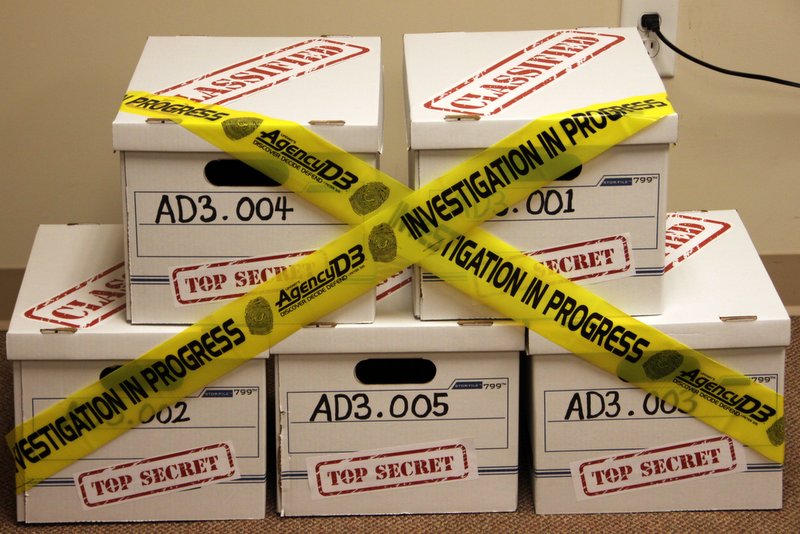
Investigation in progress

Which passage of the Bible is the favorite of Christians who like to defend the Christian worldview? I don’t mean which one is most inspirational… I mean “which one is the most useful for winning arguments?” Well, when it comes to the historical Jesus, the most important passage has to be 1 Corinthians 15:3-7.

The tradition in 1 Corinthians 15 is an early creed that was received from the eyewitnesses Peter and John when Paul visited them several times in Jerusalem, as documented in Galatians 1 and 2, where Paul meets the eyewitnesses. And of course, Paul records his own eyewitness experience, documented in 1 Cor 15:8.

So, is this passage accepted as historically reliable by all ancient historians? Or only by the Bible-believing ones?

Here’s something posted by Dr. William Lane Craig about the 1 Corinthians 15 passage:

The evidence that Paul is not writing in his own hand in I Cor. 15.3-5 is so powerful that all New Testament scholars recognize that Paul is here passing on a prior tradition. In addition to the fact that Paul explicitly says as much, the passage is replete with non-Pauline characteristics, including, in order of appearance: (i) the phrase “for our sins” using the genitive case and plural noun is unusual for Paul; (ii) the phrase “according to the Scriptures” is unparalleled in Paul, who introduces Scriptural citations by “as it is written”; (iii) the perfect passive verb “has been raised” appears only in this chapter and in a pre-Pauline confessional formula in II Tim. 2.8; (iv) the phrase “on the third day” with its ordinal number following the noun in Greek is non-Pauline; (v) the word “appeared” is found only here and in the confessional formula in I Tim. 3.16; and (vi) “the Twelve” is not Paul’s nomenclature, for he always speaks of the twelve disciples as “the apostles.”

Now the visit during which Paul may have received this tradition is the visit you mention three years after his conversion on the road to Damascus (Gal. 1.18). This puts the tradition back to within the first five years after Jesus’ death in AD 30. So there’s not even an apparent inconsistency with Paul’s appropriating the language of the formula to encapsulate the Gospel he was already preaching during those first three years in Damascus.

Ancient historian Gary Habermas loves to read non-Christian scholars… and then he writes about what THEY think about Jesus in peer-reviewed articles, published in academic journals. Let’s look at this one: Dialog: A Journal of Theology, Vol. 45; No. 3 (Fall, 2006), pp. 288-297; published by Blackwell Publishing, UK.

He writes:

(1) Contemporary critical scholars agree that the apostle Paul is the primary witness to the early resurrection experiences. A former opponent (1 Cor. 15:9; Gal. 1:13-14; Phil. 3:4-7), Paul states that the risen Jesus appeared personally to him (1 Cor. 9:1; 15:8; Gal. 1:16). The scholarly consensus here is attested by atheist Michael Martin, who avers: “However, we have only one contemporary eyewitness account of a postresurrection appearance of Jesus, namely Paul’s.”[3]

(2) In addition to Paul’s own experience, few conclusions are more widely recognized than that, in 1 Corinthians 15:3ff., Paul records an ancient oral tradition(s). This pre-Pauline report summarizes the early Gospel content, that Christ died for human sin, was buried, rose from the dead, and then appeared to many witnesses, both individuals and groups.

Paul is clear that this material was not his own but that he had passed on to others what he had received earlier, as the center of his message (15:3). There are many textual indications that the material pre-dates Paul. Most directly, the apostle employs paredoka and parelabon, the equivalent Greek terms for delivering and receiving rabbinic tradition (cf. 1 Cor. 11:23). Indirect indications of a traditional text(s) include the sentence structure and verbal parallelism, diction, and the triple sequence of kai hoti Further, several non-Pauline words, the proper names of Cephas (cf. Lk. 24:34) and James, and the possibility of an Aramaic original are all significant. Fuller attests to the unanimity of scholarship here: “It is almost universally agreed today that Paul is here citing tradition.”[4] Critical scholars agree that Paul received the material well before this book was written.[5]

This is important:

The most popular view is that Paul received this material during his trip to Jerusalem just three years after his conversion, to visit Peter and James, the brother of Jesus (Gal. 1:18-19), both of whose names appear in the appearance list (1 Cor. 15:5; 7). An important hint here is Paul’s use of the verb historesai (1:18), a term that indicates the investigation of a topic.[6] The immediate context both before and after reveals this subject matter: Paul was inquiring concerning the nature of the Gospel proclamation (Gal. 1:11-2:10), of which Jesus’ resurrection was the center (1 Cor. 15:3-4, 14, 17; Gal. 1:11, 16).

He’s an eyewitness (verse 8), and he met with the other eyewitnesses, James and Peter. 1 Corinthians is early. Galatians is early. The creed is extremely early – right after the events occurred. There was no time for legends to develop.

And atheistic / critical historians agree, the creed is reliable:

Critical scholars generally agree that this pre-Pauline creed(s) may be the earliest in the New Testament. Ulrich Wilckens asserts that it “indubitably goes back to the oldest phase of all in the history of primitive Christianity.”[7] Joachim Jeremias agrees that it is, “the earliest tradition of all.”[8] Perhaps a bit too optimistically, Walter Kasper even thinks that it was possibly even “in use by the end of 30 AD . . . .”[9]

Indicating the wide approval on this subject, even more skeptical scholars frequently agree. Gerd Ludemann maintains that “the elements in the tradition are to be dated to the first two years after the crucifixion of Jesus. . . . not later than three years. . . . the formation of the appearance traditions mentioned in I Cor.15.3-8 falls into the time between 30 and 33 CE. . . .”[10] Similarly, Michael Goulder thinks that it “goes back at least to what Paul was taught when he was converted, a couple of years after the crucifixion.”[11] Thomas Sheehan agrees that this tradition “probably goes back to at least 32-34 C.E., that is, to within two to four years of the crucifixion.”[12] Others clearly consent.[13]

Overall, my recent overview of critical sources mentioned above indicates that those who provide a date generally opt for Paul’s reception of this report relatively soon after Jesus’ death, by the early to mid-30s A.D.[14] This provides an additional source that appears just a half step removed from eyewitness testimony.

(3) Paul was so careful to assure the content of his Gospel message, that he made a second trip to Jerusalem (Gal. 2:1-10) specifically to be absolutely sure that he had not been mistaken (2:2). The first time he met with Peter and James (Gal. 1:18-20). On this occasion, the same two men were there, plus the apostle John (2:9). Paul was clearly doing his research by seeking out the chief apostles. As Martin Hengel notes, “Evidently the tradition of I Cor. 15.3 had been subjected to many tests” by Paul.[15]

These four apostles were the chief authorities in the early church, and each is represented in the list of those who had seen the resurrected Jesus (1 Cor. 15:5-7). So their confirmation of Paul’s Gospel preaching (Gal. 2:9), especially given the apostolic concern to insure doctrinal truth in the early church, is certainly significant. On Paul’s word, we are again just a short distance from a firsthand report.

(4) Not only do we have Paul’s account that the other major apostles confirmed his Gospel message, but he provides the reverse testimony, too. After listing Jesus’ resurrection appearances, Paul tells us he also knew what the other apostles were preaching regarding Jesus’ appearances, and it was the same as his own teaching on this subject (1 Cor. 15:11). As one, they proclaimed that Jesus was raised from the dead (15:12, 15). So Paul narrates both the more indirect confirmation of his Gospel message by the apostolic leaders, plus his firsthand, direct approval of their resurrection message.

Now, some of the people he lists are really biased against the supernatural, and they really hate the idea that the claims of Christianity exclude other religions. And yet they don’t deny the historical reliability of 1 Corinthians 15, or that it is based on eyewitness testimony.

That’s why when you watch debates about the historical Jesus, you see skeptical historians like Bart Ehrman, Gerd Ludemann, James Crossley, Michael Goulder, etc. accepting that the disciples thought they saw Jesus after his death. They’re not just being nice to Dr. Craig when they give him that. They are forced to accept it, because it passes the historical tests. Every Christian ought to be aware of which passages of the New Testament are seen by the broad spectrum of ancient historians as “historical”, regardless of their various biases. You can believe everything in the Bible. But when you debate non-Christians, you have to use the historical core of Christianity which successfully passes historical analysis.

You can see the creed used as evidence in the debate between James Crossley and William Lane Craig.