

All posts by Wintery Knight

https://winteryknight.com/

Peter Williams lectures on the historical reliability of the gospels

Bible study that hits the spot
Apologetics that hits the spot

This is a lecture I found from British historian Dr. Peter J. Williams.

Here’s the main lecture: (54 minutes)

And here’s the Q&A: (9 minutes)

About Peter Williams:

Peter J. Williams is the Warden (CEO) of Tyndale House and a member of the Faculty of Divinity in the University of Cambridge. He received his MA, MPhil and PhD, in the study of ancient languages related to the Bible from Cambridge University. After his PhD, he was on staff in the Faculty of Divinity, Cambridge University (1997–1998), and thereafter taught Hebrew and Old Testament there as Affiliated Lecturer in Hebrew and Aramaic and as Research Fellow in Old Testament at Tyndale House, Cambridge (1998–2003). From 2003 to 2007 he was on the faculty of the University of Aberdeen, Scotland, where he became a Senior Lecturer in New Testament and Deputy Head of the School of Divinity, History and Philosophy. In July 2007 he became the youngest Warden in the history of Tyndale House. He also retains his position as an honorary Senior Lecturer in Biblical Studies at the University of Aberdeen.

Summary of the lecture:

  • What if the stories about Jesus are legendary?
  • were the gospels transmitted accurately?
  • were the gospels written in the same place as where the events happened?
  • do the gospel authors know the customs and locations where the events happened?
  • do the gospels use the right names for the time and place where the events took place?
  • do the gospels disambiguate people’s names depending on how common those names were?
  • how do the New Testament gospels compare to the later gnostic gospels?
  • how do the gospels refer to the main character? How non-Biblical sources refer to Jesus?
  • how does Jesus refer to himself in the gospels? do the later Christians refer to him that way?
  • how does Jesus teach? do later Christians teach the same way?
  • why didn’t Jesus say anything about early conflicts in the church (the Gentiles, church services)?
  • did the writers of the gospels know the places where the events took place?
  • how many places are named in the gospels? how about in the later gnostic gospels?
  • are the botanical details mentioned in the gospels accurate? how about the later gnostic gospels?

And here are the questions from the audience:

  • how what about the discrepancies in the resurrection narratives that Bart Ehrman is obsessed with?
  • what do you think of the new 2011 NIV translation (Peter is on the ESV translation committee)?
  • how did untrained, ordinary men produce complex, sophisticated documents like the gospels?
  • is oral tradition a strong enough bridge between the events and the writers who interviewed the eyewitnesses?
  • what does the name John mean?
  • why did the gospel writers wait so long before writing their gospels?
  • do you think that Matthew and Luke used a hypothetical source which historians call “Q”?
  • which gospel do critical historians trust the least and why?

I really enjoyed watching this lecture. He’s getting some of this material from Richard Bauckham’s awesome book “Jesus and the Eyewitnesses”, so if you aren’t familiar with it, you can get an idea of what’s in it. Peter Williams is a lot of fun to listen to – an excellent speaker.

And you can listen to the Peter Williams vs Bart Ehrman debate. That link contains a link to the audio of the debate as well as my snarky summary. It’s very snarky.
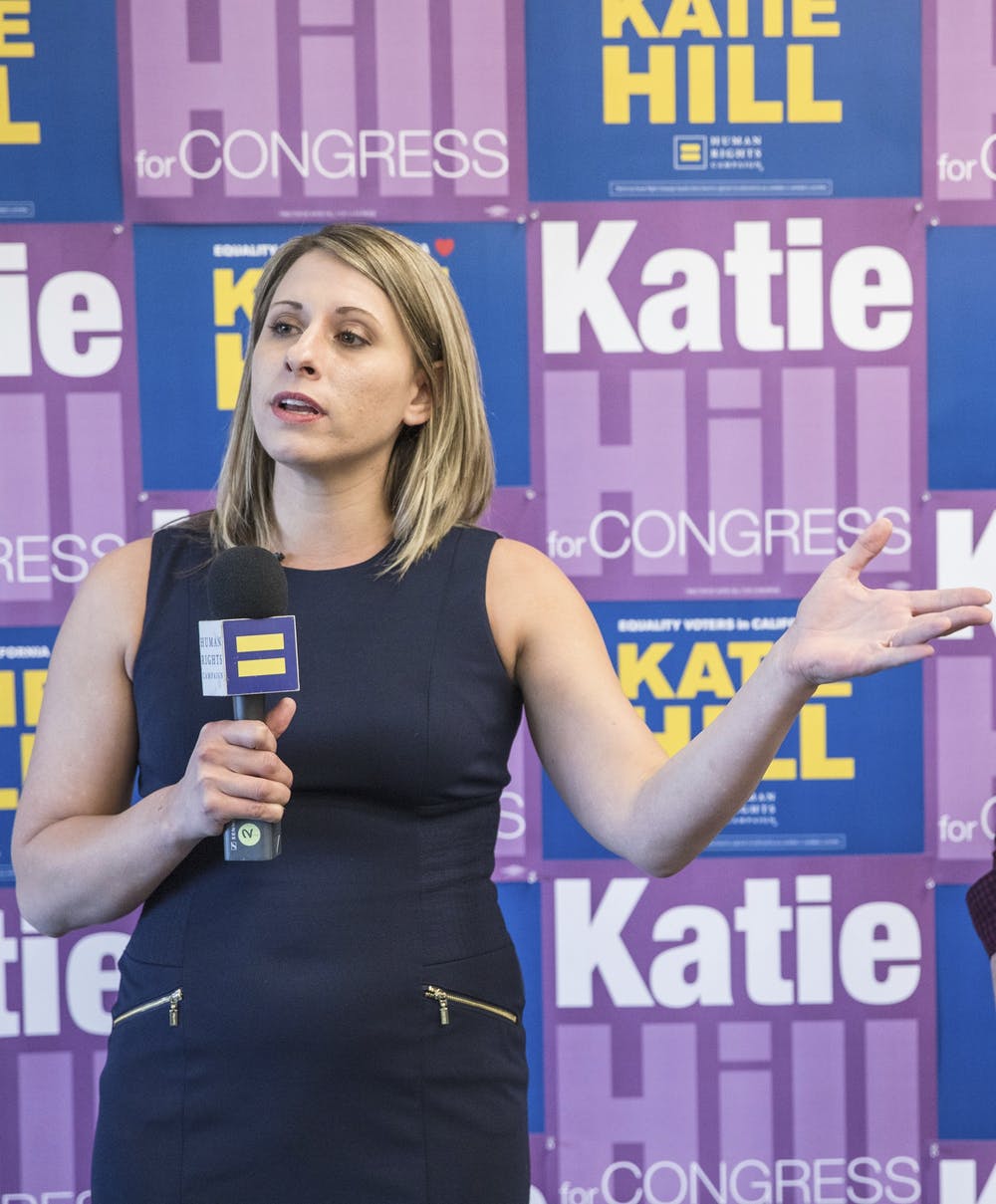
Gay rights activist Congresswoman admits to affair with younger campaign staffer

Here she is speaking for the Human Rights Campaign, a massive gay rights group
Katie Hill speaking for the Human Rights Campaign, a major gay rights group

When I saw all these stories coming out about Hollywood elites and Democrat mega-donors exposed for sexual harassment, pedophilia, rape, etc., I really started to wonder whether there is anything more to the Democrat party than championing sexual perversion and inflicting the consequences of that onto children, born and unborn. Here’s the latest Democrat sex scandal in the news.

Here’s the Washington Examiner reporting:

California Democratic Rep. Katie Hill was still paying consulting fees to her campaign staffer and former lover Morgan Desjardins, 24, as recently as last month.

According to FEC Records, since April 2019, Hill’s campaign has paid a little over $14,000 in fundraising-related consulting fees to Desjardins, doling out around $2,500 most months. Additionally, between 2017 and 2018, she made around $50,000 as a senior campaign staffer.

Hill, who is facing a House Ethics Committee investigation over allegations she had an intimate relationship with her legislative director, Graham Kelly, found herself under scrutiny after a nude photo of her brushing Desjardin’s hair was posted on the RedState.

Hill, 32, has admitted her relationship with Desjardins during her successful campaign for a House seat based in northern Los Angeles County but disputed any inappropriate relationship between her and Kelly occurred.

The image was posted along with text messages sent between Hill, the congresswoman’s estranged husband Kenny Heslep, whom she is divorcing, and Desjardins. According to the texts posted at RedState, the trio had an intimate three-way relationship during Hill’s first campaign for office, but it soured quickly after she won her race and went to Washington, D.C.

Now, the problem with having sex with your subordinates is that there is a power dynamic, because you are paying them. It’s easy to see what Katie Hill did as sexual assault and even rape, because her employees may have felt that they had to do whatever she wanted, e.g. – threesomes, with her, or they would lose their jobs. This is why companies outlaw relationships between employees – they don’t want people to use power within the company to pressure subordinates into sexual activities. Yet Democrats do this all the time and the mainstream media is silent about it.

Remember, even the pious, moral Muslim Ilhan Omar is now divorcing her husband because she had an affair with someone she was paying with campaign funds:

Rep. Ilhan Omar has filed for divorce from the father of her three kids, claiming the marriage is “irretrievable” — amid allegations that she had an affair with DC-based political consultant Tim Mynett.

[…]In August, The Post was first to report that DC-based doctor Beth Mynett had filed for divorce from her husband, Tim Mynett, alleging that he was carrying on an affair with Omar.

All the while, Omar’s campaign fund was paying Tim Mynett’s firm for work, including for travel.

Are Democrats really obsessed with sexual deviancy? Well, consider Democrats like Bill Clinton, Anthony Weiner, Eliot Spitzer, Eric Schneiderman, Ed Murray, etc. It seems like they are always involved in sex scandals. And in fact you can even see wealthy Democrat mega-donors like Jeffrey Epstein and Terry Bean getting charged with having sex with underage people all the time. (Terry Bean is the co-founder of the Human Rights Campaign, the largest gay rights group in the nation). The Democrat politicians who take money from the sexual deviants then try to change America to make what their donors are doing seem normal and even praiseworthy. That’s why Hillary Clinton threatened the women who accused her husband of rape and sexual assault.

Sexual deviancy seems to be the main plank in the Democrat party platform, and all the rest of the rhetoric about “free this” and “free that” is just to buy the votes needed to make all sorts of adult selfishness and sexual exploitation of the weak legal, and even immune to dissent and disapproval. Which is why Democrats are always using the government to attack Christians who disapprove of adult selfishness and sexual exploitation of the weak.

Now I have a question for you. What is it that young Democrat women are hoping to achieve by supporting the party of sexual deviance? Do they think that this will lead them to a faithful man, a stable marriage, well-behaved children and a peaceful home? If so, then maybe we ought to be having talks with young women about what sort of worldview grounds self-sacrificial love, commitment, and objective moral obligations. It sure isn’t the secular leftist nihilistic worldview of the Democrat party. If they want a Mike Pence marriage, then why not tell them to get the worldview of Mike Pence? They certainly won’t get to a Mike Pence marriage with the worldview of Katie Hill.

If you want to read more about Katie Hill’s destructive relationships, check out this story from Red State, which has blurred photos and text messages.

Atheist Jerry Coyne explains why morality is impossible for atheists

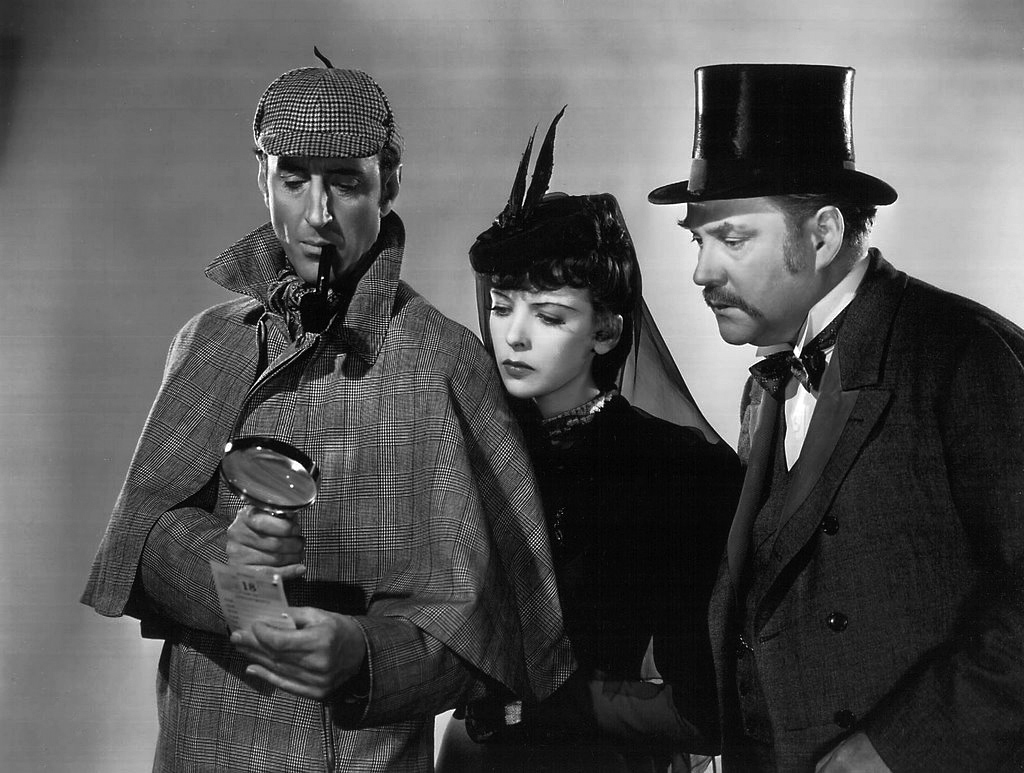
Sherlock Holmes and John Watson about to do philosophy

Let’s review what you need in your worldview in order to have a rationally grounded system of morality.

You need 5 things:

1) Objective moral values

There needs to be a way to distinguish what is good from what is bad. For example, the moral standard might specify that being kind to children is good, but torturing them for fun is bad. If the standard is purely subjective, then people could believe anything and each person would be justified in doing right in their own eyes. Even a “social contract” is just based on people’s opinions. So we need a standard that applies regardless of what people’s individual and collective opinions are.

2) Objective moral duties

Moral duties (moral obligations) refer to the actions that are obligatory based on the moral values defined in 1). Suppose we spot you 1) as an atheist. Why are you obligated to do the good thing, rather than the bad thing? To whom is this obligation owed? Why is rational for you to limit your actions based upon this obligation when it is against your self-interest? Why let other people’s expectations decide what is good for you, especially if you can avoid the consequences of their disapproval?

3) Moral accountability

Suppose we spot you 1) and 2) as an atheist. What difference does it make to you if you just go ahead and disregard your moral obligations to whomever? Is there any reward or punishment for your choice to do right or do wrong? What’s in it for you?

4) Free will

In order for agents to make free moral choices, they must be able to act or abstain from acting by exercising their free will. If there is no free will, then moral choices are impossible. If there are no moral choices, then no one can be held responsible for anything they do. If there is no moral responsibility, then there can be no praise and blame. But then it becomes impossible to praise any action as good or evil.

5) Ultimate significance

Finally, beyond the concept of reward and punishment in 3), we can also ask the question “what does it matter?”. Suppose you do live a good life and you get a reward: 1000 chocolate sundaes. And when you’ve finished eating them, you die for real and that’s the end. In other words, the reward is satisfying, but not really meaningful, ultimately. It’s hard to see how moral actions can be meaningful, ultimately, unless their consequences last on into the future.

Theism rationally grounds all 5 of these. Atheism cannot ground any of them.

Let’s take a look at #4: free will and see how atheism deals with that.

Atheism and free will?

Here’s prominent atheist Jerry Coyne’s editorial in USA Today to explain why atheists can’t ground free will. (Note: link is dead)

Excerpt:

And that’s what neurobiology is telling us: Our brains are simply meat computers that, like real computers, are programmed by our genes and experiences to convert an array of inputs into a predetermined output. Recent experiments involving brain scans show that when a subject “decides” to push a button on the left or right side of a computer, the choice can be predicted by brain activity at least seven seconds before the subject is consciously aware of having made it. (These studies use crude imaging techniques based on blood flow, and I suspect that future understanding of the brain will allow us to predict many of our decisions far earlier than seven seconds in advance.) “Decisions” made like that aren’t conscious ones. And if our choices are unconscious, with some determined well before the moment we think we’ve made them, then we don’t have free will in any meaningful sense.

If you don’t have free will, then you can’t make moral choices, and you can’t be held morally responsible. No free will means no morality.

Here are some more atheists to explain how atheists view morality.

William Provine says atheists have no free will, no moral accountability and no moral significance:

Let me summarize my views on what modern evolutionary biology tells us loud and clear — and these are basically Darwin’s views. There are no gods, no purposes, and no goal-directed forces of any kind. There is no life after death. When I die, I am absolutely certain that I am going to be dead. That’s the end of me. There is no ultimate foundation for ethics, no ultimate meaning in life, and no free will for humans, either.

Richard Dawkins says atheists have no objective moral standards:

In a universe of blind physical forces and genetic replication, some people are going to get hurt, other people are going to get lucky, and you won’t find any rhyme or reason in it, or any justice. The universe that we observe has precisely the properties we should expect if there is, at bottom, no design, no purpose, no evil and no good, nothing but blind, pitiless indifference… DNA neither knows nor cares. DNA just is. And we dance to its music. (Richard Dawkins, River Out of Eden: A Darwinian View of Life (1995))

When village atheists talk about how they can be moral without God, it’s important to ask them to justify the minimum requirements for rational morality. Atheists may act inconsistently with their worldview, believing in free will, expecting praise and blame for complying with the arbitrary standards of their peer group, etc. But there is nothing more to morality on atheism that imitating the herd – at least when the herd is around to watch them. And when the herd loses its Judeo-Christian foundation – watch out. That’s when the real atheism comes out – the atheism that we’ve seen before in countries that turned their backs on God, and the moral law. When God disappears from a society, anything is permissible.