All posts by Wintery Knight

https://winteryknight.com/

If unborn babies don’t have consciousness or don’t feel pain, may we kill them?

Was having a conversation by e-mail yesterday with a pro-abortion atheist, and he gave two reasons why he supported abortion in the first and second trimester. First, he said that unborn babies can’t feel pain, so it’s OK to kill them. Second, he said that unborn babies don’t have consciousness, so it’s OK to kill them. I thought it might be useful to link to something that answers both of these objections.

Frank Beckwith is the author of “Defending Life: A Moral and Legal Case Against Abortion Choice“, which was published by Cambridge University Press, a top academic press. But before Cambridge University Press, Beckwith wrote four easy-to-understand essays for the Christian Research Journal. Part IV is the one that has the response to the two questions raised by my atheist friend.

Part I. The Appeal to Pity

Part II. Arguments from Pity, Tolerance, and Ad Hominem

Part III. Is The Unborn Human Less Than Human?

Part IV. When Does a Human Become a Person?

Excerpt:

Some ethicists argue that the unborn becomes fully human sometime after brain development has begun, when it becomes sentient: capable of experiencing sensations such as pain. The reason for choosing sentience as the criterion is that a being that cannot experience anything (i.e., a presentient unborn entity) cannot be harmed. Of course, if this position is correct, then the unborn becomes fully human probably during the second trimester and at least by the third trimester. Therefore, one does not violate anyone’s rights when one aborts a nonsentient unborn entity. [13]

There are several problems with this argument. First, it confuses harm with hurt and the experience of harm with the reality of harm. [14] One can be harmed without experiencing the hurt that sometimes follows from that harm, and which we often mistake for the harm itself. For example, a temporarily comatose person who is suffocated to death “experiences no harm,” but he is nevertheless harmed. Hence, one does not have to experience harm, which is sometimes manifested in hurt, in order to be truly harmed.

Second, if sentience is the criterion of full humanness, then the reversibly comatose, the momentarily unconscious, and the sleeping would all have to be declared nonpersons. Like the presentient unborn, these individuals are all at the moment nonsentient though they have the natural inherent capacity to be sentient. Yet to countenance their executions would be morally reprehensible. Therefore, one cannot countenance the execution of some unborn entities simply because they are not currently sentient.

Someone may reply that while these objections make important points, there is a problem of false analogy in the second objection: the reversibly comatose, the momentarily unconscious, and the sleeping once functioned as sentient beings, though they are now in a temporary state of nonsentience. The presentient unborn, on the other hand, were never sentient. Hence, one is fully human if one was sentient “in the past” and will probably become sentient again in the future, but this cannot be said of the presentient unborn.

There are at least three problems with this response. First, to claim that a person can be sentient, become nonsentient, and then return to sentience is to assume there is some underlying personal unity to this individual that enables us to say that the person who has returned to sentience is the same person who was sentient prior to becoming nonsentient. But this would mean that sentience is not a necessary condition for personhood. (Neither is it a sufficient condition, for that matter, since nonhuman animals are sentient.) Consequently, it does not make sense to say that a person comes into existence when sentience arises, but it does make sense to say that a fully human entity is a person who has the natural inherent capacity to give rise to sentience. A presentient unborn human entity does have this capacity. Therefore, an ordinary unborn human entity is a person, and hence, fully human.

Second, Ray points out that this attempt to exclude many of the unborn from the class of the fully human is “ad hoc and counterintuitive.” He asks us to “consider the treatment of comatose patients. We would not discriminate against one merely for rarely or never having been sentient in the past while another otherwise comparable patient had been sentient….In such cases, potential counts for everything.” [15]

Third, why should sentience “in the past” be the decisive factor in deciding whether an entity is fully human when the presentient human being “is one with a natural, inherent capacity for performing personal acts?” [16] Since we have already seen that one does not have to experience harm in order to be harmed, it seems more consistent with our moral sensibilities to assert that what makes it wrong to kill the reversibly comatose, the sleeping, the momentarily unconscious, and the presentient unborn is that they all possess the natural inherent capacity to perform personal acts. And what makes it morally right to kill plants and to pull the plug on the respirator-dependent brain dead, who were sentient “in the past,” is that their deaths cannot deprive them of their natural inherent capacity to function as persons, since they do not possess such a capacity.

These four essays are a very good introduction to common responses to pro-abortion arguments. I recommend that people get familiar with this, as once you look into it, you will see that the abortion issue can be debated with as much confidence as William Lane Craig defends Christian theism. You will have the same access to scientific evidence and rational arguments on this topic, and so you will have the upper hand. And that’s fun.

The best introductory book on the abortion / right to life issue is “The Case for Life” by pro-life debater Scott Klusendorf. The best comprehensive book is a tie between “The Ethics of Abortion” by Christopher Kaczor, and Frank Beckwith’s “Defending Life: A Moral and Legal Case Against Abortion Choice“.

How Biden and Harris raised oil and gas prices, and caused inflation

Before we look at the Biden-Harris administration’s actions on oil and gas, let’s review how prices are set in a free market economy. When supply goes down and demand stays the same, then prices rise, because more people want to buy a resource that has become more scare, so sellers can raise the price. Now, has the Biden-Harris administration taken action to reduce the supply of oil and gas?

Well, consider what he did right after taking office in January 2021.

CNBC explains:

President Joe Biden on Wednesday signed a series of executive orders that prioritize climate change across all levels of government and put the U.S. on track to curb planet-warming carbon emissions.

Biden’s orders direct the secretary of the Interior Department to halt new oil and natural gas leases on public lands and waters, and begin a thorough review of existing permits for fossil fuel development.

[…]On his first day in office last week, Biden had the United States re-enter the Paris accord. He also cancelled the permit for the construction of the Keystone XL pipeline.

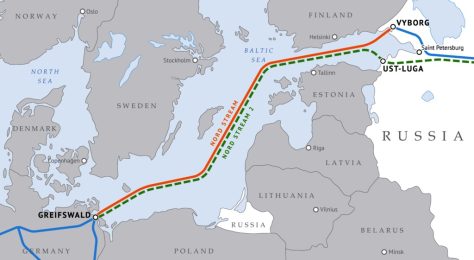
The Keystone XL pipeline would have allowed us to purchase oil and gas from Canada, which is much better than buying it from Russia, the Middle East, etc. Biden loves Russia. One might even say that he colludes with Russia to help them invade Ukraine – by helping them build their military. Biden gave approval for Russia to construct the Nord Stream 2 pipeline from Russia to Germany, so that they could sell all their oil and gas to European countries.

Nord Stream 2
Nord Stream 2

That’s what Democrat voters voted for in 2020: a pipeline for Russia, so they could sell oil and gas and invade Ukraine.

European countries are desperate for oil and gas, after having exchanged their conventional energy sources for green energy sources. Green energy sources produce low amounts of energy, and are inconsistent, while costing more than conventional energy sources. Since the green plan didn’t work out, the Europeans have to enrich Russia now. They make a show of being made at Russia, but they (like Biden) aren’t willing to develop their own energy.

How did American energy producers respond to having their lease applications denied, and their existing leases and pipelines canceled?

Biden’s moratorium on oil and gas leases won’t end fossil fuel extraction since industry leaders currently hold undeveloped leases. Drilling on public lands generates billions of dollars in revenue but comprises roughly a quarter of the country’s greenhouse gas emissions.

Oil and gas producers have strongly opposed Biden’s move and are expected to challenge the order in court.

“Penalizing the oil and gas industry kills good-paying American jobs, hurts our already struggling economy, makes our country more reliant on foreign energy sources, and impacts those who rely on affordable and reliable energy,” Anne Bradbury, president of the American Exploration and Production Council, said in a statement.

Environmental groups, who have long pushed for the changes sought by Biden, praised the orders.

Has Biden learned his lesson from the huge spike in gas prices? Is he concerned about the widespread inflation that is caused by the spike in energy prices?

Nope!

The Federalist notes:

CBS News revealed the Biden administration canceled more oil and gas leases across the country this week as soaring gas prices reached new heights Wednesday.

The Department of Interior canceled plans to drill in more than 1 million acres in Alaska’s Cook Inlet, arguing “lack of industry interest,” on top of canceling a pair of leases in the Gulf of Mexico over “conflicting court rulings.”

[…]The administration’s relentless animosity towards fossil fuels, showcased in its repeated cancelation of oil and gas projects, has chilled investment in the capital- and labor-intensive industry. This keeps production down despite rising demand at home and turmoil in markets abroad.

[…]In Alaska, upon inauguration Biden canceled leases in the Arctic National Wildlife Refuge, which is forecast to hold between 4 to 12 billion barrels of recoverable oil. He closed another 7 million acres from the state’s National Petroleum Reserve off from development last month.

What happens when investors see that the Biden administration is taxing, regulating and blocking oil and gas development? They say “we would do better investing our money elsewhere”. Oil and gas producers get the message very quickly, and they stop creating new energy sources. That’s how supply dries up. And when supply is reduced, prices go up.

Biden tried to fix the rising prices by getting Russia and the Middle East to drill more, and by stealing the strategic oil reserve, which is primarily designed for use during a crisis. But Biden considers his falling poll numbers a crisis. And begging our enemies to produce the oil that we should be producing seems right to him.

The president has turned to the nation’s emergency petroleum reserves for desperate political capital ahead of the November midterms… With no plans announced to restock the emergency supplies, Biden ordered the self-proclaimed “unprecedented” release of 1 million barrels of oil a day onto the market for the next six months beginning Sunday.

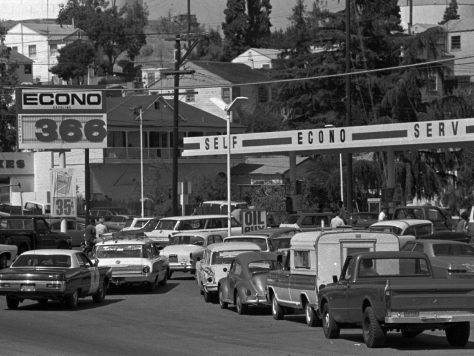
The new Democrat strategy is actually the old Democrat strategy used by Democrat President Jimmy Carter in the 1970s: to impose price controls on oil and gas:

Gas Lines
Gas Lines

That led to massive gas lines in the 1970s, because suppliers shut down when they realized they couldn’t make enough money to stay in business. There was no money to be made in producing energy, so energy companies just slowed down or stopped producing. Would you go to work if the government took 80% of what you earned?

People in America would line up around the block for gas, and they could only get a certain limited amount. Gas was only sold during certain hours of the day.

Gas Lines
Gas Lines

I’m sure that the young people won’t have heard about the results of setting price controls, but it’s in the first few chapters of Thomas Sowell’s “Basic Economics”. But if their teachers have no ability in economics, then how would the student learn it? They can’t.

UCLA research psychiatrist makes the case for mind-body dualism

I was talking about substance dualism with Rose, and showing her new academic books (one, two) about it. So, I decided to blog something related to that. Today’s post is about Jeffrey Schwartz – a research psychiatrist at UCLA. His research shows that mental effort can change your brain chemistry. Would you like a scientific argument for non-physical minds? Read on, and I’ll show you one.

First, let’s see something completely secular, from UCLA Health, just to explain who Jeffrey is, and what he does:

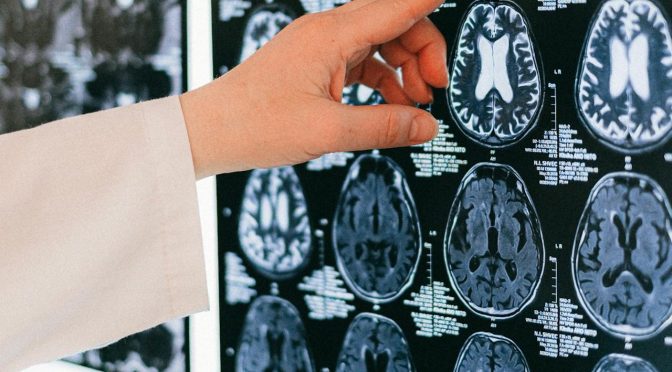
Thanks to neuroplasticity — the brain’s ability to create and reorganize neural connections — people can find relief from anxiety, depression, substance abuse, obsessive-compulsive disorder and everyday mental health challenges, says Jeffrey Schwartz, MD, a research psychiatrist with the UCLA Department of Psychiatry.

Dr. Schwartz outlined his four-step method for dealing with mental health challenges at the Emerging Themes in Behavioral Health conference, April 28, at the UCLA Luskin Conference Center(Link is external).

The four steps combine mindfulness with cognitive behavioral therapy, which results in what he calls “self-directed neuroplasticity.”

Why is this argument for substance dualism? Well, his research shows that when humans exert “mental effort” in certain structured ways, they can actually change their brains. This contradicts the materialist / physicalist view which is that your experience of consciousness is an illusion that is entirely controlled by deterministic chemical processes in your brain.

Here’s a video about his research:

And here’s a summary of the research, published in First Things, and authored by William Dembski.

Excerpt:

Schwartz provides a nonmaterialist interpretation of neuroscience and argues that this interpretation is more compelling than the standard materialist interpretation. He arrived at this position as a psychiatrist specializing in the treatment of obsessive-compulsive disorder (OCD).

[…]From brain scans, Schwartz found that certain regions in the brain of OCD patients (the caudate nucleus in particular) exhibited abnormal patterns of activity. By itself this finding is consistent with a materialist view of mind (if, as materialism requires, the brain enables the mind, then abnormal patterns of brain activity are likely to be correlated with dysfunctional mental states). Nonetheless, having found abnormal patterns of brain activity, Schwartz then had OCD patients engage in intensive mental effort through what he called relabeling, reattributing, refocusing, and revaluing (the 4 Rs).

[…]Schwartz documents not only that patients who undertook this therapy experienced considerable relief from OCD symptoms, but also that their brain scans indicated a lasting realignment of brain-activity patterns. Thus, without any intervention directly affecting their brains, OCD patients were able to reorganize their brains by intentionally modifying their thoughts and behaviors. The important point for Schwartz here is not simply that modified thoughts and behaviors permanently altered patterns of brain activity, but that such modifications resulted from, as he calls it, “mindful attention”-conscious and purposive thoughts or actions in which the agent adopts the stance of a detached observer.

So mind-brain interaction is not a one-way street. Everyone knows that you can alter your consciousness, beliefs, moods, sensations, etc. by changing your brain, e.g. – with drugs. But it turns out that you can also will to focus your thoughts on certain things in order to change your brain chemistry. So the causation is not just bottom-up, but also top-down.

Mindfulness therapies – which are documented in the research papers published by Schwartz (like this one and this one and this one)- assume the existence of free will. Naturalists don’t like this research because naturalists don’t believe in free will. So what do you find more trustworthy? The evidence? Or the philosophy? Me, I trust the evidence more than the philosophy.