All posts by Wintery Knight

https://winteryknight.com/

Government-run health care system to kill child against the wishes of his parents

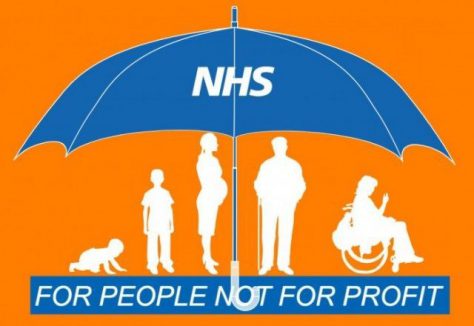
The National Health Service is government-run socialist health care

I was asked to blog about this story by Trina, and so I will.

Here is the straight news story from Fox News:

The mother and father of a brain-damaged 11-month-old baby on Friday were sitting bedside with the boy after losing a legal battle that would have kept the boy on life support.

The Wall Street Journal reported that doctors at the Great Ormond Street Hospital for Children in London, who are caring for Charlie Gard received permission from a court to discontinue life support.

The boy’s parents objected to the decision and wanted to take him to the U.S. for an unproven, experimental therapy.

[…]On Tuesday, the parents lost a bid to take Charlie to the U.S. for trial therapy when the European Court of Human Rights sided with earlier rulings that continued treatment would cause “significant harm” and that life support should end. 

The ECHR decision followed other decisions by British courts, all of which sided against the parents. The courts decided that the government-run NHS health care system should kill the child, rather than allowing the parents to bring the child to the US to try the experimental treatment.

National Review summarizes the reasoning of the judges:

According to the Honourable Mr. Justice Nicholas Francis of the High Court’s Family Division, who authored the decision subsequently upheld by the higher courts, death is “in Charlie’s best interests.” There was no “scientific basis” for believing that Charlie would respond positively to the experimental American treatment; meanwhile, there is “unanimity among the experts from whom I have heard that nucleoside therapy cannot reverse structural brain damage.” “If,” wrote Justice Francis, “Charlie’s damaged brain function cannot be improved, as all agree, then how can he be any better off than he is now?” It was “with a heavy heart,” the judge said, that he sided with the doctors. Charlie should be permitted “to die with dignity.”

[…]So it was that successive courts in the United Kingdom and in Europe simultaneously found that Connie Yates and Chris Gard had devoted themselves unhesitatingly to their son’s welfare for ten months, and also that Yates and Gard could not be trusted to act in their son’s best interests.

Connie Yates and Chris Gard pay the salaries of this leftist judges and leftist NHS doctors. If these judges were elected, and these doctors were in the private sector, then the parents’ wishes would matter. But since the money disappeared in taxes, there is no accountability. The government actors have already collected the money from the parents, and now they don’t care what the parents want any more. They won’t even let them bring their child to the United States for treatment that their primitive government-run system can’t offer.

But it’s worse than that – the NHS won’t even let the parents take the child home to die.

Hot Air explains:

The couple had raised nearly £1.4 million for that effort, which would have ended NHS involvement in the case, but the courts decided that they — and not the parents — were in position to decide that death rather than potential treatment was what was best for the child. Now the parents cannot even take the baby home to allow him to die there rather than in hospital, even though they pledged to cover all the costs.

[…]In a single-payer system such as NHS, the courts have clearly ruled that the state has more standing on whether to allow someone to die than the person or his/her nearest relations. And now, the state — through its socialized-medicine providers — refuse to even allow the death to take place under the circumstances desired by the family.

Lest you think that this is an isolated incident, there are a number of other failures of socialized medicine linked in this article by libertarian Daniel Mitchell, writing for CNS News. When Obamacare was being debated, I was easily able to find dozens of NHS horror stories. Just imagine that the losers at the post office or the bureau of motor vehicles were providing you with health care. That’s the NHS. They don’t care about you, they’ve already got their money from your taxes. They have no competition from other players in a free market, so they don’t care. THEY DON’T CARE.

I should note that the UK’s socialized medicine system does allow young women to get breast enlargements, and women also get free IVF treatment. All paid for by taxpayers, of course. The first duty of politicians is to get re-elected. When you put health care in the hands of politicians, they use health care to redistribute taxpayer money in order to buy votes.


Are all sins equally bad? Or are there degrees of severity for different sins?

Bible study that hits the spot

This question came up recently so I did some digging on theology web sites to find what Bible verses applied to the question.

Here’s what Ligonier said:

It’s clear that we have different degrees of sin when we consider the warnings of Scripture. There are at least twenty-two references in the New Testament to degrees of rewards that are given to the saints in heaven. There are different levels, different rewards, and different roles in heaven. The Bible warns us against adding to the severity of our judgment. Jesus said to Pontius Pilate, “He who delivered me over to you has the greater sin” (John 19:11). Jesus measures and evaluates guilt, and with the greater guilt and greater responsibility comes the greater judgment. It’s a motif that permeates the New Testament.

The idea of gradation of sin and reward is based upon God’s justice. If I commit twice as many sins as another person, justice demands that the punishment fits the crime. If I’ve been twice as virtuous as another person, justice demands that I get more of a reward. God tells us that entrance into heaven will be only on the basis of the merit of Christ, but once we get to heaven, rewards will be dispensed according to works. Those who have been abundant in good works will receive an abundant reward. Those who have been derelict and negligent in good works will have a small reward in heaven. By the same token, those who have been grievous enemies of God will have severe torments in hell. Those who have been less hostile will have a lesser punishment at the hands of God. He is perfectly just, and when He judges, He will take into account all of the extenuating circumstances. Jesus said, “I tell you, on the day of judgment people will give account for every careless word they speak” (Matt. 12:36).

A while back, my friend Dina sent me a sermon where that exact passage (John 19) was brought up by the pastor.

I think the correct position is that any sin is enough to separate you from God, but some sins are more severe than others in God’s objective standard of right and wrong.

OK, that was fine and good, but then I noticed a few days later that Michael Krueger had also blogged about this “all sin are equal” view, too.

Krueger says this:

First, to say all sins are the same is to confuse the effect of sin with the heinousness of sin.  While all sins are equal in their effect (they separate us from God), they are not all equally heinous.

Second, the Bible differentiates between sins. Some sins are more severe in terms of impact (1 Cor 6:18), in terms of culpability (Rom 1:21-32), and in terms of the judgment warranted (2 Pet 2:17;  Mark 9:42; James 3:1).

Even more Bible references, so we’re not on the wrong track.

So then why do some people insist that all sins are equal? It turns out that it is coming from the secular ideal of non-judgmentalism.

Krueger explains:

We should begin by observing that this phrase does not come from Scripture.  People do not use it because it appears in the Bible. Why then do they use it?

One reason, as noted above, is that some Christians use this phrase to uphold the seriousness of sin. It is viewed as a way to remind people not to be dismissive about their sin or regard it is a triviality.

Others use this phrase as way to “flatten out” all sins so that they are not distinguishable from each other.  Or, to put it another way, this phrase is used to portray all human beings as precisely the same.  If all sins are equal, and all people sin, then no one is more holy than anyone else.

In a world fascinated with “equality,” this usage of the phrase is particularly attractive to folks. It allows everyone to be lumped together into a single undifferentiated mass.

Such a move is also useful as a way to prevent particular behaviors from being condemned.  If all sins are equal, and everyone is a sinner, then you are not allowed to highlight any particular sin (or sinner).

Needless to say, this usage of the phrase has featured largely in the recent cultural debates over issues like homosexuality.  Yes, homosexuality is a sin, some Christians reluctantly concede.  But, they argue, all sins are equal in God’s sight and therefore it is no different than anything else.  Therefore, Christians ought to stop talking about homosexuality unless they are also willing to talk about impatience, anger, gluttony, and so on.

Krueger also posted this fascinating follow up post, where he looks at how the phrase is being used by people on Twitter.

Look at these tweets:

  • All sins are equal. People tend to forget that. There is no bigger or smaller sin. Being gay and lying, very equal.

  • all sins are equal in God’s eyes. whatever you’re doing, is no better than what someone else is doing.

  • If you have sex before marriage please don’t come on social media preaching about the wrongs of homosexuality. All sins are equal

  • Need people to realize that all sins are equal… don’t try to look down on me or question my faith just cuz you sin differently than I do.

  • Don’t understand why you’re so quick to judge me, when all sins are equal. So much for family..

  • if you think being gay is a sin, let me ask you something, have you not done anything wrong in your life? all sins are equal. we’re sinners

  • Nope no difference at all. All sins are equal no matter what you’re running for. The bible says do not judge lest ye be judged

  • A huge problem I have with religion is the notion that all sins are equal. Like pre-martial sex and murder are the same amount t of bad.

  • people do bad things because they believe that all sins are equal and ~god~ loves y’all equally so he’s going to forgive you naman ha ha ha

  • It a sin to condemn another sinner and their actions. All sins are equal. So what makes you better than the person you’re condemning?

  • I think so b/c having sex before marriage doesn’t make you less of a women then if you waited until marriage.. all sins are equal soo

  • friendly reminder, all sins are equal in gods eyes so you’re not better than I am in any way. please worry about your own sins before mine.

  • People don’t like when I suggest abortion as an option. This is a free country and all sins are equal so mind your business!!!

  • What I do is no worse than wat you do… all sins are equal no matter what it is… a sin is a sin

  • to god all sins are equal so you have no right to compare your sins to someone else’s bc in the end it doesn’t matter

The first thing that I noticed is that premarital sex and homosexuality are the most popular sins. I would think that divorce and abortion would be up there in the rankings, as well.

Something strange has happened in our society such that more and more people want to be led by their feelings, rather than be bounded by rules or standards. When people get caught breaking moral rules, rather than be accountable, they attack the person judging them. They would rather escape the judgment of their peers than admit fault and try to fix the mistake, and do better next time.

It’s so bad now, that the people who have morals and who make moral judgments are seen as the real bad people. The immoral people are on the offense, and even trying to ban people from being able to disagree with them. We’re seeing that with people who are being attacked for defending natural marriage against divorce and redefinition of marriage. In France, they want to make speech critical of abortion a criminal offense. And in Canada, they’ve now made speech critical of the gay agenda a criminal offense. (It’s already a human rights tribunal offense)

What is even more interesting is when the people who push the “don’t judge me” line try to justify it from the Bible. Very strange, but we seem to have forgotten the value of setting moral boundaries. Now moral boundaries are “evil”. Instead, having compassion for people who break the moral boundaries and harm themselves and others is “good”.

Dr. Jennifer Roback Morse lectures on basic economics

Dr. Jennifer Roback Morse

Here is a podcast on basic economics from Dr. Jennifer Roback Morse.

About the speaker:

Dr. Morse is the founder of the Ruth Institute, a global non-profit organization focused on keeping the family together, protecting the rights of children and helping the millions of people who have been harmed by family breakdown.

She has authored or co-authored four books and spoken around the globe on marriage, family and human sexuality. Her work has been translated into Spanish, Chinese, Korean and Polish. Her newest book is The Sexual Revolution and Its Victims.

She earned her Ph.D. at the University of Rochester and taught economics at Yale and George Mason Universities.

A bit more about her economics credentials: Dr. Morse served as a Research Fellow for Stanford University’s Hoover Institution from 1997-2005. She received her Ph.D. in economics from the University of Rochester in 1980 and spent a postdoctoral year at the University of Chicago during 1979-80. She taught economics at Yale University and George Mason University for 15 years.

The MP3 file is here. (49 minutes)

Topics:

  • The study of economics is anti-postmodern – there is objective truth independent of what people think
  • The study of economics believes in fixed principles of human nature
  • Economics studies the allocation of scarce resources that have alternative uses
  • Economics studies how people exchange resources
  • How both people who engage in a voluntary trade always believe that they will be better off
  • How both people who engage in a voluntary trade both benefit from the exchange
  • How incentives motivate people to act
  • Understanding supply and demand
  • Understanding how “free” government services are rationed
  • Understanding opportunity costs
  • How prices signal producers to produce more or less, and consumers to buy or not buy
  • Market-driven prices versus price controls
  • The role of substitution
  • The necessity of allowing failure in a free market

The requirements of economic growth:

  • private property
  • contracts
  • the profit motive
  • competition
  • free trade
  • entrepreneurship, creativity and innovation
  • the rule of law

If you want to learn more about basic economics, I recommend picking up a book or two by Thomas Sowell – the first book I usually give away is “Intellectuals and Society”, and then next “Basic Economics”. A shorter introduction is “The Politically Incorrect Guide to Capitalism” by Robert Murphy. You can find a good list of books on the website of The Institute for Faith, Work and Economics.

I think it’s important for Christians to understand basic economics, because so much of the impact we have depends not only on our personal finances, but on our ability to promote economics policies that will affect our personal finances. For example, whether you have a job or not depends on economic policy. Whether you can get food and other required resources depends on economic policy. Often, big-government regimes with poor economic policies (e.g. – North Korea) will make it impossible for you to have other liberties, like religious freedom.

Just think about how hard it would be for you to pursue a Christian life plan in a place like Venezuela, where your priorities would not be apologetics, but just finding food and avoiding death and theft at the hands of criminals. Closer to home, we are now seeing Seattle restaurant workers having their hours cut and even losing their jobs – because they decided to raise the minimum wage rate (bad economics).

Excerpt:

This latest study from the UW team looks at the effects of both the first and second jumps. The second jump, in January 2016, raised the minimum wage to $10.50 to $13. (The minimum wage has since gone up again, to the current $11 to $15. It goes up again in January to $11.50 to $15.)

The team concluded that the second jump had a far greater impact, boosting pay in low-wage jobs by about 3 percent since 2014 but also resulting in a 9 percent reduction in hours worked in such jobs. That resulted in a 6 percent drop in what employers collectively pay — and what workers earn — for those low-wage jobs.

For an average low-wage worker in Seattle, that translates into a loss of about $125 per month per job.

“If you’re a low-skilled worker with one of those jobs, $125 a month is a sizable amount of money,” said Mark Long, a UW public-policy professor and one of the authors of the report. “It can be the difference between being able to pay your rent and not being able to pay your rent.”

The report also estimated that there are about 5,000 fewer low-wage jobs in the city than there would have been without the law.

As I blogged previously, 93% of economists agree that raising the minimum wage hurts job seekers. It actually hurts young and/or minority job seekers the most, because they are the ones looking for entry-level jobs. That is why in countries that have embraced bad economic policies, the unemployment rates for young people are at or above 50%.

Youth unemployment in socialist countries

Look at what the far-left UK Guardian says:

In Greece, 59.2% of under-25s are out of work. In Spain, youth unemployment stands at 56.5%; in Italy, it hovers around 40%.

[…]In the words of Enrico Giovannini, Italy’s employment minister, this is a disaster all the more shocking because it is hitting Europe’s best-educated generation: in Spain, nearly 40% of people in their 20s and early 30s have degrees; in Greece it’s 30%; in Italy, more than 20%.

Having an education isn’t what gets you a job. What gets you a job are the economic policies that make it viable for an entrepreneur to risk their capital in the hope of being able to keep more of what they earn – instead of paying it to the government so that bureaucrats can spend it on social programs.

Imagine it was you who lost your job or couldn’t find work due to bad economic policy. Think of how that would affect your ability to even drive to church on Sundays, or purchase a Bible, much less being able to organize an apologetics event at the university and pay for a speaker to fly in and stay in a hotel. Economics is important for Christians to understand, because so much of our influence and effectiveness depends on it.