How good is Alexander Vilenkin’s no-God explanation for the origin of the universe?

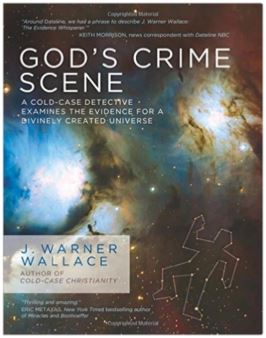
God's Crime Scene: A Cold-Case Detective Examines the Evidence for a Divinely Created Universe
God’s Crime Scene: A Cold-Case Detective Examines the Evidence for a Divinely Created Universe

I’ve been spending some time going over J. Warner Wallace’s splendid book “God’s Crime Scene” with a friend of mine over Skype. Last week we did chapter 1 on the origin of the universe. We were both struck at Wallace’s statement about Alexander Vilenkin, a non-theist who thinks that the universe had a beginning out of nothing.

Wallace writes:

If you’re a bit confused by all the alternatives offered by those who deny the universe had a beginning, perhaps it’s time to call an expert witness. In this case, there’s no one better than Alexander Vilenkin, theoretical physicist, cosmologist, professor of physics, and director of the Institute of Cosmology at Tufts University. Partnering with mathematician Arvind Borde, cosmologist Alan Guth, and graduate researcher Audrey Mithani, Vilenkin has written several papers demonstrating demonstrating any model of the universe in which expansion is occurring, regardless of the early conditions of the cosmos, must have a beginning.[8] Vilenkin’s work addresses all the models we’ve already described, plus any future proposals in which the expansion of the universe is acknowledged. [9]Vilenkin is a critical expert witness because he simplifies and makes sense of the diverse, sometimes-confusing scientific data.’

This week, my friend asked me why Vilenkin was still not ready to become a theist. Well, Dr. William Lane Craig got asked that same question in his question of the week, and his answer was interesting.

Vilenkin’s view affirms the nothing that precedes the universe:

Modern physics can describe the emergence of the universe as a physical process that does not require a cause. Nothing can be created from nothing, says Lucretius, if only because the conservation of energy makes it impossible to create nothing [sic; something?] from nothing. . . .

There is a loophole in this reasoning. The energy of the gravitational field is negative; it is conceivable that this negative energy could compensate for the positive energy of matter, making the total energy of the cosmos equal to zero. In fact, this is precisely what happens in a closed universe, in which the space closes on itself, like the surface of a sphere. It follows from the laws of general relativity that the total energy of such a universe is necessarily equal to zero. . . .

If all the conserved numbers of a closed universe are equal to zero, then there is nothing to prevent such a universe from being spontaneously created out of nothing. And according to quantum mechanics, any process which is not strictly forbidden by the conservation laws will happen with some probability. . . .

What causes the universe to pop out of nothing? No cause is needed.[1]

Dr. Craig replies at length, here is the part I liked best:

Finally, Vilenkin’s inference that because the positive and negative energy in the universe sum to zero, therefore no cause of the universe’s coming into being is needed is hard to take seriously. This is like saying that if your debts balance your assets, then your net worth is zero, and so there is no cause of your financial situation! (Vilenkin would, I hope, not agree with Peter Atkins that because the positive and negative energy of the universe sum to zero, therefore nothing exists now, and so “Nothing did indeed come from nothing.”[2] For as Descartes taught us, I, at least, undeniably exist, and so something exists.) Christopher Isham, Britain’s premier quantum cosmologist, rightly points out that there still needs to be “ontic seeding” to create the positive and negative energy in the first place, even if on balance its sum is naught.[3]

Vilenkin’s interaction with the kalam cosmological argument is, as I say, fascinating because we see here so clearly how philosophical faux pas, not scientific mistakes, invalidate the objections of an eminent scientist to the argument. This should be an object lesson to all those who, like Stephen Hawking or Lawrence Krauss, naïvely think that philosophy is a sterile and irrelevant discipline compared to science. Philosophy can help all of us, including scientists, to avoid the logical mistakes and conceptual confusions that are all too prevalent in discussions taking place on the borderland of physics, metaphysics, and theology.

That’s a very simple refutation of a famous scientist’s speculative cosmology that anyone can understand. Christians are on very good ground when it comes to the science of origins.

You would think that more Christians would be aware of this evidence and the difficulties that naturalists have in accounting for the origin of the universe in their worldview. But, for some reason, it’s not a real hot topic in most churches. Nor is the fine-tuning or the origin of life or the Cambrian explosion. It’s really strange! If you haven’t yet picked up Wallace’s book, I highly recommend it. It’s the best book for blue collar workers who like evidence. The book touches on virtually every piece of evidence relevant to the God question, including some I had never seen before.

Positive arguments for Christian theism

Are evangelism and human responsibility for sin rational in Calvinism?

Bible study that hits the spot

Here is a quote from Dr. Craig that seems to get Calvinists so angry:

“The counterfactuals of creaturely freedom which confront Him are outside His control. He has to play with the hand He has been dealt.”

(Source)

Calvinists have told me that this quotation from Dr. Craig is “heretical” or “borderline heretical”. They are claiming that Dr. Craig thinks that God is lacking in power somehow. But why is God’s power limited, according to this quote?

Well, it’s because God respects FREE WILL. That quote is simply Dr. Craig’s way of saying that God does not override the free will of his creatures.

So let’s make sense of Craig’s statement. Either there is determinism and God causes people to act, or humans have free will and they cause themselves to do things. If you do not cause yourself to act, then you are not responsible for what you do. Just think for a minute. If I push you into someone and you fall into them and then they fall off a cliff, then are you a murderer? No – I would be, because I am the cause. The Bible teaches that God has chosen to limit his power so that that people have genuine responsibility for their actions, and that means they have genuine free will. Humans can only be responsible for their sins if they have the ability to do other than they do, and this is the traditional Christian view.

It’s true that human beings are totally depraved as a result of the fall, and do not want God in their lives, but they are responsible because God wants them to be saved, and it is their free choice that prevents it. Rather than force humans to love him against their will, God lets them resist him, and so they are responsible for their sin.

Dr. Craig cites the famous Calvinist D. A. Carson (who I like) explaining some of the themes of the Bible that affirm robust free will and human responsibility:

The classical Reformed [scholars]… acknowledge that the reconciliation of Scriptural texts affirming human freedom and contingency with Scriptural texts affirming divine sovereignty is inscrutable. D. A. Carson identifies nine streams of texts affirming human freedom: (1) People face a multitude of divine exhortations and commands, (2) people are said to obey, believe, and choose God, (3) people sin and rebel against God, (4) people’s sins are judged by God, (5) people are tested by God, (6) people receive divine rewards, (7) the elect are responsible to respond to God’s initiative, (8) prayers are not mere showpieces scripted by God, and (9) God literally pleads with sinners to repent and be saved (Divine Sovereignty and Human Responsibility: Biblical Perspectives in Tension, pp. 18-22). These passages rule out a deterministic understanding of divine providence, which would preclude human freedom.

On Calvinism, however, all of these 9 features of reality, supported by dozens and dozens of Bible passages, are all false. On Calvinism, God is the sole causal agent. There is no free will. People go to Heaven or Hell as a choice of God. People can only perform good actions if God acts unilaterally to “regenerate” them, making obedience to God possible. Calvinism teaches that God and his agents are constantly exhorting and commanding things that they literally cannot do because they are unregenerate, and the only way to get regenerate is for God to regenerate them, against their will. And they can’t resist that.

So let’s make sense of D.A. Carson’s list of 9 items:

  1. On Calvinism, when God or his agents exhort or command people to perform good actions, it’s meaningless because God has to unilaterally regenerate them first, so that they can perform the good actions.
  2. On Calvinism, when God or his agents tell people to obey, believe and choose God, it’s meaningless because God has to unilaterally regenerate them first, so they can obey, believe and choose God.
  3. On Calvinism, when people sin and rebel against God, it’s like people are soda cans that God shakes up some of them, and then pops the tabs on all of them and the ones he shook up fizz.
  4. On Calvinism, when God judges people for sinning, it’s like God sends the cans who don’t fizz to Hell for eternity, even though he unilaterally chose not to shake them, which is the only way they could fizz.
  5. On Calvinism, when God tests people, it’s meaningless, because there is no way they can pass the tests unless God unilaterally regenerates them first, so they can pass the test.
  6. On Calvinism, when people receive divine rewards, it’s meaningless, because all the credit goes to God for regenerating them. They are just fizzing because God shook their can of soda.
  7. On Calvinism, when people respond to God’s initiative, it’s meaningless, because God’s regeneration is irresistible and irrevocable. They can do nothing other than fizz when he shakes the can.
  8. On Calvinism, when people pray, it’s meaningless, because God unilaterally decides whether to regenerate people or not, and all their fizzing comes solely from his decision to shake or not shake the can.
  9. On Calvinism, when God pleads with sinners to repent and be saved, it’s meaningless, because God has to unilaterally regenerate them before they can repent, and then that repentance cannot be resisted at any time after.

Here’s William Lane Craig to explain it further in an answer to a question of the week from Dr. Craig’s Reasonable Faith web site.

5 problems:

  1. Universal, divine, causal determinism cannot offer a coherent interpretation of Scripture.
  2. Universal causal determinism cannot be rationally affirmed.
  3. Universal, divine, determinism makes God the author of sin and precludes human responsibility.
  4. Universal, divine, determinism nullifies human agency.
  5. Universal, divine determinism makes reality into a farce.

If God’s choice, to regenerate or not, causally determines whether we can respond to him, or not, then that is determinism. And it makes our lives meaningless because we are not responsible for anything we do. Life is a puppet show, and there is only one person pulling the strings. Evangelism makes no sense, because God decides unilaterally and irrevocably who is saved. When I explain this to Calvinists, their response is that God commands us to evangelize, so we must even if it makes no sense on their view.

A Calvinist might respond to this defense of free will and human responsibility with passages from Romans 8 and 9, but those are best understood as speaking about corporate election, rather than unilaterally-determined selection. Membership in the elect group is based on people responding to God’s drawing of them to him. That interpretation fits with the rest of the Bible, which is uniformly affirmative of human free will and human responsibility. Concerns about diminished divine sovereignty are resolved by middle knowledge, in which God chooses to actualize exactly the world that achieves his sovereign will out of all the possible worlds, and he saves exactly the people he chooses to save – but without violating their free will. Yes, it’s cosmic entrapment, but at least the cosmic entrapment does not violate the free will of the creatures, which would render then irresponsible for their own sins.

Disclaimer: I don’t think that this is an issue that should divide Christians, and I do think that Calvinists are most definitely Christians. And that they are very devout and intelligent Christians, too. I think they just have a presupposition of theological determinism that colors the way they read the Bible, resulting in an unBiblical anthropology. This often leads them to a Mormon epistemology (“the Bible is true because I feel that it’s true”) and magic words evangelism (“the correct way to evangelize is not to use evidence but to invite unbelievers to presuppose the truth of the Bible because it causes them to have all the feels”).

If you are looking for a good book on this issue, I recommend Kenneth Keathley’s “Salvation and Sovereignty“, which is a thorough discussion of the problem of divine sovereignty and human freedom.

New study: college students who lost access to marijuana improved their grades

Investigation in progress

This is from the radically leftist fake news site Washington Post, of all places. Thankfully, the study was done by scientists, not by journalists.

Excerpt:

The most rigorous study yet of the effects of marijuana legalization has identified a disturbing result: College students with access to recreational cannabis on average earn worse grades and fail classes at a higher rate.

Economists Olivier Marie and Ulf Zölitz took advantage of a decision by Maastricht, a city in the Netherlands, to change the rules for “cannabis cafes,” which legally sell recreational marijuana. Because Maastricht is very close to the border of multiple European countries (Belgium, France and Germany), drug tourism was posing difficulties for the city. Hoping to address this, the city barred noncitizens of the Netherlands from buying from the cafes.

This policy change created an intriguing natural experiment at Maastricht University, because students there from neighboring countries suddenly were unable to access legal pot, while students from the Netherlands continued.

The research on more than 4,000 students, published in the Review of Economic Studies, found that those who lost access to legal marijuana showed substantial improvement in their grades. Specifically, those banned from cannabis cafes had a more than 5 percent increase in their odds of passing their courses. Low performing students benefited even more, which the researchers noted is particularly important because these students are at high-risk of dropping out. The researchers attribute their results to the students who were denied legal access to marijuana being less likely to use it and to suffer cognitive impairments (e.g., in concentration and memory) as a result.

Other studies have tried to estimate the impact of marijuana legalization by studying those U.S. states that legalized medicinal or recreational marijuana. But marijuana policy researcher Rosalie Pacula of RAND Corporation noted that the Maastricht study provide evidence that “is much better than anything done so far in the United States.”

The author of that article is a professor of psychiatry at Stanford University. Should be reliable.

The best way to learn about the effects of legalizing drugs like marijuana is to look at where it’s been tried. We don’t have to look far, just to Colorado.

The Daily Signal reports on a peer-reviewed study about Colorado.

Excerpt:

A published academic peer-reviewed study and another thorough study set to be released next Monday show:

  • An increase in marijuana-related traffic fatalities in Colorado since 2009
  • An increase in marijuana-related traffic fatalities in Colorado compared to non-“medical marijuana” states since 2009
  • Alcohol-related fatalities remained the same

[…]Marijuana was in essence legalized in Colorado in 2009, when the state commercialized the sale of so-called “medical marijuana.” By commercializing the sale, and thus consumption of marijuana across the state, the state saw a large increase in use by its citizens, and citizens from other states, so-called pot tourists.

In other words, 2009 was a pivotal year for Colorado and its’ drivers.

In the three years prior to 2009 (2006-2008), Colorado averaged 35 drivers per year who tested positive for marijuana in fatal accidents.

In the three years after 2009 (2010-2012), Colorado averaged 57.3 drivers per year who tested positive for marijuana use in fatal accidents—a 64 percent increase over the pre-2009 numbers.

And here is another report that explains some of the other effects of legalizing marijuana.

Excerpt:

According to the new report by the Rocky Mountain High Intensity Drug Trafficking Area entitled “The Legalization of Marijuana in Colorado: The Impact,” the impact of legalized marijuana in Colorado has resulted in:

  1. The majority of DUI drug arrests involve marijuana and 25 to 40 percent were marijuana alone.
  2. In 2012, 10.47 percent of Colorado youth ages 12 to 17 were considered current marijuana users compared to 7.55 percent nationally. Colorado ranked fourth in the nation, and was 39 percent higher than the national average.
  3. Drug-related student suspensions/expulsions increased 32 percent from school years 2008-09 through 2012-13, the vast majority were for marijuana violations.
  4. In 2012, 26.81 percent of college age students were considered current marijuana users compared to 18.89 percent nationally, which ranks Colorado third in the nation and 42 percent above the national average.
  5. In 2013, 48.4 percent of Denver adult arrestees tested positive for marijuana, which is a 16 percent increase from 2008.
  6. From 2011 through 2013 there was a 57 percent increase in marijuana-related emergency room visits.
  7. Hospitalizations related to marijuana has increased 82 percent since 2008.

The report includes other data about the negative effect of legalizing marijuana in Colorado, including marijuana-related exposure to children, treatment, the flood of marijuana in and out of Colorado, the dangers of pot extraction labs and other disturbing factual trends.

Part of me thinks that posting this is futile. Sensible people will not be surprised by these studies, but the libertarians and Democrats who think that legalized pot is just wonderful are probably so brain-damaged already that they won’t care what studies say at all. Marijuana is dangerous and addictive. We shouldn’t legalize it, and we shouldn’t normalize it.

Related posts