Donald Trump names Ken Blackwell as head of his domestic transition team

Ken Blackwell: Senior Fellow for Human Rights and Constitutional Governance at the Family Research Council

OK, so some of my readers may not know who Ken Blackwell is, but long story short, this would be like naming Ted Cruz as Solicitor General or naming Thomas Sowell as head of the Congressional Budget Office. Ken Blackwell has a reputation as a social conservative who is also a fiscal conservative. Don’t worry, I have things about him for you to read, but first the announcement, which was tweeted by the Family Research Council (!) where Blackwell is a Senior Fellow.

Associated Press:

The Ohio Republican selected by president-elect Donald Trump to lead his domestic transition is an outspoken conservative with a history as a party maverick.

Ken Blackwell prevailed in an intra-party feud in 2006 to become Ohio’s first black nominee for governor. He also took on fellow Republicans in the state Legislature while serving in statewide office.

As state elections chief, Blackwell played a pivotal role in administering the hotly-contested 2004 presidential election while serving as Republican George W. Bush’s honorary campaign co-chair. Democrats alleged in political attacks and lawsuits that Blackwell supported vote-suppressing policies favoring Bush, who won Ohio and the election. Blackwell prevailed in court.

Blackwell is on the boards of the National Rifle Association and Club for Growth. He’s also a senior fellow at the Family Research Council.

Oh my goodness, you can’t appoint someone from the Family Research Council. This is the organization that gay rights activists really hate – remember the attack by gay activist Floyd Lee Corkins? That was the FRC he tried to shoot up! Wow, this is my second favorite think tank.

Here is his fact sheet from the FRC:

Ken Blackwell

Ken Blackwell is the Senior Fellow for Human Rights and Constitutional Governance at the Family Research Council.  He is a national bestselling author of three books: Rebuilding America: A Prescription For Creating Strong Families, Building The Wealth Of Working People, And Ending Welfare; The Blueprint: Obama’s Plan to Subvert the Constitution and Build an Imperial Presidency; and Resurgent: How Constitutional Conservatism Can Save America.

He serves on the Board of Directors of various high-profile organizations including the Timothy Plan, the International Foundation for Electoral Systems, the United States Air Force Academy Foundation, the Club for Growth, Grove City College, the National Rifle Association, the Becket Fund for Religious Liberty, the National World War II Museum, and the Law Enforcement Legal Defense Fund. He is a member of the Council on Foreign Relations and the Board of Advisors, of the Jewish Institute for National Security Affairs (JINSA).

Mr. Blackwell has had a vast political career. He was mayor of Cincinnati, Treasurer and Secretary of State for Ohio, undersecretary at the U.S. Department of Housing and Urban Development, and U.S. Ambassador to the United Nations Human Rights Commission. He was a delegate to the White House Summit on Retirement Savings in 1998 and 2002. During the 1990s, he served on the congressionally appointed National Commission on Economic Growth and Tax Reform and the board of the International Republican Institute. He was Co-Chairman of the U.S. Census Monitoring Board from 1999-2001.

He has received many awards and honors for his work in the public sector. These accolades include the U.S. Department of State’s Superior Honor Award for his work in the field of human rights which he received from both the administrations of Presidents George H.W. Bush and Bill Clinton. In 2004, the American Conservative Union honored Mr. Blackwell with the John M. Ashbrook Award for his steadfast conservative leadership.

Ken’s commentaries have been published in major newspapers and websites: The Wall Street Journal, USA Today, The New York Times,The Washington Post, The Washington Times, and Investor’s Business Daily.  In addition, he has been interviewed by many media outlets including CBS’sFace the Nation, NBC’s Meet the Press, ABC’s This Week, and Fox News Sunday.

His continuing education has included executive programs at the Massachusetts Institute of Technology and Harvard. Mr. Blackwell has also received honorary doctoral degrees from ten institutions of higher education. He holds Bachelor of Science and Master of Education degrees from Xavier University in Ohio, where he later served as a vice president and member of its faculty. In 1992, he received Xavier’s Distinguished Alumnus Award and was inducted into Xavier’s Athletic Hall of Fame in 2015.

I do have something that I can give you right away. A while back the Heritage Foundation made this public policy booklet that featured essays by social conservatives writing on fiscal issues, and fiscal conservatives writing on social issues. The idea was fusionism – that social conservatives and fiscal conservatives need each other. I am a fusionist. Well, Ken Blackwell is a prominent social conservative, and he wrote a chapter on “The Rule of Law” – exactly the thing that was lacking in the corrupt Obama administration.

Here is the PDF of the booklet’s table of contents AND the chapter by Ken Blackwell!!!! How did I get this so fast? I used my Wintery powers, of course.

Also, I have a copy of the full PDF. I would really recommend to everyone that they read this so that they can get a thumbnail picture of what social and fiscal conservatives believe. Each of the essays is only 3-5 pages long, so it’s not a lot to read. These are the things that I wish that every evangelical Christian understood about public policy. Really, everyone should understand what conservatives really believe, whether you agree with these positions, or not.

If you have wonderful things about Ken Blackwell to share, leave them in the comments. This is just incredible – I would have believed that Ted Cruz would have named Ken Blackwell to such a post, but never, ever Donald Trump in a million years. I expect Trump to nominate a bunch of moderates like Giuliani, but Blackwell is more like me – very conservative, and passionate about conservative ideas and policies. I think there will be a lot of picks that I disagree with, but this is one I really agree with.
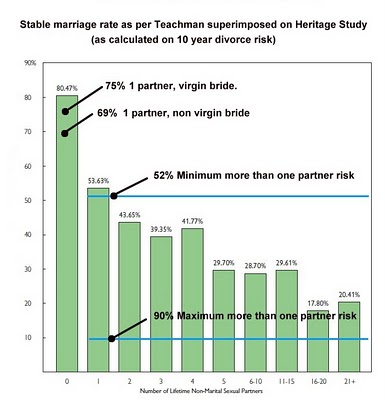

Does more relationship experience lead to better relationship success?

Published in the Journal of Marriage and Family

Consider this article from the Institute for Family Studies.

It says:

In most areas of life, having more experience is good. Want to be great in your chosen field? Sustained experience is essential. Want to be great at a sport? There’s no substitute for practice. And anyone who runs a business can tell you that their best employees are those who have been in the job long enough to have learned how to handle the normal well and the unexpected with wisdom.

While more experience is often beneficial in life, the story looks different when it comes to some types of experience before marriage. For example, in our Before “I Do” report, we surveyed a national longitudinal sample of young adults about their love lives prior to marriage to examine factors associated with future marital quality. We found that having more sexual and cohabiting partners before marriage is associated with lower relationship quality once married. In particular, having only ever lived with or had sex with one’s spouse was associated with higher marital quality. Our findings are consistent with other studies showing that cohabiting with more partners before marriage is associated with greater likelihood of divorce1 and that a higher number of sexual partners before marriage is associated with lower marital quality and greater likelihood of divorce.2 As we noted, what happens in Vegas may not always stay in Vegas. But why?

There are many reasons why having more romantic partners before marriage may put one at higher risk of difficulties in marriage. One of the most important explanations comes under the heading of what some call selection effects. For many people, an elevated risk of difficulties in marriage was present before they had their first relationship experience. Background characteristics such as parental divorce, low education, and economic disadvantage are associated both with having more sexual and cohabiting partners and also with lower marital quality and/or divorce.3So it may not be that having more sexual or cohabiting partners causes further risk because a lot of risk was already in motion. Selection is a big part of how relationships unfold, but is it the whole story? We believe that, in addition to selection, behavior matters and has plausible connections to marital outcomes. We are going to explain four reasons why having more relationship experience before tying the knot might make it harder to succeed in marriage.

Here are the 4 reasons:

  1. More Awareness of Alternatives
  2. Changed Expectations: The Perfect Sexual Lover (in Your Mind)
  3. More Experience Breaking It Off
  4. Babies

I have to quote the one that I’ve personally encountered in my mentoring – number three: more experience breaking it off. I’ve seen this commitmentphobia in two women who had “wild” periods in their past who had broken up with cohabitating boyfriends.

It says:

Cohabitation has characteristics that seem paradoxical. Living with a partner makes it harder to break up than dating, all other things being equal, and often now comes at a time in relationship development where people have not really chosen each other for the future.8 And yet, cohabiting couples frequently break up, and they are more likely than any other time in history not to end up marrying.9

These days, cohabitation has become more a part of the dating scene than a lead-up to marriage. Let’s call the phenomenon cohabidating. In this context, some people are getting a lot of experience at leaving serious relationships (or surviving being left). Just as with our prior point, that does not sound bad in one way—at least insofar as people are breaking off relationships that had no future. But it’s also true that people tend to get good at things they have a lot of experience doing. People can get good at moving out and moving on.

How does that impact marriage? Some people probably so deeply learn that they can survive leaving a relationship when they are unhappy with it that they leave reasonably good marriages that would have given them and their children the best outcomes in life. They bail too quickly.

Obviously, many others leave very poor or even dangerous marriages only after a lot of agonizing and effort. We’re not suggesting divorce is ever easy or that it is not sometimes the best course. But in a day and age when people get so much experience moving out and moving on, we think many may learn to do so too rapidly, and to their detriment.

If you want to get good at relationships, experience may not be the answer. Reading good studies like this, and making decisions that line up with the research is much wiser. As always, never follow your heart. Always follow rational arguments and evidence, and keep connected to a good panel of advisors who have had long-term relationships success. That’s the best way to avoid disaster.

People ask me how to learn how to do relationships well if your parents are divorced and the culture is a cesspool. The answer is to go back in time to before radical feminism, to the time when men and women had distinct roles, and had to attract each other without using sex. Men had to prove their feelings to women with actions, and when women chose men for the roles of husband and father. Parents were consulted to give advice about courtship and marriage. Where can you find this today? Well, books by Christian authors like Jane Austen are very helpful. If you like DVDs, go out and get yourself the BBC production of “North and South”, which is based on the book by Christian author Elizabeth Gaskell. My favorite romance is Edmund Rostand’s “Cyrano de Bergerac”, just make sure you get the Brian Hooker translation if you are reading it in English. Although the best version is the original French. Shakespeare is also good – I got my rule of saving the first kiss for the proposal / engagement from Henry V.

You have to dig if you are going to get away from a culture that trains people to fail to prepare for marriage. You have to fight to develop and maintain your ability to love another person well, in a Christ-like way. The culture says to treat the opposite sex like a commodity, but you should instead think of them as something designed to be presented to God. Never treat them in a way that causes damage to that vertical relationship, that’s the most important thing about them – how they see God.

William Lane Craig lectures on failure in the Christian life

I have a key that will unlock a puzzling mystery

I found this audio on Brian Auten’s Apologetics 315 web site.

Here is the MP3 file.

And here is my summary.

Intro:

  • the topic of failure is not one that is often discussed by Christians
  • failure #1: failure in the Christian life which is the result of sin
  • failure #2: when a Christian is defeated while trying to serve God
  • the consequences for failure #1 can be worse for the Christian
  • the consequences for failure #2 can be worse for the world as whole
  • how is it possible for a person to fail when they are obeying God? (#2)
  • how can it be that God can call someone to a task then let them fail?
  • failure is not persecution – persecution is normal for Christians
  • failure is not trials – testing is normal for Christians to grow

Bill’s failure:

  • Bill had submitted all the coursework for his second doctoral degree
  • but he had to pass a comprehensive oral examination
  • he failed to pass the comprehensive exam
  • Bill and Jan and his supporters had all prayed for him to pass
  • how could God allow this to happen?

Solution to the problem:

  • God’s will for us may be that we fail at the things we try in life
  • there are things that God may teach us through failure
  • Bill learned that human relationships are more important than careers
  • we need to realize that “success” in life is not worldly success
  • true success is getting to know God well during your life
  • and failure may be the best way to get to know God well
  • it may even be possible to fail to know God while achieving a lot
  • the real measure of a man is loving God and loving your fellow man

Practical:

  • give thanks to God regardless of your circumstances
  • try to learn from your failure
  • never give up

The ending of Bill’s story:

  • Bill spent an entire year preparing for a re-take of his exam
  • Bill was awarded his second doctorate “magna cum laude” (with great distinction)
  • Bill learned that American students are not well prepared for exams
  • the year of studying remedied his inadequate American education
  • in retrospect, he is thankful for the failure – he learned more

If you like this, you should pick up Craig’s book “Hard Questions, Real Answers“, which has a chapter on this problem.