
Are atheists more moral than religious people?

Well, let’s take a look at the numbers with this article by Arthur Brooks, published by the Hoover Institute at Stanford University.

Excerpt:

How do religious and secular people vary in their charitable behavior? To answer this, I turn to data collected expressly to explore patterns in American civic life. The Social Capital Community Benchmark Survey (SCCBS) was undertaken in 2000 by researchers at universities throughout the United States and the Roper Center for Public Opinion Research. The data consist of nearly 30,000 observations drawn from 50 communities across the United States and ask individuals about their “civic behavior,” including their giving and volunteering during the year preceding the survey.

From these data, I have constructed two measures of religious participation. First, the group I refer to as “religious” are the respondents that report attending religious services every week or more often. This is 33 percent of the sample. Second, the group I call “secular” report attending religious services less than a few times per year or explicitly say they have no religion. These people are 26 percent of the sample (implying that those who practice their religion occasionally make up 41 percent of the sample). The SCCBS asked respondents whether and how much they gave and volunteered to “religious causes” or “non-religious charities” over the previous 12 months. Across the whole population, 81 percent gave, while 57 percent volunteered.

The differences in charity between secular and religious people are dramatic. Religious people are 25 percentage points more likely than secularists to donate money (91 percent to 66 percent) and 23 points more likely to volunteer time (67 percent to 44 percent). And, consistent with the findings of other writers, these data show that practicing a religion is more important than the actual religion itself in predicting charitable behavior. For example, among those who attend worship services regularly, 92 percent of Protestants give charitably, compared with 91 percent of Catholics, 91 percent of Jews, and 89 percent from other religions.

Socioeconomically, the religious and secular groups are similar in some ways and different in others. For example, there is little difference between the groups in income (both have average household incomes around $49,000) or education level (20 percent of each group holds a college degree). On the other hand, the secular group is disproportionately male (49 percent to 32 percent), unmarried (58 percent to 40 percent), and young (42 to 49 years old, on average). In addition, the SCCBS data show that religion and secularism break down on ideological lines: Religious people are 38 percentage points more likely to say they are conservative than to say they are liberal (57 percent to 19 percent). In contrast, secular people are 13 points more likely to say they are liberal than to say they are conservative (42 percent to 29 percent).

It is possible, of course, that the charity differences between secular and religious people are due to these nonreligious socioeconomic differences. To investigate this possibility, I used a statistical procedure called probit regression to examine the role of religious practice in isolation from all other relevant demographic characteristics: political beliefs, income (and hence, indirectly, the tax incentives for giving), education level, gender, age, race, marital status, and area of residence. The data show that if two people — one religious and the other secular — are identical in every other way, the secular person is 23 percentage points less likely to give than the religious person and 26 points less likely to volunteer.

Honestly, I’ve always struggled to understand how giving to charity could be rational, on atheism. If you are only alive for 80 years, and the purpose of your life is to be happy, then the only reason I can think of to give anything away to anyone is because it makes you feel happier or more respected or something. Maybe because you like thinking of yourself as moral, or maybe because you want to be seen as moral, or maybe because you want a tax deduction, or maybe something else. But if this is the only life you are ever going to have, and people are just collections of atoms, then why care about what anyone is doing? We’re all just accidents anyway, on atheism, and we’re going to die out eventually. There are no objective moral duties – we are accidents on the atheist view. One set of atoms giving some atoms to another set of atoms, and then in the end all the atoms get scattered: who cares?

Look:

In a universe of blind physical forces and genetic replication, some people are going to get hurt, other people are going to get lucky, and you won’t find any rhyme or reason in it, or any justice. The universe that we observe has precisely the properties we should expect if there is, at bottom, no design, no purpose, no evil and no good, nothing but blind, pitiless indifference… DNA neither knows nor cares. DNA just is. And we dance to its music. (Richard Dawkins, River Out of Eden: A Darwinian View of Life (1995))

They may live better than that for whatever whim, but goodness is not rational within their worldview. And we want to be rational about morality, because as the numbers show, having a reason to be good makes a big difference in whether actually do good. As opposed to just claiming to be good. Anyone can say anything, but their rational beliefs are the rails on which they run their lives.

Here’s something interesting I found about the leaders of the two political parties in this country.

Excerpt:

In 2009, the Obamas gave 5.9 percent of their income to charity, about the same as they gave in 2006 and 2007. In the eight years before he became president, Obama gave an average of 3.5 percent of his income to charity, upping that to 6.5 percent in 2008.

The Obamas’ charitable giving is equally divided between “hope” and “change.”

George W. Bush gave away more than 10 percent of his income each year he was president, as he did before becoming president.

Thus, in 2005, Obama gave about the same dollar amount to charity as President George Bush did, on an income of $1.7 million — more than twice as much as President Bush’s $735,180. Again in 2006, Bush gave more to charity than Obama on an income one-third smaller than Obama’s.

In the decade before Joe Biden became vice president, the Bidens gave a total — all 10 years combined — of $3,690 to charity, or 0.2 percent of their income. They gave in a decade what most Americans in their tax bracket give in an average year, or about one row of hair plugs.

Of course, even in Biden’s stingiest years, he gave more to charity than Sen. John Kerry did in 1995, which was a big fat goose egg. Kerry did, however, spend half a million dollars on a 17th-century Dutch seascape painting that year, as Peter Schweizer reports in his 2008 book, “Makers and Takers.”

To be fair, 1995 was an off-year for Kerry’s charitable giving. The year before, he gave $2,039 to charity, and the year before that a staggering $175.

He also dropped a $5 bill in the Salvation Army pail and almost didn’t ask for change.

In 1998, Al Gore gave $353 to charity — about a day’s take for a lemonade stand in his neighborhood. That was 10 percent of the national average for charitable giving by people in the $100,000-$200,000 income bracket. Gore was at the very top of that bracket, with an income of $197,729.

When Sen. Ted Kennedy released his tax returns to run for president in the ’70s, they showed that Kennedy gave a bare 1 percent of his income to charity — or, as Schweizer says, “about as much as Kennedy claimed as a write-off on his 50-foot sailing sloop Curragh.” (Cash tips to bartenders and cocktail waitresses are not considered charitable donations.)

The Democratic base gives to charity as their betters do. At the same income, a single mother on welfare is seven times less likely to give to charity than a working poor family that attends religious services.

In 2006 and 2007, John McCain, who files separately from his rich wife, gave 27.3 percent and 28.6 percent of his income to charity.

In 2005, Vice President Cheney gave 77 percent of his income to charity. He also shot a lawyer in the face, which I think should count for something.

In a single year, Schweizer reports, Rush Limbaugh “gave $109,716 to ‘various individuals in need of assistance mainly due to family illnesses,’ $52,898 to ‘children’s case management organizations,’ including ‘various programs to benefit families in need,’ $35,100 for ‘Alzheimer’s community care — day care for families in need,’ and $40,951 for air conditioning units and heaters delivered to troops in Iraq.”

The Democrats are the non-religious party, the Republicans are the religious party. The Democrats are also the talking party, as you can see, and the Republicans are the doing party.

By the way, Arthur Brooks eventually turned this research into a book called “Who Really Cares?“, and it’s a good response to atheists when they tell you that they can be moral without God. If it doesn’t make sense to be moral, then atheists aren’t going to do it. You can read more about that book here.

What should we do to encourage men to marry?

Marriage and family
Marriage and family

Dina tweeted two articles in a row about a new book that describes some of the reasons that men aren’t marrying. I thought that since she tweeted two of them, that I had better blog on them. I think there are some good ideas in here about why men are not marrying as much as they used to.

The first article is from the UK Daily Mail, and it talks about how men are mocked in the popular culture.

It says:

Our universities and further education institutions are dominated by women at a proportion of ten to every seven men, with the Royal Veterinary College formally identifying boys as an under-represented group.

Across the Russell Group of Britain’s leading 20 universities, just three have a majority of male students.

This means your son will be more likely to join the ranks of the unemployed, the majority of whom are now — yes, you’ve guessed it — men.

The Office of National Statistics noted that in the summer of 2014 a total of 1,147,511 British men were out of work, compared with 887,892 women.

Psychologically, your son will be more likely to suffer from depression and attempt suicide than his sibling, but there’ll be less support in place to save him.

He’s also more likely to endure everyday violence than women, with the latest crime statistics for England and Wales noting that two-thirds of homicide victims were men.

[…]By the time your son is 18, he will probably have absorbed the social message that his dad is much less valuable as a parent than his mother — that fathers in families are an added bonus, not a crucial cog.

Then, if he starts his own family and his relationship doesn’t last, he may become one of the four million UK men who have no access to their children, yet are forced to fund them.

This part below about health care for men was interesting – how well do men do in a big-government health care system?

Not well:

To cap it all, he’ll be progressively neglected by British healthcare despite being more likely to get — and die from — nine out of the top ten killer diseases. You know, the biggies: these include cancer, heart conditions, strokes, pneumonia, diabetes and cirrhosis of the liver.

Fifteen years ago the UK Men’s Health Forum showed that, for every £1 spent on men’s health, £8 was spent on women’s. Since then little has changed, for no good reason. Or rather, one very bad reason: we live in a medical matriarchy. In other words, male life is cheap. Bargain basement, last-day-of-the-sale cheap.

The ultimate insult? It’s all done at our expense. The National Health Service is funded by the public purse, but it’s men — yes, men — who pay a whopping 70 per cent of UK income tax. Yet we are thrown nothing but crumbs in return.

Currently, women are screened for breast cancer, ovarian and cervical cancer. This is great, but excuse me if I don’t jump for joy. There’s still no screening programme for prostate cancer, even though it kills four times more men than cervical cancer does women.

And while we’re on the subject of statistics, we men will die five years earlier than our wives, sisters, daughters and girlfriends in a life expectancy gap that’s increased 400 per cent since 1920.

Regarding government-run health care in the UK, this is the same as in other government-run systems. In America, men do much better because the health care system is slightly less controlled by government.

Look:

Americans have better survival rates than Europeans for common cancers.[1]  Breast cancer mortality is 52 percent higher in Germany than in the United States, and 88 percent higher in the United Kingdom.  Prostate cancer mortality is 604 percent higher in the U.K. and 457 percent higher in Norway.  The mortality rate for colorectal cancer among British men and women is about 40 percent higher.

Americans have lower cancer mortality rates than Canadians.[2]  Breast cancer mortality is 9 percent higher, prostate cancer is 184 percent higher and colon cancer mortality among men is about 10 percent higher than in the United States.

I was wondering if he was going to say something about divorce and child custody in his article, but he left that for his second article, also tweeted by Dina.

He writes:

‘Ultimately, men know there’s a good chance they’ll lose their friends, their respect, their space, their sex life, their money and — if it all goes wrong — their family,’ says Dr Helen Smith, author of Why Men Are Boycotting Marriage, Fatherhood And The American Dream.

‘They don’t want to enter into a legal contract with someone who could effectively take half their savings, pension and property when the honeymoon period is over.

‘Men aren’t wimping out by staying unmarried or being commitment phobes. They’re being smart.’

[…]It wasn’t always this way. In the 1800s, men typically got custody of the children in the event of a split — not as a result of privilege, but because they were solely financially responsible for them.

They got the children, but they also got the bill. Benefits Britain didn’t exist, encouraging single mums to go it alone.

Now, 200 years on, women get the children, but men still get the bill. Sometimes, men even pay for children who aren’t theirs.

The Child Support Agency has 500 cases of paternity fraud a year, where a mother names a man as the biological father of her child, even when she has a good idea he isn’t. And that’s just the cases we know about. According to a YouGov study, 1.2 million men doubt they are the fathers of their partners’ children.

[…][N]o British woman has been convicted of paternity fraud.

And finally, the well-known sex-withholding problem:

Think your wedding day will be the happiest day of your life, chaps? You may need to think again. The quantity — and quality — of sex dwindles after marriage, say researchers.

A recent survey of 3,000 couples found those who had sex four times a week before their wedding did the deed just once a week afterwards.

The value proposition of marriage to men has certainly changed over time, and men are responding to the changing incentives.

One of my co-workers who has no trouble attracting talented, attractive women to live with him asked me to name one reason why he – as an atheist – ought to get married. I could not think of one. The risks are just too high, and in my experience, women (not Dina, obviously), generally don’t understand the problem, nor are they sympathetic with the needs of men.

Scott Walker’s immigration plan is more conservative than Bush or Rubio

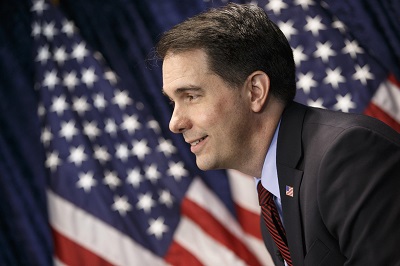
Wisconsin Governor Scott Walker

According to Breitbart News, which took a good look at it.

Excerpt:

Wisconsin Gov. Scott Walker, a likely 2016 GOP presidential candidate, pledged to protect American workers from the economic effects, not only of illegal immigration but also of a massive increase in legal immigration.

During an interview with Glenn Beck, Walker became the first declared or potential 2016 GOP presidential candidate to stake out a position on immigration fully in line with that of Senate Judiciary Committee subcommittee on Immigration and the National Interest chairman Sen. Jeff Sessions (R-AL). He also noted that he has been working with Chairman Sessions on the issue to learn more about it.

His view is now secure the border and implement E-Verify for foreign workers:

Walker says he discussed immigration policy in depth with Texas Gov. Greg Abbott when he visited the border a few weeks ago. He said that he doesn’t think he was “directly wrong” before but didn’t have a “full appreciation for what is the risk along our border.”

He continued:

I knew there were people traveling, coming across the border, but really what you have is much greater than that. What you have is international criminal organizations, the drug cartels aren’t just smuggling drugs—they’re smuggling firearms and smuggling not only humans but trafficking and horrific situations. It’s an issue that’s not just about safety or about national security, it’s about sovereignty. If we had this kind of assault along our water based ports, the federal government would be sending in the navy. And yet there is a very minimal force along our land-based borders, be it New Mexico, Texas, Arizona, or California, and so to me it was clearly far bigger than immigration.

We need to have a much bigger investment from the federal government to secure the border, through not only infrastructure but personnel and certainly technology to do that and to make a major shift. If you don’t do that, there’s much greater issues than just immigration. Folks coming in from potentially ISIS-related elements and others around the world, there’s safety issues from the drugs and drug trafficking and gun trafficking and gun things with regard—but to get to immigration you have got to secure the border, because nothing you do on immigration fundamentally works if you don’t secure that border.

Walker also discussed the need for interior enforcement:

Then I think you need to enforce the law and the way you effectively do that is to require every employer in America to use an effective E-Verify system and by effective I mean you need to require particularly small businesses and farmers and ranchers. We got to have a system that works, but then the onus is on the employers and the penalties have to be steep that they’re only hiring people who are here, who are legal to be here. No amnesty, if someone wants to be a citizen, they have to go back to their country of origin and get in line behind everybody else who’s waiting.

This development, perhaps one of if not the biggest of the 2016 presidential campaign so far, comes as Walker has taken a commanding lead in polls in all three of the first GOP primary states: Iowa, New Hampshire, and South Carolina.

Walker also said in the interview that he would “absolutely” repeal Common Core in Wisconsin. Jeb Bush is, of course, a huge proponent of Common Core.

So, whatever our worries were about Walker on immigration, I think now we can relax. The only trouble now is getting the electorate to care more about accomplishments than charisma. But if the fight is between Walker and Clinton, I have no doubt that Clinton’s “entitled” attitude is going to lose her the election. No matter how much money she has. And remember that Walker is able to speak to any issue in a way that is persuasive to independents – he proved that in Wisconsin. While Hillary is taking about “equal pay” and smashing the glass ceiling, Walker’s going to be cleaning up on the issues middle-class Americans care about.

Chins up, buttercups! Things are looking good for our side.

Related posts