
Tag Archives: Won

Ted Cruz and Marco Rubio won the debate against pro-Democrat CNBC “moderators”

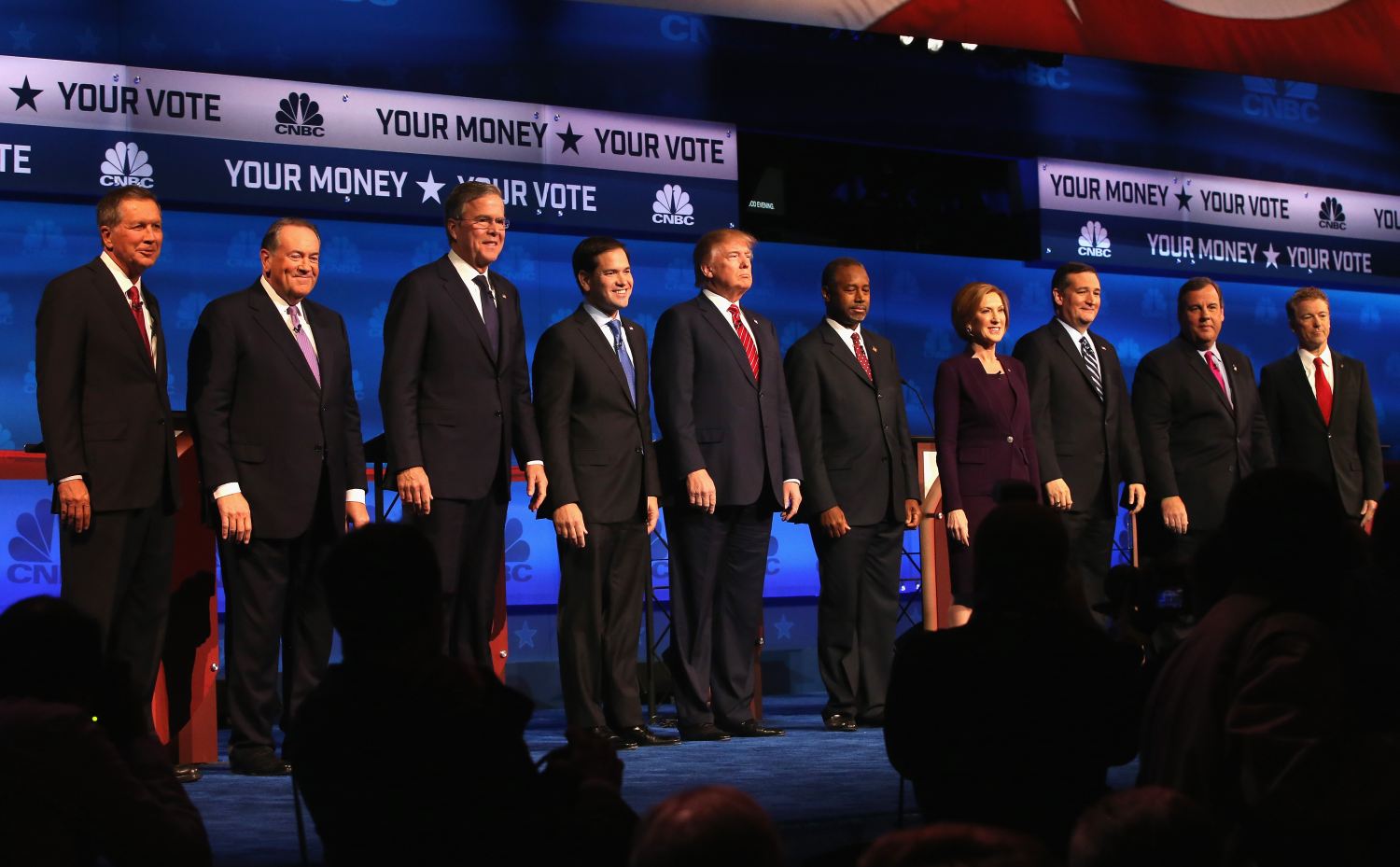
CNBC GOP primary debate candidates

The CNBC debate was a debacle. Leftist Democrat moderators tried desperately to make conservative ideas look as unpalatable as possible. Insults were phrased as questions, and substantive answers were constantly interrupted. But several of the debaters shined, in teeth of blatant media bias. The only questions that were not biased were those from Jim Kramer and Rick Santelli.

The best clip goes to Ted Cruz:

Transcript:

CRUZ: The questions that have been asked so far in this debate, illustrate why the American people don’t trust the media. This is not a cage match. And if you look at the questions, Donald Trump, are you a comic book villain? Ben Carson, can you do the math? John Kasich, can you insult two people over here? Marco Rubio, why don’t you resign? Jeb Bush, why have your numbers fallen? How about talking about the substantive issues people care about —

CNBC: Does this count? Do we get credit for this one?

CRUZ: And Carl, I’m not finished yet. The contrast with the Democratic debate, where every fawning question from the media was, which of you is more handsome and wise?

CNBC: Let me say, you have 30 seconds left to answer should you choose to do so.

CRUZ: Let me be clear. The men and women on this stage have more ideas, more experience, more common sense, than every participant in the Democratic debate. That debate reflected a debate between the Bolsheviks and the Menchavicks. Nobody watching at home believes that any of the moderators have any intention of voting in a Republican primary. The questions being asked shouldn’t be trying to get people to tear into each other, it should be what are your substantive solutions —

CNBC: I asked you about the debt limit and got no answer.

As expected, the ever-agile Marco Rubio outperformed.

Marco Rubio answering a puerile question from one of the CNBC Democrat stooges:

Marco Rubio taking on media for being in the pocketsof the Democrat Party:

Carly Fiorina on big government and socialism:

Ben Carson on his flat tax plan:

Ted Cruz on the need to audit the Federal Reserve:

Marco Rubio on balancing skilled immigration with training up the next generation of American workers, including vocational education in trades:

Ben Carson answers a question on gay rights and political correctness:

So many good Republican candidates, it’s hard to choose. I’m still liking Cruz and Rubio from this first-tier debate.

The Undercard / Second-Tier debate

I also watched the undercard debate, and Bobby Jindal won that one by a mile.

Here is his best clip, answering another biased question:

Jindal talks about his “everyone should pay something” tax plan:

Jindal was asked “Should for-profit schools be held accountable when they take taxpayer money and leave students deep in debt?” and he talked about his school choice policies in Louisiana, consumer-centered policies that promote choice and competition among education providers:

We always get a great post-debate podcast from the experts at The Weekly Standard. They agree with me that Cruz and Rubio won the debate. And they also think that CNBC lost the debate! Indeed. It’s indubitable.

Also, see this late-breaking post at from the Weekly Standard’s Jonathan Last. Last says that we are down to six candidates: “Trump, Carson, Rubio, Cruz, and maybe—just maybe—Fiorina and Christie”.
Perry and Bachmann to reassess their campaigns after disappointing loss in Iowa

Here are the Iowa election results from Fox News as of 2 AM on Wednesday morning:

Candidate Votes Percent
Santorum 29,968 25%
Romney 29,964 25%
Paul 26,186 22%
Gingrich 16,241 14%
Perry 12,592 11%
Bachmann 6,070 5%
Huntsman 744 <1%

And now the good news for Rick Santorum: Rick Perry and Michele Bachmann are both reassessing their campaigns.

Fox News:

Michele Bachmann said she’s soldiering on, giving no indication that she would bail on her Republican presidential campaign after a last-place showing in the contested Iowa caucuses, while Rick Perry, who finished just ahead of her in fifth, said he’s going back to Texas to “determine whether there is a path forward.”

“I believe I am the best conservative who can and who will beat Barack Obama in 2012,” Bachmann told supporters late Tuesday night following projections that she would be last in the six-way contest. Jon Huntsman decided not to compete in Iowa.

“In 2012, there could be another president in the White House. Who knows? There could be another Michele in the White House,” Bachmann said, referencing her shared name with first lady Michelle Obama.

Despite her pledges to go on, Bachmann campaign manager Keith Nahigian told The Associated Press that he couldn’t say with certainty whether Bachmann would go forward with her candidacy.

“I don’t know yet,” he said. “It’s hard to tell, but everything is planned.”

Asked about the report, Bachmann Communications Director Alice Stewart told Fox News that the AP story said it’s “uncertain.” “That’s true,” she said.

Bachmann’s 6 percent showing was a sharp turn after finishing in first place during the Ames, Iowa, GOP straw poll over the summer.

Perry, who doubled Bachmann’s raw vote total but earned only 11 percent overall, said he’s reassessing what he will do. He’s making that decision in light of the first-in-the-nation vote, but not before the Texas governor announced his campaign was making an ad buy in South Carolina, the third state to vote.

Perry has described the GOP presidential race as a marathon, but after spending the most of any campaign on Iowa advertising, his poor showing in Iowa won’t lend any momentum as the candidates go to New Hampshire, the first primary state of the election season, where Perry places last in polling.

The latest results are actually worse for Bachmann – 5%, not 6%. I think she should get out now and endorse Rick Santorum.

What’s interesting is that Mitt Romney had to spend a heck of a lot more money than Rick Santorum did in order to get the same 25% of the vote. What does that tell you about Mitt Romney as a candidate?

UPDATE: Bachmann is out, Perry is still in.

Conservatives defeat socialists by a landslide in Spain election

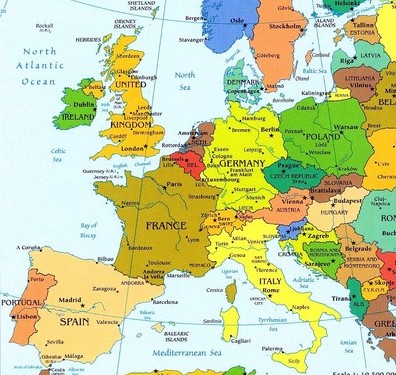
Political Map of Europe

The UK Telegraph explains.

Excerpt:

With almost 98 per cent of the vote counted the Popular Party won 186 seats in the 350 seat congress garnering a strong mandate to push through further austerity measures in an attempt to turn around an economy that risks being engulfed by the sovereign debt crisis.

[…]The socialists suffered their biggest defeat since Spain became a democracy more than 30 years ago, punished by an electorate for their perceived bungling of the economic crisis that has left 5 million unemployed.

[…]Alfredo Perez Rubalcaba, 60, the prime ministerial candidate who took the helm of the PSOE when Jose Luis Rodriguez Zapatero said he would not seek a third term, conceded defeat after the party won just 110 seats down from 169 in 2008.

“The Socialist Party did not have a good result. We clearly lost the elections,” he told party faithful in Madrid.

The conservatives won roughly 44 per cent of the votes and the Socialists took 29 per cent, according to official election results.

The Wall Street Journal analyzes the election result.

Excerpt:

Formerly a solid growth engine for the region’s economy, Spain today is grappling with a burst housing bubble, a 21% unemployment rate and borrowing costs near levels that triggered the international bailouts of several fiscally frail euro-zone peers.

Analysts said the election of Mariano Rajoy, the conservative leader who has committed to austerity and economic overhauls, could help improve investor sentiment toward Spain, but won’t fundamentally change perceptions that Spain and other peripheral nations are risky investments. For that, they said, European Union institutions will have to extend more support, possibly by converting the European Central Bank into a lender of last resort.

[…]The groundswell of support for Mr. Rajoy is chiefly the result of a deep economic crisis that has forced Socialist Prime Minister José Luis Rodríguez Zapatero to make unpopular budget cuts and economic overhauls. Earlier this year, Mr. Zapatero said he wouldn’t seek re-election and his party chose the veteran Mr. Pérez Rubalcaba to succeed him.

Analysts said the fact that change in Spain was coming via the ballot box was another sign of a better track record on governance, which has helped to keep Spanish borrowing costs below those of its fiscally frail peers.

Although Mr. Zapatero lacked a parliamentary majority, he was able to deliver all the measures he promised last year, including a public-sector wage cut, a pension freeze and a labor-market overhaul.

As a result, a clear victory for Mr. Rajoy, who has promised to take overhauls much further than his Socialist rivals, is widely expected to shore up confidence in the Spanish economy inside and outside the country.

Many recall the Popular Party-led governments of José María Aznar of 1996-2004 for their far-reaching moves that helped set the stage for a lengthy economic boom. Mr. Rajoy headed various ministries during that time.

At a polling station in Madrid’s Chamberí district, 18-year-old engineering student Diego Cubero said he had voted for the first time and chosen the Popular Party.

This is the end of a huge mistake made by the Spanish people in 2004 when they elected the socialists. Never, ever, ever elect socialists unless you want your economy to end up like Greece. That’s what socialists do to economies.