Tag Archives: War

Should Christians expect to know God’s will by means of feelings and intuitions?

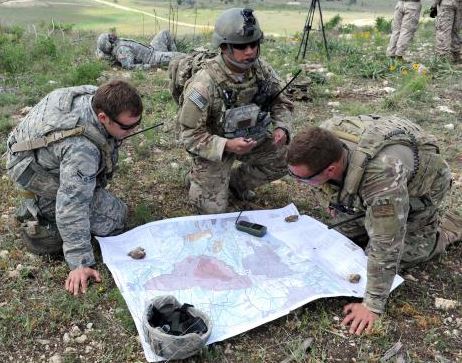
Air Force TACPs confirm target locations with their map

There are two views on the topic of decision making and the will of God. The view you learn in the church is called “the traditional view”. I call this view the feelings/intuition view. This view that elevates feelings / intuitions to the level of divine communications from God. The more practical view is called “the wisdom view”. I call this view the battlefield commander view. I am a proponent of the wisdom / commander view.

Let’s learn about the two different views:

[The traditional view is] that God has a plan for our lives and that we receive guidance through methods such as “open and closed doors”, “feeling led” and “the still, small, voice”.

[The wisdom view] holds that God does not have an “individual will” for our lives, but rather that all of God’s will can be summed up within two categories, God’s sovereign will and God’s moral will. Basically God’s sovereign will is all the things that god decrees will happen. It is hidden (mostly) from us, and does not play an active part in our decision, although some of it is revealed in the bible. God’s moral will is the part that we must concern ourselves with in making decisions. It is fully revealed in the bible and our decisions must be made within it. We may use wisdom in applying god’s moral will to our lives, or we may be in an area not covered by god’s moral will. We must finally submit in advance to God’s sovereign will, being prepared for him to sovereignty intervene and redirect us through whatever means he wills (see James).

Here’s a bit more from someone else:

Regarding the view that God has a personal will for us individually that we have to discern and find, J.I. Packer says, “The first thing to say is that the idea of guidance is actually a novelty among orthodox evangelicals. It does not go back farther than the last century. Second, it has led people to so much foolish action on the one hand, and so much foolish inaction on the other, as well as puzzlement and heartbreak when the ‘hotline’ to God seems to go silent, that it has to be discredited. Third, it must be said that Scripture gives us no more warrant constantly to expect personal ‘hotline,’ ‘voice-from-the-control-tower’ guidance than to expect new authoritative revelations to come our way for the guidance of the whole church.” (Hot Tub Religion, page 118).

As to the point of the question, how do I make decisions, I attempt to make decisions in light of three factors: God’s moral will, wisdom, and my personal desires. If something is opposed to God’s moral will, then I should obviously flee from it. If it’s not opposed, then I consider the wisdom of the choices. For example, would it be wise for me to marry a woman who loves Jesus, though we have nothing else in common? Probably not. If the options pass the criteria of wisdom, then I’m free to choose how I wish. If I’m offered two jobs, and both are honoring to God, and both would be wise to take, then I’m free to choose the job I would like more. I don’t need to put out a fleece or await some other confirmation from God. If it’s moral and wise, then the only question as to whether or not it will honor Him is my attitude.

Some examples of this model used in the Bible (in theological circles referred to as the Wisdom Model) are in Paul’s planning of a mission to Rome in Romans 1:9-15, 15:22-24, the Jerusalem Council (Acts 15:1-29), and Paul’s instructions for legal disputes (1 Cor 6:3-6).

The best book on this topic is Garry Friesen’s “Decision Making and the Will of God”. In it, you’ll find a full assessment about what the Bible teaches on this topic.

When I am trying to decide what will be effective, I look at Christian scholars, at their papers, books, and public debates. That’s effectiveness because it is addressed to a non-Christian audience in public with the force of reason and evidence. It is persuasion and it is addressed to rational minds. I want to change the minds of people who have a large influence on society on the whole. I don’t think that offering Christianity as life-enhancement or self-help is really “having an influence”. I think that offering Christianity as truth, with support, is “having an influence”.

So let me be clear about what I believe:

  • I don’t think that God normally talks to people directly
  • I don’t believe that life is an Easter egg hunt, filled with clues accessible only to emotion and intuition
  • I don’t believe that God expects people to discover a specific will for their lives using non-rational means
  • I think that people make up their own life plan that is consistent with the Bible
  • The goal of the life plan is to be effective, and there are no other considerations
  • I think that there are many good things a person can do, but that some are more effective than others
  • I think that with respect to the goal of serving God effectively, my happiness is expendable
  • I don’t think that the purpose of doing something for the Lord is to feel good about ourselves
  • I don’t think that people should choose ineffective things to do just because they like them
  • I don’t think that people should choose ineffective things to do just because they are good at them
  • I think people should do hard things that they don’t like – as long as it’s more effective
  • I don’t think that any course of action is as effective as any other – some plans accomplish more
  • I don’t think that life is totally unpredictable and irrational and subjective
  • I think that we can know what is or is not effective by studying and learning about the world
  • I think life is like a battlefield that must be surveyed, understood and acted upon deliberately

I think that every person is the commanding officer of his or her own life, and each person must study everything they can, make a plan that is consistent with the Bible’s moral prescriptions, execute the plan and achieve whatever they can achieve for the Lord. And the goal is not comfort or happy feelings, but real achievements. Not for the purpose of being saved, of course, because salvation is a free gift of God because of what Jesus did on the cross. Life is more like a battle than a vacation resort or a buffet or a shopping center. God’s will for us is not have happy feelings, but that we freely choose to sacrifice ourselves out of obedience and service to him. In my case, that means studying hard things, making money, saving money, and giving money away to good scholars, sponsoring good events and being persuasive to non-Christians. None of this necessarily makes me happy, but it does work to bring glory to God. I cried when I had to learn calculus, because it was so hard. But who cares? The main thing is that I have money now to sponsor Christian speakers or to give books to Christians to read, and God is happy with that.

I think that it is very important to realize that God is not impressed by our not being smart and not being effective. If we have the ability to be smart, then we should be smart, whether it makes us happy or not. If we have the ability to make money, then we should make money, whether it makes us happy or not. If we have the ability have a great influence, then we should have a great influence, whether it makes us happy or not. There will be plenty of time for happiness after we’re dead. But this life is a time of serving, and we should try to serve effectively, whether it makes us happy or not. With respect to God’s purposes in the world, my happiness is expendable.

Whenever someone questions my goals and plans by saying that I am asserting my will over God’s will, the first question I want to ask that person is this: “how do you know what God’s will is?” and “what is your basis for thinking that my plan to serve will not be effective?”. I want to know if I have misunderstood something about the way the world is, or miscalculated in some way. I want someone to look at my calculations and show where they are going to produce a less optimal result for the Lord. That’s the only concern I have – effectiveness for the Lord. Usually what I have found is that the other person wants to make the purpose of life their own happiness, and it makes them happier to choose what to do moment by moment, without having to study anything or make plans. It’s not that they have better goals (for God) or better plans (for God). It’s that they want their goals to be above God, and they don’t want to make plans other than to do whatever makes them happy.

I also found this summary of the Friesen book useful:

Remember Jeremiah 17:9:

9 “The heart is more deceitful than all else
And is desperately sick;
Who can understand it?.

Wisdom is best.
Least qualified president ever leaves Trump foreign policy disasters

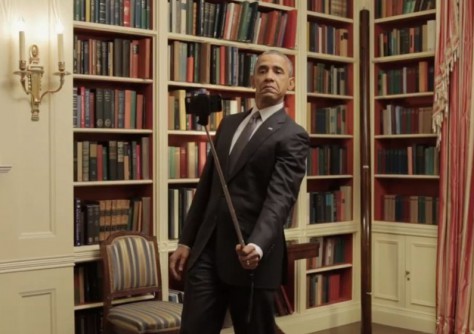
Is Barack Obama focused on protecting the American people?

Of all the things that the least qualified president did in the last eight years, the most difficult for the incoming Trump administration to fix are the national security and foreign policy blunders.

It’s not just that he gave away all our classified secrets via Hillary’s unsecure e-mail server is a problem. And then there were the leaks of our national security secrets from people like Edward Snowden and gay private Bradley Manning. And of course the hacking of our computers by the Chinese. What else would you expect from a political party that focuses on free condoms and gay marriage?

But the worse mistakes are the foreign policy blunders – the creation of wars in other countries and the the supporting of our enemies (giving assault weapons to drug cartels, giving nuclear weapons to Iran, etc.) that are the most difficult to make right.

Consider this article from the Daily Signal.

It lists 5 crises created by the Obama administration in the last 8 years:

  1. ISIS in Iraq and Syria
  2. Afghanistan War
  3. Ukraine-Russia War
  4. Saudi Arabia-Yemen War
  5. Campaigns Against Terrorists in Africa

There was no “Islamic State” in Iraq or Syria when president Bush left office. Iraq and Syria, along with Egypt and Libya, were stable. Libya had just voluntarily given up their WMD programs without a shot being fired, because of concern that Bush would invade them, too. But then Obama became president and withdrew our troops from Iraq. What happened next? Genocide, rape and sex-trafficking on a scale unimaginable to naive American progressives.

Excerpt:

1. ISIS in Iraq and Syria

In response to rapid territorial gains made by the Islamic State during the first half of 2014, the U.S. and allied countries began a military campaign against the terrorist group, relying primarily on airstrikes and support of local ground forces.

As of Nov. 2, the U.S. coalition has conducted nearly 16,000 airstrikes in Syria and Iraq, the countries where ISIS maintains its largest presence.

The Defense Department reports that as of Aug. 31, the total cost of operations related to defeating ISIS is $9.3 billion and the average daily cost is $12.3 million.

Trump inherits the military campaign against ISIS during a crucial phase, as the U.S. undertakes missions to take back key territory controlled by the militants.

[…]In Syria, the Obama administration is supporting 30,000 Syrian-Kurdish and Syrian-Arab fighters, who announced last weekend they were launching a campaign to liberate the ISIS capital in Raqqa. There are roughly 300 U.S. special operations forces on the ground in the country.

The moves to take back ISIS’ remaining strongholds showcase the extent to which Obama has prioritized the counter­terrorism mission in Syria over efforts to help resolve the country’s civil war, which has resulted in as many as a half a million deaths.

On Monday, in a press conference, Obama acknowledged his Syria policy “has not worked.”

Another blunder by the Obama administration occurred with his decision to take a naive, pacifist stance with Russia. Obama and Clinton were following the liberal playbook, which states that the best way to stop a bully from being aggressive is to bow down to him and grovel. This is literally how progressives think about foreign policy – they think that weaknesses causes tyrants to back off, and that strength causes tyrants to arm up and attack their neighbors.

How well this the progressive view work with Russia?

3. Ukraine-Russia War

Europe’s only active war has resulted in the deaths of nearly 10,000 soldiers and civilians on both sides.

The conflict started in 2013, when Ukrainian President Viktor Yanukovych, under pressure from Russia, suspended talks on a trade deal with the European Union. Thousands of protesters hit the streets in the following days, supporting closer ties with the West.

The protests turned violent, and Yanukovych fled the capital, Kiev. Russia annexed Crimea in 2014, and pro-Russian rebels began to seize territory in eastern Ukraine. Separatists in the eastern regions of Donetsk and Luhansk eventually declared independence.

Two cease-fire accords are not being observed. The Obama administration’s policy has been to support a German and French-led effort to negotiate a settlement to the war, and maintain pressure on Russia by working with the European Union to uphold sanctions imposed on Moscow for its annexation of Crimea. The Obama administration has also delivered Ukraine tens of millions of dollars in nonlethal aid, but has not provided weapons.

Obama isn’t providing Ukraine with weapons, because his progressive playbook says that Russia will be more likely to attack if they stand to take more losses to anti-tank weapons. That’s how people on the secular left think. They make decisions based on what makes them feel superior and what makes them look idealistic to others – not based on what works.

But there’s more. Hillary Clinton and Marco Rubio championed an idealistic intervention in Libya. They thought that if we got rid of Libya’s dictator, then there would be a spontaneous uprising of peaceful Muslim democracy-lovers. So they ordered air strikes with no ground invasion, and guess what they got?

Islamic State taking root in the anarchy they created:

5. Campaigns Against Terrorists in Africa

Obama has described his efforts to destroy al-Qaeda’s core leadership as one of the successes of his national security policy. But the terrorist threat has spread to new regions in recent years, prompting a U.S. military response, and Trump will have to decide how to proceed.

Unrelated campaigns in Libya and Somalia are prime examples of the diffuse threat.

In Libya, the U.S. has conducted more than 360 airstrikes in support of pro-government forces trying to expel ISIS from the coastal Libyan city, Sirte. A small number of U.S. special operations forces are also providing on-the-ground support.

Since the 2011 American intervention in Libya that led to the death of the country’s deposed dictator leader, Muammar Gaddafi, the country has been plagued by instability.

Today, the U.S. is supporting a project to build a unity government in Libya. But the unity government has not yet won the approval of Libya’s various rival factions.

“Libya is a quintessential civil war,” Middle East expert Pollack said. “ISIS makes their home in civil wars.”

Separately, in another African nation, Somalia, the U.S. has been engaged for more than a decade in an air campaign against al-Shabab, an affiliate of al-Qaeda. The group is responsible for one of the deadliest attacks in Africa, when in 2013 it struck a mall in Nairobi, Kenya.

The terrorist group spawned in 2005, taking advantage of chaos in a country that has been split apart by civil war for 25 years.

This year, The Washington Post reports, the U.S. has conducted more than a dozen airstrikes and drone strikes against al-Shabab.

According to The New York Times, as part of a multifront war against militant Islam in Africa, American forces are also involved in helping to combat al-Qaeda in Mali, Niger, and Burkina Faso and Boko Haram in Nigeria, Cameroon, and Chad.

Although progressives like to style themselves as being “anti-war”, they actually cause a lot of wars and deaths with their misguided idealistic military interventions. Obama inherited a peaceful situation in Russia and in the Middle East, but he screwed everything up.  To stop wars you must understand military issues. Just because a person says they don’t like war, it doesn’t mean that they know what actions to take to avoid war. President Trump is inheriting disasters from his incompetent predecessor.

Should Christians expect to know God’s will by means of feelings and intuitions?

I have a key that will unlock a puzzling mystery

There are two views on the topic of decision making and the will of God. The view you learn in the church is called “the traditional view”. I call this view the feelings/intuition view. This view that elevates feelings / intuitions to the level of divine communications from God. The more practical view is called “the wisdom view”. I call this view the battlefield commander view. I am a proponent of the wisdom / commander view.

Let’s learn about the two different views:

[The traditional view is] that God has a plan for our lives and that we receive guidance through methods such as “open and closed doors”, “feeling led” and “the still, small, voice”.

[The wisdom view] holds that God does not have an “individual will” for our lives, but rather that all of God’s will can be summed up within two categories, God’s sovereign will and God’s moral will. Basically God’s sovereign will is all the things that god decrees will happen. It is hidden (mostly) from us, and does not play an active part in our decision, although some of it is revealed in the bible. God’s moral will is the part that we must concern ourselves with in making decisions. It is fully revealed in the bible and our decisions must be made within it. We may use wisdom in applying god’s moral will to our lives, or we may be in an area not covered by god’s moral will. We must finally submit in advance to God’s sovereign will, being prepared for him to sovereignty intervene and redirect us through whatever means he wills (see James).

Here’s a bit more from someone else:

Regarding the view that God has a personal will for us individually that we have to discern and find, J.I. Packer says, “The first thing to say is that the idea of guidance is actually a novelty among orthodox evangelicals. It does not go back farther than the last century. Second, it has led people to so much foolish action on the one hand, and so much foolish inaction on the other, as well as puzzlement and heartbreak when the ‘hotline’ to God seems to go silent, that it has to be discredited. Third, it must be said that Scripture gives us no more warrant constantly to expect personal ‘hotline,’ ‘voice-from-the-control-tower’ guidance than to expect new authoritative revelations to come our way for the guidance of the whole church.” (Hot Tub Religion, page 118).

As to the point of the question, how do I make decisions, I attempt to make decisions in light of three factors: God’s moral will, wisdom, and my personal desires. If something is opposed to God’s moral will, then I should obviously flee from it. If it’s not opposed, then I consider the wisdom of the choices. For example, would it be wise for me to marry a woman who loves Jesus, though we have nothing else in common? Probably not. If the options pass the criteria of wisdom, then I’m free to choose how I wish. If I’m offered two jobs, and both are honoring to God, and both would be wise to take, then I’m free to choose the job I would like more. I don’t need to put out a fleece or await some other confirmation from God. If it’s moral and wise, then the only question as to whether or not it will honor Him is my attitude.

Some examples of this model used in the Bible (in theological circles referred to as the Wisdom Model) are in Paul’s planning of a mission to Rome in Romans 1:9-15, 15:22-24, the Jerusalem Council (Acts 15:1-29), and Paul’s instructions for legal disputes (1 Cor 6:3-6).

The best book on this topic is Garry Friesen’s “Decision Making and the Will of God”. In it, you’ll find a full assessment about what the Bible teaches on this topic.

When I am trying to decide what will be effective, I look at Christian scholars, at their papers, books, and public debates. That’s effectiveness because it is addressed to a non-Christian audience in public with the force of reason and evidence. It is persuasion and it is addressed to rational minds. I want to change the minds of people who have a large influence on society on the whole. I don’t think that offering Christianity as life-enhancement or self-help is really “having an influence”. I think that offering Christianity as truth, with support, is “having an influence”.

So let me be clear about what I believe:

  • I don’t think that God normally talks to people directly
  • I don’t believe that life is an Easter egg hunt, filled with clues accessible only to emotion and intuition
  • I don’t believe that God expects people to discover a specific will for their lives using non-rational means
  • I think that people make up their own life plan that is consistent with the Bible
  • The goal of the life plan is to be effective, and there are no other considerations
  • I think that there are many good things a person can do, but that some are more effective than others
  • I think that with respect to the goal of serving God effectively, my happiness is expendable
  • I don’t think that the purpose of doing something for the Lord is to feel good about ourselves
  • I don’t think that people should choose ineffective things to do just because they like them
  • I don’t think that people should choose ineffective things to do just because they are good at them
  • I think people should do hard things that they don’t like – as long as it’s more effective
  • I don’t think that any course of action is as effective as any other – some plans accomplish more
  • I don’t think that life is totally unpredictable and irrational and subjective
  • I think that we can know what is or is not effective by studying and learning about the world
  • I think life is like a battlefield that must be surveyed, understood and acted upon deliberately

I think that every person is the commanding officer of his or her own life, and each person must study everything they can, make a plan that is consistent with the Bible’s moral prescriptions, execute the plan and achieve whatever they can achieve for the Lord. And the goal is not comfort or happy feelings, but real achievements. Not for the purpose of being saved, of course, because salvation is a free gift of God because of what Jesus did on the cross. Life is more like a battle than a vacation resort or a buffet or a shopping center. God’s will for us is not have happy feelings, but that we freely choose to sacrifice ourselves out of obedience and service to him. In my case, that means studying hard things, making money, saving money, and giving money away to good scholars, sponsoring good events and being persuasive to non-Christians. None of this necessarily makes me happy, but it does work to bring glory to God. I cried when I had to learn calculus, because it was so hard. But who cares? The main thing is that I have money now to sponsor Christian speakers or to give books to Christians to read, and God is happy with that.

I think that it is very important to realize that God is not impressed by our not being smart and not being effective. If we have the ability to be smart, then we should be smart, whether it makes us happy or not. If we have the ability to make money, then we should make money, whether it makes us happy or not. If we have the ability have a great influence, then we should have a great influence, whether it makes us happy or not. There will be plenty of time for happiness after we’re dead. But this life is a time of serving, and we should try to serve effectively, whether it makes us happy or not. With respect to God’s purposes in the world, my happiness is expendable.

Whenever someone questions my goals and plans by saying that I am asserting my will over God’s will, the first question I want to ask that person is this: “how do you know what God’s will is?” and “what is your basis for thinking that my plan to serve will not be effective?”. I want to know if I have misunderstood something about the way the world is, or miscalculated in some way. I want someone to look at my calculations and show where they are going to produce a less optimal result for the Lord. That’s the only concern I have – effectiveness for the Lord. Usually what I have found is that the other person wants to make the purpose of life their own happiness, and it makes them happier to choose what to do moment by moment, without having to study anything or make plans. It’s not that they have better goals (for God) or better plans (for God). It’s that they want their goals to be above God, and they don’t want to make plans other than to do whatever makes them happy.

This article by Greg Koukl may be helpful.

And I also found this summary of the Friesen book useful:

In nine parts.