Tag Archives: Travel

Eat, Pray, Love author divorces man she married after leaving her first husband

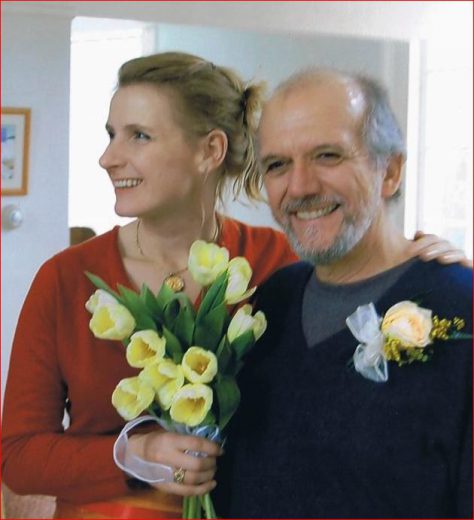
Eat, Pray, Love: Elizabeth Gilbert and her Brazilian stud Felipe
Eat, Pray, Love: Elizabeth Gilbert and her Brazilian stud

Does abandoning your marriage in order to travel the world indicate that a woman has the character necessary for a life-long married love? Let’s look at a case in which a famous feminist abandoned her husband to travel to have adventures.

The New York Times writes:

Elizabeth Gilbert, whose best-selling 2006 memoir, “Eat Pray Love,” traced a journey of self-discovery around the world that continues to resonate with fans, announced a new chapter on Friday.

[…]Ms. Gilbert, speaking directly to her readers in a Facebook post, said that after 12 years she was separating from José Nunes, the Brazilian importer whom she met during her travels and later married, and who was a central character in the book.

“I am separating from the man whom many of you know as ‘Felipe,’ ” she wrote of her husband, referring to his pseudonym in the book. “Our split is very amicable. Our reasons are very personal.” She also asked for privacy, saying she would be “a bit absent from social media during this sensitive moment.”

“Eat Pray Love,” a sumptuous tale of escape, self-discovery and romance, quickly became a cultural phenomenon, though not one without criticism, with some noting that not every woman who wished to escape would have the privilege to live as sumptuously as Ms. Gilbert did on her sojourn through India, Italy and Bali.

The book, however, drew praise from Oprah Winfrey and was made into a 2010 film starring Julia Roberts and Javier Bardem. The tale also resonated with fans, mostly women, who either identified with being in an unhappy relationship or had managed to artfully escape one.

The phenomenon has endured over the past decade: The travelogue touched so many readers that it eventually spawned a book, “Eat, Pray, Love Made Me Do It,” comprising 47 essays from inspired fans who had written their own tales of escape and discovery. That book was released in April.

[…]In April, Ms. Gilbert said that she missed travel: “I’ve never been to Japan, Iceland, South Africa and other places that it would be a pity to come to this earth and miss.”

Adventures, escape and discovery – that’s what young women want today. Not marriage, and not motherhood. They believe that they can find lasting happiness through travel and adventures. Even if they change their minds later, and want to marry, repeated acts of self-centered behavior do not prepare a woman for life-long self-sacrificial married love. Promiscuity and hedonism do not prepare a woman’s character to be content with the roles of wife and mother.

Here is Gilbert writing in the New York Times about her priorities:

It started with a boy I met at summer camp and ended with the man for whom I left my first husband. In between, I careened from one intimate entanglement to the next — dozens of them — without so much as a day off between romances. You might have called me a serial monogamist, except that I was never exactly monogamous. Relationships overlapped, and those overlaps were always marked by exhausting theatricality: sobbing arguments, shaming confrontations, broken hearts. Still, I kept doing it. I couldn’t not do it.

[…]If the man was already involved in a committed relationship, I knew that I didn’t need to be prettier or better than his existing girlfriend; I just needed to be different.

[…]Soon enough, and sure enough, I might begin to see that man’s gaze toward me change from indifference, to friendship, to open desire. That’s what I was after: the telekinesis-like sensation of steadily dragging somebody’s fullest attention toward me and only me. My guilt about the other woman was no match for the intoxicating knowledge that — somewhere on the other side of town — somebody couldn’t sleep that night because he was thinking about me. If he needed to sneak out of his house after midnight in order to call, better still. That was power, but it was also affirmation. I was someone’s irresistible treasure. I loved that sensation, and I needed it, not sometimes, not even often, but always.

[…]In my mid-20s, I married, but not even matrimony slowed me down. Predictably, I grew restless and lonely. Soon enough I seduced someone new; the marriage collapsed. But it was worse than just that. Before my divorce agreement was even signed, I was already breaking up with the guy I had broken up my marriage for.

[…][I]f you asked me what I was up to, I might have claimed that I was a helpless romantic — and how can you judge that? If really cornered, I might have argued that I was a revolutionary feminist, taking brazen agency over my own sexuality…

She didn’t want to commit and love others self-sacrificially. That’s boring! She wanted to get attention and drama. Men liked her because she was easy to use and easy to throw away. She wasn’t anyone’s “irresistible treasure”, because she didn’t have enough value for any of these men to commit to her for life and take care of her as she aged. The men she chose wanted sex, but they were not going to actually provide for her or protect her when she reached her 70s, 80s and 90s.  The question that we need to ask is whether a woman like this can stay married. Is she capable of doing the work that ordinary wives and mothers do in a married home – the work that wins a man’s loyalty for life? Is she capable of behaving in a way that leads a man to commit to caring for her when she is no longer young and pretty?

Let’s review what happened after Elizabeth Gilbert divorced her first husband for travel and adventures.

Christian men’s rights blogger Dalrock explains:

Having written a book on divorce, Elizabeth decided to write a book on marriage titled Committed.

From the Publishers Weekly review on Amazon:

How did a woman who didn’t want children land the only Latino hottie with a vasectomy in all of Indonesia?

[…][I]t turns out he needed a visa to get into the US, so he asked Elizabeth to marry him.  After a year of bickering and unhappiness together, she finally said yes after he explained it to her.

From the Publishers Weekly book review on Amazon.com:

When are you going to understand? As soon as we secure this bloody visa and get ourselves safely married back in America, we can do whatever the hell we want.

You couldn’t make stuff this romantic up!

That was 6 years ago, Elizabeth is about 47 now and divorced again. I wonder how well her plan of “seducing” men and getting no commitment in return will work over the next 40 years? Tramp stamps and belly-button rings seem fun when you are 17, but are not so fun when you are 71. Hooking up, cohabitating, traveling and having adventures seems to make sense when you are 17, but they don’t result in a man standing by you when you are 71. A woman needs to invest in a marriage-minded man early, and sustain this investment if she expects him to stick around when she loses her youth and beauty. Not every man will respond to this investment, but it is her job to choose one who will – with the help of wise advisers.

UPDATE:

In early September 2016, it emerged that she is now in a relationship with her best female friend.


New study: women seeking to have a child should start before age 32

Brain vs Heart, from: theawkwardyeti.com

Dina sent me this sobering piece of research from the New Scientist which is perfect for all the young feminists who have been taught in college that marriage should be put off, and women can easily get pregnant after age 40.

Excerpt:

It’s a question many people will ask themselves at some point in their lives: when should I start a family? If you know how many children you’d like, and whether or not you would consider, or could afford, IVF, a computer model can suggest when to start trying for your first child.

Happy with just one? The model recommends you get started by age 32 to have a 90 per cent chance of realising your dream without IVF. A brood of three would mean starting by age 23 to have the same chance of success. Wait until 35 and the odds are 50:50 (see “When to get started”).

The suggestions are based on averages pulled from a swathe of data so don’t give a personal prediction. And of course, things aren’t this simple in real life – if only family size and feelings about IVF were the only factors to consider when planning a family. But the idea behind the model is to help people make a decision by condensing all the information out there into an accessible form.

“We have tried to fill a missing link in the decision-making process,” says Dik Habbema at Erasmus University in Rotterdam, the Netherlands, one of the creators of the model. “My son is 35 and many of his friends have a problem deciding when to have children because there are so many things they want to do.”

It’s a scenario that will be familiar to many; the age at which people have their first child has been creeping up over the last 40 or so years. For example, the average age at which a woman has her first child is 28 in the UK and has reached 30 in Italy, Spain and Switzerland. In the US, the birth rate for women in their 20s has hit a record low, while the figures for those over 35 have increased over the last few decades.

The decision is more pressing for women thanks to their limited supply of eggs, which steadily drop in quantity and quality with age. Female fertility is thought to start declining at 30, with a more significant fall after the age of 35.

[…]The new model incorporates data from studies that assess how fertility naturally declines with age. The team took information on natural fertility from population data collected over 300 years up to the 1970s, which includes data on 58,000 women.

I have often tried to talk to young women about the need to get their lives in gear. I advise them to work summers during high school, obtain a STEM degree in university, minimize borrowing money by going to community college for the generic prerequisites, don’t have premarital sex, get a job related to their STEM field straight out of college, pay off their debts, move out of their parents’ house, start investing from the first paycheck, marry between age 25-30, and then start having children after the first two “stabilizing” years of marriage. This is sound advice, rooted in my careful reconnaissance of the things that human beings care about and need in their old age. This advice is not bullying, it comes from reading many, many relevant papers. It comes from putting the knowledge gained from reading the papers into practice, and seeing results where appropriate.

I am giving you the numbers. Straight out of a peer-reviewed study. Don’t follow your heart. Don’t listen to your friends. Follow the science. Make your decisions within the boundaries of reality. God will not save you from foolish decisions.

Related posts

Who suffers the most from the trend of extended adolescence?

Marriage and family
Marriage and family

My friend Tracy sent me this interesting post. As I read it, I thought I was going to disagree with him about who is to blame for the mess he describes, but as we’ll see in a bit, I don’t.

Here’s his intro, which pretty much everyone agrees on:

The Five Traditional Milestones of Adulthood

Something magically happens between adolescence and young adulthood.  There are five traditional milestones of that mark entrance into adulthood that sociologists, psychologists, and the general population have used as a proxy to determine when someone has reached that tipping point of maturity.  It is at this time adolescence is shed and emotional maturity comes to full fruition.

These are:

  • Leaving Home
  • Becoming Financially Independent
  • Completing School
  • Marrying
  • Starting a Family

I hate not being married and not having any children, but I can’t marry a feminist and that’s all the church seems to be producing these days. The other ones I had finished by age 23 (debt-free).

He has some examples to illustrate who is and isn’t mature:

Examples of Adults:

  • A 25-year old teacher with a college degree, who works full time, is married, has a child, owns her own home, and pays for her own living expenses
  • A 65-year old janitor with a high school diploma, who works full time, is married or widowed, has children, owns his own home, and pays for his own living expenses

Examples of Extended Adolescence: 

  • A 30-year old who has part of their rent and bills covered by parents, endlessly enrolls in colleges or universities seeking additional degrees or credentials, single, without children.
  • A 45-year old high-school dropout living on social welfare programs who spends his days getting drunk in bars

OK, then he talks about who suffers the most from this, and it’s women:

What is particularly interesting is the interaction between biology and the paradigm shift that has occurred with so much of the younger generation suffering from extended adolescence. Women have a specific, limited window of time in which they can genetically reproduce and to which they are attractive to potential mates.  This so-called “biological clock”, written into the code at the very deepest core of our DNA, puts a limit on childbearing for females.

  • Fertility: Female fertility peaks at 20 to 30 years old.  After 30 years old, fertility drops by 20%.  After 35, it drops 50%.  After 40, it drops 95%.  As for in vitro fertilization, the American Society for Reproductive Medicine states that women in their early 40’s have, on average, only a 3% to 5% chance of having a baby through this method.
  • Down Syndrome: At 25, a woman has about 1 chance in 1,250 of having a baby with Down Syndrome; at age 30, a 1-in-1,000 chance; at age 35, a 1-in-400 chance; at age 40, a 1-in-100 chance; and at 45, a 1-in-30- chance.
  • Miscarriage: Only 9 percent of recognized pregnancies for women aged 20 to 24 end in miscarriage; 15 percent of women aged 25-30 miscarry; 40 percent of women over 40 do and more than 50 percent miscarry at 42 years of age.

These limitations do not apply to men (an 80 year old man can still reproduce).  Men have virtually no opportunity cost to waiting to find a mate.  If they want to spend their twenties working their way up their field, putting money in the bank, playing video games, and hanging out with friends, they can always wake up one morning and decide they are ready to settle down, get married, and have kids.  As such, the biological cost of extended adolescence is significantly and substantially higher for women than it is for men.  Females suffer from a Mother Nature-induced “use it or lose it” policy.

I don’t think that a Down syndrome child is insurmountable, but it’s more challenging.

So, should men be expected to ride to the rescue at the last minute, to make things “work out” for women who refused to marry when they were in their 20s, when they were fertile and attractive?

Nope:

This fear was encapsulated by Kay Hymowitz in a book called Manning Up: How the Rise of Women Has Turned Men Into Boys.

[…]As one reviewer somewhat critically noted of the book, “Hymowitz wants the child-men [those suffering from extended adolescence] to man up so that women don’t have to become spinsters or “choice mothers” at the expense of their careers. Might women alter their own behavior? “[T]he economic and cultural changes are too embedded, and, for women especially, too beneficial to reverse.” So the answer is no. Although it is women who are becoming disenchanted with the way things are, and although it is women who have created this situation, it is [in her opinion] men who ought to change.  And they are to change precisely when women are ready.”

The reviewer is correct because men are acting rationally within the confines the new paradigm.  In today’s world, men are presented no social, financial, emotional, or reproductive advantage by adjusting their own life to the ticking of a potential mate’s biological clock.  It is for the woman, to borrow a phrase, “too damn bad”.  It may not be fair, but in a finite world, there is an opportunity cost to every decision we make.  That has always been one of the central themes of this blog.  Incentive systems drive nearly everything in civilization from the type of people we attract into certain industries to the kind of behavior we reward.  The incentive system for men has changed and society now reflects this reality.

I actually blame the pastors and parents for this. Pastors and parents don’t challenge women’s feelings with the truth about what she ought to be doing in order to grow up and be well-positioned in the future. They want to let women decide what to do at every point in their lives, based on their feelings in the moment. The refusal to make judgments leads to women having delusions like “I can have children when I’m 35” and “I can change a bad man into a good man after I marry him” and “a degree in English is as worthwhile as a degree in computer science”.

Feminism has a lot to do with it. Women used to be taught by pastors and parents that they should choose chaste men with good jobs, work histories and savings. But feminism says that men don’t have any special provider role, and now the main things that women look for in a man is that he is attractive, fun, and lets her do whatever she feels like doing – no matter how crazy and irrational it is.

One woman recently told me that a friend of ours who is dating a penniless 28-year-old student who has never worked a day in his life need not worry, because “if they marry, he’ll drop out of school and start to work and provide for her”. She is 33, and she thinks that marrying a full-time student is a good idea, because he enthusiastically supports her crazy plans to pursue fun, thrills and travel into her mid-30s. She tells him that God is telling her (through her feelings) to pursue fun and thrills through travel – a position she held when she still an atheist in college, mind you. And he, in response, is both unwilling to, and incapable of, questioning her plan from a practical point of view. She likes that he lets her fly the plane, even it it means she’ll crash it and kill them both.

Pastors and parents don’t dare hurt the self-esteem of sensitive little girls by telling them to study hard things, get full-time jobs, move out of the house and focus on marrying a man who can provide during their 20s. And what happens when the “fun-thrills-travel until you’re 35” plan explodes and no one wants to marry her except losers? Well, then, all pastors and parents blame men for not wanting to marry her. But men don’t marry 35-year-old women when the value proposition of marriage has been greatly diminished by age and infertility. (Or worse: by promiscuity, cohabitation, divorce, and children from other men)

Women who think that they can play the fool through their 20s and early 30s, calling their feelings the voice of God, and being affirmed by parents and pastors in their crazy views, are in for a surprise. Men have needs and feelings too. Men respond to incentives. Marriage-minded women need to actively repudiate feminism, or they must live with the consequences of their failure to engage.