Texas doctors are opting out of Medicare at alarming rates, frustrated by reimbursement cuts they say make participation in government-funded care of seniors unaffordable.
Two years after a survey found nearly half of Texas doctors weren’t taking some new Medicare patients, new data shows 100 to 200 a year are now ending all involvement with the program. Before 2007, the number of doctors opting out averaged less than a handful a year.
[…]More than 300 doctors have dropped the program in the last two years, including 50 in the first three months of 2010, according to data compiled by the Houston Chronicle. Texas Medical Association officials, who conducted the 2008 survey, said the numbers far exceeded their assumptions.
[…]The opt-outs follow years of declining Medicare reimbursement that culminated in a looming 21 percent cut in 2010. Congress has voted three times to postpone the cut, which was originally to take effect Jan. 1. It is now set to take effect June 1.
The uncertainty proved too much for Dr. Guy Culpepper, a Dallas-area family practice doctor who says he wrestled with his decision for years before opting out in March. It was, he said, the only way “he could stop getting bullied and take control of his practice.”
“You do Medicare for God and country because you lose money on it,” said Culpepper, a graduate of the University of Texas Medical School at Houston. “The only way to provide cost-effective care is outside the Medicare system, a system without constant paperwork and headaches and inadequate reimbursement.”
What’s wrong with government running health care? If there is no money to be made in health care, then there is no one who invests in it. The government is left to bear the full brunt of the costs, and they pass it on to taxpayers. After helping themselves to piece of the tax revenues, of course. The patients are the least of their concerns – especially the elderly, who no longer pay taxes into the system.
What would happen if Obama succeeds in passing a law to force insurance companies to accept customers with pre-existing conditions at the same price as everyone else who doesn’t have pre-existing conditions?
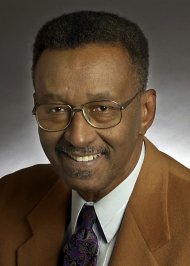
Read this IBD editorial by George Mason University economist Walter Williams. (my second favorite economist)
Excerpt:
Sen. John Rockefeller, D-W.Va., chairman of the Senate Finance Subcommittee on Health Care, and Rep. Joe Courtney, D-Conn., a member of the House Education and Labor Committee, have introduced the Pre-existing Condition Patient Protection Act, which would eliminate pre-existing condition exclusions in all insurance markets. That’s an Obama administration priority.
I wonder whether President Obama and his congressional supporters would go a step further and protect not just patients, but everyone against pre-existing condition exclusions by insurance companies. Let’s look at the benefits of such a law.
A person might save quite a bit of money on fire insurance. He could wait until his home is ablaze and then walk into Nationwide and say, “Sell me a fire insurance policy so I can have my house repaired.” The Nationwide salesman says, “That’s lunacy!” But the person replies, “Congress says you cannot deny me insurance because of a pre-existing condition.”
This mandate against insurance company discrimination would not only apply to home insurance, but auto insurance and life insurance as well. Instead of a wife wasting money on costly life insurance premiums, she could spend that money on jewelry, cosmetics and massages and then wait until her husband kicked the bucket to buy life insurance on him.
Insurance companies don’t stay in business and prosper by being stupid. If Congress were to enact a law eliminating pre-existing condition exclusions, what might be expected?
Yeah, that’s why Walter Williams is awesome. And you must read the rest to see how it would apply to medical insurance. Everything sounds good to those who do not ask the most important question in economics: “and then what happens?” And that question cannot be answered with “then I feel good about myself and people like me because I care about the poor”. That question needs to be asked for the forgotten man. The nameless man who is hog-tied into supplying the wealth that gets redistributed by demagogues desperately seeking adulation from the covetous masses.
The problem is that people don’t understand how insurance works. If you have to pay guaranteed claims from people with pre-existing conditions, then the premiums of all those people who don’t have pre-existing conditions will be increased to pay for those claims. Think. Beyond. Stage. One.
The Cato Institute
Consider this podcast from the libertarian Cato Institute, which explains a little more from the point of view of the medical insurance company.
Here a summary of what happens after stage one, to the forgotten man. Medical care costs money to produce. Forcing medical insurance companies to sell care for a pre-existing condition far below the actual cost of providing it will force insurers to drop coverage for those pre-existing conditions. (Or they may drop the doctors who treat those conditions from their network). That is worse for the people with pre-existing conditions. And this is how economic ignorance hurts the very people that the secular leftist do-gooders are trying to help.
Believe me when I tell you that this happens all the time with leftist economic policies. It’s the law of unintended consequences. They think they are helping their preferred victims, they feel better about themselves, but they actually hurt the very people they are trying to help. And by “help” I mean they steal someone else’s money/product/liberty and transfer it to their preferred victims in order to buy votes.
National Review
Now, take a look at this article that ECM sent me from National Review, which talks about Obama’s promise that you will be able to keep the medical coverage you have. Is Obama telling the truth? Can pigs really fly just by sheer belief and pixie dust?
Excerpt:
Obamacare would forbid insurers from basing rates on the individual health of their customers in any community. It also would force issuers to cover people who refuse to buy insurance until they get sick. These and Obamacare’s other complexities and contradictions would make insurance pricier, as would a $149.1 billion, 40 percent excise tax on high-value “Cadillac plans.” Thus, some employers would save money by paying fines after de-insuring employees. Workers who cherish their health plans then would find themselves dumped into the government-run Health Insurance Exchange.
“Some smaller employers would be inclined to terminate their existing coverage,” explained a December 10 memorandum by Medicare’s chief actuary, Richard S. Foster. He added: “The per-worker penalties assessed on non-participating employers are very low compared to prevailing health insurance costs. As a result, the penalties would not be a significant deterrent to dropping or foregoing coverage. We estimate such actions would collectively reduce the number of people with employer-sponsored health coverage by about 17 million.”
Even more ominously, Obamacare would require employers to provide federally approved coverage. Obama considers “meaningful” plans those at least as generous as the Federal Employees Health Benefits Program.
“Obama’s definition of ‘meaningful’ coverage could eliminate the health plans that now cover as many as half of the 159 million Americans with employer-sponsored insurance, plus more than half of the roughly 18 million Americans in the individual market,” says Cato Institute policy analyst Michael Cannon. “This could compel close to 90 million Americans to switch to more comprehensive health plans with higher premiums, whether they value the added coverage or not.”
It’s not just elective abortions that we’re going to be paying for whether we want them or not. In some countries with socialized health care you can pay for breast enlargements (UK), sex changes (Canada), in vitro fertilization (Canada), etc. And these elective surgeries take up money from the other vital services. Obama can make it such that every plan has to offer those coverages.
So, those who don’t use such elective services end up encouraging them, even if they have moral objections to those services. When the government subsidizes something, more people choose it. Won’t Planned Parenthood be pleased with all that new revenue? I’m sure they’ll think of something to do with all that money. Maybe a nice political donation?
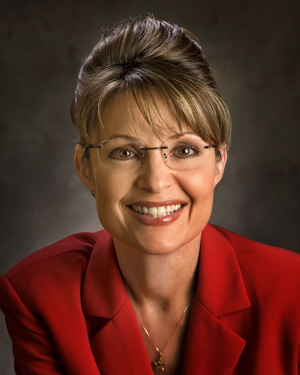
What Palin wrote about death panels clearly had nothing to do with counseling or with any other specifics in seminal House bill. What she wrote was: “Government health care will not reduce the cost; it will simply refuse to pay the cost. And who will suffer the most when they ration care? The sick, the elderly, and the disabled, of course.”
How could anyone believe Palin’s sensible comment about rationing was, in reality, a senseless fear of counseling? To say so was no mistake; it was an oft-repeated big lie.
Rather than even mentioning the House bill, Palin linked to an interesting speech by “Rep. Michele Bachmann [which] highlighted the Orwellian thinking of the president’s health care advisor, Dr. Ezekiel Emanuel, the brother of the White House chief of staff.”
[…]Pending health care bills would make such government-mandated scarcity of health care much worse. There would be massive shifting of money away from Medicare toward Medicaid. But the extra Medicaid money would be spread around more thinly. States would cut benefits to the poor in order to accommodate millions of new, less-poor people lured into Medicaid, at least half of whom (7 or 8 million by my estimate) currently have employer-provided health insurance.
The Senate health bill supposedly intends to slash Medicare payment rates for physicians by 21% next year and more in future years, with permanent reductions in payments to other medical services too. It would also establish an Independent Payment Advisory Board which would be empowered to make deeper cuts which Congress could reject only with considerable difficulty. If that’s not quite a “death panel” it would surely not be pro-life in its impact.
The Congressional Budget Office says, “It is unclear whether such a reduction in the growth rate could be achieved, and if so, whether it would . . . reduce access to care or diminish the quality of care.”
Actually, it’s clear enough that the proposed Medicare cuts won’t be achieved, but that efforts in that direction will nonetheless reduce access to care and diminish its quality. The government can’t boost demand and cut prices without creating excess demand. And that, in turn, means rationing by longer waiting lines and by panels (rationing boards) making life-or death decisions for other people.
The Cato Institute says that Sarah Palin is right, and I agree. She is the one who understands the economics of supply and demand – her critics are ignorant of the facts.

 WINTERY KNIGHT