

Tag Archives: Stewardship

J. Warner Wallace: practical advice on becoming an effective one-dollar apologist

As promised, below is my summary of J. Warner Wallace’s most recent Please Convince Me podcast, and my comments.

Details:

J. Warner continues examining the Christian life in light of God’s desire for all of us to become Christian Case Makers. Jim reads listener email highlighting some of the typical frustrations involved in starting an apologetics ministry and then provides a template to help you become the Case Maker you’ve always wanted to be. Jim also answers the question: Why Didn’t Jesus Reveal Scientific Facts to Demonstrate His Deity?

You can grab the MP3 file here.

This episode is probably one of the best episodes of the Please Convince Me podcast I’ve ever heard, because it’s practical. I like listening to the cold-case detective talk about practical things.

Summary:

  • e-mail from someone trying to start an apologetics ministry for college students and facing difficulties
  • the challenge of getting Christians to take an evidential approach to their faith
  • tips for getting Christians exposed to apologetics materials
  • there are a lot of Christians who are making a daily contribution to apologetics even with a full-time job
  • Wallace himself started his apologetics ministry while working full-time
  • Wallace, as an atheist, was initially skeptical of religion because he thought it was too focused on money
  • His plan as an apologist was to take money right out of it – do it for free, and  be self-funded
  • 1 Cor 9: “But I have made no use of any of these rights, nor am I writing these things to secure any such provision.”
  • People in ministry deserve to be supported, but Paul dispensed with that right to raise support for his ministry
  • Paul self-financed his ministry in order to avoid all appearance of doing his ministry for financial gain
  • Similarly, Wallace’s goal of being self-financed was to avoid the appearance of doing ministry for money
  • If you plan your life carefully enough in the first half, you’ll have the money you need to do ministry in the second half
  • Wallace wanted the liberty to pursue things without any financial need, and he achieved this by working full-time
  • The problem with money is that it often causes us to not cooperate well with other people
  • Ministries and churches sometimes avoid working with other people, like scholars and apologists
  • They do this because they are afraid of losing their own people to these scholars and apologists
  • Wallace wants to get the money out of it and be able to serve anyone with a need
  • Wallace: you need to work hard in the first half of life, in order to have freedom to serve in the second half
  • First area: financial preparation – you need to escape financial needs so that it doesn’t restrict your passion
  • Wallace married well, to a woman who was a good saver, very frugal, and not materialistic – he saved 30% of his income
  • Second area: need to prepare yourself educationally for being able to teach apologetics materially
  • That doesn’t always mean doing the MA in apologetics, but you do have master the material – continuous learning
  • Third area: try to focus on the parts of your career that might have some connection to apologetics
  • You want to have experiences in your work where you learn something that can be used in your ministry
  • Wallace actually made career choices to focus on evidence, case-making and teaching
  • It’s hard because men are naturally competitive – we focus on promotions, money and consumer goods
  • It’s not always the right move in your career to get promoted if it takes you away from skills related to apologetics
  • Christian apologists need to not neglect to develop leadership skills and to develop influence
  • He recommends a book called “Platform” by Michael Hyatt, which Doug Groothuis also recommended to me
  • If you are financially independent, then if an unpaid opportunity arises, you have the freedom to take it
  • You can volunteer for positions that you want to have, instead having to take what pays
  • Wallace writes for Breakpoint, and he is able to dispense with the 1000-word limit that gets a fee
  • Money opens up the danger of corruption, so it’s another reason to just take it out of the picture
  • You can be very effective in your apologetics ministry while still working full-time
  • The second half is a good time to have even more freedom because your kids are grown up
  • A good wife can really help you if she is picking up the slack so that you can work on your ministry
  • Jane Pantig works for Ratio Christi, an organization that promotes apologetics on campus
  • Jane’s model: she is in full-time ministry, with a BS in biology and an MA in apologetics (Biola)
  • Jane is able to get many high-quality speakers to speak for free/cheap at San Jose State University

The rest of the podcast deals a question that was asked at the San Jose State University event that Wallace did for Ratio Christi. I blogged about it this morning. I  laughed my butt off while listening to that podcast, starting at around 62:50 and on. It’s pretty funny when he does the role-pay between Jesus and the people listening to him.

My comments:

The reason I wanted to post this is because I think that a lot of people feel obligated to quit their jobs and raise support because they think that you have to do apologetics full time. It’s not true. Wallace explains that he worked as a cold-case detective until just recently when he took his pension. His pension is now underwriting his ministry. Similarly with me, I work a full-time job and run the blog out of my income. In addition, I probably donate a few thousand dollars each year to people who are organizing apologetics lectures, debates and conferences – events featuring speakers I like best.

This blog gets about 1 million page views per year, depending on the year (election years are better), so that’s not an insignificant impact. In addition, I meet a lot of young Christians in university in different countries who want advice or mentoring, so I spend a few hours here and there mentoring them, and sometimes sending them rewards (books) for doing difficult degrees at good universities and getting good grades. My full-time job helps me to do all of these things. And before I could have a full-time job in information technology, I had to put in the time and effort to get the Bachelor and Masters degree in computer science.

So I think that Christian men especially need to be thinking about how much the apologetics enterprise of a one-dollar apologist relies on money. We really need to be thinking about that early on, in high school, and choosing to study hard things and to do well in those hard subjects. The higher-paying jobs that are more secure tend to be in fields like science, math, technology and engineering. We need to be thinking of doing these courses in high school – especially the men, but also the women – in order to be able to pay for our apologetics ministry. In addition, my decision to not marry (unless I meet a woman who can support me in my plan) gives me even more freedom to work on my ministry while working full time.

I fully approve of what Wallace said about self-financing your apologetics ministry – and supporting other apologetics ministries – in order to avoid all appearance of self-interest. In fact, I have long admired Wallace for his intentional, practical way of doing his ministry. He doesn’t take donations, and he gives away tons of materials for free. I like that.

Should Christians be motivated by the fear of missing out (FOMO)?

Theology that hits the spot

Dina was off from her stressful job last week, so we spent some time talking over some articles that we found on the culture. We specifically talked about what is motivating young people, so I wanted to write something about that.

FOMO: Fear Of Missing Out

Here’s a leftist New York Times article explaining where FOMO comes from:

It’s known as FOMO, or “fear of missing out,” and refers to the blend of anxiety, inadequacy and irritation that can flare up while skimming social media like Facebook, Twitter, Foursquare and Instagram. Billions of Twitter messages, status updates and photographs provide thrilling glimpses of the daily lives and activities of friends, “frenemies,” co-workers and peers.

[…]When we scroll through pictures and status updates, the worry that tugs at the corners of our minds is set off by the fear of regret, according to Dan Ariely, author of “Predictably Irrational” and a professor of psychology and behavioral economics at Duke University. He says we become afraid that we’ve made the wrong decision about how to spend our time.

[…]A friend who works in advertising told me that she felt fine about her life — until she opened Facebook. “Then I’m thinking, ‘I am 28, with three roommates, and oh, it looks like you have a precious baby and a mortgage,’ ” she said. “And then I wanna die.”

It’s like they want to run a race to do fun and exotic things with their peers, and not finish last.

Anyway, I want to begin this post with examples of FOMO behavior I have personally encountered.

FOMO Travel

Dina and I read and discussed this article by Alain de Botton in The European – notice the emphasis on travel and having fun, sophisticated experiences:

We’re continually being bombarded with suggestions about what we might do (go jet skiing, study in Colorado, visit the Maldives or see the Pyramids). We’re always hearing of the amazing things friends have done or are going to do: ‘there was this great bar we all went to …’; ‘she’s getting married in a little country church, then we’re having a picnic…’; ‘the sun was glinting on Sydney Harbour…’ There are endless hints of the allure of life in other places: an article about family-friendly restaurants in Brooklyn, a crime novel set in Trieste, the departure board at the airport with its list of places only a plane trip away: Moscow, Bangkok, Addis Ababa… The modern world makes sure we know at all times just how much we’re missing. It is a culture in which intense and painful doses of FOMO (Fear Of Missing Out) are almost inevitable.

What’s interesting is this – how does FOMO travel affect young, unmarried Christians?

Travel through missions work seems to be the FOMO activity of choice for at least a few young, unmarried Christians. One of my best friends who is married to another of my best friends told me about her missions trip to a European country. I asked her why she did it, since it meant lost savings, lost earnings, lost work experience, etc. (She gave up a year of earnings, and she had a great job in engineering). Her answer was that she did it for the adventure. I have a hard time hearing Jesus say that he was going to do something because he was bored and wanted an adventure. Especially when it’s $30,000 in costs, $60,000 of lost income, and lost work experience – per year. This was before the time of the Internet, though, when missionary work actually made sense. I just don’t think it’s worth spending that kind of money for the impact you make. The people I know who went on missionary trips just wanted to feel spiritual, look spiritual, and have a fun “life experience” vacation. One missionary told me that she was desperate to get away from her boring mid-Western roots.

If you really want to share Christ effectively with people in other countries, then you can start a blog and pay the tiny costs for it out of your earnings from your day job – that’s what I do. I get more people from Europe reading my blog than I could contact in a year of missionary work. I Skype with the people who are interested in Christianity from these countries (Scotland, Northern Ireland, England, Canada, etc.), as well. Meanwhile, I keep working my not-exciting job, so my savings increase, and my resume remains gap-less. This is good stewardship of finances, and self-denial prepares your character for the hard work of marriage and parenting. The Bible says that those who do not work should not eat. And Paul says that he built tents so that no one could accuse him of taking on missionary work for financial gain.

You can tell whether a person is sincere in their missionary intentions by looking at how responsible they’ve been in their decision-making. If a person has gone into debt paying for fun, thrilling activities like skydiving, ziplining, surfing, etc., then it’s FOMO travel. We must look past the spiritual smokescreen, and tell young people to grow up.

After all, if defending God’s honor was the missionary’s main goal, then the real battlefield would be the university.

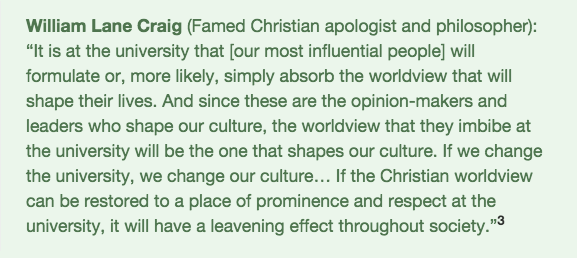
Bill Craig puts it best:

If serving God is your goal, look to the university

There is already a perfectly fine university right next door – no need to fly to Europe to find one! Remember, the university that took your faith away, or maybe the faith of someone you cared about? Yeah, it’s still there in your home town! And it’s still ruining the lives of thousands of young people. It seems to me that it’s better stewardship to stay here and work, then give money to groups like Reasonable Faith. And you can start a blog, teach in church and invite scholars to the local university, too. That costs almost nothing, and it produces better results.

What about Jesus?

Sometimes, it’s a good idea to look beyond the words of the Bible and reflect on the overall message of it at a higher level. When I look in the Bible, I see that Jesus went through a lot of suffering in obedience to God in order to secure the salvation of people who did not even like him. And it’s from this sacrifice on our behalf that his claim on our obedience comes. There are things that I don’t like to do that I do anyway because they work to serve God. Jesus life’s ambition was not to do things that were easy, or that made him happy. Experienced Christians do things that are not fun, because these things are right and because they solve the real problem.

Five reasons why Christians ought to care about economics

This is from the Acton Institute blog.

The five:

  1. The Bible Deals with Economic Issues
  2. Economics Helps Us Understand the Public Square
  3. It Expands Our Model of Discipleship
  4. It Enhances Our Theology of Work
  5. It Illuminates the Theological Implications of Politics

I want to choose just one of these, but I have to choose two, because they rock my socks off:

2. Economics Helps Us Understand the Public Square

Second, an understanding of economics and especially of political economy can help us understand what is going on in the world around us. The general election…is impossible to follow without some understanding of the implications of Obamacare and its impact on Medicare, the federal deficit, and the long-term effects of continued deficit spending. The posturing on the part of Republicans and Democrats sometimes seems like little more than rhetoric, but the one who understands what is really at stake can help lead people to a better understanding of their responsibility in the public square.

3. It Expands Our Model of Discipleship

Third, an understanding of economics can help us pastor our people more effectively by pointing to the need for a more comprehensive model of Christian discipleship. Many people in our churches just don’t grasp that wealth is produced through work, how that in itself is a blessing to others, and then what God calls them to do with their wealth, even if they have very little of it. Taking a money management course is important to becoming a mature steward, but what most need more than that is a framework for understanding how politics, economics, and citizenship responsibilities fit into a broader discipleship model of life stewardship. In other words, they need an introduction to biblical oikonomia (“the law of the house”). And this applies to pastors and seminary professors every bit as much as it does to members of the congregation. A good place to start is by imparting some understanding of supply and demand, of fruitfulness and pay, and of how investments work (just to give a small sampling), because this will help God’s people to grasp better the role they play every day in the broad sweep of God’s mission in the world.

And now a comment from me about 2 and 3:

I wasn’t raised in the church and I don’t think of God the way that church people do. I think of God as my boss. I don’t expect God to micromanage according to some mysterious plan that I can only sense through my emotions. What he does is communicate his character and his goals in the Bible, and then he leaves it up to me to decide how to steward my resources in order to produce a return on his investment. That’s why economics, business and investing are all important to me. If I can understand how the world works, then I know how to make decisions that will help me to achieve good results, like mentoring people and supporting Christian scholars. It’s just like fixing a car or building a house. The more you know about how things work, the better it is. Feelings and intuitions have no place in decision-making, it’s knowledge all the way.

Here’s Matthew 25:14-30.

Look:

14 “For it will be like a man going on a journey, who called his servants and entrusted to them his property.

15 To one he gave five talents, to another two, to another one, to each according to his ability. Then he went away.

16 He who had received the five talents went at once and traded with them, and he made five talents more.

17 So also he who had the two talents made two talents more.

18 But he who had received the one talent went and dug in the ground and hid his master’s money.

19 Now after a long time the master of those servants came and settled accounts with them.

20 And he who had received the five talents came forward, bringing five talents more, saying, ‘Master, you delivered to me five talents; here I have made five talents more.’

21 His master said to him, ‘Well done, good and faithful servant. You have been faithful over a little; I will set you over much. Enter into the joy of your master.’

22 And he also who had the two talents came forward, saying, ‘Master, you delivered to me two talents; here I have made two talents more.’

23 His master said to him, ‘Well done, good and faithful servant. You have been faithful over a little; I will set you over much. Enter into the joy of your master.’

24 He also who had received the one talent came forward, saying, ‘Master, I knew you to be a hard man, reaping where you did not sow, and gathering where you scattered no seed,

25 so I was afraid, and I went and hid your talent in the ground. Here you have what is yours.’

26 But his master answered him, ‘You wicked and slothful servant! You knew that I reap where I have not sown and gather where I scattered no seed?

27 Then you ought to have invested my money with the bankers, and at my coming I should have received what was my own with interest.

28 So take the talent from him and give it to him who has the ten talents.

29 For to everyone who has will more be given, and he will have an abundance. But from the one who has not, even what he has will be taken away.

30 And cast the worthless servant into the outer darkness. In that place there will be weeping and gnashing of teeth.’

He’s the boss, and we are here to freely decide what we are going to do about it. If you want to do a good job, then it makes sense to do what everyone else does – learn how things work so that you can make good decisions. If I could give one other piece of advice, it would be to not put mysticism and feelings on the same level as reason and evidence. It doesn’t work in the normal workday world, and it doesn’t work when you are planning out the overall course of your life, either. Cautious works. Cautious gets results.