Tag Archives: Sales Tax

Is Herman Cain’s 9-9-9 plan revenue neutral? Does it tax the poor more?

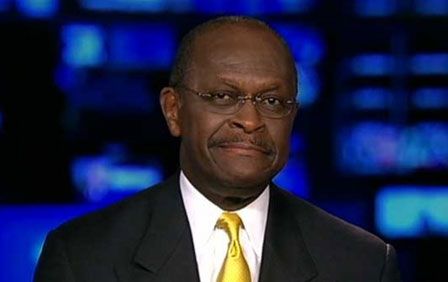
Presidential candidate Herman Cain

Consider this article by rock-star economist Arthur Laffer.

Excerpt:

In the recent past, federal tax revenues from the personal and business income taxes, all payroll taxes, and the capital gains, gift and estate taxes have averaged $2.3 trillion, while gross domestic product has averaged about $14.5 trillion. The total revenue from these taxes as a share of gross domestic product averages around 16%. Sometimes it’s a good deal higher, as in the boom of the late 1990s, and sometimes its lower, as in today’s “Great Recession.” But a number in the 16%-19% range is as good as you’ll get under our current tax code.

By contrast, the three tax bases for Mr. Cain’s 9-9-9 plan add up to about $33 trillion. But the plan exempts from any tax people below the poverty line. Using poverty tables, this exemption reduces each tax base by roughly $2.5 trillion. Thus, Mr. Cain’s 9-9-9 tax base for his business tax is $9.5 trillion, for his income tax $7.7 trillion, and for his sales tax $8.3 trillion. And there you have it! Three federal taxes at 9% that would raise roughly $2.3 trillion and replace the current income tax, corporate tax, payroll tax (employer and employee), capital gains tax and estate tax.

The whole purpose of a flat tax, à la 9-9-9, is to lower marginal tax rates and simplify the tax code. With lower marginal tax rates (and boy will marginal tax rates be lower with the 9-9-9 plan), both the demand for and the supply of labor and capital will increase. Output will soar, as will jobs. Tax revenues will also increase enormously—not because tax rates have increased, but because marginal tax rates have decreased.

By making the tax codes a lot simpler, we’d allow individuals and businesses to spend a lot less on maintaining tax records; filing taxes; hiring lawyers, accountants and tax-deferral experts; and lobbying Congress. As I wrote on this page earlier this year (“The 30-Cent Tax Premium,” April 18), for every dollar of business and personal income taxes paid, some 30 cents in out-of-pocket expenses also were paid to comply with the tax code. Under 9-9-9, these expenses would plummet without a penny being lost to the U.S. Treasury. It’s a win-win.

I have heard precious few conservative commentators reporting the facts on Herman Cain’s plan, so it’s nice to see Art Laffer looking at the details.

Here are three facts about Cain’s plan:

  • Fact #1: People below the poverty line are exempt from ALL the taxes.
  • Fact #2: It is a stupid objection to say that the tax rate can be raised. ALL taxes can be raised, and Cain has already said that his plan would require a 2/3rds majority to raise the tax rates.
  • Fact #3: This plan has nothing to do with state income taxes or state sales taxes or state corporate taxes – his plan only reforms federal taxes. State tax laws are outside of the jurisdiction of the President.

I was really disappointed to hear some of the people in Tuesday night’s debate disparaging Herman Cain’s plan, especially Michele Bachmann, who ought to know better because this is her strength. When people say that a tax is regressive, that means that it is not progressive. And a progressive tax is communist. It punishes success. What we want to have is a flat tax rate that doesn’t punish success and broadens the tax base so that everyone pays something. What Cain’s plan does is lower the punishment on job creators and workers, and raises the tax on consumers who spend money. And isn’t that a good thing? Aren’t we in this whole mess because we spend too much money? Maybe we should incentivize job creation and work instead of spending. Cain’s plan would be the greatest boon to job creation that this company has ever seen – it’s brilliant precisely because it eliminates the cost of having to comply with an onerous, complicated tax code. We are getting this wealth for free, and the only losers will be the IRS and the Washington lobbyists.

The VAT as a replacement or add-on to the income tax

From the Heritage Foundation. (H/T ECM)

Excerpt:

Revenue-neutral tax reform involving a VAT substituting for income tax raises a number of concerns, but its one advantage might be that it would reduce or even eliminate the net bias against saving. Such a reform would quickly begin to raise the level of private savings and the private saving rate.

The same cannot be said of adding a VAT to the current tax system. Adding a VAT would not have the same beneficial effects as substituting a VAT because, obviously enough, the anti-savings biases of the current system would remain intact.

Even more telling, a massive VAT-based tax hike would slash the after-tax purchasing power of individuals and families. As they adjusted to the new tax, an early casualty would be private saving.

[…]VAT proponents who seek massive new sources of revenue—whether in the short run to pay for President Obama’s spending surge or to address the nation’s unsustainable long-term fiscal imbalance—sometimes misapply arguments that have some validity in the context of a revenue-neutral tax reform. A good example is the argument that a VAT would increase private saving.

However, as an add-on tax, the VAT would not improve saving incentives as some suggest but would instead hammer private savings for an extended period as individuals and families slash their saving rates to sustain current consumption in light of the VAT’s higher prices.

I am pro-VAT, but only if it is revenue-neutral and is coupled with a cap on federal spending, indexed to inflation. A freeze would be better still!

What’s your view of taxation? Do you like a flat tax or the FAIR tax? Which taxes would you cut and which ones would you raise? What effect would it have on working families and their employers?

Why don’t governments cut spending during tough times?

Check out this article from USA Today.

Excerpt:

Many states and cities coping with hard times are asking residents to open their wallets for the latest fashion in taxation — the temporary tax.

Governments are raising taxes for a specific period of time and promising the hikes will go away when good times return.

Some big temporary taxes:

Arizona voters decide today whether to approve a three-year sales-tax hike. Republican Gov. Jan Brewer pushed to raise the sales tax from 5.6% to 6.6%, dedicating two-thirds of the new money for schools.

Kansas hikes its sales tax July 1 from 5.3% to 6.3% for three years. The tax is designed to prevent cuts in education and social programs.

• Mobile, Ala., boosts its sales tax by 1 cent for 16 months starting June 1. The combined state and local rate will be 10%. Goal: avoid laying off police and firefighters.

A half-dozen other states are eyeing temporary taxes. So are many cities and counties, including King County, Wash., which includes Seattle.

Temporary taxes are phenomena seen during recessions, says Curtis Dubay, a tax expert at the conservative Heritage Foundation. “You don’t hear about temporary taxes when money is flowing into the coffers.”

The problem is that these taxes rarely go away, he says. “Once politicians get their hands on revenue, they won’t give it up,” he adds.

I noticed that Stan, a resident of Arizona, wrote about an alternative to temporary tax hikes in this post.

Excerpt:

Let’s see what the official 2010 budget says. Hmm. Well, they’ll be paying back $50 million in Federal Stimulus money. Odd. There is a line item for an additional $40 million in “new private prison beds”. Right … so our criminals are more comfortable. Got it. Interesting. There is a “Department of Racing”. Apparently the Department of Racing regulates the Arizona parimutuel horse and greyhound racing industry. Oh, now this is funny. The Department of Economic Security has a budget of $546 million. Perhaps we ought to fire them, eh? While we’re at it, perhaps we ought to take a real hard look at the Governorʹs Office of Strategic Planning and Budgeting and their $2 million. I’m thinking they’re not doing their job. Oh, I suppose there is no way around the $2 million we’re spending on the Board of Cosmetology. I mean, what could be more important to Arizonans than beauty treatments. Oh, yeah, we have to regulate that carefully. There’s another $4 million on a “Telecom for the Deaf Fund”. I know … that’s a good thing … but is it more important than public safety? Is that really the job of the government? And the fact that we’re spending more than $13 million on a “Department of Gaming” (with another $74 million to the Arizona State Lottery Commission) is troubling to me all on its own.

Allegedly something around 60% of our budget is already spent on schools and public safety and health care. Fine. But is anyone looking at what that money is going toward and how to cut waste? Trust me. There is lots of waste.

Overspending governments always market tax hikes as ways to say essential services or “compassionate” social programs. Why can’t they just cut some wasteful spending, instead? Is that so hard?