
Tag Archives: Richard Dawkins

Coward A.C. Grayling and chicken Dawkins flee debate with William Lane Craig

Sing with me:

Brave Sir Grayling ran away
Bravely, ran away…away…
When danger reared its ugly head
He bravely turned his tail and fled
Yes, brave Sir Grayling turned about
And gallantly he chickened out
Bravely taking to his feet
He beat a very brave retreat
Bravest of the brave, Sir Grayling

He is packing it in and packing it up
And sneaking away and buggering off
And chickening out and pissing off home,
Yes, bravely he is throwing in the sponge.

From BeThinking.org’s web site.

Excerpt:

For years, ‘New Atheist’ Professors Anthony Grayling and Richard Dawkins have made money and gained publicity out of God.  But now, the courage of their convictions seems to be running dry: they have both refused to debate one of the world’s leading defenders of the Christian Faith, Professor William Lane Craig.

While Professor Dawkins has set himself up as the ‘scourge’ of the Church, Professor Grayling has offered his latest attack on Christianity by publishing The Good Book – a secular bible in the year the Church celebrates the 400th anniversary of the translation of the King James Bible.

While Dawkins and Grayling have refused to debate the existence of God, Grayling has also refused to debate the foundations of the morality on which his ‘Good Book’ rests. These point-blank refusals to engage in public discussions with Professor Craig will undermine their credibility, not only among Christians but also amongst fellow academics.

Professor Craig, Research Professor of Philosophy at Talbot School of Theology, California, is arguably the world’s foremost defender of historic Christianity. He has debated with many top academics and leading atheists across the world, including Peter Atkins, Daniel Dennett, Anthony Flew, Christopher Hitchens, Lewis Wolpert and, most recently, Sam Harris.

Craig visited the UK in 2007 and received national media coverage for his debate at Westminster Central Hall with Professor Lewis Wolpert, chaired by Radio 4’s Today presenter, John Humphrys. This debate has now been seen by thousands of people on YouTube. Professor Craig, who has two Ph.Ds, has written over thirty books and published some 200 academic papers. He is returning to the UK from 17-26 October in a tour sponsored by the Universities and Colleges Christian Fellowship, Damaris Trust and Premier Christian Radio.

Having been invited to debate Craig, Professor Grayling replied:

I am not interested in debating Professor Craig, though if he would like to co-opt me for the publicity for his tour – I would be happy to debate him on the question of the existence of fairies and water-nymphs. But as for the very uninteresting matter of whether there is just one god or goddess and that it can be debated despite the claim that it is transcendently ineffable and unknowablethat is an empty prospect, hence my declining the invitation.”

Justin Brierley, who presents Premier Radio’s highly-rated discussion programme, Unbelievable?, comments:

“It looks insulting and worryingly narrow minded when an invitation to defend such views against a top-flight Christian academic such as Dr. Craig is dismissed in these terms. Grayling is seen as a key proponent of rationalism and atheism in the UK. It will therefore come as a surprise to many that he is so unwilling to defend the rational grounds for atheism against a major opponent.”

Brian Auten of Apologetics 315 tweeted this, earlier:

If you would like the see how well atheists do in debates with Craig, you can watch this:

William Lane Craig vs. Christopher Hitchens:

No wonder Grayling and Dawkins are soiling their knickers at the thought of facing him. It’s easy to impress your students when you are grading their papers AFTER they’ve paid their tuition. But a formal debate in a neutral venue would not be safe.
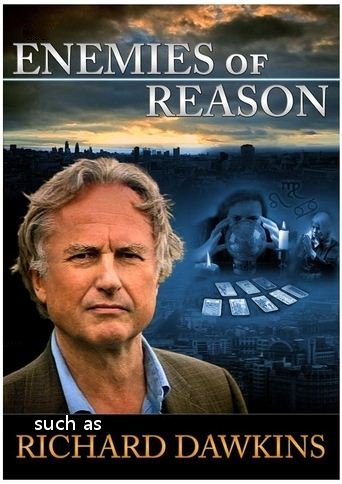
Previous story on Dawkins’ refusal to debate is here.

Craig’s UK tour schedule is here.

Is the Bible’s definition of faith opposed to logic and evidence?

Probably the biggest misconception that I encounter when defending the faith is the mistaken notion of what faith is. Today we are going to get to the bottom of what the Bible says faith is, once and for all. This post will be useful to Christians and atheists, alike.

What is faith according to the Bible?

I am going to reference this article from apologist Greg Koukl of Stand to Reason in my explanation.

Koukl cites three Biblical examples to support the idea that faith is not blind leap-of-faith wishing, but is based on evidence.

  1. Moses went out into the wilderness and he had that first encounter with the burning bush, and God gave him the directive to go back to Egypt and let his people go. Moses said, Yeah, right. What’s going to happen when they say, why should we believe you, Moses?God said, See that staff? Throw it down.Moses threw it down and it turned into a serpent.God said, See that serpent? Pick it up.And he picked it up and it turned back into a staff.God said, Now you take that and do that before the Jewish people and you do that before Pharaoh. And you do this number with the hail, and the frogs, and turning the Nile River into blood. You put the sun out. You do a bunch of other tricks to get their attention.And then comes this phrase: “So that they might know that there is a God in Israel.”
  2. [I]n Mark 2 you see Jesus preaching in a house, and you know the story where they take the roof off and let the paralytic down through the roof. Jesus said, “Your sins are forgiven.” And people get bugged because how can anyone forgive sins but God alone?Jesus understood what they were thinking and He said this: What’s harder to say, your sins are forgiven, or to rise, take up your pallet and go home?Now, I’ll tell you what would be harder for me to say : Arise, take up your pallet and go home. I can walk into any Bible study and say your sins are forgiven and nobody is going to know if I know what I am talking about or not. But if I lay hands on somebody in a wheelchair and I say, Take up your wheelchair and go home, and they sit there, I look pretty dumb because everyone knows nothing happened.But Jesus adds this. He says, “In order that you may know that the Son of Man has the power and authority to forgive sins, I say to you, arise, take up your pallet and go home.” And he got up and he got out. Notice the phrase “In order that you may know”. Same message, right?
  3. Move over to the Book of Acts. First sermon after Pentecost. Peter was up in front of this massive crowd. He was talking about the resurrection to which he was an eyewitness. He talked about fulfilled prophecy. He talked about the miraculous tongues and the miraculous manifestation of being able to speak in a language you don’t know. Do you think this is physical evidence to those people? I think so. Pretty powerful.Peter tells them, These men are not drunk as it seems, but rather this is a fulfillment of prophecy. David spoke of this. Jesus got out of the grave, and we saw him, and we proclaim this to you.Do you know how he ends his sermon? It’s really great. Acts 2:36. I’ve been a Christian 20 years and I didn’t see this until about a year ago. This is for all of those who think that if you can know it for sure, you can’t exercise faith in it. Here is what Peter said. Acts 2:36, “Therefore let all the house of Israel know for certain that God has made him both Lord and Christ, Messiah, this Jesus whom you crucified.” There it is again. “Know for certain.”

What is faith according to Bible-based theologians?

I am going to reference this article from theologian C. Michael Patton of Parchment and Pen in my explanation.

Patton explains that according to Reformation (conservative, Bible-based) theologians, faith has 3 parts:

  1. notitia – This is the basic informational foundation of our faith. It is best expressed by the word content. Faith, according to the Reformers must have content. You cannot have faith in nothing. There must be some referential propositional truth to which the faith points. The proposition “Christ rose from the grave,” for example, is a necessary information base that Christians must have.
  2. assensus – This is the assent or confidence that we have that the notitia is correct… This involves evidence which leads to the conviction of the truthfulness of the proposition… This involves intellectual assent and persuasion based upon critical thought… assensus… says, “I am persuaded to believe that Christ rose from the grave.”
  3. fiducia – This is the “resting” in the information based upon a conviction of its truthfulness. Fiducia is best expressed by the English word “trust.”… Fiducia is the personal subjective act of the will to take the final step. It is important to note that while fiducia goes beyond or transcends the intellect, it is built upon its foundation.

So, Biblical faith is really trust. Trust(3) can only occur after intellectual assent(2), based on evidence and thought. Intellectual assent(2) can only occur after the propositional information(1) is known.

The church today accepts 1 and 3, but denies 2. I call this “fideism” or “blind faith”. Ironically, activist atheists, (the New Atheists), also believe that faith is blind. The postmodern “emergent church” denies 1 and 2. A person could accept 1 and 2 but deny 3 by not re-prioritizing their life based on what they know to be true.

How do beliefs form, according to Christian philosophers?

I am going to reference a portion of chapter 3 of J.P. Moreland’s “Love Your God With All Your Mind” (i.e. – LYGWYM).

J.P. Moreland explains how beliefs form and how you can change them.

  1. Today, people are inclined to think that the sincerity and fervency of one’s beliefs are more important than the content… Nothing could be further from the truth… As far as reality is concerned, what matters is not whether I like a belief or how sincere I am in believing it but whether or not the belief is true. I am responsible for what I believe and, I might add, for what I refuse to believe because the content of what I do or do not believe makes a tremendous difference to what I become and how I act.
  2. A belief’s strength is the degree to which you are convinced the belief is true. As you gain ,evidence and support for a belief, its strength grows for you… The more certain you are of a belief… the more you rely on it as a basis for action.

But the most important point of the article is that your beliefs are not under the control of your will.

…Scripture holds us responsible for our beliefs since it commands us to embrace certain beliefs and warns us of the consequences of accepting other beliefs. On the other hand, experience teaches us that we cannot choose or change our beliefs by direct effort.

For example, if someone offered you $10,000 to believe right now that a pink elephant was sitting next to you, you could not really choose to believe this… If I want to change my beliefs about something, I can embark on a course of study in which I choose to think regularly about certain things, read certain pieces of evidence and argument, and try to find problems with evidence raised against the belief in question.

…by choosing to undertake a course of study… I can put myself in a position to undergo a change in… my beliefs… And… my character and behavior… will be transformed by these belief changes.

The article goes on to make some very informative comments on the relationship between apologetics and belief.

UK Telegraph on Richard Dawkins’ cowardly refusal to debate William Lane Craig

Will Richard Dawkins debate William Lane Craig?

(Image stolen from Glenn Peoples)

Cowardly Richard Dawkins refuses to debate William Lane Craig on this latest UK tour. (H/T Mary)

Excerpt:

Richard Dawkins has made his name as the scourge of organised religion who branded the Roman Catholic Church “evil” and once called the Pope “a leering old villain in a frock”.

But he now stands accused of “cowardice” after refusing four invitations to debate the existence of God with a renowned Christian philosopher.

A war of words has broken out between the best selling author of The God Delusion, and his critics, who see his refusal to take on the American academic, William Lane Craig, as a “glaring” failure and a sign that he may be losing his nerve.

Prof Dawkins maintains that Prof Craig is not a figure worthy of his attention and has reportedly said that such a contest would “look good” on his opponent’s CV but not on his own.

An emeritus fellow of New College, Oxford, Prof Dawkins last year supported a plan to charge Pope Benedict XVI with crimes against humanity for his alleged involvement in the cover-up of sex abuse by Catholic priests.

Prof Craig is a research Professor of Philosophy at Talbot School of Theology, in California, and the author of 30 books and hundreds of scholarly articles on Christianity.

He has debated with leading thinkers including Daniel Dennett, A.C.Grayling, Christopher Hitchens, Lewis Wolpert and Sam Harris.

Prof Craig is due to visit Britain in October this year. Four invitations to take part in public debates were sent to Prof Dawkins from The British Humanist Association, The Cambridge Debating Union, the Oxford Christian Union and Premier Radio.

Prof Dawkins declined them all.

[…]Some of Prof Dawkins’s contemporaries are not impressed. Dr Daniel Came, a philosophy lecturer and fellow atheist, from Worcester College, Oxford, wrote to him urging him to reconsider his refusal to debate the existence of God with Prof Craig.

In a letter to Prof Dawkins, Dr Came said: “The absence of a debate with the foremost apologist for Christian theism is a glaring omission on your CV and is of course apt to be interpreted as cowardice on your part.

“I notice that, by contrast, you are happy to discuss theological matters with television and radio presenters and other intellectual heavyweights like Pastor Ted Haggard of the National Association of Evangelicals and Pastor Keenan Roberts of the Colorado Hell House.”

Prof Craig, however, remains willing to debate with Prof Dawkins. “I am keeping the opportunity open for him to change his mind and debate with me in the Sheldonian Theatre in Oxford” in October, he said.

Read it all. And please forward this to EVERYONE you know.

Dawkins mentions that he “already debated Craig” in that lame, worthless Mexico event where all the speakers got 2 minutes for their speeches, and one minute rebuttals. That was not a formal academic debate, that was a spectacle. I want a formal debate so Craig can put this blowhard in his place like he did with Hitchens, Harris, and Dennett. I want this nonsense about atheism being a  rational, moral worldview to end NOW. And by now, I mean yesterday.

Why won’t Dawkins debate Craig?

Let’s re-cap Dawkins’ reasons in point form: (with my comments in parentheses)

  • Dawkins claims that he is willing to debate high-ranking clergymen (but Craig is a scholar, not a clergyman)
  • Dawkins claims that Craig is a creationist (but Craig supports his kalam cosmological argument with the Big Bang)
  • Dawkins claims that Craig’s only claim to fame is that he is a professional debater (but see Craig’s CV and publications below, which is far more prestigious than Dawkins)
  • Dawkins claims that he’s too busy (busy cowering in fear hugging his Darwin doll for comfort)

Let’s review William Lane Craig’s qualifications:

William Lane Craig is Research Professor of Philosophy at Talbot School of Theology in La Mirada, California.

Dr. Craig pursued his undergraduate studies at Wheaton College (B.A. 1971) and graduate studies at Trinity Evangelical Divinity School (M.A. 1974; M.A. 1975), the University of Birmingham (England) (Ph.D. 1977), and the University of Munich (Germany) (D.Theol. 1984). From 1980-86 he taught Philosophy of Religion at Trinity… In 1987 they moved to Brussels, Belgium, where Dr. Craig pursued research at the University of Louvain until assuming his position at Talbot in 1994.

He has authored or edited over thirty books, including The Kalam Cosmological Argument; Assessing the New Testament Evidence for the Historicity of the Resurrection of Jesus; Divine Foreknowledge and Human Freedom; Theism, Atheism and Big Bang Cosmology; and God, Time and Eternity, as well as over a hundred articles in professional journals of philosophy and theology, including The Journal of Philosophy, New Testament Studies, Journal for the Study of the New Testament, American Philosophical Quarterly, Philosophical Studies, Philosophy, and British Journal for Philosophy of Science.

Craig’s CV is here.

Craig’s list of publications is here.

Here are some of Craig’s most recent publications:

From 2007:

  • Ed. with Quentin Smith. Einstein, Relativity, and Absolute Simultaneity. Routledge Studies in Contemporary Philosophy. London: Routledge, 2007, 302 pp.
  • “Theistic Critiques of Atheism.” In The Cambridge Companion to Atheism, pp. 69-85. Ed. M. Martin. Cambridge Companions to Philosophy. Cambridge University Press, 2007.
  • “The Metaphysics of Special Relativity: Three Views.” In Einstein, Relativity, and Absolute Simultaneity, pp. 11-49. Ed. Wm. L. Craig and Quentin Smith. Routledge Studies in Contemporary Philosophy. London: Routledge, 2007.
  • “Creation and Divine Action.” In The Routledge Companion to Philosophy of Religion, pp. 318-28. Ed. Chad Meister and Paul Copan. London: Routledge, 2007.

From 2008:

  • God and Ethics: A Contemporary Debate. With Paul Kurtz. Ed. Nathan King and Robert Garcia. With responses by Louise Antony, Walter Sinnott-Armstrong, John Hare, Donald Hubin, Stephen Layman, Mark Murphy, and Richard Swinburne. Lanham, Md.: Rowman & Littlefield, 2008.
  • “Time, Eternity, and Eschatology.” In The Oxford Handbook on Eschatology, pp. 596-613. Ed. J. Walls. Oxford: Oxford University Press, 2008.

From 2009:

  • Ed. with J. P. Moreland. Blackwell Companion to Natural Theology. Oxford: Blackwell.
  • “The Kalam Cosmological Argument.” With James Sinclair. In Blackwell Companion to Natural Theology. Ed. Wm. L. Craig and J. P. Moreland. Oxford: Blackwell.
  • “In Defense of Theistic Arguments.” In The Future of Atheism: Alister McGrath and Daniel Dennett in Dialogue. Ed. Robert Stewart. Philadelphia: Fortress Press.

Forthcoming:

  • “The Cosmological Argument.” In Philosophy of Religion: Classic and Contemporary Issues. Ed. Paul Copan and Chad Meister. Cambridge: Blackwell.
  • “Cosmological Argument”; “Middle Knowledge.” In The Cambridge Dictionary of Christian Theology. Ed. G. Fergusson et al. Cambridge: Cambridge University Press.
  • “Divine Eternity.” In Oxford Handbook of Philosophical Theology. Ed. Thomas Flint and Michael Rea. Oxford: Oxford University Press.

Richard Dawkins is eminently qualified to debate uninformed clergymen, but he has too much at stake (in terms of book royalties) to disappoint his loyal horde of foam-flecked fundies by debating a professional scholar who has debated hundreds of times, against the top non-Christian scholars, in hundreds of universities, including Harvard, Cambridge and Oxford.

The Craig-Hitchens debate

This debate was moderated by HUGH HEWITT, host of the nationally-syndicated Hugh Hewitt Show.

This is just an example of what these debates typically look like. No one gets hurt, so what is Dawkins afraid of?

Who is linking to this post?

Related posts