
First, let’s briefly talk about whether the Bible supports talking about the resurrection with non-Christians.
There are lots and lots of Christians in the world, but almost none of them are comfortable talking about the resurrection with non-Christians, in a way that doesn’t use crazy Christianese language and doesn’t assume that the Bible is inerrant. But I think that this situation is wrong for three reasons.
First, Jesus says that his resurrection is a sign so that peope will believe in his other theological claims.
Matthew 12:38-40:
38Then some of the Pharisees and teachers of the law said to him, “Teacher, we want to see a miraculous sign from you.”
39He answered, “A wicked and adulterous generation asks for a miraculous sign! But none will be given it except the sign of the prophet Jonah.
40For as Jonah was three days and three nights in the belly of a huge fish, so the Son of Man will be three days and three nights in the heart of the earth.
Second, Paul says that if the resurrection didn’t happen then we are all wasting our time with Christianity.
1 Corinthians 15:13-19:
13If there is no resurrection of the dead, then not even Christ has been raised.
14And if Christ has not been raised, our preaching is useless and so is your faith.
15More than that, we are then found to be false witnesses about God, for we have testified about God that he raised Christ from the dead. But he did not raise him if in fact the dead are not raised.
16For if the dead are not raised, then Christ has not been raised either.
17And if Christ has not been raised, your faith is futile; you are still in your sins.
18Then those also who have fallen asleep in Christ are lost.
19If only for this life we have hope in Christ, we are to be pitied more than all men.
And third, Peter uses the resurrection as evidence in his evangelistic efforts.
Acts 2:22-24, 29-33, 36:
22“Men of Israel, listen to this: Jesus of Nazareth was a man accredited by God to you by miracles, wonders and signs, which God did among you through him, as you yourselves know.
23This man was handed over to you by God’s set purpose and foreknowledge; and you, with the help of wicked men, put him to death by nailing him to the cross.
24But God raised him from the dead, freeing him from the agony of death, because it was impossible for death to keep its hold on him.
29“Brothers, I can tell you confidently that the patriarch David died and was buried, and his tomb is here to this day.
30But he was a prophet and knew that God had promised him on oath that he would place one of his descendants on his throne.
31Seeing what was ahead, he spoke of the resurrection of the Christ, that he was not abandoned to the grave, nor did his body see decay.
32God has raised this Jesus to life, and we are all witnesses of the fact.
33Exalted to the right hand of God, he has received from the Father the promised Holy Spirit and has poured out what you now see and hear.
36“Therefore let all Israel be assured of this: God has made this Jesus, whom you crucified, both Lord and Christ.”
So, how can you do what Jesus, Paul and Peter do with your non-Christian friends?
You can do it, too – and you must
It’s true that non-Christians don’t like to hear that they will go to Hell unless they have a relationship with Jesus. And do you know why they think that? Because they think that sin and Hell are just your personal opinions. Not-very-nice opinions. Opinions that they can ignore because it’s just your personal preference that you were raised in. They think that religion is like Santa Claus and the Tooth Fairy – myths designed to make people feel good about themselves.
Just think for a minute what they must think of your blind-faith pronouncement that they are going to Hell unless they “believe in Jesus” (whatever that means to a non-Christian). How would you like to hear someone tell you that you are going to Hell for not liking vanilla ice cream? You’d think they were crazy! And that’s what non-Christians think of you, unless… Unless what? Unless you present publicly testable arguments and evidence to show them why they should consider the claims of Jesus.
No one complains that it is “mean and divisive” if their doctor diagonoses them with cancer. Because a challenging diagnosis is not the doctor’s personal opinion – it’s true objectively. You need to make your presentation of the gospel exactly like a doctor’s diagnosis. Am I making sense here?If you are telling them the truth and you can show them publicly testable reasons and evidence, what sense does it make for them to be offended? They might as well be offended by their credit card statement or their speeding ticket.
I have Jewish friends, Hindu friends, Muslim friends, atheist friends, etc. Telling people the truth with publicly testable arguments and evidence that they can assess for themselves works. What doesn’t work is denying the reality of sin and Hell and then trying to be nice to non-Christians who are going to Hell so that they will like you. That‘s not Biblical. That’s just reinventing Christianity based on your own emotional need to be happy and to be liked by others and to feel good about yourself.
Some things to help you talk about the resurrection
The main thing to remember about talking about the resurrection in public with non-Christians is that you can’t assume that the Bible is true. Serious Christians get around this by using standard historical criteria to filter out the passages of the Bible that are most likely to be historical. A passage could be as small as 1 verse or it could be several verses. Some of the criteria would be things like: 1) how early after the events was the passage written? 2) in how many places does it appear? 3) Are the places where it appears independent from one another (e.g. – Mark and Paul), 4) does it embarass the author in some way? Using these criteria, historians can extract a bare minimum set of facts about Jesus.
Once you establish these minimal facts, you argue that the best explanation of the facts is that God raised Jesus from the dead. Your opponent either has to disprove one of your minimal facts, or he has to propose an alternative explanation of those minimal facts that explains the data better.
Usually, the only point of disagreement is whether the tomb was empty. Most atheists will give you the crucifixion, the burial, the post-mortem appearances, and the early belief in the bodily resurrection of Jesus in the early church.
The top 10 links to get you started
So with that out of the way, here are the top 10 links to help you along with your learning.
- How every Christian can learn to explain the resurrection of Jesus to others
- The earliest source for the minimal facts about the resurrection
- The earliest sources for the empty tomb narrative
- Who were the first witnesses to the empty tomb?
- Did the divinity of Jesus emerge slowly after many years of embellishments?
- What about all those other books that the Church left out the Bible?
- Assessing Bart Ehrman’s case against the resurrection of Jesus
- William Lane Craig debates radical skeptics on the resurrection of Jesus
- Did Christianity copy from Buddhism, Mithraism or the myth of Osiris?
- Quick overview of N.T. Wright’s case for the resurrection
Debates are a fun way to learn
Two debates where you can see this play out:
Or you can listen to my favorite debate on the resurrection.
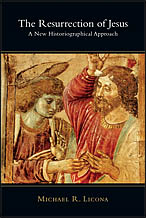
 .
. WINTERY KNIGHT