
Tag Archives: Price

Bobby Jindal explains the right way to lower health care costs

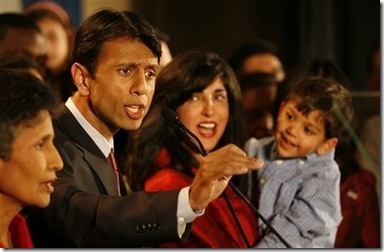
Bobby and Supriya Jindal

Governor Bobby Jindal is a wizard with health care policy!

Here he is writing in the Wall Street Journal about how to cut health care costs without rationing care:

Consumer choice guided by transparency. We need a system where individuals choose an integrated plan that adopts the best disease-management practices, as opposed to fragmented care. Pricing and outcomes data for all tests, treatments and procedures should be posted on the Internet. Portable electronic health-care records can reduce paperwork, duplication and errors, while also empowering consumers to seek the provider that best meets their needs.

Aligned consumer interests. Consumers should be financially invested in better health decisions through health-savings accounts, lower premiums and reduced cost sharing. If they seek care in cost-effective settings, comply with medical regimens, preventative care, and lifestyles that reduce the likelihood of chronic disease, they should share in the savings.

Medical lawsuit reform. The practice of defensive medicine costs an estimated $100 billion-plus each year, according to the American Academy of Orthopaedic Surgeons, which used a study by economists Daniel P. Kessler and Mark B. McClellan. No health reform is serious about reducing costs unless it reduces the costs of frivolous lawsuits.

Insurance reform. Congress should establish simple guidelines to make policies more portable, with more coverage for pre-existing conditions. Reinsurance, high-risk pools, and other mechanisms can reduce the dangers of adverse risk selection and the incentive to avoid covering the sick. Individuals should also be able to keep insurance as they change jobs or states.

Pooling for small businesses, the self-employed, and others. All consumers should have equal opportunity to buy the lowest-cost, highest-quality insurance available. Individuals should benefit from the economies of scale currently available to those working for large employers. They should be free to purchase their health coverage without tax penalty through their employer, church, union, etc.

Pay for performance, not activity. Roughly 75% of health-care spending is for the care of chronic conditions such as heart disease, cancer and diabetes—and there is little coordination of this care. We can save money and improve outcomes by using integrated networks of care with rigorous, transparent outcome measures emphasizing prevention and disease management.

Refundable tax credits. Low-income working Americans without health insurance should get help in buying private coverage through a refundable tax credit. This is preferable to building a separate, government-run health-care plan.

These are conservative solutions – they will preserve out liberty and prosperity.

Bobby Jindal is my pick for Secretary of Health and Human Services in 2012, if he isn’t elected President. So remember his name!

Sarah Palin crushes cap-and-trade in the Washington Post

Sarah Palin’s op-ed in the Washington Post is called “The ‘Cap And Tax’ Dead End”. (H/T Watts Up With That, Gateway Pundit, Stop the ACLU)

Excerpt:

American prosperity has always been driven by the steady supply of abundant, affordable energy. Particularly in Alaska, we understand the inherent link between energy and prosperity, energy and opportunity, and energy and security. Consequently, many of us in this huge, energy-rich state recognize that the president’s cap-and-trade energy tax would adversely affect every aspect of the U.S. economy.

There is no denying that as the world becomes more industrialized, we need to reform our energy policy and become less dependent on foreign energy sources. But the answer doesn’t lie in making energy scarcer and more expensive! Those who understand the issue know we can meet our energy needs and environmental challenges without destroying America’s economy.

Job losses are so certain under this new cap-and-tax plan that it includes a provision accommodating newly unemployed workers from the resulting dried-up energy sector, to the tune of $4.2 billion over eight years. So much for creating jobs.

In addition to immediately increasing unemployment in the energy sector, even more American jobs will be threatened by the rising cost of doing business under the cap-and-tax plan. For example, the cost of farming will certainly increase, driving down farm incomes while driving up grocery prices. The costs of manufacturing, warehousing and transportation will also increase.

The ironic beauty in this plan? Soon, even the most ardent liberal will understand supply-side economics.

…The Americans hit hardest will be those already struggling to make ends meet. As the president eloquently puts it, their electricity bills will “necessarily skyrocket.” So much for not raising taxes on anyone making less than $250,000 a year.

Even Warren Buffett, an ardent Obama supporter, admitted that under the cap-and-tax scheme, “poor people are going to pay a lot more for electricity.”

Meh. It’s merely excellent. Somewhat superlative.

Not nearly as good as Michele Bachmann could do, and Michele is conservative on vouchers and illegal immigration, unlike Sarah. See, Sarah writes about supply-side economics once in a while, but Michele gives passionate speeches about supply-side economics every day:

And Michele likes Christian apologetics more than Sarah! Sarah probably doesn’t even know who William Lane Craig is! Michele should be President, Sarah can be Secretary of Energy.

Ed Morrissey at Hot Air comments on Sarah’s article:

We need to make all of this clear.  Cap-and-trade rations energy production, which means there will be less of it for a long time.  Alternatives are not ready for the kind of mass production that would allow a complete replacement of energy, and probably won’t be for decades, if ever in some cases (notably wind power, as GreenChoice showed and as T. Boone Pickens finally realized).  That means a lower standard of living that will impact America regressively, with the lowest income earners getting hit the hardest.  The drain on the economy from high energy prices means less jobs and higher retail prices for goods and services, again a regressive consequence of energy rationing.

Obama and his Utopian allies promise that government will help close the gap by offering more services to the unemployed and the poor at the expense of the “rich”.  What will that do?  It will further handicap the economy by keeping capital out of the markets.  Even worse, it will vastly expand the dependent class in America who have to go on the dole to survive.  And many of those ardent liberals will be pretty happy with that outcome, too.

We need to stop this thing. It’s good that Sarah came out against it.

Understanding what cap-and-trade actually does

I thought I would put together a few snippets to help everyone understand what Obama’s cap-and-trade energy tax actually does.

It’s a massive government intervention in the free market

The Heritage Foundation explains the point of cap and trade.

One of the most contentious provisions in the bill is the use of offsets to reduce carbon dioxide emissions, in which “a manufacturing plant in, say, Gary, Ind., that is exceeding its ‘permitted’ expulsion of CO2, could continue to commit this sin against humanity by paying for a Brazilian farmer to plant some trees in the rain forest…. Of course, to guard against some nefarious polluter trying to cheat Uncle Sam and the world by claiming bogus ‘offsets,’ here must be a monitoring mechanism. Enter the ‘Offsets Integrity Advisory Board’ — yet another group of scientific ‘experts’ that would be tasked with compiling a list of qualifying offsets around the globe.”

Cap and trade is a regulatory nightmare that would hand over more power and money to the government with the intention of reducing global temperatures. The problem with that, however, is the Waxman-Markey cap and trade bill will only reduce temperatures by an amount almost too small to measure. The bigger problem is that consumers’ pocketbooks will be hit hard by this bill. The Heritage Foundation’s Center for Data Analysis found that by 2035, gasoline prices would increase 58 percent, natural gas prices would increase 55 percent, home heating oil would increase 56 percent, and worst of all, electricity prices would jump 90 percent. After all, the goal of cap and trade is to drive up energy prices so high that people will use less. Yet in Missouri, state legislators are considering a bill that would charge consumers for saving electricity.

That’s enough to scare the snark out of you, but there’s much more to it than that.

The bill provides opportunities for corruption

Consider this National Review Online post, which counts 50 reasons why cap-and-trade is bad. (H/T Club for Growth)

I cannot excerpt the 50 points. I read through them and each one is more horrible than the last. Any of the 50 would be sufficient to cause an honest man to cry like a baby. (The print version of the article is easier to read – please send it to all your friends, too!)

The Democrats didn’t even read the bill

And remember, none of the Democrats who voted for the energy tax actually read it.

Excerpt:

Recall the passing of Waxman-Markey by the House, which had 300 pages added 18 hours before the floor vote–almost certainly going unread by most members of Congress. Furthermore, the nonplussed responses from administration backers and Democrats in Congress–when pressed to read the legislation they vote on or support–should be infuriating to anyone in favor of transparency and responsibility in government. As CEI Adjunct Fellow Fran Smith noted, some on the left went as far to claim that members of Congress uncomfortable with voting for climate change legislation in the dark were guilty of “treason against the planet.”

Yes, there’s that vaunted leftist morality again. Cutting missile defense is good, but not passing an energy tax is treason.