Tag Archives: Philosophy of Mind

Paul Copan challenges Richard Dawkins on determinism and rationality

This is from Parchment & Pen. There is an MP3 file linked in the post. (H/T Apologetics 315)

Excerpt:

Last week, Richard Dawkins spoke here in Ft. Lauderdale at Nova Southeastern University on “The Fact of Evolution.” The following week, I spoke on “The Fact of God”—also delivered at Nova Southeastern.

[…]I asked Dawkins how he could claim that the naturalist id rationally superior to the theist since, according to his book River Out of Eden, all of us are dancing to the music of our DNA. Our beliefs are the product of non-rational, deterministic physical forces beyond our control—whether we’re theists or naturalists. In fact, if the naturalist is right, it’s only by accident—not because he’s more intellectually virtuous than the theist. That is, the naturalist has accidental true belief (which is not knowledge) rather than warranted true belief (which is knowledge).

Dawkins gave the odd reply that it’s kind of like Republicans and Democrats—with each group thinking they’re right and the other group wrong. But on what grounds could either side think they are more rational than the other? Dawkins then added that he supposed that whatever view “works” the correct one to hold. But here’s the problem: what “works” is logically distinct from “true” or “matching up with reality”—since we may hold to a lot of false beliefs that help us survive and reproduce, even if they are false. Indeed, naturalistic evolution is interested in survival and reproduction—the “four F’s” (fighting, feeding, fleeing, and reproducing). Truth, the naturalist philosopher Patricia Churchland argues, is secondary to these pursuits According to another such naturalist, the late Richard Rorty, truth is “utterly unDarwinian.”

[…]…how can Dawkins condemn “religious” people who fly planes into buildings since they are just dancing to their DNA—just like the naturalist is? They’re just doing what nature has programed them to do. We can further ask: Why isn’t Dawkins denouncing atrocities done in the name of atheism—like those of Stalin, Pol Pot, or Mao Tse-tung? Dawkins gives the impression that it’s only people of “religion” who carry out horrendous evils. Of course, if Dawkins is right, these mass murderers could not justly be condemned since they too were wired by nature to act as they did.

Paul then excerpts a segment from an interview with Dawkins:

Dawkins:….What I do know is that what it feels like to me, and I think to all of us, we don’t feel determined. We feel like blaming people for what they do or giving people the credit for what they do. We feel like admiring people for what they do. None of us ever actually as a matter of fact says, “Oh well he couldn’t help doing it, he was determined by his molecules.” Maybe we should… I sometimes… Um… You probably remember many of you would have seen Fawlty Towers. The episode where Basil where his car won’t start and he gives it fair warning, counts up to three, and then gets out of the car and picks up a tree branch and thrashes it within an edge of his life. Maybe that’s what we all ought to… Maybe the way we laugh at Basil Fawlty, we ought to laugh in the same way at people who blame humans. I mean when we punish people for doing the most horrible murders, maybe the attitude we should take is “Oh they were just determined by their molecules.” It’s stupid to punish them. What we should do is say “This unit has a faulty motherboard which needs to be replaced.” I can’t bring myself to do that. I actually do respond in an emotional way and I blame people, I give people credit, or I might be more charitable and say this individual who has committed murders or child abuse of whatever it is was really abused in his own childhood. ….

Manzari: But do you personally see that as an inconsistency in your views?

Dawkins: I sort of do. Yes. But it is an inconsistency that we sort of have to live with otherwise life would be intolerable. But it has nothing to do with my views on religion it is an entirely separate issue.

There’s a fuller explanation in the post – I just pulled out some parts to give you the idea.

This is something Christians need to get used to. Atheism should not smuggle in Christian beliefs. Atheism has to stand and fall on materialism, determinism, life ending at the grave, and moral subjectivism. There is no free will on atheism. There are no moral values or moral obligations on atheism. There is no rationality on atheism. There is no meaning in life on atheism. There is no purpose to life on atheism. There is no accountability for sin on atheism. There is no self-sacrificial love on atheism. There is no reward for virtue and self-sacrifice on atheism. It is a worldview
Can computers become conscious by increasing processing power?

There is a very famous thought experiment from UC Berkeley philosopher John Searle that all Christian apologists should know about. And now everyone who reads the Wall Street Journal knows about it, because of this article. (H/T Sarah)

Searle is writing about the IBM computer that was programmed to play Jeopardy. His Chinese room example shows why no one should be concerned about computers acting like humans. There is no thinking computer. There never will be a thinking computer. And you cannot build up to a thinking computer my adding more hardware and software.

Excerpt:

Imagine that a person—me, for example—knows no Chinese and is locked in a room with boxes full of Chinese symbols and an instruction book written in English for manipulating the symbols. Unknown to me, the boxes are called “the database” and the instruction book is called “the program.” I am called “the computer.”

People outside the room pass in bunches of Chinese symbols that, unknown to me, are questions. I look up in the instruction book what I am supposed to do and I give back answers in Chinese symbols.

Suppose I get so good at shuffling the symbols and passing out the answers that my answers are indistinguishable from a native Chinese speaker’s. I give every indication of understanding the language despite the fact that I actually don’t understand a word of Chinese.

And if I do not, neither does any digital computer, because no computer, qua computer, has anything I do not have. It has stocks of symbols, rules for manipulating symbols, a system that allows it to rapidly transition from zeros to ones, and the ability to process inputs and outputs. That is it. There is nothing else.

By the way, Searle is a naturalist – not a theist, not a Christian. But he does oppose postmodernism. So he isn’t all bad. But let’s hear from a Christian scholar who can make more sense of this for us.

Here’s an article by Christian philosopher Jay Richards.

Excerpt:

Popular discussions of AI often suggest that if you keep increasing weak AI, at some point, you’ll get strong AI. That is, if you get enough computation, you’ll eventually get consciousness.

The reasoning goes something like this: There will be a moment at which a computer will be indistinguishable from a human intelligent agent in a blind test. At that point, we will have intelligent, conscious machines.

This does not follow. A computer may pass the Turing test, but that doesn’t mean that it will actually be a self-conscious, free agent.

The point seems obvious, but we can easily be beguiled by the way we speak of computers: We talk about computers learning, making mistakes, becoming more intelligent, and so forth. We need to remember that we are speaking metaphorically.

We can also be led astray by unexamined metaphysical assumptions. If we’re just computers made of meat, and we happened to become conscious at some point, what’s to stop computers from doing the same? That makes sense if you accept the premise—as many AI researchers do. If you don’t accept the premise, though, you don’t have to accept the conclusion.

In fact, there’s no good reason to assume that consciousness and agency emerge by accident at some threshold of speed and computational power in computers. We know by introspection that we are conscious, free beings—though we really don’t know how this works. So we naturally attribute consciousness to other humans. We also know generally what’s going on inside a computer, since we build them, and it has nothing to do with consciousness. It’s quite likely that consciousness is qualitatively different from the type of computation that we have developed in computers (as the “Chinese Room” argument, by philosopher John Searle, seems to show). Remember that, and you’ll suffer less anxiety as computers become more powerful.

Even if computer technology provides accelerating returns for the foreseeable future, it doesn’t follow that we’ll be replacing ourselves anytime soon. AI enthusiasts often make highly simplistic assumptions about human nature and biology. Rather than marveling at the ways in which computation illuminates our understanding of the microscopic biological world, many treat biological systems as nothing but clunky, soon-to-be-obsolete conglomerations of hardware and software. Fanciful speculations about uploading ourselves onto the Internet and transcending our biology rest on these simplistic assumptions. This is a common philosophical blind spot in the AI community, but it’s not a danger of AI research itself, which primarily involves programming and computers.

AI researchers often mix topics from different disciplines—biology, physics, computer science, robotics—and this causes critics to do the same. For instance, many critics worry that AI research leads inevitably to tampering with human nature. But different types of research raise different concerns. There are serious ethical questions when we’re dealing with human cloning and research that destroys human embryos. But AI research in itself does not raise these concerns. It normally involves computers, machines, and programming. While all technology raises ethical issues, we should be less worried about AI research—which has many benign applications—than research that treats human life as a means rather than an end.

Jay Richards is my all-round favorite Christian scholar. He has the Ph.D in philosophy from Princeton.

When I am playing a game on the computer, I know exactly why what I am doing is fun – I am conscious of it. But the computer has no idea what I am doing. It is just matter in motion, acting on it’s programming and the inputs I supply to it. And that’s all computers will ever do. Trust me, this is my field. I have the BS and MS in computer science, and I have studied this area. AI has applications for machine learning and search problems, but consciousness is not on the radar. You can’t get there from here.

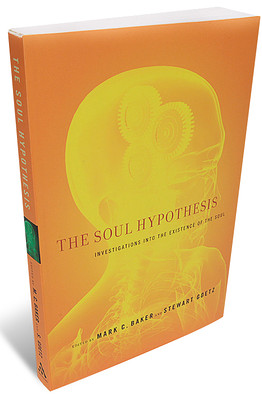
New collection of essays published to defend mind-body dualism

Here’s the new book on J.P. Moreland’s web site.

Full text:

In the Soul Hypothesis: Investigations into the Existence of the Soul (Continuum), co-editors Mark C. Baker and Stewart Goetz have assembled an impressive interdisciplinary team of scholars to address questions about the existence and nature of the soul.

“The Soul of the Matter” – Charles Taliaferro
“Minds, Brains and Brains in Vats” – Daniel N. Robinson
“Brains and Souls; Grammar and Speaking” – Mark Baker
“Making Things Happen: Souls in Action” – Stewart Goetz
“Energy of the Soul” – Robin Collins
“The Measure of All Things: Quantum Mechanics and the Soul” – Dean Zimmerman
“From Seeing to Seer” – Hans Halvorson
“Souls Beastly and Human” – William Hasker
“A Scientific Case for the Soul” – Robin Collins

You can preview the book here.

The book is unique is combining philosophical and scientific arguments for dualism, and the result is a rigorous, exciting, persuasive presentation of the issues and a stimulating challenge to so much of the reductionism that reigns in the sciences. As was noted in a recent review of the book in the WSJ,

Sooner or later, the contributors to “The Soul Hypothesis” warn, scientists will pinpoint the exact three neurons whose firing accompanies the thought of our deciding to make a phone call or, if you prefer, deciding to get up and get a beer from the refrigerator. As ever more such micro-couplings are observed, we will—so scientists tell us with unseemly glee— gradually come to see that our cherished conscious life is nothing but a long series of electrical impulses, not an autonomous realm of free will and free thought. Co-editor Mark C. Baker cites the psychologist Steven Pinker, who finds it plausible to say that neural “activity in the brain” simply “is the mind.”

The book’s contributors set out this scientific challenge fully and engagingly, but they also expose its fallacies. They note, for instance, that even if two things differ in their essential nature, as do mental thoughts and physical actions—or legislatures and laws—there is no reason why the one can’t cause the other. As David Hume argued, what establishes our idea of cause and effect is the regular “conjunction” of two events. That a physical act regularly follows a mental decision suggests, as co-editor Stewart Goetz writes, that the one is “causing” the other and that voluntary human action exists.

The Soul Hypothesis is an excellent text that is sure to provoke a vigorous dialog about its content. I highly recommend it.

I really would like to be able to use this argument more – I just need a good book. I’m a big admirer of Charles Taliaferro. I even met him once at a conference!