Tag Archives: Obamacare

Obama’s Affordable Care Act: health care costs rise by the most in 32 years

Trust Obama with your health care plan

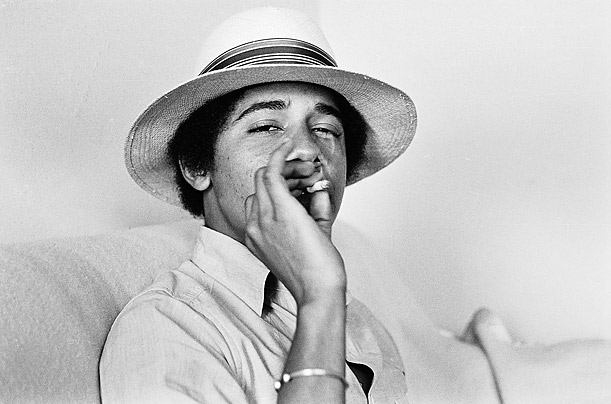
Should you entrust a “community organizer” to reform health care? What if he had no record of having successfully reformed health care in his resume – at any level of government? What if he refused to show you his academic transcripts? What if he had not a single private sector job related to health care in his resume? What if he had written an autobiography where he confessed to drug use that has very possibly damaged his brain so that all he can do is play golf and read a teleprompter?

Should you hire someone like that to reform health care? What if he only gives you one reason to hire him: his skin color? Should you hire someone to reform health care based solely on his skin color?

CNN Money explains what Obamacare has done to health care costs:

Health care costs rose sharply in August.
Prices for medicine, doctor appointments and health insurance rose the most last month since 1984. The price increases come amid a broader debate about climbing health care costs and high premiums for Obamacare coverage.

A recent report by Kaiser/HRET Employer Health Benefits forecasts that the average family health care plan will cost $18,142, up 3.4% from 2015. That’s faster than wage growth in America.

Medical care costs altogether rose 1% just in August from July, according to the Consumer Price Index, a report on price inflation from the U.S. Labor Department.

Premiums on the Obamacare exchanges are expected to rise by double-digits this year.

Some health insurers, such as Aetna, have recently announced they would pull out of the Obamacare exchanges, saying Obamacare patients have turned out to be sicker and costlier than expected.

Overall, workers are paying up more for deductibles. Over half of U.S. workers with single coverage health insurance plans pay a deductible of $1,000 or more, up from 31% of workers in 2011.

And the health care price increases come as inflation overall continues to be low. Consumer prices altogether rose 1.1% in August compared to a year ago.

Consider this article from Investors Business Daily to illustrate the importance of not picking a President based on confident words and personal charisma.

It says:

Employer-based health insurance premiums climbed 4.2% this year for family plans, according to an annual Kaiser Family Foundation report. That’s up from 3% the year before.

Since 2008, average family premiums have climbed a total of $4,865.

The White House cheered the news, saying it was a sign of continued slow growth in premium costs.

[…]”We will start,” Obama said back in 2008, “by reducing premiums by as much as $2,500 per family.”

That $2,500 figure was Obama’s mantra on health care. You can watch the video if you don’t believe it.

And Obama wasn’t talking about government subsidized insurance or expanding Medicaid or anything like that. He specifically focused on employer provided health care.

For “people who already have insurance, and the employers who are providing it,” he said at one campaign event, “we will work to lower your premiums by up to $2,500 per family.”

Let’s watch the video. I want everyone to see how confident a clown can sound when he lies about being able to solve problems that he knows nothing about.

He had no record of achievement in this area. None, Zero, Zip. And the same goes for his claims about keeping your doctor, keeping your health care plan, and so on. It was all lies – just things that people wanted to believe, that Obama did not have the ability to make happen. He had never, ever done anything with health care ever before. You would literally have had a better result if you had handed the job of health care reform to a turnip.

Honestly, someone’s skin color, sex, national origin or sexual orientation is not a reason to hire them to do an important job. Obama isn’t qualified to flip burgers in a McDonald’s. Why would anyone entrust someone with no transcripts and no resume to undertake such a momentous task? This is hurting real people – real people are having to pay the costs of electing an affirmative action President. We really need to not do things like that.

Next time, if we are going to hire someone to reform health care, let’s hire someone like black economist Thomas Sowell. At least he has experience in economics enough to know what happens next to all parties involved in a policy implementation. Obama, on the other hand, has doubled the national debt from $10 trillion to $20 trillion – an enormous burden on the next generation of American workers. What did we get for all this spending? Absolute and complete failure across the board.
Is Obamacare a spectacular failure because of incompetence, or by design?

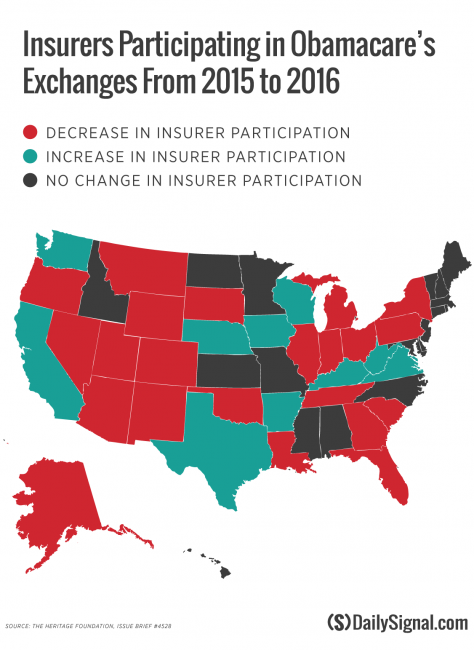
Private insurer participation in Obamacare exchanges, 2015-2016

First, let’s establish that Obamacare really is a failed policy.

One of my favorite health policy experts Sally C. Pipes reports for CNBC (H/T Bree) on how private insurers are reversing their decision to sell customers Obamacare policies.

Excerpt:

Aetna the nation’s fourth-largest health insurer, just decided to stop offering plans on Obamacare’s exchanges in all but four states in 2017. The firm says that it was losing roughly $300 million per year on these policies. And it projected that its losses would only increase, since the share of covered individuals “in need of high-cost care” was growing, according to CEO Mark Bertolini.

Aetna isn’t the only insurer giving up on Obamacare. UnitedHealth, America’s biggest insurer, will sell plans in just three states next year, down from 34 this year. Humana will offer coverage in just 156 counties in 2017, 88 percent fewer than this year.

In other words, the insurance “death spiral” has arrived. Obamacare’s critics have long predicted that exchange plans’ high premiums and deductibles would keep all but the sickest Americans from enrolling. These people would need so much medical care that insurers would lose money no matter how much they raised premiums. Eventually, insurers would have no choice but to pull out.

[…]Insurers that haven’t pulled out of Obamacare are requesting premium hikes averaging 24 percent next year. And some states have it far worse. Many Georgians could see a hike of 65 percent. The 600,000 Texans enrolled in Blue Cross Blue Shield may face a 59 percent premium increase.

I must have blogged about 50 posts on Obamacare, and why it would fail, before the 2012 election. I even had podcasts and articles by Sally C. Pipes! She predicted all of this long ago. The 2012 election was our last chance to stop it, and we failed.

Obamacare premium growth, 2015-2016

I always like to think about the future so I can prepare for it. Investors Business Daily thinks that if Hillary is elected, she will use this crisis to push for single payer health care. Single payer basically means that you pay into the government based on what you earn, and the sickest / least responsible people get a deal because they get “free” care. It’s a terrible deal for healthy, fit single men who never use health care. We have to pay about $10,000 a year in taxes, and never use it.

Investors Business Daily explains:

So what’s Hillary Clinton’s answer to the failing private exchanges? Get more people on government insurance through what she calls the “public option.” This would be a government-run health care plan offered in ObamaCare exchanges across the country.

“The public option, Clinton says, “will strengthen competition and reduce costs.”

But wait a minute. The “public option” was pushed by liberal Democrats in 2009 when ObamaCare was being built, and it was rejected by centrists in the party because it looked too much like a steppingstone to single payer.

As a matter of fact, that was the idea behind the “public option” in the first place.

As Mark Schmitt explained in the liberal American Prospect, “The public option was part of a carefully thought out and deliberately funded effort (to convince the single-payer crowd) they could live with the public option as a kind of stealth single-payer.” The idea was that the public option would be able to undercut private plans, driving them all out of the exchanges.

But all those centrists Democrats who opposed the public option are gone from the Senate, and if Hillary Clinton gets elected with a more liberal Senate majority, the public option will likely be top of her agenda.

With the vast Medicaid expansion, and the public option (as well as Clinton’s proposal to expand Medicare), it’s not far-fetched to say that soon the only people covered by private insurance will be the diminishing number who get it through work. (ObamaCare was also designed to shrink employer-based health.)

I guess my solution to this is to hang on to my employer-subsidized plan for as long as I can, and then if single-payer becomes the law, then I’ll just ease back my working. Maybe work part-time in a less demanding job. I don’t want to get up and go to work to pay for strangers, especially if their “health care” is just abortions, in vitro fertilization, drug addiction therapy, breast enlargements and sex changes – which is what happens in countries where the government does run health care. They just use it as a way to buy votes.

Arthur Brooks: why is the American public shifting from optimism to envy?

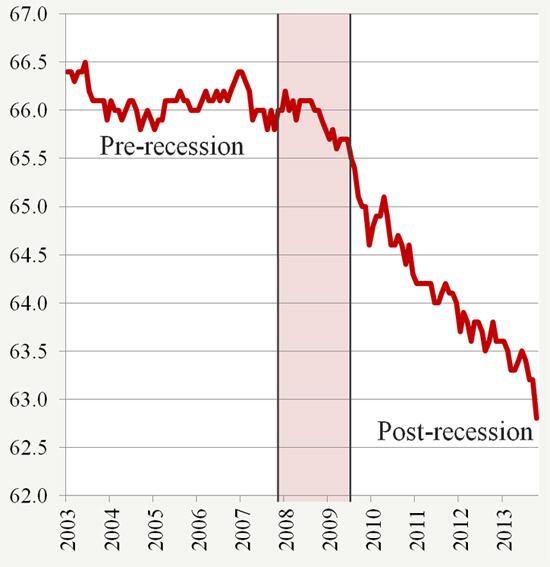
Labor Force Participation down to 62.8%

An editorial by Arthur Brooks appeared today in the leftist New York Times. His topic is the shift from optimism to envy, why it is happening, and whether envy makes us happier than optimism.

Excerpt: (links removed)

The Irish singer Bono once described a difference between America and his native land. “In the United States,” he explained, “you look at the guy that lives in the mansion on the hill, and you think, you know, one day, if I work really hard, I could live in that mansion. In Ireland, people look up at the guy in the mansion on the hill and go, one day, I’m going to get that bastard.”

[…]Unsurprisingly, psychologists have found that envy pushes down life satisfaction and depresses well-being. Envy is positively correlated with depression and neuroticism, and the hostility it breeds may actually make us sick. Recent work suggests that envy can help explain our complicated relationship with social media: it often leads to destructive “social comparison,” which decreases happiness. To understand this, just picture yourself scrolling through your ex’s wedding photos.

My own data analysis confirms a strong link between economic envy and unhappiness. In 2008, Gallup asked a large sample of Americans whether they were “angry that others have more than they deserve.” People who strongly disagreed with that statement — who were not envious, in other words — were almost five times more likely to say they were “very happy” about their lives than people who strongly agreed. Even after I controlled for income, education, age, family status, religion and politics, this pattern persisted.

It’s safe to conclude that a national shift toward envy would be toxic for American culture.

Unfortunately, in the wake of the Great Recession, such a shift may well be underway, given the increasing anxiety about income inequality and rising sympathy for income redistribution. According to data from the General Social Survey, the percentage of Americans who feel strongly that “government ought to reduce the income differences between the rich and the poor” is at its highest since the 1970s. In January, 43 percent of Americans told the Pew Research Center that government should do “a lot” to “reduce the gap between the rich and everyone else.”

Why the shift? The root cause of increasing envy is a belief that opportunity is in decline. According to a 2007 poll on inequality and civic engagement by the Maxwell School of Citizenship and Public Affairs at Syracuse University, just 30 percent of people who believe that everyone has the opportunity to succeed describe income inequality as “a serious problem.” But among people who feel that “only some” Americans have a shot at success, fully 70 percent say inequality is a major concern.

People who believe that hard work brings success do not begrudge others their prosperity. But if the game looks rigged, envy and a desire for redistribution will follow.

This is the direction we’re heading. According to Pew, the percentage of Americans who feel that “most people who want to get ahead” can do so through hard work has dropped by 14 points since about 2000. As recently as 2007, Gallup found that 70 percent were satisfied with their opportunities to get ahead by working hard; only 29 percent were dissatisfied. Today, that gap has shrunk to 54 percent satisfied, and 45 percent dissatisfied. In just a few years, we have gone from seeing our economy as a real meritocracy to viewing it as something closer to a coin flip.

There is a good lesson in this for people who want what is best for the poor. Simply receiving money from others is not going to make poor people happy. What we need to focus on is providing the poorest people with opportunities.

One way to help the poor is by giving poor children a better education. Conservatives support school choice, which takes money away from government and puts it back in the hands of parents, letting them choose the best school for their child. Schools have to produce good outcomes in order to earn the money, just like private businesses have to compete for customers. But Democrats oppose school choice, as when they killed the D.C. voucher program that helped poor black students. Less school choice helps public schools to be insulated from competition, which provides worse outcomes to students, especially poor minority students. If we really cared about poor, minority students, we would put pressure on public schools to compete with private schools. But the Democrats don’t want that, they prefer to give favors to their teacher union allies.

Democrats also want to punish job creators with high taxes and burdensome regulations. Democrats passed Obamacare, which punishes businesses with taxes if they allow part-time workers to work for more than 30 hours a week. Many jobs were lost because of this, and many people are now struggling to pay higher premiums for plans with higher deductibles and co-pays. Obamacare is a nightmare of intrusive regulations, too. Now the Democrats are talking about raising the minimum wage, which is going to put even more pressure on employers to lay off workers, because they can’t afford to pay them more money for the same work. For Democrats, this is all to the good, though. Because if the poor don’t have jobs, or can’t work enough hours, they start to see the economic game as “rigged” and they are more responsive to “envy rhetoric”. They start to look to big government for handouts, rather than trying to prevent the government from taxing and regulating job creators.

What we need to see is that it’s not the Democrats’ objective to help people find jobs. They gain when people become more envious, like in European countries, and start to vote to grow the size and power of government to redistribute wealth. Speeches about income inequality never have the goal of giving people jobs. None of Obama’s policies aim to do that. That’s why he won’t build the Keystone XL pipeline, or boost domestic energy development here at home. Instead, they want to extend unemployment benefits and pass the costs on to the next generation. Their goal is to get you unemployed or on disability or on welfare, so that you will vote for the government to continue to take your neighbor’s money to give it to you. That manufactured envy is what keeps the Democrats in power.

This plan to borrow from young people to buy the votes of old people today works for a while, until the money runs out. But by then, the politicians who put in place the redistribution programs are usually long gone .