Tag Archives: New Testament

Where to get help if you have a selfish, absent or abusive mother or father

Bible study that hits the spot

Today, I want to say something this article about lambs in Scotland, written by Sheila Walsh in the The Stream.

She writes:

I am very fond of sheep. I grew up on the west coast of Scotland with sheep all around me, field after field of white wool and incessant crying when things seemed a little off.

[…]Of all the lessons I have learned from these defenseless, gentle animals, the most profound is the most painful. Every now and then, a ewe will give birth to a lamb and immediately reject it. Sometimes the lamb is rejected because they are one of twins and the mother doesn’t have enough milk or she is old and frankly quite tired of the whole business. They call those lambs, bummer lambs.

Unless the shepherd intervenes, that lamb will die. So the shepherd will take that little lost one into his home and hand feed it from a bottle and keep it warm by the fire. He will wrap it up warm and hold it close enough to hear a heartbeat. When the lamb is strong the shepherd will place it back in the field with the rest of the flock.

“Off you go now, you can do this, I’m right here.”

The most beautiful sight to see is when the shepherd approaches his flock in the morning and calls them out, “Sheep, sheep, sheep!”

The first to run to him are the bummer lambs because they know his voice. It’s not that they are more loved — it’s just that they believe it.

I am so grateful that Christ calls himself the Good Shepherd.

“He calls his own sheep by name and leads them out. After he has gathered his own flock, he walks ahead of them, and they follow him because they know his voice.” (John 10:3-4 NLT)

My older brother and I grew up with a mother who was very much focused on her career and earning and saving money for her retirement. We were both stuck in daycare very early after being born, so that she could go back to work right away. (Me after 6 weeks) My older brother has shown the ill effects of our parents (especially our mother) not having any plan for us, especially morally and spiritually. He dropped out of college after failing his first year, never had a career. Although he has normal intelligence and mental health, he never could stick in any real job.

Although there were early warning signs when his grades started to drop in Grade 5, my parents never took responsibility to make a plan to solve it. Oh, they would yell and scream at him at report card time, but just for a day or two, and after that, nothing constructive. My brother decided that he could just ride out the flak my parents gave him on report card night, and keep going with his plan of having fun and being popular. My parents just forgot about it until the next report card day, because they did not want to be distracted from their careers, hobbies and retirement planning. When dispensing rewards, my brother was always given the same as me, despite our different levels of achievement. And my parents considered this equal dispensation of rewards regardless of performance to be a great virtue, and excellent parenting.

I had the exact same upbringing as my older brother. He actually did pretty well until Grade 5 just like me, but then our paths diverged. From Grade 5 on, his grades deterioriated. He got tired of having to study and he was more interested in the opinions of his peers and conforming to popular culture. In my case, from Grade 5 on, my grades were always high-90s. I remember taking the same classes as he did, in the same high school, with the same teachers. He got a 44 in data processing, I got a 96 with the same teacher and won the award for the entire grade. Every class I went to, the teachers would speak fondly of my older brother – he was a nice guy, very popular with his peers, good at sports. But not a very good student. How was it that I was winning awards when he had scored so poorly. Was I really his brother? How could we be so different?

The difference is that in Grade 5, he got a Gideon’s New Testament and he read it and he didn’t put it into practice, and in Grade 5, I got a Gideon’s New Testament and I read it twice and I did put it into practice. That was the difference. I had the awareness of the moral law (i.e.- wisdom) that allowed me to judge my parents and judge my peers and judge my teachers and stand alone. When you cannot rely on anyone to lead you, be able to judge when others mistreat you is very important. That is what allows you to maintain appropriate boundaries and minimize the influence of friends and family who are teaching you self-destructive behaviors. Awareness of the moral law is what allows you to stop trying to please people who do not want what is best for you. On the other hand, God is always willing to give you wisdom if you ask Him for it, and you can find out all about him because he has left plenty of evidence concerning his existence and character for you to find. It is in knowing God as he really is that you can find your sense of value, purpose and meaning. The God of the New Testament is the God of people who are lost and need a Savior.

For me, Christianity was a simple matter of being willing to go along with what was true, and not insisting on having fun or conforming to peer expectations. The essential characteristic of my faith, in contrast to my older brother’s lack of faith, was this – I did not mind being different, so long as I never lost a debate about what was true. My obedience to Christ has never been conditional on things going my way, on being liked, or anything like that. The only thing that mattered was being factually correct. It never bothered me what other people were doing, or what other people expected me to do, so long as I was acting on what I knew to be true. And God helped me to find out what was true by motivating me to study, and leading me to him with good evidence, and good mentors. Thanks to Jesus’ death on the cross, the mistakes I made early did not count against me, and they never will. Jesus’ death on the cross gives me the imputed righteousness that I need to stand before God holy and blameless. This is what allows me to keep learning and keep trying no matter how much I fail on any given day.

How has this affected me? Well, this is the second thing I wanted to say about the bummer lamb analogy. Since I was a victim of this hands-off, me-first style of parenting, it’s caused me to be extra sensitive about being a good spiritual leader to others in the same predicament. The people I mentor can see it in the way that I treat them . I treat them the opposite of the way that my older brother and I were treated. I care what people read. I care what courses they choose. I care what they eat. I care how they feel. I care about their finances. I care about their plans to serve God. I care about their romantic relationships. I care whether they get recognition for doing good. I care whether their life is going in the right direction. One person I mentored who once considered taking her own life wrote to me when she graduated from a STEM program, and she said this: “I wish you could have been here at my graduation. My parents only paid for this degree. You were the one who got me through it”. We have never met in person, but she is going to continue to make a huge difference for Christ and His Kingdom going forward.

I think when you have been a bummer lamb, you are extra careful to make decisions that will enable you to be a good shepherd to other lambs. Being a good shepherd does not mean being pious, spiritual, mystical, etc. Being a good shepherd does not mean making the lambs feel good about making bad decisions. Being a good shepherd means understanding what God has done to lead you, and then reflecting that love back to others in practical, self-sacrificial actions that solve actual real-world problems for other people who want to know and serve God. If you are about to jump off a cliff, the last thing you need is someone with no wisdom or experience telling you that God is OK with you doing whatever feels good to you. What you need is someone practical and competent to give you good advice, however much that advice may make you feel bad, or block your pursuit of fun.

One of my friends proof-read the draft of this post and told me that it made her think of 2 Cor 1:3-5:

Praise be to the God and Father of our Lord Jesus Christ, the Father of compassion and the God of all comfort,

who comforts us in all our troubles, so that we can comfort those in any trouble with the comfort we ourselves receive from God.

For just as we share abundantly in the sufferings of Christ, so also our comfort abounds through Christ.

Nothing else I do in life matters to me as much as taking care of the people I mentor, especially the ones who are lost and lacking guidance and care. I have good health, good education, good career, and great finances. But by far the most important thing I do is following the example of the Shepherd by caring for other lambs.
What is the criterion of embarrassment, and what are some examples of it?

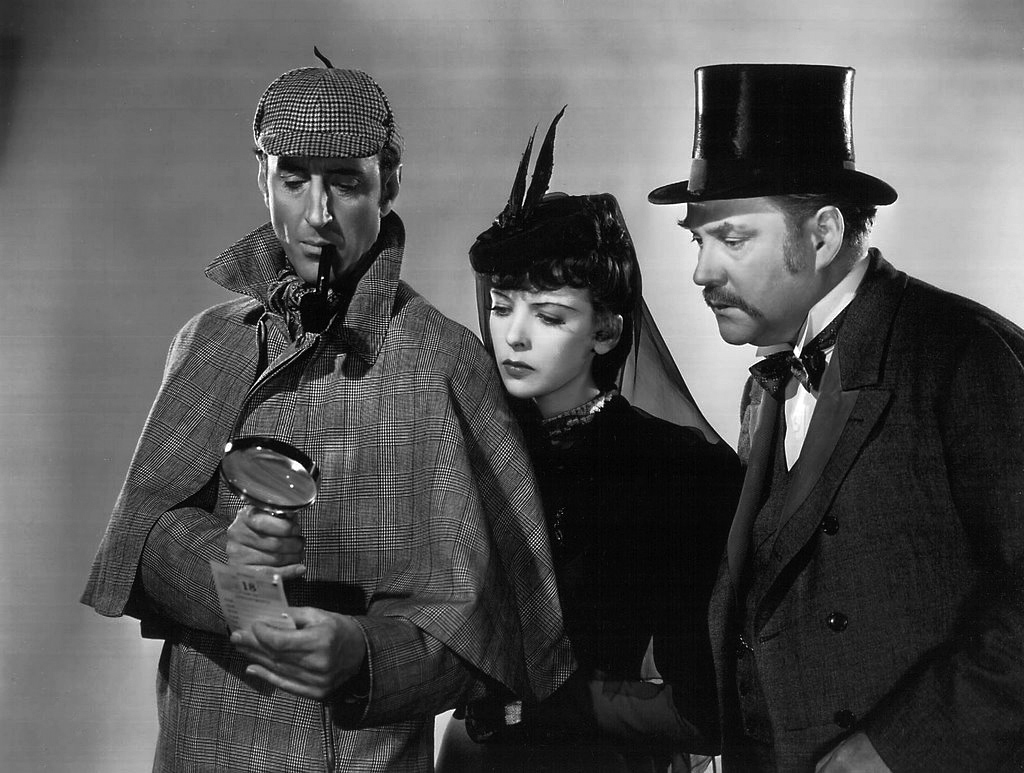
Sherlock Holmes and John Watson are going to take a look at the data

The criterion of embarrassment is just one of the historical criteria used to select the parts of a piece of ancient literature that are likely to be historical. Other things in the source may have happened, but we can’t know them as history. If significant parts of a text are historical, it is possible to accept it as historical until there are specific reasons to say that some part of it is NOT historical.

Here is William Lane Craig’s list of criteria for a saying or event to be historical:

  1. Historical congruence: S fits in with known historical facts concerning the context in which S is said to have occurred.
  2. Independent, early attestation: S appears in multiple sources which are near to the time at which S is alleged to have occurred and which depend neither upon each other nor a common source.
  3. Embarrassment: S is awkward or counter-productive for the persons who serve as the source of information for S.
  4. Dissimilarity: S is unlike antecedent Jewish thought-forms and/or unlike subsequent Christian thought-forms.
  5. Semitisms: traces in the narrative of Aramaic or Hebrew linguistic forms.
  6. Coherence: S is consistent with already established facts about Jesus.

The criteria is the same for liberal historians and conservative historians, although some historians weight one criteria more than others when trying to evaluate the historicity of different New Testament parts.

What’s amazing is that even liberal historians will give you facts that are embarrassing to the authors as “historical”.

Anyway, here are 8 examples of parts of the New Testament that exhibit the criterion of embarrassment, thanks to theologian C. Michael Patton.

  1. Jesus’ Baptism
  2. Jesus’ Family Did Not Believe
  3. John the Baptist’s Doubt
  4. The Disciples Doubted After the Resurrection
  5. Jesus Does not Know the Time of His Coming
  6. Women are the First to Witness the Resurrection
  7. Jesus Cursed a Fig Tree
  8. Death and Resurrection of Christ

I think 6 and 8 are the ones I want you to take away with you when you finish this post.

Here they are:

Women are the First to Witness the Resurrection

This is one that is often brought up. Craig Keener puts it well enough: “The witness of women at the tomb is very likely historical, precisely because it was so offensive to the larger culture — not the sort of testimony one would invent. Not all testimony was regarded as being of equal merit; the trustworthiness of witnesses was considered essential. Yet most of Jesus’ Jewish contemporaries held much less esteem for the testimony of women than for that of men; this suspicion reflects a broader Mediterranean limited trust of women’s speech and testimony also enshrined in Roman law.” (Keener, The Historical Jesus, 331)

And:

Death and Resurrection of Christ

This easily escapes our notice since the basic story of Christ is so well known. However, both the death and resurrection of Christ are, from the standpoint of the culture of the day, embarrassing and damaging. Concerning the death of Christ on a cross, Paul sees this problem: “But we preach Christ crucified: a stumbling block to Jews and foolishness to Gentiles” (1 Cor. 1:23). The word used for “stumbling block” is skandalon. Louw-Nida defines this as “that which causes offense and thus arouses opposition.” Why? Because the Jews would never have thought their Messiah would have been hung on a tree. “Cursed is one who hangs on a tree” (Gal. 3:13; Deut 21:23). The Greeks thought of the resurrection as foolishness as they were dualist, essentially believing that the material world was evil and the spiritual world good. They would have scoffed at the idea that Christ returned to physical form. This is why later Greeks attempted to adapt the Christ story, doing away with the physical resurrection. Marcion is the most famous promoter of this view (see Docitism).

Now, when you are talking about the New Testament to your non-believing friends, you definitely want to draw attention to passages that are embarrassing to the authors. It will help you to be more convincing when you explain the New Testament like a historian.

By the way, you can read an entire post I did on all the criteria that historians use to evaluate ancient historical documents.

What are undesigned coincidences, and how are they used in apologetics?

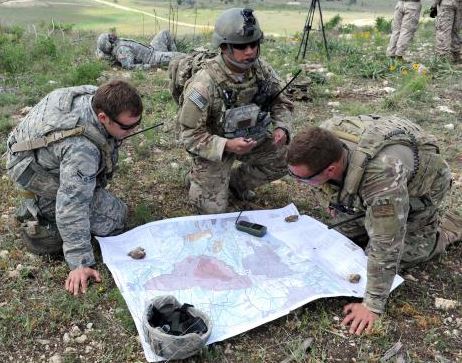
Air Force TACPs confirm target locations with their map

When you’re reading the Bible, you may find passages in one book that are mysterious on their own, but then they make sense if you add missing details from a parallel account from a different source inside or even outside the Bible. I think these “undesigned coincidences” are helpful for answering the question of that skeptics often ask: “is the Bible history or myth?” Let’s see some examples.

So, there are two kinds of undersigned coincidences. In the “internal” kind, the clearing up is done by another source in the same book. In the external kind, the clearing up is done by a source outside the same book.

Here’s an article from Apologetics UK with some internal examples:

In John 6:1-7, we are told:

Some time after this, Jesus crossed to the far shore of the Sea of Galilee (that is, the Sea of Tiberias), and a great crowd of people followed him because they saw the signs he had performed by healing the sick. Then Jesus went up on a mountainside and sat down with his disciples. The Jewish Passover Festival was near.When Jesus looked up and saw a great crowd coming toward him, he said to Philip, “Where shall we buy bread for these people to eat?” He asked this only to test him, for he already had in mind what he was going to do.Philip answered him, “It would take more than half a year’s wages to buy enough bread for each one to have a bite!”

Now, Philip is a fairly minor character in the New Testament. And one might, naturally, be inclined to wonder why Jesus hasn’t turned to someone a little higher in the pecking order (such as Peter or John). A partial clue is provided in John 1:44: “Philip, like Andrew and Peter, was from the town of Bethsaida.” Likewise, John 12:21 refers to “Philip, who was from Bethsaida in Galilee”

And what is so significant about Philip being from the town of Bethsaida? We don’t learn this until we read the parallel account in Luke’s gospel (9:10-17). At the opening of the account (verses 10-11) we are told, “When the apostles returned, they reported to Jesus what they had done. Then he took them with him and they withdrew by themselves to a town called Bethsaida, but the crowds learned about it and followed him. He welcomed them and spoke to them about the kingdom of God, and healed those who needed healing.”

And so, we are informed by Luke that the event was actually taking place in Bethsaida — the town from which Philip was from! Jesus thus turns to Philip, whom, he believed, would be familiar with the area. Notice too that Luke does not tell us that Jesus turned to Philip.

But it gets even more interesting still. In Matthew 11, Jesus denounces the unrepentant cities, saying, “Woe to you, Chorazin! Woe to you, Bethsaida! For if the miracles that were performed in you had been performed in Tyre and Sidon, they would have repented long ago in sackcloth and ashes.” The reader is left wondering what miracles were performed in these cities. We are not told in Matthew’s gospel. It is only in light of Luke’s account of the feeding of the five thousand (chapter 9), in which we are told of the event’s occurrence in Bethsaida, that this statement begins to make sense!

This one is pretty clever:

In Matthew 2 6:67-68, we read, “Then they spat in His face and beat Him; and others struck Him with the palms of their hands, saying, “Prophesy to us, Christ! Who is the one who struck You?”” This raises the natural question, why are they asking “Who hit you?” It is not until we read the parallel account in Luke’s gospel (22:64) that we learn that they had blindfolded him, thereby making sense of their taunts “Who hit you?”

Another one:

In Luke 23:1-4, w e read,
Then the whole assembly rose and led him off to Pilate. And they began to accuse him, saying, “We have found this man subverting our nation. He opposes payment of taxes to Caesar and claims to be Messiah, a king.”

So Pilate asked Jesus, “Are you the king of the Jews?”

“You have said so,” Jesus replied.

Then Pilate announced to the chief priests and the crowd, “I find no basis for a charge against this man.”
On the surface, this seems to be a rather strange declaration to make. Jesus has just declared Himself to be a King, and has been charged with subverting the nation and opposing paying taxes to Caesar. Why has Pilate found no basis for a charge against him?

The answer lies in the parallel account in John’s gospel (18:33-38):

Pilate then went back inside the palace, summoned Jesus and asked him, “Are you the king of the Jews?”

“Is that your own idea,” Jesus asked, “or did others talk to you about me?”
“Am I a Jew?” Pilate replied. “Your own people and chief priests handed you over to me. What is it you have done?”

Jesus said, “My kingdom is not of this world. If it were, my servants would fight to prevent my arrest by the Jewish leaders. But now my kingdom is from another place.”

“You are a king, then!” said Pilate.

Jesus answered, “You say that I am a king. In fact, the reason I was born and came into the world is to testify to the truth. Everyone on the side of truth listens to me.”

“What is truth?” retorted Pilate. With this he went out again to the Jews gathered there and said, “I find no basis for a charge against him.

It is only when you read John’s account that you learn that Jesus had told Pilate that “My kingdom is not of this world. If it were, my servants would fight to prevent my arrest by the Jewish leaders. But now my kingdom is from another place.”

And the same article has some external undesigned coincidences:

In Matthew 2:22, we are told:

But when [Joseph] heard that Archelaus was reigning in Judea in place of his father Herod, he was afraid to go there. Then after being waned by God in an dream, he left for the regions of Galilee…

Josephus’ Antiquities 17.3.1 tells us that the domain of Herod the Great was divided among his sons, with Archelaus having authority in Judea but not in Galilee, which was governed by his younger brother, Herod Antipas.

We also know that Archelaus had acquired quite a bloody reputation (e.g. Antiquities 17.13.1-2 and 17.9.3). The latter of these references describes how Archelaus slaughtered 3,000 Jews at Passover. Thus, Joseph decides not to return to Judea and, instead, goes further north to the regions of Galilee, governed by Herod Antipas.

And another one:

In Matthew 2:22, Archeleaus is reigning as king in Judea; in Matthew 27:2, Pilate is governor of Judea; in Acts 12:1, Herod is king of Judea; and in Acts 23:33, Felix is governor of Judea. This becomes extremely confusing.

But here’s the thing: Josephus attests to the accuracy of every one of these titles. Herod the Great was made King of Judea by Mark Anthony. Archelaus was deposed in the year 6 A.D., after only a ten-year reign, and a series of procurators ruled over Judea (of whom Pilate was fifth). The Herod of Acts 12 is Agrippa I. He was made king by Claudius Caesar. After his death, Judea was, once again, placed under the government of procurators (one of them being Felix).

And another one:

When Luke tells us of the riot in Ephesus, he reports that the city clerk tells the crowd that “There are proconsuls”. A proconsul is a Roman authority to whom a complaint may be taken. Normally, there was only one proconsul. Just at that particular time, however, there seems to have been two as a result of the assassination of Silanus (the previous proconsul) by poisoning in the Fall of AD 54, by the two imperial stewards at the urging of Nero’s mother. This event is independently documented by Tacitus in his Annals (13.1). Indeed, Luke’s accuracy has allowed historians to date the event which Luke narrates with incredible precision since we know when Silanus was poisoned.

If you think that these are clever, then share this post, and encourage your non-Christian friends and family to consider one of the many reasons why so many scholars have considered the New Testament books to be so reliable.

I wish that Christian parents and pastors were more thoughtful about how they present the Bible to young people. Instead of just saying “the Bible says” and praising blind faith acceptance of the Bible, why don’t we think a little harder, and look for some confirmation of the Bible from historical methods like undesigned coincidences, and from non-Biblical authors, and from archaeology, etc.? Surely adding more evidence for taking the Bible seriously is the right approach, if the goal is to be persuasive? It’s not like we’re see good results from the current “blind faith” approach to raising Christian children, right?