
Tag Archives: Morality

Denominations that liberalized Christianity’s teachings on sex are in decline

Alexander Grisworld writes about all the denominations that liberalized their teachings on sex, in The Federalist.

Excerpt:

The Episcopal Church

In 2003, Gene Robinson became the first openly gay, noncelibate man to be consecrated as a bishop of the Episcopal Church. In the wake of his consecration, entire dioceses severed ties with the Episcopal Church, eventually creating the Anglican Church of North America (ACNA). But the Episcopal Church continued to liberalize its sexual teachings, lifting a moratorium on any more gay bishops in 2006 and creating a “blessing ceremony” for gay couples in 2009.

In 2002, the number of baptized U.S. members of the Episcopal Church stood at 2.32 million. By 2012, that number had fallen to 1.89 million, a decline of 18.4 percent. Meanwhile, attendance has fallen even more steeply. Average Sunday attendance in its U.S. churches was 846,000 in 2002, but had fallen 24.4 percent by 2012 to only 640,000. Other signs of congregational liveliness have fallen even further. Baptisms have fallen by 39.6 percent, and marriages have fallen by 44.9 percent.

As for the ACNA? It’s seen its membership rise by 13 percent and its Sunday attendance rise by 16 percent in the past five years. Since 2009, the ACNA has planted 488 new congregations. In 2012, the entire Episcopal Church managed to plant four new churches.

The Evangelical Lutheran Church of America

The Evangelical Lutheran Church of America (ELCA) was formed in 1987, when three Lutheran denominations merged to create the largest Lutheran church in America. For most of its history, gay men and women were permitted to be pastors, so long as they remained celibate. But in a narrow vote at its 2009 Churchwide Assembly, ordination was extended to gay men and women in “committed monogamous relationships.” In addition, the Assembly passed an amendment allowing churches “to recognize, support and hold publicly accountable life-long, monogamous, same-gender relationships.”

From ELCA’s formation in 1987 to 2009, the average decrease in membership each year was only 0.62 percent. But after the liberalization of the ELCA’s stance on sexuality, membership declined a whopping 5.95 percent in 2010 and 4.98 percent in 2011. Since 2009, more than 600 congregations abandoned the denomination, with almost two-thirds joining conservative Lutheran denominations like the North American Lutheran Church and Lutheran Churches in Ministry for Christ.

By the end of 2012, ELCA had lost 12.3 percent of its members in three years—nearly 600,000 people. If the present rate of defections holds steady, ELCA will cease to exist in less than two decades.

The United Church of Christ

The United Church of Christ (UCC) has long had a reputation for unfettered liberalism, sometimes bordering on the radical. In 2008, for example, the pastor of the largest UCC congregations in the country was one Rev. Jeremiah Wright. The UCC’s tendency for pushing traditional boundaries has led to unquestionably positive developments (such as the first African-American pastor as early as 1785) and the unquestionably silly (such as the first hymnal that refuses to call Jesus male). Needless to say, in 2005 UCC became the first U.S. mainline Protestant denomination to support same-sex marriage, and has been an outspoken voice in the gay marriage debate ever since.

While UCC has been bleeding members for decades, its decline rapidly acceleratedafter the gay marriage vote. Since 2005, UCC has lost 250,000 members, a decline of 20.4 percent over seven years. While an average of 39 congregations left UCC annually from 1990 to 2004, more than 350 congregations departed in the following three years. The UCC’s own pension board called the 2000’s decline “the worst decade among 25 reporting Protestant denominations,” and admitted that “…the rate of decline is accelerating.”

2013 marked a particularly grim milestone for the denomination, as membership finally fell below one million. If the post-2005 rate in membership losses doesn’t taper out, the denomination will cease to exist in 30 years.

The Presbyterian Church U.S.A.

The Presbyterian Church U.S.A. (PCUSA) was flirting with loosening its sexual standards as early as its 2006 General Assembly, when it voted to allow ordination boards to essentially overlook clergy marriage standards if a candidate “adhere[s] to the essentials of the Reformed faith.” By 2010, the General Assembly had passed an amendment to remove all clerical standards of sexual behavior entirely. This year’s General Assembly voted overwhelmingly to change their Book of Order to redefine marriage as a civil contract between “two people” and to allow ministers to perform same-sex marriages where legal.

Hopefully by now, you can see where this is all headed. In 2006, 2.2 million people were members of PCUSA, a number that dropped 22.4 percent to 1.85 million by 2013. PCUSA’s decline accelerated significantly after approving the ordination of non-celibate gay and lesbian clergy in mid-2011, which led to the creation of an alternative denomination in 2012 called ECO: A Covenant Order of Evangelical Presbyterians. Over 100,000 members left the PCUSA in 2012 alone.

Once again, if post-2006 trends continue, the denomination will cease to exist by 2037.

Why is this?

I think it’s because when a person says that the plain meaning of Scripture is no longer authoritative in our lives simply because it interferes with our seeking of pleasure, that is the ballgame. When it comes to ethics, any serious Christian is going to look to the Bible to be the guide on God’s character and our duties to him that come out of being in relationship with him. If I have girlfriend, and we go out to a restaurant, I cannot spend the entire time hitting on the waitress and staring at every other girl in the room. Similarly, when a person claims to be a Christian, and be in a relationship with God, it’s a two-way relationship, and our actions have got to respect God as he is. God has a design for male-female relationships – a design for love, marriage and sex. If we just decide that we don’t have to care about who he is when we make these decisions about love, marriage and sex, then the relationship with him is over. It’s all about us, then. And if it’s all about us, then why get up and go to church at all?

The question that decides what side we are on is this: are there two people in this relationship? Do I have to care about that other person, or do I just project my feelings and desires onto them so they are just a projection of me? In my relationship with God, I know God is different than me. And I know what God is like from reading the Bible and seeing what God has done in the past. In particular, I can clearly see what Jesus has done in history. I know that God is not like me, and that he has other things he values than what I value. I know that what he wants for me is better for me in the long run than the things that seem so important to me now. Being in a relationship means that you have to listen to that other person and think about how to respect them in your decision-making. Once you put your own happiness above the things the other person cares about, it’s over.
Is Sam Harris successful at rationally grounding objective moral values and duties?

I just wanted to put out a few snips from this layperson-level article on the Reasonable Faith web site. The article is about atheist scholar Sam Harris, and his attempt to provide a basis for morality on atheism.

Here’s the Harris project:

The question then is, what is the best foundation for the existence of objective moral values and duties? What grounds them? What makes certain actions good or evil, right or wrong? Traditionally, God has been the highest Good (summum bonum) and His commandments constitutive of our moral duties. But if God does not exist, what foundation remains for objective moral values and duties?

Dr. Craig is able to show why Harris’ attempt to ground the objective moral value of humans in “human flourishing” fails, by using the law of identity to show that Harris’ rule doesn’t account for the possibility that those who do evil could possibly flourish and be happy. If Harris is right that objective morality is identical to human flourishing, then it cannot even be possible that this be the case. This can be a bit confusing to non-philosophers, though, so I’ll focus on Dr. Craig’s argument against Harris’ attempt to ground objective moral duties.

Dr. Craig writes:

That takes us to a second question: Does atheism provide a sound foundation for objective moral duties? Duty has to do with moral obligation and prohibition, what I ought or ought not to do. Here reviewers of The Moral Landscape have been merciless in pounding Harris’ attempt to provide a naturalistic account of moral obligation. Two problems stand out.

First: Natural science tells us only what is, not what ought to be, the case. As philosopher Jerry Fodor has written, “Science is about facts, not norms; it might tell us how we are, but it wouldn’t tell us what is wrong with how we are.” In particular it cannot tell us that we have a moral obligation to take actions that are conducive to human flourishing.

So if there is no God, what foundation remains for objective moral duties? On the naturalistic view, human beings are just animals, and animals have no moral obligations to one another. When a lion kills a zebra, it kills the zebra, but it does not murder the zebra. When a great white shark forcibly copulates with a female, it forcibly copulates with her but it does not rape her — for there is no moral dimension to these actions. They are neither prohibited nor obligatory.

So if God does not exist, why think we have any moral obligations to do anything? Who or what imposes these moral duties on us? Where do they come from? It is hard to see why they would be anything more than a subjective impression ingrained into us by societal and parental conditioning.

So we might feel morally obligated to do something, maybe what our herd expects of us in this time and place we live in. But on atheism those feelings are arbitrary. After all, societies have evolved where feelings of obligation are felt by people to perform suicide bombings against civilians. On atheism, those feelings are as valid and grounded as any other “duties” because they emerge from the same process in other times and places. Obligations change between time and place – they are not objectively real. But that means that our moral duties are not objective, they are arbitrary – if atheism is true. The same “socio-biological evolution” is generating opposite moral duties in different times and places. This is not “objective”.

And the second objection is even more lethal:

Second: “ought” implies “can.” A person is not morally responsible for an action he is unable to avoid. For example, if somebody shoves you into another person, you are not to blame for bumping into this person. You had no choice. But Harris believes that all of our actions are causally determined and that there is no free will. Harris rejects not only libertarian accounts of freedom but also compatibilistic accounts of freedom. But if there is no free will, no one is morally responsible for anything. In the end, Harris admits this, though it’s tucked away in his endnotes. Moral responsibility, he says, “is a social construct,” not an objective reality: “in neuroscientific terms no person is more or less responsible than any other” for the actions they perform. His thoroughgoing determinism spells the end of any hope or possibility of objective moral duties on his worldview because we have no control over what we do.

Harris recognizes that “determinism really does threaten free will and responsibility as we intuitively understand them.” But not to worry! “The illusion of free will is itself an illusion.” The point, I take it, is that we do not really have the illusion of free will. Not only is such a claim patently false phenomenologically, as any of us can attest, but it is also irrelevant. The fact remains that whether we experience the illusion of free will or not, on Harris’ view we are thoroughly determined in all that we think and do and can therefore have no moral responsibilities.

On Harris’ view, human beings are computers made out of meat. But if you cannot freely make moral choices, then you cannot choose to perform moral duties or not. What is amazing to me is why he wants to deny free will in the first place. He is surely very well aware of his own experience of free will, and his own consciousness, for that matter. Before we even start to look at evidences like the origin of the universe, the fine-tuning, the origin of life, the Cambrian explosion, etc. we have evidence within ourselves that naturalism is false. I mean – has no one ever loved this man enough to point out the self-deception to him? I know people want to believe that no one will hold them accountable for their selfish, immoral actions, but surely some logical contradictions are so obvious that the atheist has to step back from it and say “enough! I am not going to commit intellectual suicide”.

Not just aborting babies with Down’s syndrome – Dawkins supports infanticide

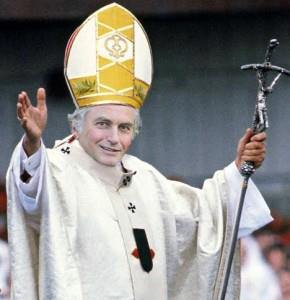
Listen up you atheists, the Pope has spoken

The UK Telegraph reports on the latest Dawkins blunder.

Excerpt:

Richard Dawkins, the atheist writer, has claimed it is “immoral” to allow unborn babies with Down’s syndrome to live.

The Oxford professor posted a message on Twitter saying would-be parents who learn their child has the condition have an ethical responsibility to “abort it and try again”.

His comments were dismissed by charities and prompted fury online from opponents but he insisted his stance was “very civilised” because foetuses do not have “human feelings”.

He claimed that the important question in the abortion debate is not “is it ‘human’?” but “can it suffer?” and insisted that people have no right to object to abortion if they eat meat.

[…]Anti-abortion campaigners describe the practice of aborting foetuses on physical grounds as a form of “eugenics”.

But Prof Dawkins strongly defended its as simply standard practice and ridiculed his critics as portraying him as “a horrid monster”.

The row erupted during a debate on Twitter about calls for further changes to Ireland’s abortion laws in the wake of the case of a rape victim who was forced to carry the child until she could deliver by caesarean section.

One participant said they would suffer a real ethical dilemma if they were carrying a child with the condition.

Prof Dawkins replied: “Abort it and try again. It would be immoral to bring it into the world if you have the choice.”

Another pointed to recent figures asking: “994 human beings with Down’s Syndrome deliberately killed before birth in England and Wales in 2012 – is that civilised?”

He responded: “Yes, it is very civilised. These are foetuses, diagnosed before they have human feelings.”

I’m really not sure why anyone is surprised by this. Dawkins is an atheist and as such, he has no rational grounding for objective moral values and duties. He also does not have any rational grounding for free will, which is required for making moral choices and bearing moral responsibility. To an atheist, what people ought to do is decided by conventions and customs that vary by time and place. There is no objective moral standard for the way humans ought to be. Dawkins is an evolutionist. He believes in survival of the fittest. The unfit should die – if necessary, directly at the hands of the fit.

Listen to what he writes in his book:

In a universe of blind physical forces and genetic replication, some people are going to get hurt, other people are going to get lucky, and you won’t find any rhyme or reason in it, or any justice. The universe that we observe has precisely the properties we should expect if there is, at bottom, no design, no purpose, no evil and no good, nothing but blind, pitiless indifference… DNA neither knows nor cares. DNA just is. And we dance to its music.

–Richard Dawkins, (River Out of Eden: A Darwinian View of Life (1995))

I’m not misrepresenting him – the man is a very consistent atheist, and there is no room for morality on atheism. It’s not rationally grounded.

Here’s how far Dawkins takes his view that there is no evil and no good:

Richard Dawkins explains morality on atheism

But wait!

He goes even further than mere abortion – he also supports infanticide:

Richard Dawkins even advocates for adultery. So I’m really not sure why people are so fascinated by atheism, when this is the kind of person it produces.I am not saying that every atheist is going to treat morality as all personal preference and social convention. Just the ones who really understand it, and are consistent with it. Real atheists don’t have any rational grounding for morality in their worldview. This man has 1 million twitter followers. He is their spokesman because he reflects their views.

And finally, in the past, Dawkins has expressed that his goal is to destroy Christianity. Is this the same kind of destruction of Christianity that his fellow atheist Stalin wanted? Given Dawkins views on murdering innocent unborn and born children, I think we can infer what he means by “destroy Christianity”.

By the way, Nick Peters has also written about Dawkins’ comments, and I stole the image of Pope Dawkins from his post.
