

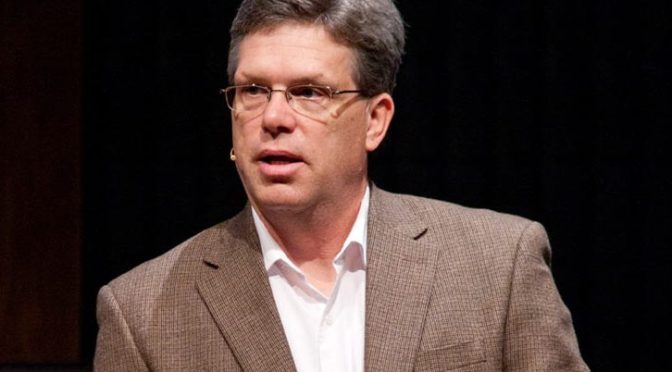
Here’s Dr. William Lane Craig explaining why atheists can’t help themselves to objective morality, given a worldview of atheism:
He presents 3 reasons why in the video, all of which are also discussed in his Defenders class:
The mention of Plato brings to mind another possible atheistic response to the first premise of the moral argument that if God does not exist, then objective moral values and duties do not exist. Plato thought that the Good just exists as a sort of self-subsistent idea, as an entity in and of itself. Indeed, it is the most real thing in reality. The Good simply exists. If you find this difficult to grasp, join the company! Nevertheless, that is what Plato believed. Later Christian thinkers, like Augustine, equated Plato’s Good with the nature of God. God’s nature is the Good, and so it was anchored in a concrete object, namely, God. But for Plato, at least, the Good just sort of existed on its own as a kind of self-existent idea.
Some atheists might say that moral values, like Justice, Mercy, Love, and Forbearance, just exist all on their own as sort of abstract moral objects. They have no other foundation; they just exist. We can call this view Atheistic Moral Platonism. According to this view, moral values are not grounded in God. They just exist all on their own.
Unintelligibility of Atheistic Moral Platonism
What might we say by way of response to Atheistic Moral Platonism? Let me make three responses. First, it seems to me that this view is just unintelligible. I simply don’t understand what it means. What does it mean, for example, to say that the moral value Justice just exists? I understand what it means to say that a person is just or that some action is just, but what does it even mean to say that in the absence of any persons or any objects at all, that Justice just exists? It is hard to understand even what this means. Moral values seem to be properties of persons, and so it is hard to understand how Justice can just exist as a sort of abstraction.
Lack of Moral Obligation on Atheistic Moral Platonism
Secondly, a major weakness of this view is that it provides no basis for objective moral duties. Let’s suppose, for the sake of argument, that moral values like Justice, Love, Forbearance, and Tolerance just exist on their own. Why would that lay any sort of moral obligation upon me? Why would the existence of this realm of ideas make it my duty to be, say, merciful or loving? Who or what lays such an obligation upon me? Why would I have the moral duty to be merciful or loving? Notice that on this view moral vices like Greed, Hatred, and Selfishness presumably also exist as abstractions. In the absence of any moral law giver, what obligates me to align my life with one set of these abstract ideas rather than with some other set of abstract ideas? There just doesn’t seem to be any basis at all for moral duty in this view. In the absence of a moral law giver, Atheistic Moral Platonism lacks any basis for moral obligation.
Improbability of Atheistic Moral Platonism
Finally, thirdly, it is fantastically improbable that the blind evolutionary process should spit forth exactly those kinds of creatures that align with the existence of this realm of abstract values.1 Remember that they have no relationship with each other at all. The natural realm and this abstract moral realm are completely separate. And yet, lo and behold, the natural realm has by chance alone evolved exactly those kind of creatures whose lives align with these moral duties and values. This seems to be an incredible coincidence when you think about it. It is almost as if the moral realm knew that we were coming! I think it is a far more plausible view to say that both the natural realm and the moral realm are under the sovereignty of a divine being, who is both the creator of natural laws that govern the physical universe and whose commands constitute the moral laws that govern our ethical duties. This is a more coherent view of reality. Theism is a more coherent view because these two realms of reality don’t fall apart in this disjointed way. They are both under the sovereignty of a single natural and moral law giver.
For those three reasons, Atheistic Moral Platonism is a less plausible view than theistic based ethics such as I have been defending.
And now, I must be mean to the atheists, because I think this me too nonsense is just ridiculous, desperate intellectual dishonesty.
I remember having a conversation with one of my IT project managers who was an atheist, and she asked me what I thought would happen to dogs when they died. I said “well on your view of atheism, they don’t have an afterlife, so they just rot away when we bury them and they get eaten by worms”. She was aghast and said “no they don’t, they go to Heaven”. That was just her wishful thinking, there. And that’s what morality on atheism is: wishful thinking. It’s just an appearance package that gets bolted onto absolute meaninglessness and hedonism. And even if the atheist tries to make traditional decisions in their own lives, they typically push for full-on dismantling of Judeo-Christian values, especially in the sexual realm. And that spills over into abortion, divorce, same-sex marriage and government restraints on free speech, conscience and religious liberty.
Dear atheists: you cannot duct tape morality onto nihilism and have it be rational. We know you’re doing it to feel good about yourselves and to appear normal instead of wearing your nihilism openly. But your faked morality is not even close to the morality of theists, and especially not of Christian theists. Christians go against their self-interest because we imitate the self-sacrificial love of Christ, who gave himself as a ransom to save others. That makes no sense on an atheistic worldview, since this life is all you have, and there is no afterlife where your actions are in the context of a relationship with that self-sacrificial Son of God. In any case, free will doesn’t exist on atheism, so that means no moral choices regardless. These are the common sense implications of atheist first principles, and in fact that’s what you hear expressed from the finest atheist scholars: no free will, no right and wrong, no life after death.
If you want to see what atheists really think about morality, then take a look at this post featuring Matt Dillahunty, where he is asked to condemn the Holocaust as objectively wrong, and he refuses to do it. That’s intellectually consistent atheist morality right there. If the universe is an accident, and human beings evolved by accident, then there is no way things ought to be, and no way we ought to act. And no one is there to be part of an ongoing two-way relationship where our conduct matters, anyway. On atheism, human beings will die out individually and collectively in the heat death of the universe. Once the heat death of the universe arrives, there will be no one left to care how we lived after we’re dead – there is no one waiting for us who cares how we act towards him and towards others. Atheists can arbitrarily put any limits they want on their actions, based on what makes them feel good, and what makes people like them, perhaps taking account the arbitrary customs and conventions of the time and place they find themselves in. But it’s delusional and irrational make-believe for atheists to claim that morality is rational on their worldview.
Positive arguments for Christian theism
- The kalam cosmological argument and the Big Bang theory
- The fine-tuning argument from cosmological constants and quantities
- The origin of life, part 1 of 2: the building blocks of life
- The origin of life, part 2 of 2: biological information
- The sudden origin of phyla in the Cambrian explosion
- Galactic habitable zones and circumstellar habitable zones
- Irreducible complexity in molecular machines
- The creative limits of natural selection and random mutation
- Angus Menuge’s ontological argument from reason
- Alvin Plantinga’s epistemological argument from reason
- William Lane Craig’s moral argument
- The unexpected applicability of mathematics to nature
- Arguments and scientific evidence for non-physical minds

 WINTERY KNIGHT