
Tag Archives: Marriage

The top 7 things a wife needs to be happy in her marriage

Do women have a plan for marriage?
Do women influenced by feminism understand marriage?

From MercatorNet.

Here’s the list, in order of importance:

  1. A husband’s emotional engagement
  2. Fairness
  3. A breadwinning husband
  4. A commitment to marriage
  5. Staying at home
  6. Shared religious attendance
  7. Traditional gender attitudes

I want to highlight #3, because it’s the one I most frequently find missing in younger, unmarried Christian women.

Here’s number three:

American wives, even wives who hold more feminist views about working women and the division of household tasks, are typically happier when their husband earns 68% or more of the household income. Husbands who are successful breadwinners probably give their wives the opportunity to make choices about work and family—e.g., working part-time, staying home, or pursuing a meaningful but not particularly remunerative job—that allow them to best respond to their own needs, and the needs of their children.

The reason I have found that the young, unmarried Christian women oppose this is because it negates the “follow your heart” Disney princess mentality that they are often raised on. They don’t want to be practical, and some of them even go so far as to shun the good advice of other married women. Women should be able to count the costs of a marriage and understand that handsomeness and confidence does not pay the considerable bills that married couples incur, especially when they have children. I think a good basic education in business, finance and/or economics for this “follow your heart”, “have no fear” women would be beneficial. It’s very important that women learn to value a man’s ability to make decisions that allow him to find work that pays well.

It’s getting common now for men to be in their late 20s and yet never have had a job that earns money. Women should not be relying on penniless students younger than they are – men who have not proved (from their past) that they can fulfill the demands of the provider role. Women should not be resting their hopes on men who have no proven record of work experience. They should not hope that things will get better in the future. Future wishes are not evidence of the ability to provide, only past performance at providing is evidence of the ability to provide. What is needed is a record of earning money, of showing up to work on time, of getting promotions, of steady long-term employment (not jumping around to different jobs), and being good at saving money that is earned.

I also liked #4:

Wives who share a strong commitment to the norm of lifelong marriage with their husband—e.g., who both believe that even unhappily married couples should stay together for the sake of their children—are more likely to have a happy marriage than couples who do not share this commitment to marriage. Shared commitment seems to generate a sense of trust, emotional security, and a willingness to sacrifice for one’s spouse—all of which lead to happier marriages for women. This shared commitment also provides women with a long-term view of their marriage that helps them negotiate the inevitable difficulties that confront any marriage.

I think the commitment ideal is something that is now very much against the grain in our culture. We want to have relationships that make us happy all the time. We don’t want to make commitments that will force us to confront the needs of that other person. We don’t want to have to deal with expectations, responsibilities and obligations, especially when they conflict with our pursuit of self-fulfillment and fun. But commitment is the opposite of pursuing fun. Commitment is about making a promise to another person to care for their needs. If caring for someone else’s needs scares you, then naturally, you’ll want to avoid commitment as much as you can.

Unfortunately, marriage isn’t compatible with obligation avoidance. Commitment is the very center of it, and if you want a good marriage, then you’d better get used to making and keeping commitments. If you are good at sensing and caring for the needs of others, and putting others above yourself, and enduring hardships and difficulties to keep your commitments, then you’re ready for marriage.

What happened in other countries, e.g. Canada, after gay marriage was legalized?

If you want real confidence, try studying instead of yelling

This article from CNS News is a must-read for sleepy American Christians.

It says:

Rather than settle animosity and ease cultural tensions, the advent of same-sex “marriage” will lead to the repression of religious freedom and determination to root out dissent to the gay rights doctrine. At LifeSiteNews, we have watched this play out for nearly two decades in 17 countries around the world – and America is next.

A prime example is Canada. Same-sex “marriage” passed in 2005. Similar to European countries which have done so, there has been a relentless pursuit of the minds of children against the wishes of their parents. Schools, both public and private, were first mandated by law to have gay-straight alliance clubs under the auspices of anti-bullying. Then, sex-education, teaching the normalcy of homosexual sex, was given to children without parents being permitted to opt their children out of the classes.

We have arrived at this state of affairs because of the silence of Christian pulpits on sexual matters, and the concomitant shouting from every secular pulpit, screen and book. Even the current discussion around same-sex “marriage” in the United States reveals a grave reluctance to speak about the heart of the issue – homosexual sex. Rather, arguments are made about the goodness of natural marriage, about its benefit to children, and its unchangeable character.

From reporting on the subject every day for so many years, we knew that the struggle for same-sex “marriage” has very little to do with marriage. In fact, until just recently, gay activists didn’t even want to be “married” to each other. Most had no interest in the constraints that such a formalized union would entail in terms of exclusive partnership.

However, the leaders among the activists convinced the movement that they must attain marriage as a societal stamp of approval to homosexual behavior. And, frankly, they have largely succeeded.

Today, in many of the nations where same-sex “marriage” is law, opposition to it is seen as akin to racism. It is seen falsely as an animosity against someone for who they are—an unwillingness to recognize the human dignity of a class of persons due to an immutable characteristic.

However, that false perception is due to a purposeful agenda to conflate animosity against homosexual sex acts with animosity against persons who experience same-sex attraction.  The ancient Christian teaching to “love the sinner and hate the sin” is an impermissible distinction in the minds of some. It is, however, the key to understanding the majority of the opposition to same-sex “marriage.”

The plain truth of the matter is that opposition to same-sex “marriage” is rooted not in hatred and bigotry, but just the opposite – in love. Like parents who do not allow children to behave dangerously without lovingly correcting them, opponents of same-sex relationships are hoping to save people with same-sex attractions from severe physical, psychological, and spiritual harm.

Just as, out of love and concern for their children’s welfare, parents must correct and discipline, despite the protests they may get in return, any true believer in marriage, natural law and science must lovingly correct their fellow man.

In other nations, the perception that opposition to same-sex “marriage” is based upon bigotry has led to laws that violate religious liberty, parental rights and freedom of speech. This is why those who oppose same-sex “marriage” must present their reasoning as based on love and concern for the welfare of those in homosexual relationships, in addition to concerns for children and society itself.  And there is ample evidence on which to base that concern in the numerous studies showing the grave harm of homosexual sex to both body and psyche.

The danger is something that some gay activists (who are honest) speak about:

When I’ve spoken of these findings at conferences around the world, some have questioned if the researchers who showed these harms weren’t themselves biased by anti-gay sentiment.  And so I’ve taken to carrying with me on my phone the quotes of the late Canadian gay activist Gens Hellquist, whose testimony proves the harms of gay sex better than any study ever could.

Speaking a year after the passage of same-sex “marriage” into law, Hellquist was seeking more healthcare dollars for the LGBT community. “We have one of the poorest health statuses in this country,” he said. “Health issues affecting queer Canadians include lower life expectancy than the average Canadian, suicide, higher rates of substance abuse, depression, inadequate access to care and HIV/AIDS.”

“There are all kinds of health issues that are endemic to our community,” he added. “We have higher rates of anal cancer in the gay male community, lesbians have higher rates of breast cancer.”

He concluded: “Now that we can get married everyone assumes that we don’t have any issues any more. A lot of the deaths that occur in our community are hidden, we don’t see them. Those of us who are working on the front lines see them and I’m tired of watching my community die.”

Here is a good summary of what happened in Canada in the years after they legalized same-sex

Why is this happening? The answer is that American Christians have become more concerned about soft-aspects of Christianity than about truth. The church is more concerned about feeling good and being liked by non-Christians. Cultivating intellectual ability to defend marriage through a study of the relevant literature is definitely out. The very pious Bible-focused fundamentalists are confident that the best way to argue with non-Christians is to quote Bible verses to them.

I have a different idea of what we should be doing. I think we should be reading books on the philosophical arguments for marraige, (e.g. – “What Is Marriage?“) ,and reading books on what happens to children who are raised by same-sex adults instead of by their own mom and dad, (e.g. – “Gender and Parenthood“). It’s this study of philosophical arguments and social science evidence which allows us to be bold in defending marriage. Studying the issues instead of trying to do pious, subjective devotional activities will also help our children to be able to reach positions of influence in the culture, from which they can push the pro-marriage view.

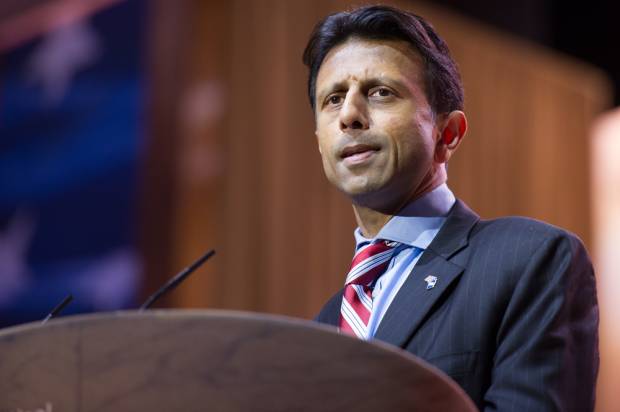
Louisiana governor Bobby Jindal to anti-marriage corporate bullies: “Save your breath”

Louisiana Governor Bobby Jindal

Bobby Jindal is my #2 pick for President, just behind Scott Walker. Previously, I blogged about how Jindal had the best pro-life record of any of the GOP primary candidates. And now were going to see that he is tough on defending marriage, as well.

Jindal defends marriage in the radically leftist New York Times, of all places.

Jindal writes:

THE debate over religious liberty in America presents conservatives and business leaders with a crucial choice.

In Indiana and Arkansas, large corporations recently joined left-wing activists to bully elected officials into backing away from strong protections for religious liberty. It was disappointing to see conservative leaders so hastily retreat on legislation that would simply allow for an individual or business to claim a right to free exercise of religion in a court of law.

Our country was founded on the principle of religious liberty, enshrined in the Bill of Rights. Why shouldn’t an individual or business have the right to cite, in a court proceeding, religious liberty as a reason for not participating in a same-sex marriage ceremony that violates a sincerely held religious belief?

That is what Indiana and Arkansas sought to do. That political leaders in both states quickly cowered amid the shrieks of big business and the radical left should alarm us all.

It might be a surprise for my readers, but big greedy corporations are as liberal as big greedy unions – conservatives don’t like unions or big corporations. We like small businesses. And so does Bobby Jindal.

While Indiana and Arkansas retreat, Jindal wants to double down:

As the fight for religious liberty moves to Louisiana, I have a clear message for any corporation that contemplates bullying our state: Save your breath.

In 2010, Louisiana adopted a Religious Freedom Restoration Act, which prohibits government from unduly burdening a person’s exercise of religion. However, given the changing positions of politicians, judges and the public in favor of same-sex marriage, along with the potential for discrimination against Christian individuals and businesses that comes with these shifts, I plan in this legislative session to fight for passage of the Marriage and Conscience Act.

The legislation would prohibit the state from denying a person, company or nonprofit group a license, accreditation, employment or contract — or taking other “adverse action” — based on the person or entity’s religious views on the institution of marriage.

Some corporations have already contacted me and asked me to oppose this law. I am certain that other companies, under pressure from radical liberals, will do the same. They are free to voice their opinions, but they will not deter me. As a nation we would not compel a priest, minister or rabbi to violate his conscience and perform a same-sex wedding ceremony. But a great many Americans who are not members of the clergy feel just as called to live their faith through their businesses. That’s why we should ensure that musicians, caterers, photographers and others should be immune from government coercion on deeply held religious convictions.

I know that many of you have not heard of Bobby Jindal, but he is one of our best and most conservative candidates. I think that for people who vote primarily for social conservatism, he is the most effective on those issues – much more than all the other candidates. Honestly, I don’t think he cares about being popular, he just does what he thinks is right.