
Tag Archives: Link

Induced abortions, drinking and use of contraceptives all increase breast cancer risk

Here’s the latest study from the Journal of the American Medical Association (JAMA), showing that excessive consumption of alcohol is a rish factor for breast cancer.

Excerpt:

Consumption of 3 to 6 alcoholic drinks per week is associated with a small increase in the risk of breast cancer, and consumption in both earlier and later adult life is also associated with an increased risk, according to a study in the November 2 issue of JAMA.

“In many studies, higher consumption of alcohol has been associated with an increased risk of breast cancer. However, the effect of low levels of drinking as is common in the United States has not been well quantified,” according to background information in the article. “In addition, the role of drinking patterns (i.e., frequency of drinking and ‘binge’ drinking) and consumption at different times of adult life are not well understood.”

Wendy Y. Chen, M.D., M.P.H., of Brigham and Women’s Hospital and Harvard Medical School, Boston, and colleagues examined the association of breast cancer with alcohol consumption during adult life, including quantity, frequency, and age at consumption. The study included 105,986 women enrolled in the Nurses’ Health Study who were followed up from 1980 until 2008 with an early adult alcohol assessment and 8 updated alcohol assessments. The primary outcome the researchers measured was the risk of developing invasive breast cancer.

During the follow-up period, there were 7,690 cases of invasive breast cancer diagnosed among the study participants. Analyses of data indicated that a low level of alcohol consumption (5.0 to 9.9 grams per day, equivalent to 3-6 glasses of wine per week) was modestly but statistically significantly associated with a 15 percent increased risk of breast cancer. In addition, women who consumed at least 30 grams of alcohol daily on average (at least 2 drinks per day) had a 51 percent increased risk of breast cancer compared with women who never consumed alcohol.

The researchers also found that when examined separately, alcohol consumption levels at ages 18 to 40 years and after age 40 years were both strongly associated with breast cancer risk. The association with drinking in early adult life still persisted even after controlling for alcohol intake after age 40 years.

Binge drinking, but not frequency of drinking, was also associated with breast cancer risk after controlling for cumulative alcohol intake.

Now let’s take a look at some other factors that raise the risk of breast cancer.

Abortion and breast cancer

Many studies show a link between abortion and breast cancer.

Study 1: (September 2010)

Based on the expression of estrogen receptor (ER), progesterone receptor (PR) and HER2/neu (HER2), breast cancer is classified into several subtypes: luminal A (ER+ and/or PR+, HER2-), luminal B (ER+ and/or PR+, HER2+), HER2-overexpressing (ER-, PR-, and HER2+) and triple-negative (ER-, PR-, and HER2-). The aim of this case-control study is to determine reproductive factors associated with breast cancer subtypes in Chinese women. A total of 1,417 patients diagnosed with breast cancer in the First Affiliated Hospital, China Medical University, Shenyang, China between 2001 and 2009 and 1,587 matched controls without a prior breast cancer were enrolled.

[…]Postmenopause and spontaneous abortion were inversely associated with the risk of luminal tumors. By contrast, multiparity, family history of breast cancer and induced abortion increased the risk of breast cancer.

Study 2: (March 2010)

OBJECTIVE: To explore the risk factors of breast cancer for better control and prevention of the malignancy.

METHODS: The clinical data of 232 patients with pathologically established breast cancer were investigated in this 1:1 case-control study to identify the risk factors of breast cancer.

RESULTS: The history of benign breast diseases, family history of carcinoma and multiple abortions were the statistically significant risk factors of breast cancer, while breast feeding was the protective factor.

CONCLUSION: A history of benign breast diseases, family history of carcinoma and multiple abortions are all risk factors of breast cancer.

But wait, there’s more.

Birth control pills

Many studies showed that taking birth control pills caused an increased risk of breast cancer.

Study 1: (March 2003)

RESULTS: Among the youngest age group (<35 years, n = 545), significant predictors of risk included African-American race (RR = 2.66: 95% CI 1.4-4.9) and recent use of oral contraceptives (RR = 2.26; 95% CI 1.4-3.6). Although these relationships were strongest for estrogen receptor-negative (ER-) tumors (RRs of 3.30 for race and 3.56 for recent oral contraceptive use), these associations were also apparent for young women with ER+ tumors. Delayed childbearing was a risk factor for ER+ tumors among the older premenopausal women (Ptrend < 0.01), but not for women <35 years in whom early childbearing was associated with an increased risk, reflecting a short-term increase in risk immediately following a birth.

Study 2: (October 2008)

Oral contraceptive use ≥1 year was associated with a 2.5-fold increased risk for triple-negative breast cancer (95% confidence interval, 1.4-4.3) and no significantly increased risk for non-triple-negative breast cancer (Pheterogeneity = 0.008). Furthermore, the risk among oral contraceptive users conferred by longer oral contraceptive duration and by more recent use was significantly greater for triple-negative breast cancer than non-triple-negative breast cancer (Pheterogeneity = 0.02 and 0.01, respectively).

Why are these risk factors so prevalent today?

Now let’s put it all together by looking at this New York Times article by Nancy Bauer.

Excerpt:

If there’s anything that feminism has bequeathed to young women of means, it’s that power is their birthright.  Visit an American college campus on a Monday morning and you’ll find any number of amazingly ambitious and talented young women wielding their brain power, determined not to let anything — including a relationship with some needy, dependent man — get in their way.  Come back on a party night, and you’ll find many of these same girls (they stopped calling themselves “women” years ago) wielding their sexual power, dressed as provocatively as they dare, matching the guys drink for drink — and then hook-up for hook-up.

The article was written by:

Nancy Bauer is associate professor and chair of philosophy at Tufts University. She is the author of “Simone de Beauvoir, Philosophy, and Feminism,” and is currently completing a new book, “How to Do Things With Pornography.”

Her comments cause me to ask some questions. Where did women ever get the idea that they had to drink as much as men drink? Where did women ever get the idea that using contraceptives to enable hook-up sex was healthy and normal? Where did women ever get the idea that aborting their own unborn children was healthy and normal? Is there one unifying worldview that stipulates all of these beliefs? Why has this worldview become so popular that so many young women who now believe in it, rather than believing in traditional Judeo-Christian values?

Who is paying for all of this increased health care spending?

The total cost for breast cancer treatment, which raises medical insurance premiums (private health care) or taxes (single-payer health care), has been estimated to be between $1.8 billion and $3.8 billion dollars. In addition, the government spends billions of dollars each year on breast cancer research. All of this spending is costing taxpayers a lot of money, as people demand more and more government funding of breast cancer research and breast cancer treatment (with either private or single-payer health care).
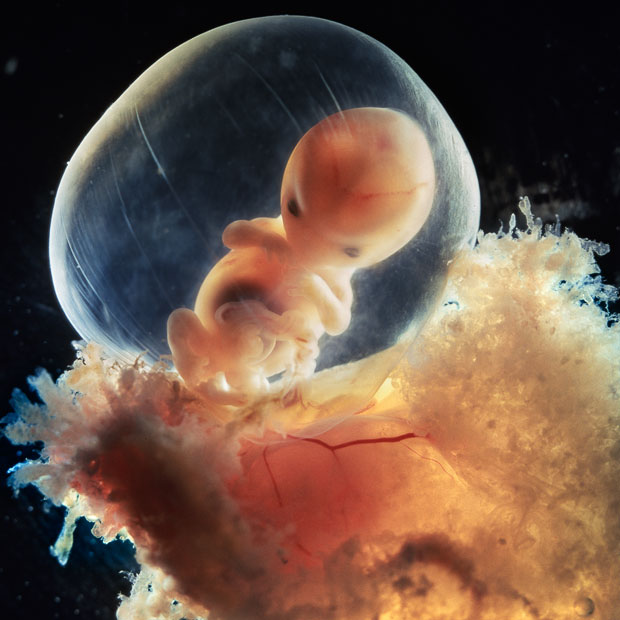
New study finds that choice to abort nearly doubles the risk of mental illness

Unborn baby scheming about prestigious research papers
Unborn baby scheming about a new research paper

Here is the study published in the British Journal of Psychiatry. (H/T Mary)

Abstract:

Background Given the methodological limitations of recently published qualitative reviews of abortion and mental health, a quantitative synthesis was deemed necessary to represent more accurately the published literature and to provide clarity to clinicians.

Aims To measure the association between abortion and indicators of adverse mental health, with subgroup effects calculated based on comparison groups (no abortion, unintended pregnancy delivered, pregnancy delivered) and particular outcomes. A secondary objective was to calculate population-attributable risk (PAR) statistics for each outcome.

Method After the application of methodologically based selection criteria and extraction rules to minimise bias, the sample comprised 22 studies, 36 measures of effect and 877 181 participants (163 831 experienced an abortion). Random effects pooled odds ratios were computed using adjusted odds ratios from the original studies and PAR statistics were derived from the pooled odds ratios.

Results Women who had undergone an abortion experienced an 81% increased risk of mental health problems, and nearly 10% of the incidence of mental health problems was shown to be attributable to abortion. The strongest subgroup estimates of increased risk occurred when abortion was compared with term pregnancy and when the outcomes pertained to substance use and suicidal behaviour.

Conclusions This review offers the largest quantitative estimate of mental health risks associated with abortion available in the world literature. Calling into question the conclusions from traditional reviews, the results revealed a moderate to highly increased risk of mental health problems after abortion. Consistent with the tenets of evidence-based medicine, this information should inform the delivery of abortion services.

Life News has more about the study.

Excerpt:

A new study published in the British Journal of Psychiatry by leading American researcher Dr. Priscilla Coleman of Bowling Green State University finds women who have an abortion face almost double the risk of mental health problems as women who have their baby.

Coleman’s study is based on an analysis of 22 separate studies which, in total, examine the pregnancy experiences of 877,000 women, with 163,831 women having an abortion. The study also indicated abortion accounts for one in ten of every adverse mental health issue women face as a whole.

“Results indicate quite consistently that abortion is associated with moderate to highly increased risks of psychological problems subsequent to the procedure,” the study says. “Overall, the results revealed that women who had undergone an abortion experienced an 81 percent increased risk of mental health problems, and nearly 10 percent of the incidence of mental health problems were shown to be directly attributable to abortion.”

The peer-reviewed study indicated abortion was linked with a 34 percent chance of anxiety disorders, and 37 percent higher possibility of depression, a more than double risk of alcohol abuse (110 percent), a three times greater risk of marijuana use (220 percent), and 155 percent greater risk of trying to commit suicide.

When compared to unintended pregnancy delivered women had a 55% increased risk of experiencing any mental health problem.

[…]“The paper is being published in a very prestigious journal, the British Journal of Psychiatry, which is considered one of the top psychiatry journals in the world. This means the paper has been extensively scrutinized by well-respected scientists and the results of studies are trusted by practitioners throughout the world,” Coleman said.

I was always told when debating the abortion issue not to talk about the effects on women, because the studies conflict. Some women have positive reactions after an abortion (relief) and some have negative reactions (guilt). This paper tips the balance in favor of the view that abortion is harmful to women. It confirms other recent studies that showed that abortion does have a negative impact on women’s mental health.

Abortion and breast cancer

Recent studies have also confirmed that there is a link between abortion and breast cancer.

Consider this article in the UK Daily Mail.

Excerpt:

An abortion can triple a woman’s risk of developing breast cancer in later life, researchers say. A team of scientists made the claim while carrying out research into how breastfeeding can protect women from developing the killer disease. While concluding that breastfeeding offered significant protection from cancer, they also noted that the highest reported risk factor in developing the disease was abortion. Other factors included the onset of the menopause and smoking. The findings, published in the journal Cancer Epidemiology, are the latest research to show a link between abortion and breast cancer. The research was carried out by scientists at the University of Colombo in Sri Lanka. It is the fourth epidemiological study to report such a link in the past 14 months, with research in China, Turkey and the U.S. showing similar conclusions.

[…]There has been an 80 per cent increase in the rate of breast cancer since 1971, when in the wake of the Abortion Act, the number of abortions rose from 18,000 to nearly 200,000 a year.

Earlier this year, Dr Louise Brinton, a senior researcher with the U.S. National Cancer Institute who did not accept the link, reversed her position to say she was now convinced abortion increased the risk of breast cancer by about 40 per cent.

Note that there were only 300 people in the new study, so it is a small study. But it confirms the Turkey study that I blogged on before, and the China study that I blogged about before, and the American study that I blogged about before.

, , , , , , , , , , , , , , , , , , , , , , , , , , ,

Vermont governor blames tropical storms on global warming

Here’s the interview of the left-wing site Democracy Now.

Excerpt:

AMY GOODMAN: You have a climate cabinet—you’re unusual in this way, Governor Shumlin—in Vermont, dealing with the issue of climate change. Can you talk about something that the networks, as they covered what wasn’t happening in New York and then came very late to what is happening in Vermont, have not talked about through this massive coverage, and that is those two words, “climate change” or “global warming”?

GOV. PETER SHUMLIN: Well, you know, I find it extraordinary that so many political leaders won’t actually talk about the relationship between climate change, fossil fuels, our continuing irrational exuberance about burning fossil fuels, in light of these storm patterns that we’ve been experiencing. Listen, since I’ve been sworn in as governor just seven months ago, I have dealt with—this is the second major disaster as a result of storms. We had storms this spring that flooded our downtowns and put us through many of the same exercises that we’re going through right now. We didn’t used to get weather patterns like this in Vermont. We didn’t get tropical storms. We didn’t get flash flooding. It wasn’t—you know, our storm patterns weren’t like Costa Rica; they were like Vermont.

And the point is, we in the colder states are going to see the results of climate change first. We are. Myself, Premier Charest up in Quebec, Governor Cuomo over in New York, we understand that the flooding and the extraordinary weather patterns that we’re seeing are a result of our burnings of fossil fuel. We’ve got to get off fossil fuels as quickly as we know how, to make this planet livable for our children and our grandchildren. And I do think that there’s a relationship between the storms that we’ve been getting here in Vermont and the example, frankly, of what—they are an example of what lies ahead for us.

Yes, it’s politicians like this that cause oil prices to go through the roof because they refuse to develop domestic sources of energy. And when you raise the price of oil and gas, you raise the prices of food, and anything else that needs to be transported.

But I digress… is the Vermont governor right about tropical storms never happening in Vermont? Let’s see.

Excerpt:

1927 November – A tropical storm spawned torrential rains as it rose over the Green Mountain in Vermont, Nov. 3-4. The record flooding caused $40 million in damage and killed 84 people in Vermont and 1 in Rhode Island. The storm ended as snow in the mountains. Note that this flood was unrelated to the 1927 Mississippi Flood.

1938 September – New England Hurricane of 1938 – Strong Category 3. Wind gusts reached Category 5 strength in eastern Connecticut, Rhode Island and southern Massachusetts west of Buzzards Bay and Cape Cod. The anemometer at the Blue Hill Observatory registered a peak wind gust of 186 m.p.h. before the instrument broke. The hurricane lost strength as it tracked into interior areas of New England, but it is believed to have been at Category 2 intensity as it crossed into Vermont and at minimal Category 1 intensity as it tracked into Quebec. The storm killed over 600 people and is considered to be the worst hurricane to strike New England in modern times.

Ooops!They’ve had hurricanes in Vermont… and those are much worse than tropical storms.

But what about scientists… what do pro-global warming scientists think of the link between hurricane frequency and global warming?

Excerpt:

Ever since Hurricane Katrina in 2005, hurricanes have often been seen as a symbol of global warming’s wrath. Many climate change experts have tied the rise of hurricanes in recent years to global warming and hotter waters that fuel them.

Another group of experts say there is no link. They attribute the recent increase to a natural multi-decade cycle.

What makes this study different is Knutson, a meteorologist with the National Oceanic and Atmospheric Administration’s fluid dynamics lab in Princeton, N.J.

He has warned about the harmful effects of climate change and has even complained in the past about being censored by the Bush administration on studies on the dangers of global warming.

He said his new study argues “against the notion that we’ve already seen a really dramatic increase in Atlantic hurricane activity resulting from greenhouse warming.”

The study, published online Sunday in the journal Nature Geoscience, predicts that by the end of the century the number of hurricanes in the Atlantic will fall by 18 percent. The number of hurricanes making landfall in the United States and its neighbors will drop by 30 percent because of wind factors. The biggest storms – those with winds of more than 110 mph – would only decrease in frequency by 8 percent.

So what are we to make over the media freaking out over hurricane tropical storm Irene?

As Dennis Prager argues, meteorologists can’t even predict the intensity of a “hurricane” one day before the event, but they are certain about their predictions for catastrophic global warming. Is that not “irrational exuberance”? I can see why politicians on the left would sign on to this – they are always trying to make everyone equal by limiting individual freedoms and regulating businesses.