
Tag Archives: Jobs

American Spectator praises Australia’s bold new conservative leader

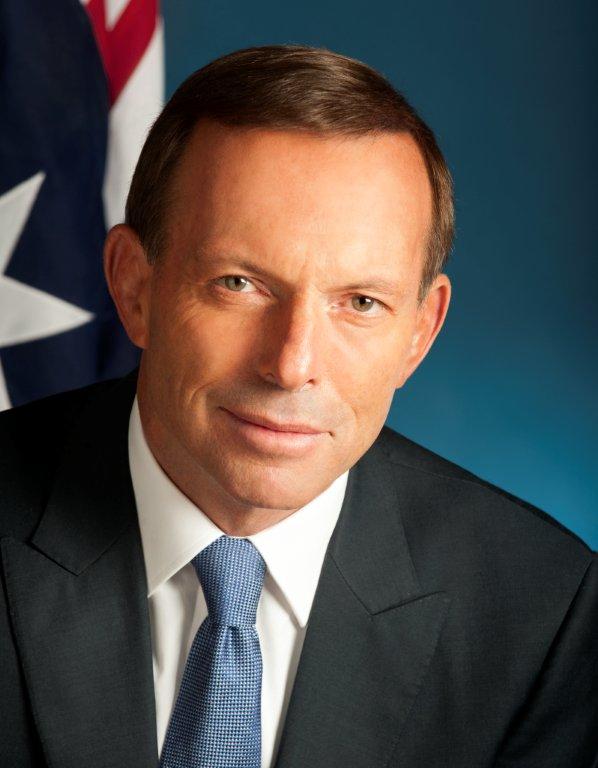
Tony Abbott, Prime Minister of Australia

Well, I think we can get some encouragement from this article from the American Spectator.

Let’s take a look at his policies and appointments:

On economic policy, his government has moved in the opposite direction of those who favor Dodd-Frank-like behemoth approaches to the financial industry. Instead it’s opted to simplify regulation. As the minister responsible for the reform bluntly pointed out, “no amount of legislation will ever be a guarantee against another Storm Financial.” Indeed it’s often excessive regulation that creates opportunities for financial shenanigans by industry insiders.

Regarding the welfare state, Abbott’s minister for Social Security, Kevin Andrews (another conservative politician-thinker), has announced a major overhaul of a welfare system that was starting to drift in a distinctly European-direction. Predictably the left are up in arms. But so too are those rent-seeking Australian businesses who now find themselves dealing with a government uninterested in subsidizing them. That’s nothing, however, to the fury that greeted Abbott’s disbanding of the climate-change bureaucracy established by the preceding Labor government.

[…]The first sign of Abbott’s seriousness about obstructing the left’s long march through the institutions was his government’s appointment of the policy-director of the center-right Institute of Public Affairs to the nation’s Human Rights Commission. This was widely seen as the beginning of an effort to re-balance an organization long criticized as monolithically left-wing. Since then Abbott has indicated that major changes are coming to the ABC: Australia’s government-funded institutional — and ideological — equivalent of the BBC.

[…]Along the same lines, Abbott’s education minister, Christopher Pyne, has initiated a review of the national curriculum implemented by the previous government. A moment’s glance at the curriculum’s treatment of history soon illustrates the extent to which it seeks to downplay Australia’s indisputably Western heritage. In the words of Sydney’s Cardinal George Pell, “Europe, Britain and the United States are mentioned 76 times, while Asia is referred to on more than 200 occasions.” This disparity is odd because although Australia is certainly in Asia, no objective observer could say that Australia is “of” Asia. Moreover, while Australian students learn about “Gaia” and other deep-green fantasies in grade 9, many Australian universities find they need to put the same students through remedial English classes once they begin college.

Then there are Abbott’s initial steps on the international stage. Take, for instance, his recent remarks at Davos. Much of the address was devoted to pushing a strong free trade agenda and insisting that governments should let business do what it does best: promote lasting economic growth. “After all,” Abbott said, “government doesn’t create wealth; people do, when they run profitable businesses.”

In the same speech, however, Abbott made the conservative point that economic prosperity and freedom can’t be sustained in a value-neutral world. Nor did Abbott shy away from relentlessly pressing one of the most important moral arguments for free trade articulated long ago by Adam Smith: that economic freedom, combined with the right institutions, radically reduces poverty faster than any other approach. “No country,” Abbott added, “has ever taxed or subsidized its way to prosperity.”

All in all, the address added up to a solid integration of sound economics with conservative principles. That’s what makes Abbott different from, say, Canada’s Stephen Harper or Spain’s Mariano Rajoy. Abbott happily engages in the indispensable task of moral suasion in favor of conservative positions. What’s more, he’s quite good at it. With his rare combination of plain-speaking and intellectual substance, Abbott makes conservative ideas sound, well, reasonable to the average voter.

Now, I personally thought that prime minister Stephen Harper of Canada was the best leader of any nation out there, but I had not been following Australian politics as much as I should be, and now I think I’ll give the crown to Abbott. He seems to have a good fusionist view that integrates economic policy and social policy, and that makes him better than Harper, in my view. I would like to see Abbott flex his muscles on foreign policy, as well. Something to look forward to.
State department: not building the Keystone XL pipeline could increase greenhouse gas emissions

From CNS News.

Excerpt:

Not building the 875-mile Keystone XL Pipeline could result in the release of up to 42 percent more greenhouse gases than would be released by building it, according to the State Department.

Not building the pipeline “is unlikely to significantly impact the rate of extraction in the [Canadian] oil sands or the continued demand for heavy crude oil at refineries in the United States,” the department noted in a long-awaited environmental report released January 31st.

But the “No Build” option is likely to result in an increased number of oil spills, six more deaths annually, and up to 42 percent higher greenhouse gas (GHG) emissions, the State Department concluded.

The proposed 36-inch pipeline would transport 830,000 barrels of crude oil each day from western Canada through the Bakken oil fields of Montana and South Dakota before connecting to an existing pipeline in Nebraska on its way to Gulf Coast refineries.

The project will create an estimated 42,100 jobs and add $3.4 billion to the U.S. economy.

This report follows last week’s report showing that the pipeline would have no major environmental impact.

Excerpt:

The long-delayed Keystone XL oil pipeline cleared a major hurdle toward approval Friday, a serious blow to environmentalists’ hopes that President Barack Obama will block the controversial project running more than 1,000 miles from Canada through the heart of the U.S.

The State Department reported no major environmental objections to the proposed $7 billion pipeline, which has become a symbol of the political debate over climate change. Republicans and some oil- and gas-producing states in the U.S. — as well as Canada’s minister of natural resources — cheered the report, but it further rankled environmentalists already at odds with Obama and his energy policy.

Now the State Department is one of the most liberal departments in the government. Unfortunately, this has not appeased the great climate science experts in Hollywood, who donate so much money to Democrat election campaigns. So long as the money keeps flowing from the high school drop-out celebrities, don’t expect this pipeline to get built. For the Democrats, it’s all about staying in power.

Related Posts

Minimum wage: doing what feels good doesn’t produce good results

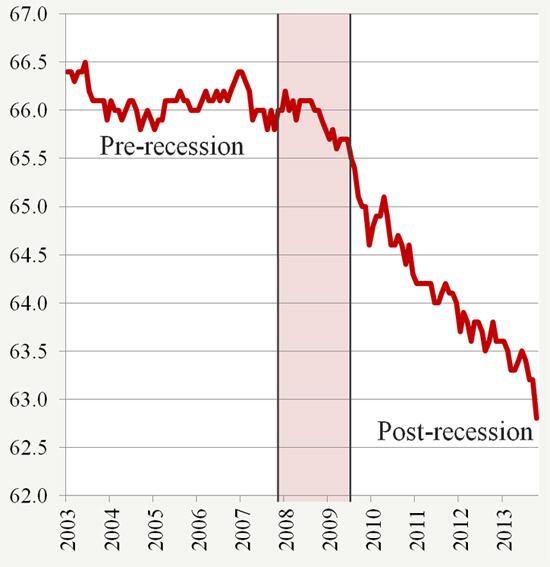
Labor Force Participation down to 62.8%

Will Obama’s plan to raise minimum wage help people?

From the Daily Caller. (H/T Conway)

Excerpt:

The Obama administration’s proposal to raise the minimum wage to $10.10 an hour could result in as many 1,084,000 jobs eliminated from the work force, according to a new study conducted by the Employment Policies Institute (EPI)

“No amount of denial by the president and his political allies — and no number of ‘studies’ published by biased researchers — can change the fact that minimum wage hikes eliminate jobs for low-skill and entry-level employees. Non-partisan economists have agreed on this consensus for decades, and the laws of economics haven’t changed,” Michael Saltsman, research director at EPI, said in a statement.

He offered an alternative to the president’s plan: “Instead of raising small businesses’ labor costs and creating more barriers to entry-level employment, the president and the Senate should focus on policies that help reduce poverty and create jobs.”

The  study was released in the wake of an expected vote on a Senate bill that aims to raise the federal minimum wage from the current $7.25 an hour to $10.10 an hour — a nearly 40 percent increase.

Many Democrats argue that increasing the federal minimum will reduce poverty without having an adverse effect on unemployment.

EPI’s report, which used analysis from economists at Miami and Trinity University, reached a different conclusion.

Researchers used recently updated Census Bureau data from 2012 and 2013 to calculate how each individual state would be impacted by the proposed wage hikes. As a lump sum, Americans would see a loss of at least 360,000 jobs, and perhaps even over one million if hourly wages are increased to $10.10.

The number of job losses would be the most dramatic in large states, such as California and Texas. Economists found that California could lose as many as 100,016 jobs and Texas could see up to 128,617 jobs disappear from its economy.

But’s it’s not just this proposal that is the problem, it’s his past policies.

After FIVE YEARS of Obamanomics, we still have a record 100 MILLION people still out of work from when he became President. There has been NO RECOVERY since the housing bubble, which was caused by the Democrats in Congress. Policies like raising the minimum wage only make that worse, although it sounds great to Obama’s low information supporters.

Minimum wage raises cause higher unemployment

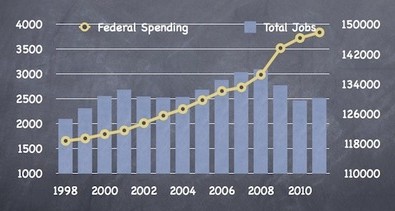
Government Spending Vs Jobs

From Investors Business Daily.

Excerpt:

How amusing to watch Democrats wring their hands over what they can do to get businesses to create jobs, when one of the biggest job killers is the minimum wage they keep hiking.

Recall that it was Democrats who raised the federal wage floor a whopping $2.10 an hour in the middle of the recession. The record 41% increase has led to record unemployment among young people, especially black teens.

Congress started ratcheting up the minimum wage from $5.15 an hour in mid-2007, arguing it would help abate poverty. But retailers looking to slash costs eliminated low-skilled, entry-level jobs rather than pay the mandated increases.

Now 1.5 million fewer teens are working. Last year’s unemployment rate for workers ages 16 to 19 shot up to 26% from 2007’s 15%.

As for black teens, their joblessness soared to a record 43% after the final raise to $7.25 took effect in mid-2009. It helped put more than half of young black men out of work — a first.

The president proposes cranking the minimum wage even higher to $9.50. Then he wants to raise it every year thereafter as a “living wage” indexed to inflation.

Yes, this is the problem that happens when you elect someone who knows nothing whatsoever about economics. And when I say nothing, I mean he is in disagreement with virtually all economists across the ideological spectrum.

A large majority of economists agree

Moderate economist Gregory Mankiw of Harvard University lists the policies that are accepted by virtually all economists.

Here’s Greg’s list, together with the percentage of economists who agree:

  1. A ceiling on rents reduces the quantity and quality of housing available. (93%)
  2. Tariffs and import quotas usually reduce general economic welfare. (93%)
  3. Flexible and floating exchange rates offer an effective international monetary arrangement. (90%)
  4. Fiscal policy (e.g., tax cut and/or government expenditure increase) has a significant stimulative impact on a less than fully employed economy. (90%)
  5. The United States should not restrict employers from outsourcing work to foreign countries. (90%)
  6. The United States should eliminate agricultural subsidies. (85%)
  7. Local and state governments should eliminate subsidies to professional sports franchises. (85%)
  8. If the federal budget is to be balanced, it should be done over the business cycle rather than yearly. (85%)
  9. The gap between Social Security funds and expenditures will become unsustainably large within the next fifty years if current policies remain unchanged. (85%)
  10. Cash payments increase the welfare of recipients to a greater degree than do transfers-in-kind of equal cash value. (84%)
  11. A large federal budget deficit has an adverse effect on the economy. (83%)
  12. A minimum wage increases unemployment among young and unskilled workers. (79%)
  13. The government should restructure the welfare system along the lines of a “negative income tax.” (79%)
  14. Effluent taxes and marketable pollution permits represent a better approach to pollution control than imposition of pollution ceilings. (78%)

You can find out more about how raising the minimum wage increases unemployment, especially for young people and minorities, from this comprehensive, 50-year, government study.

This is why it is important for voters to understand economics. When you raise the price of labor, fewer employers will purchase labor. Supply and demand. This is so basic, that I am surprised that someone as educated as Obama doesn’t understand it. It’s probably because he has virtually no experience working in the private sector.