Tag Archives: Investing

New study: most Americans have not saved enough for their retirement

Building a castle isn't easy - it takes work
Building a castle isn’t easy – it takes work

This story is from CNBC, and I hope it causes you young people to count the cost of your plans.

It says:

A new GAO analysis finds that among households with members aged 55 or older, nearly 29 percent have neither retirement savings nor a traditional pension plan.

“There hasn’t been a significant increase in wages, people have student loans and other debt, and many are continuing to struggle financially,” said Charles Jeszeck, the GAO’s director of education, workforce and income security, which analyzed the Federal Reserve’s 2013 Survey of Consumer Finances to come up with its estimates. “We aren’t surprised that people have not saved a lot for retirement.”

Even among those who do have retirement savings, their nest eggs are small. The agency found the median amount of those savings is about $104,000 for households with members between 55 and 64 years old and $148,000 for households with members 65 to 74 years old. That’s equivalent to an inflation-protected annuity of $310 and $649 per month, respectively, according to the GAO.

Americans underestimate how much money is needed in order to retire:

Estimates about the size and scope of the retirement savings problem vary widely, the GAO found. In addition to examining the Survey of Consumer Finances, it reviewed nine studies conducted between 2006 and 2015 by a variety of organizations, including academics, benefits consultant Aon Hewitt, the Employee Benefit Research Institute (EBRI) and the Investment Company Institute. Based on these reports, it concluded that one-third to two-thirds of workers are at risk of falling short of their retirement savings targets, in part because of the range of assumptions about how much income is required in retirement.

Given that we have been inflating the currency and running low interest rates for the last few years, any savings you have will buy less than they buy today.

Here’s another really key point:

The research that the GAO examined consistently showed that people aged 55 to 64 are less confident about their retirement and plan to work longer to afford retirement. However, a 2012 study by the EBRI found that about half of retirees said they retired earlier than planned because of health problems, changes at their workplace or having to care for a spouse or another family member. This suggests “that many workers may be overestimating their future retirement income and savings,” wrote GAO researchers.

Got that? When young people make plans about the future, they underestimate the risks and overestimate their own abilities.
Don't rely on Social Security, young snowflakes
Don’t rely on Social Security, precious little snowflakes

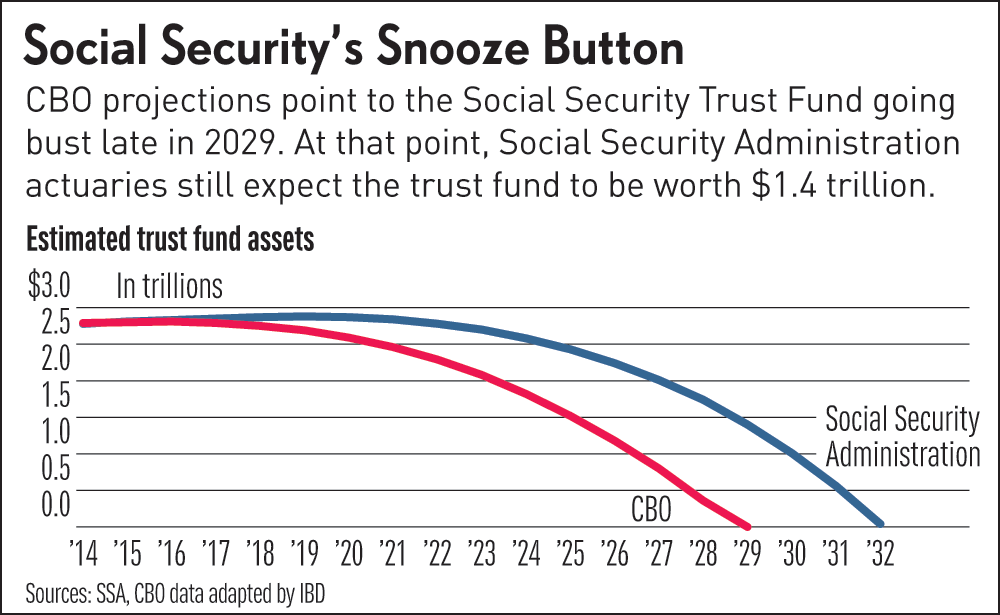
Investors Business Daily has been posting a lot about Social Security, and they are saying that payouts are going to be dropping sooner than you think.

Look:

Every year, the Social Security Administration releases its Trustees Report, which projects the program’s solvency — how much it will take in, how much it will pay out and how long the “trust fund” can cover revenue gaps — over the next 75 years.

The latest report says that Social Security can meet its financial obligations for about 18 more years. After that, the trust fund will be exhausted, and payroll taxes won’t cover nearly all the benefit costs.

That’s bad enough. But a new study by researchers at Harvard and Dartmouth shows that this day of reckoning will almost certainly come far sooner than that.

The authors compare previous Trustees Report forecasts about life expectancy, fertility rates and other variables to actual results. They found that these forecasts have grown increasingly unreliable.

Worse, since 2000 “the direction of the biases are all in the same direction, making the Social Security trust funds look healthier than they turned out to be.”

For example, Social Security has been consistency underestimating life expectancy, which means that people are living and collecting benefits for longer than predicted. Underestimating life expectancy by just 1.3 years leads to 150,000 more people collecting benefits than predicted, the researchers note.

The Trustees Report has also overestimated the nation’s fertility rate. In 2010, for example, 315,000 fewer children were born than predicted. This error makes the population look younger, which in turn makes Social Security’s financial outlook seem healthier.

Likewise, the report has consistently overestimated the Trust Fund’s assets and solvency.

Many of these forecasts are so bad that the actual results are often worse than the report’s “worst case” scenario, which currently has the program becoming insolvent in just 14 years.

Don’t be depending on Social Security if you are under 50 – it’s not going to be there for you, even though you’re going to be paying into it.

When young people imagine what the future will be like, they almost always underestimate the things that can go wrong. They are so optimistic and inexperienced, that they simply can’t conceive of the possible setbacks, and calculate the probabilities of these occurring. The best way to get around this is to talk to someone who is good at doing what you are trying to do. When I was training as a software engineer, I actually had to take classes in software design to learn how to identify unexpected scenarios. This is because engineers start off the same as everyone else – optimistic. We have to train ourselves to identify dependencies and risks. This is how you design software – by thinking not just of common usage scenarios, but also unexpected disaster scenarios, like power failures and data transmission interruptions and database failures. When it comes to earning and saving money, don’t talk to your inexperienced young friends. Talk to someone a little older who has already been through it, and who is doing a good job at it.
A third of Americans who have a savings plan have less than $1000 in it

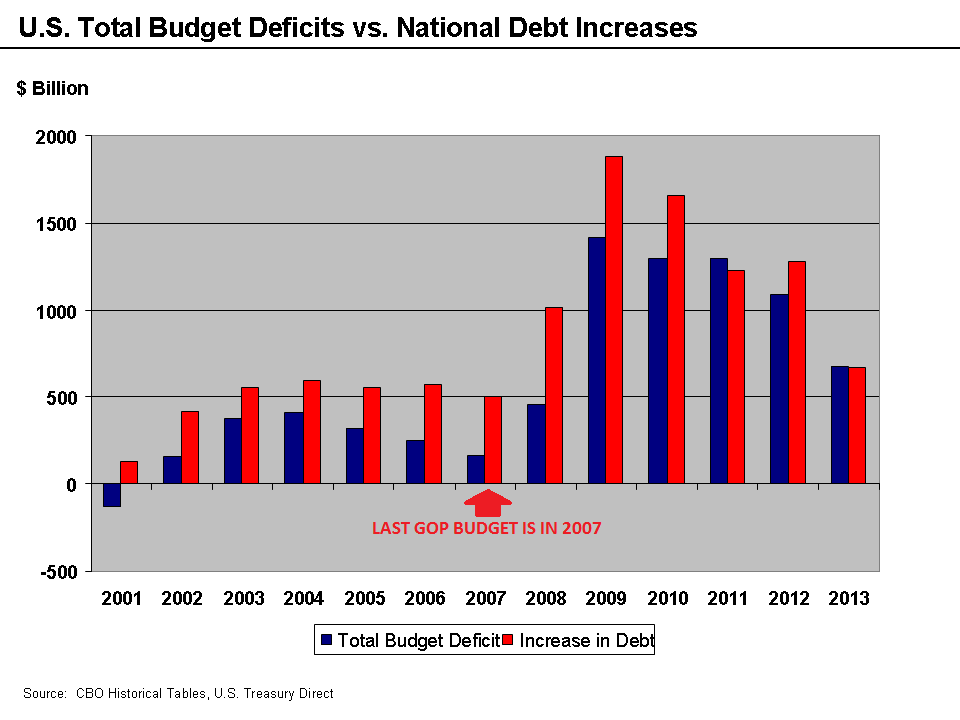
National Debt and Deficit 2007-2013

Let me start with the facts from Breitbart News, and then I’ll comment on the part in bold.

Excerpt:

Study after study shows that Americans are not saving for retirement like they should, and a new survey finds that nearly one third of people who have some sort of savings plan have amassed less than $1,000 for retirement.

The survey titled “Preparing for Retirement in America,” by Employee Benefit Research Institute (EBRI) and Greenwald and Associates, finds that only 65 percent of workers have any savings for retirement, a number that fell below the 75 percent figure from 2009.

But 28 percent of workers report that they have saved less than $1,000 for retirement, and almost 6 in 10 Americans say that their financial planning needs improvement.

Additionally, 34 percent say they have made no effort at all to saving anything or make a retirement plan. Still, most say that they intend to start saving at some point.

But intentions may not be enough. “Intending one thing and doing another is human, but it’s an impulse we should all fight hard to resist,” Rebekah Barsch, vice president of planning and sales at Northwestern Mutual, said in a press statement. “Intentions only get us so far. And when the stakes are high, it’s taking action that’s critical.”

Many say that the average person needs to save one million dollars for retirement, but a recent piece by David Marotta, president of Marotta Wealth Management in Charlottesville, VA, noted that a 20-year-old in 2015 may have to amass up to $7 million to retire comfortably.

“Someone retiring now in 2014 with $1 million at age 65 can safely withdraw $43,600 a year,” Marotta wrote last May. “However, [because of inflation], today’s 20-year-olds will need over $7 million to have that same lifestyle when they retire. In 1970, they would only have needed $166,000 in retirement to have a similar purchasing power for the rest of their life.”

Many Americans save for retirement using the 401K plans provided through their employer, but according to the federal government, around 50 million Americans don’t have the ability to enroll in such a savings plan.

Here’s a helpful article from CNBC that answers the question “how much do I need to retire?”.

It says:

You can’t feel secure in retirement if you don’t have a good idea of how much money you’ll need.

But if you believe a new Legg Mason survey, you may have to save far more than you think. Investors surveyed by the global investment management firm said they will require an average of $2.5 million in retirement to enjoy the quality of life they have today.

That’s about $2.2 million more than the average balance of $385,000 those investors actually had in 401(k)s and similar retirement plans, which might help explain why only 40 percent of the 458 investors surveyed said they are “very confident” in their ability to “retire at the age I want to.” (And the investors surveyed have set more aside than the average retirement saver. At Fidelity, the nation’s largest retirement plan provider, the average 401(k) balance was $91,300 at the end of 2014.)

[…]Fidelity estimates most investors require about eight times their ending salary to increase the chances that their savings will last during a 25-year retirement. But every retirement is different. People also tend to spend lavishly in their first years of retirement before their spending declines in later years.

Health care is the wild card in retirement planning, especially as Americans live longer. Fidelity projects a 65-year-old couple retiring will need an average of $220,000 to cover medical expenses in retirement.

So, according to Fidelity’s rule, if you are single and making $50K after taxes, then you need $400,000 to retire at age 65. You’ll need more the earlier you retire. That seems about right to me. The important thing to do when planning for the future is not to imagine a higher income than you have right now, though. Imagining that things will be better than they are right now is a terrible mistake. You can’t make the world change just by imagining things that make you feel good, or by looking at cherry-picked examples from people you know who got lucky.

The trouble with young people today is that they think that things tomorrow will be the same as they were yesterday. They don’t see the future implications of running our national debt up to $18.5 trillion dollars. They think entitlement programs will be solvent when they are ready to retire. They aren’t aware of what’s going on in the economies of other countries that we trade with. They aren’t aware of what’s going on in Greece, and how that will affect the European Union. They aren’t aware of the demographic crisis in Europe, and especially in Japan. They aren’t thinking about the implications for future wars as America withdraws from the world stage. And so on. And since they are not aware, they are delaying making a plan to save, so they can have more fun now. Their retirement plan is all future sunshine and rainbows, but no actions are being taken right now.

If I could give young people one piece of advice, it’s this. It’s much easier to shift your life out of a position of financial security to something lighter but more meaningful in the second half of your life. It’s harder to work back to earning and saving if you have squandered your early life on fun, thrills, travel, non-STEM degrees, etc. If you’re 30 years old and don’t have any savings, you are in serious, serious trouble. You need to get focused on a regular career as soon as possible, and start saving. Get those debts paid off now. Still think that your rosy picture of the future will obtain? Usually, you can tell how good you are at strategic forecasting by looking at your past decisions. Have you been wise before, or have you chosen poorly? If you’ve chosen poorly, then it’s a good idea to defer to people who haven’t made the same mistakes. If you’re an optimistic person who is always being surprised and disappointed, that’s a good sign you need to start saving now.

Obama’s SOTU speech: more spending on Democrat special interests

From Hans Bader at the Washington Examiner.

Excerpt:

In his State of the Union address, President Obama will call for even more spending on his cronies – what he euphemistically refers to as “targeted investments” in things like “green jobs.” Such spending benefits companies that donate millions to liberal politicians, like GE, which recently spent $65.7 million on lobbying to extract special favors from the government.

[…]“The new spending” Obama will call for will likely “include initiatives aimed at building the renewable-energy sector—which received billions of dollars in stimulus funding.”

This is a bad sign for the American worker, because such green jobs programs have wiped out thousands of American jobs in the past.  The $800 billion stimulus package used “green-jobs” subsidies to send American jobs overseas.  79 percent of those subsidies went to foreign firms, such as an Australian firm that imported Japanese wind turbines, effectively outsourcing American jobs.

[…]The Wall Street Journal reports that the President will also call for “new government spending” on education. This is also a dubious idea, given that America already spends much more per capita on education than most other wealthy industrialized countries, with worse results.

[…]Dumping more money on the educational system is unlikely to spur economic growth, since so many college students learn little in college, are not interested in learning, and only go to college in order to get paper credentials rather than an education.

[…]Unlike other countries, which focus on educating engineers and other economically-productive occupations, America focuses on superficial, ideologically-fashionable liberal-arts majors.

If I had to summarize Obama’s speech, I would say “the government will give you a unicorn in every stable”.

Let’s put the teleprompter away and review the facts.

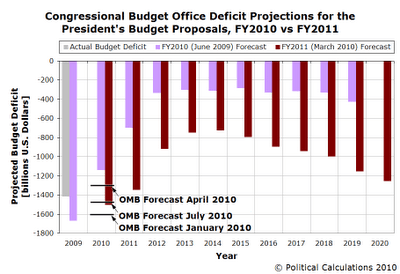
Government spending: (i.e. – what Obama calls “investing”)

CBO Projected Federal Budget Deficits

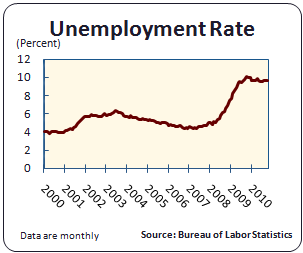
Unemployment rate:

Unemployment Rate
Unemployment Rate

The Democrats controlled ALL SPENDING starting in January of 2007, when they gained control of the House of Representatives and the Senate. When spending increases, businesses understand that there are only two ways to pay it off. Higher taxes, or inflation. So they stop hiring here and ship their jobs overseas. That’s Obamanomics.

Republican Congressman Paul Ryan’s response.