
Tag Archives: Hooking Up

Feminist explains how she chose to drink alcohol before recreational sex

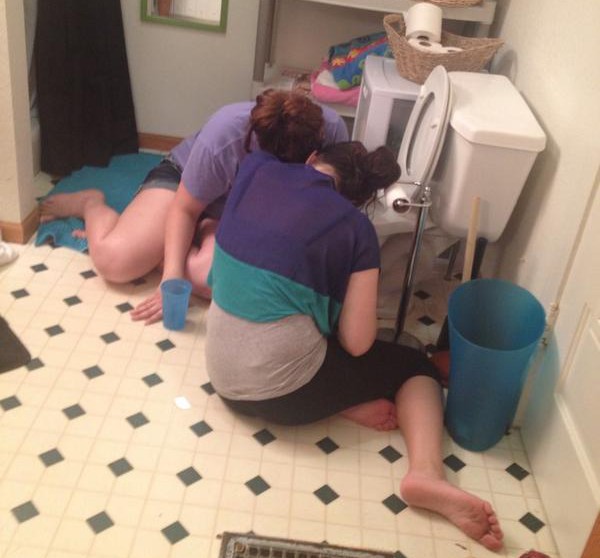
College students puking in toilet

Guess where I’m linking today? To a radical feminist web site named Jezebel, to an article written by a radical feminist who writes for the radically leftist Slate.

No, I’m not crazy. Just read it:

Much of the conversation around alcohol and sex has focused on assault—the line at which intoxication becomes incapacitation, for instance—but what we fail to mention is how haunted people can be by the sex they actually, technically consented to.

[…]I wonder what my sex life would even look like if alcohol hadn’t been there. Alcohol gave me comfort in my own body, and it allowed me to turn my erotic curiosity and hunger for experience into an action plan. I was tired of being the stuttering girl sucking in her stomach after the lights went out. I wanted to be the woman who roamed wild and free.

Alcohol also helped me cut the girlish strings on my heart, an action my college years demanded. Three months into my freshman year, I split a six pack with a dashing sophomore, and we wound up partially clothed on his bed, my bare legs wrapped around his waist, my hands around his neck. I pulled back slightly and asked him the question, the naive question of a girl who does not yet understand her fate: “What does this mean?”

He looked past me, into his studio apartment, and then back into my eyes. “It means that I’m a 19-year-old boy, and we’re having fun.”

What is interesting is that she didn’t see this man’s using her for fun after getting her drunk as any disqualification for a serious relationship. On the contrary, she believes that a serious relationship built on self-sacrificial love and commitment that lasts through difficulties can be found in a man who uses her for fun sex:

I’m not saying I didn’t enjoy that night with the dashing sophomore. I’m saying the fun part for me might have been turning our physical intimacy into a sustained attachment.

Amazing. She wasn’t looking for men with good educations, good jobs, lots of savings, who were sober and chaste – they would have made her unhappy with their bossy leading, and strict plans about courting and marriage. Nope, she wanted the drunken slut who didn’t ask her any questions or have any plan for her to develop into a wife and mother. That’s who she wanted. He was hawt! And he was free, easy and fun.

She is 35 now, and still single. I’m sure if you ask her, she would like to be married “some day”, but who could look at 20 years of drunken sex and say that this is good preparation for the challenges of marriage? Marriage is about self-sacrificial love, and endurance. To prepare for it, you learn self-denial and self-control. You learn how to accept expectations, obligations and responsibilities.

Anyway, back to the article by the drunken, promiscuous feminist. The point that I wanted to make is that she chose the alcohol herself, and that she did it for a very specific reason:

I wanted to have fun, too. And alcohol evened the score. I cared less about everything when I was drinking: What you thought of me, what I looked like in this dress, whether that taco was warm or cold when I stuffed it in my mouth. I don’t want to make it sound like I drank in order to have sex. I drank for a million reasons.

[…]Booze downshifted my intense body consciousness, and it revved up my bravado. Sex was scary—but alcohol made me feel safe.

She drank in order to have sex. Got it? She chose to get drunk in order to have sex. This is the part that permissive parents and pious pastors need to understand about their darling daughters. Many young women think that recreational sex with hot guys is a pathway to marriage. They drink in order to make progress towards the marriage they want – the marriage to the man who is fun. Not the man who is serious. They don’t want the serious man who makes plans and expects them to behave responsibly and honor obligations. They want the fun, hot man – the bad boy – and they expect to change him into a faithful, sober, responsible provider through the magical power of vagina. And if that doesn’t work, by threatening him with divorce.

Why are millenials acting like children into adulthood?

This reminds me of the Institute for American Values study. Despite their name, it is not a conservative organization

Look at this citation from p. 15:

A number of students noted that being drunk could later serve as your excuse for the hook up.

A Yale University student said, “Some people like hook up because they’re drunk or use being drunk as an excuse to hook up.”

A New York University student observed, “[Alcohol is] just part of an excuse, so that you can say, oh, well, I was drinking.”

A Rutgers University student commented, “If you’re drinking a lot it’s easier to hook up with someone… [and] drugs, it’s kind of like a bonding thing… and then if you hook up with them and you don’t want to speak to them again, you can always blame it on the drinking or the drugs.”

[…]A University of Chicago junior observed, “One of my best friends… sometimes that’s her goal when we go out. Like she wants to get drunk so I guess she doesn’t have to feel guilty about [hooking up].”

I think at this point you should assume that if your daughter is not passionate about chastity, natural marriage and pro-life, then she is probably somewhere on this drinking – recreational sex – cohabitation – abortion – no-fault divorce path. The more fun-loving and emotional a woman is, the more likely she is to fall into it, and some of them just work it together with Christianity. Once woman I know was living with a non-Christian man and praying fervently for God to make her career take off. God is there for hope and comfort, not to impose any sort of moral boundaries. And parents and pastors are oblivious – they just want to let women do whatever they want, and then blame men for not making it “work out”. Parents and pastors are not doing the job of explaining to women what their lives will really be like from age 40 to 90, and urging women to make a plan that provides lasting love and and security even as they experience declining youth, declining beauty, and declining fertility.

I hope that many of the men out there who refuse to hold women accountable for their own desires start to understand that not everything a woman wants is good, and not every plan a woman makes will work. Sometimes, you need to calmly and constructively challenge them about their priorities, plans and actions. It’s for their own good.

Can we raise declining marriage rates by telling men to “man up”?

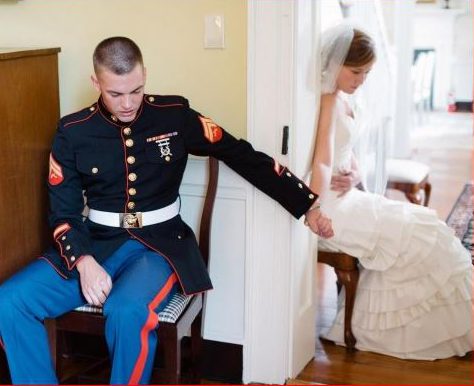
Marine prays with his wife on their wedding day

The latest Prager University video features pro-marriage scholar Brad Wilcox:

I watched this video, and, as a card-carrying member of the Christian men’s rights movement, I was concerned that nothing was said about how radical feminism has weakened the attractiveness of marriage to men. I mean specifically things like women carrying debt, having liberal political views, being unchaste and even promiscuous, initiating the majority of divorces (70%), withholding sex if they do marry, and denying men child visitation if they divorce, single mother welfare making men superfluous, big government replacing men as providers, etc. The consequences of divorce for men are catastrophic, and I don’t just mean financially, but emotionally as well.

I contacted Wilcox to ask him why he did not recognize how radical feminism undermines the value of marriage to men, and he pointed me to this article he wrote in the leftist Washington Post.

He writes:

These days, 20something marriage has gotten a reputation for being a bad idea. That’s partly because parents, peers, and the popular culture encourage young adults to treat their twenties as a decade for exploration and getting one’s ducks in a row, not for settling down. In the immortal words of Jay-Z, “Thirty’s the new twenty.”

Indeed, the median age-at-first marriage has climbed to nearly 30 for today’s young adults, up from about 22 in 1970. Of course, there’s an upside to that. As my coauthors and I report in  Knot Yet: the Benefits and Costs of Delayed Marriage in America, women who put off marriage and starting a family earn markedly more money than their peers who marry earlier.

And here he sort of takes on my concerns about chastity, delayed marriage, and fertility:

First, you are more likely to marry someone who shares your basic values and life experiences, and less likely to marry someone with a complicated romantic or family history.  Those who marry in their twenties, for instance, are more likely to marry someone who isn’t previously married and shares their level of educational attainment as well as their religious faith. Marrying at this stage in your life also allows couples to experience early adulthood together. In the words of Elizabeth Gilbert, a 31-year-old woman who married in her mid-twenties, “My husband and I got to grow up together—not apart. We learned sacrifice, selflessness, compromise, and became better people for it.”

Women who marry in their 20s generally have an easier time getting pregnant, and having more than one child, than their peers who wait to marry in their thirties.  You’ll also be around to enjoy the grandchildren for longer.

You’re less likely to lose the best possible mate for fear of getting started too young on the adventure that is married life. One single, thirtysomething woman struggling to find a good partner put it this way to psychologist Meg Jay, the author of The Defining Decade: Why Your Twenties Matter and How to Make the Most of Them Now, and whose TED Talk on twentysomethings has garnered 6.9 million views: “The best boyfriend I ever had was in my mid-twenties. I just didn’t think I was supposed to be [married] with someone then.” And as psychotherapist Lori Gottlieb explains in her book, Marry Him, there’s a higher likelihood of finding a true peer and more appealing partner-for-life in one’s twenties, before those most appealing potential mates marry somebody else by their thirties.

I cannot fault Wilcox or Prager for being ignorant of the social changes that have undermined the value proposition of marriage for men, and that have also undermined men’s ability to fulfill their roles. Far from being a man-blamer, Prager is a warrior against radical feminism, and just today Wilcox tweeted a study showing the boys benefit from single-sex education – a position I favor myself. But I do want to head off the common “men need to man up” objection made by those who deny that the real problem is radical feminism.

Contrary to the “be a man / man up” crowd, my objections to marriage don’t come from a desire to be lazy about education, career and finance. Rest assured that I have a BS and MS in STEM, and nearly two decades of STEM work experience (internships, summer jobs, full-time employment). I do make six figures, like the person Wilcox discussed in the video, and I have the savings you would expect with a gapless STEM resume. So, complaining about “man up” isn’t going to work on me, and probably not on most men who have concerns about marriage.

Radical feminism causes women to delay marriage in order to have fun, travel and ride the carousel of promiscuity in their 20s. Women have been told that they will have more fun by delaying marriage and staying single in their 20s. Church leaders, friends and family should be discussing and demonstrating the value of marriage to women, and showing them how the lasting contentment of marriage is better than the temporary fun of drinking, sex, travel and career. Marriage is a better platform for lasting joy and for quality relationships. It’s up to the woman’s friends and family to make the case for marriage as more fun and fulfilling than the alternatives offered by radical feminism. Her friends and family need to be countering the feminist message that is everywhere in the culture: marriage is boring, children are a burden, and that husbands are needy and demanding fools. And women need to be told how spending a decade being selfish in their 20s undermines their suitability for marriage.

A woman’s friends and family should train her not to view the moral and spiritual leadership of a man as threatening and dangerous, just because it disagrees with her feelings and desires. Instead of recoiling in horror when a well-educated, successful, wealthy man tells a woman with a history of poor decision-making to get a full-time job, pay off her debts, and start investing, her friends and family ought to welcome it. A good man’s practical advice should not be seen as stifling a woman’s freedom to “follow her heart”. And her friends and family certainly should not celebrate when she chooses a penniless, unemployed, empty-resume man who never questions her reckless decisions. Women should be encouraged to choose men who have demonstrated ability as protectors, providers and moral and spiritual leaders, even if she would rather have a doormat who lets her be wild, selfish and irresponsible. Doormats are not intimidating, but they are also not decisive about marriage. When a man wants to marry a woman, he is very interested in encouraging her to be practical and responsible. This is a good thing.

Lesbian relationships are the most unstable and shortest-lived relationships. This suggests that there is a tendency in women to reject commitment when it goes against their feelings and self-interest. Women’s emotions can make them unstable, and less capable of commitment. Friends and family need to recognize that tendency, and help women to learn practicality, responsibility and unselfishness at a young age, so that they are capable of making commitments.Men look for women who have demonstrated that they are able to complete things that they start. We know that women initiate 70% of divorces, and mostly because of feelings of unhappiness. Finish a tough STEM degree, work a tough job for a few years, pay off debts, pay off a car loan, etc. Men look for women who can make and keep commitments through good times and bad times, even when it goes against their self-interest.

A good basic book to read on this issue is Helen Smith’s “Men On Strike“.

Here’s a short video about her book:

A longer interview from News Max:

And an even longer interview with a homeschooling man:

Some men are ignorant of how radical feminism makes women less suitable for marriage while simultaneously making school and work more difficult to boys and men. It is these men who need to “man up” and “be a man” by challenging women to reject radical feminism and embrace early marriage to strong men who lead. If you’re not willing to fight the radical feminism that causes the underlying problems, then you can’t complain when men wisely reject marriage to women who aren’t ready to be wives and mothers.

Women, under the influence of feminism, are willing participants in the hook-up culture

A man leading a woman upward
Another post in which I try to pull women out of the quagmire of radical feminism

Note: in this article, when I refer to women, I mean young, unmarried women who have been influenced by feminism. I do not mean all women, and especially not married women.

My good friend Tom sent me this article from the ultra left-wing Vanity Fair. Tom is a veteran of the New York City dating scene and has been telling me for years about the practices described in this article.

The article is very, very long, so I can only quote a little, and then I’ll encourage you to read it, although be warned, it’s filled with sex and bad language, and it tries to present women as victims.

Excerpt:

It’s a balmy night in Manhattan’s financial district, and at a sports bar called Stout, everyone is Tindering. The tables are filled with young women and men who’ve been chasing money and deals on Wall Street all day, and now they’re out looking for hookups. Everyone is drinking, peering into their screens and swiping on the faces of strangers they may have sex with later that evening.

Tinder is a hook-up app that people use to find people to have sex with, based solely on their photograph. This is actually what studies say about how women choose men – it’s all physical appearance, and nothing that is learned subsequently alters that first impression.

The article says this:

“Romance is completely dead, and it’s the girls’ fault,” says Alex, 25, a New Yorker who works in the film industry. “They act like all they want is to have sex with you and then they yell at you for not wanting to have a relationship. How are you gonna feel romantic about a girl like that? Oh, and by the way? I met you on Tinder.

“Women do exactly the same things guys do,” said Matt, 26, who works in a New York art gallery. “I’ve had girls sleep with me off OkCupid and then just ghost me”—that is, disappear, in a digital sense, not returning texts. “They play the game the exact same way. They have a bunch of people going at the same time—they’re fielding their options. They’re always looking for somebody better, who has a better job or more money.” A few young women admitted to me that they use dating apps as a way to get free meals. “I call it Tinder food stamps,” one said.

Even the emphasis on looks inherent in a dating game based on swiping on photos is something men complain women are just as guilty of buying into. “They say in their profiles, ‘No shirtless pictures,’ but that’s bulls**t,” says Nick, the same as above. “The day I switched to a shirtless picture with my tattoos, immediately, within a few minutes, I had, like, 15 matches.”

And if women aren’t interested in being treated as sexual objects, why do they self-objectify in their profile pictures? some men ask. “There’s a lot of girls who are just like, Check me out, I’m hot, I’m wearing a bikini,” says Jason…

Men talk about the nudes they receive from women. They show off the nudes. “T*t pics and booty pics,” said Austin, 22, a college student in Indiana. “My phone is full of ‘em.”

Although the article, and the women who are interviewed, try to pass themselves off as victims, it’s very clear that they are full participants in this hook-up culture. It’s “fun” for them to be free and independent – no responsibilities, expectations or obligations from a relationship.

Feminist writer Hanna Rosin says that this hook-up culture is great:

Some, like Atlantic writer Hanna Rosin, see hookup culture as a boon: “The hookup culture is … bound up with everything that’s fabulous about being a young woman in 2012—the freedom, the confidence.”

The Vanity Fair author comments:

“Short-term mating strategies” seem to work for plenty of women too; some don’t want to be in committed relationships, either, particularly those in their 20s who are focusing on their education and launching careers.

Previously, I quoted a feminist professor writing in the New York Times. She also thought that it was great that women were hooking up with hot guys for fun, but staying focused on their educations and careers.

Here’s Amanda to explain it:

“There is no dating. There’s no relationships,” says Amanda, the tall elegant one. “They’re rare. You can have a fling that could last like seven, eight months and you could never actually call someone your ‘boyfriend.’ [Hooking up] is a lot easier. No one gets hurt—well, not on the surface.”

[…]It’s not, she says, that women don’t want to have sex. “Who doesn’t want to have sex? But it feels bad when they’re like, ‘See ya.’ ”

Who doesn’t want to have sex? Well, me for one. At least, not till I’m married.

Amanda later explains that she doesn’t want to care, because that would mean that she “somehow missed the whole memo about third-wave feminism”. She has to be independent – able to dismiss responsibilities, expectations and obligations in a real relationship – because third-wave feminism tells her so. I know Christian women who think they are fundamentalists who have this exact same attitude. They think that relationships are somehow compatible with doing whatever they want to do – that doing whatever makes them happy each and every moment is compatible with a lasting relationship. Married people laugh at this, but this is what most young, unmarried women believe. And of course most men are only to happy to take advantage of this and treat women like objects.

Why don’t women reject the men who use them like kleenexes? Why is the man’s appearance so much more important than his character and suitability for the marriage roles of husband and father? Feminism tells women that gender distinctions are “sexist”, that chivalry is “sexist”, that chastity is “repressive” because it blocks having recreational sex, that marriage is boring and must be delayed, and that having lots of sexual experience makes you more attractive. All nonsense, but this is what the vast majority of American women believe. They measure men by how the man makes them feel and whether he will be impressive physically to their peers. They believe in feminism and the denial of specific male roles and male virtues. I can’t speak for all the men, but all my male friends are either virgins or married, and we are horrified because we don’t know who we are supposed to marry.

Probably the most traumatic experiences that I have ever heard in my life are the stories I hear from women who are raised in Christian homes, with two married Christian parents, who nevertheless dump their Christianity late in high school, or sometimes when they get to university. One minute, they are adorable little kids playing with teddy bears or riding horses. The next minute they are hooking up and shacking up and avoiding marriage and child-bearing in order to have as much fun as possible.

Two interesting things about this. First, their parents never find out what is really going on. The parents always believe that the daughters are as pure as the driven snow, no matter how long the “lost” period is, where their daughters went crazy. Second, the young woman’s core desire to have fun and seek thrills never goes away. Conversion to Christianity doesn’t make an irresponsible woman responsible. And she usually is careful to surround herself with people who will affirm her in her recklessness, perhaps confidently calling her emotional desires “the voice of God speaking to her”. My friend Dina likes to tell me that these women do not want to be rescued – they are having a good time doing what they want to do, and they think it will go on forever – that the attention from men will always be there, and that chasing happiness will somehow “work out”.

What is interesting is how the parents don’t fix the problem when the girls are young. They are too busy with their careers, their own traveling and fun, etc. Usually, the girl’s mother has chosen a man who is not really strong on truth or moral convictions, because then he is easier to get along with and will not judge her. Women do not like being judged by men, either about factual claims or about moral claims. When the girl starts to act up, and the mother turns to the non-judgmental, postmodern relativist man she chose, and expects him to do something about it. Unfortunately, he does nothing to set boundaries on the daughter.

Finally, you might think that the pastors would be aware of this, and be doing something about restoring women back to the way they used to be. I was talking with a friend who is also in his 30s, also a virgin, also an engineer, and also went to graduate school. We both agreed that the church was doing nothing to counter the radical feminism that exalts this retreat from relationship, and denigrates chastity, marriage and child-bearing. There’s no response from the church to radical feminism.

As always, should you, as a young Christian man of some means, desire to get married, then I recommend using my checklist to validate your candidate. And remember, the right answers are unimportant – only the willingness to learn matters.