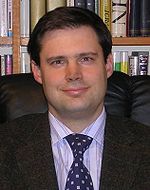
Here’s a quick overview of Michael Licona’s latest book on the resurrection, entitled “The Resurrection of Jesus“.
60 minutes of lecture, 20 minutes of Q&A.
Summary:
Dr. Licona’s background and education
The definition of history and philosophy of history
Postmodern approaches to history
Historical bedrock: facts that are historically demonstrable
Historical criterion 1: Explanatory scope
Historical criterion 2: Explanatory power
Historical criterion 3: Plausibility
Historical criterion 4: Ad Hoc / Speculation / non-evidenced assumptions
Inference to the best explanation
Investigating miracle claims: is it possible? How?
Objection of James D.G. Dunn
Objection of Bart Ehrman
New Testament sources: Gospels and Paul’s letters
The Gnostic gospels: are they good sources?
The minimal facts
The hallucination hypothesis
The best explanation
While watching this lecture, it struck what good preparation it was for understanding debates. This lecture is more about historical methods, but if you’re interested in Mike’s minimal facts case for the resurrection, here’s a video on that:
This is the case he uses in his debates with Richard Carrier, Dale Allison, Bart Ehrman, etc.
Mike Licona’s ministry is here: Risen Jesus but there is more to his work than just the resurrection. He co-edited a book on 50 evidences for God from many different areas with William Dembski. He likes evidence from every discipline you can think of, and then some.
Peter J. Williams is the Warden (CEO) of Tyndale House and a member of the Faculty of Divinity in the University of Cambridge. He received his MA, MPhil and PhD, in the study of ancient languages related to the Bible from Cambridge University. After his PhD, he was on staff in the Faculty of Divinity, Cambridge University (1997–1998), and thereafter taught Hebrew and Old Testament there as Affiliated Lecturer in Hebrew and Aramaic and as Research Fellow in Old Testament at Tyndale House, Cambridge (1998–2003). From 2003 to 2007 he was on the faculty of the University of Aberdeen, Scotland, where he became a Senior Lecturer in New Testament and Deputy Head of the School of Divinity, History and Philosophy. In July 2007 he became the youngest Warden in the history of Tyndale House. He also retains his position as an honorary Senior Lecturer in Biblical Studies at the University of Aberdeen.
Summary of the lecture:
What if the stories about Jesus are legendary?
were the gospels transmitted accurately?
were the gospels written in the same place as where the events happened?
do the gospel authors know the customs and locations where the events happened?
do the gospels use the right names for the time and place where the events took place?
do the gospels disambiguate people’s names depending on how common those names were?
how do the New Testament gospels compare to the later gnostic gospels?
how do the gospels refer to the main character? How non-Biblical sources refer to Jesus?
how does Jesus refer to himself in the gospels? do the later Christians refer to him that way?
how does Jesus teach? do later Christians teach the same way?
why didn’t Jesus say anything about early conflicts in the church (the Gentiles, church services)?
did the writers of the gospels know the places where the events took place?
how many places are named in the gospels? how about in the later gnostic gospels?
are the botanical details mentioned in the gospels accurate? how about the later gnostic gospels?
And here are the questions from the audience:
how what about the discrepancies in the resurrection narratives that Bart Ehrman is obsessed with?
what do you think of the new 2011 NIV translation (Peter is on the ESV translation committee)?
how did untrained, ordinary men produce complex, sophisticated documents like the gospels?
is oral tradition a strong enough bridge between the events and the writers who interviewed the eyewitnesses?
what does the name John mean?
why did the gospel writers wait so long before writing their gospels?
do you think that Matthew and Luke used a hypothetical source which historians call “Q”?
which gospel do critical historians trust the least and why?
I really enjoyed watching this lecture. He’s getting some of this material from Richard Bauckham’s awesome book “Jesus and the Eyewitnesses”, so if you aren’t familiar with it, you can get an idea of what’s in it. Peter Williams is a lot of fun to listen to – an excellent speaker.
And you can listen to the Peter Williams vs Bart Ehrman debate. That link contains a link to the audio of the debate as well as my snarky summary. It’s very snarky.
Was having a conversation Sunday evening with the woman I am mentoring and she brought up the Jesus Seminar – a small group of naturalistic, pluralistic academics. Apparently, someone’s child went to college, heard about them, and lost their faith because of their writings. I wanted to find a good article for her on this, and since Dr. William Lane Craig has debated most of the leading scholars in the Jesus seminar, (e.g. – John Dominic Crossan, Marcus Borg, Roy Hoover, Gerd Ludemann, Robert Price, John Shelby Spong, etc.), I chose an article by Dr. Craig. I also link to two debates that Dr. Craig did with Jesus Seminar people below.
First a short video (4 minutes):
If you can’t watch anything long, then watch that.
In 1985 a prominent New Testament scholar named Robert Funk founded a think tank in Southern California which he called the Jesus Seminar. The ostensible purpose of the Seminar was to uncover the historical person Jesus of Nazareth using the best methods of scientific, biblical criticism. In Funk’s view the historical Jesus has been overlaid by Christian legend, myth, and metaphysics and thus scarcely resembled the Christ figure presented in the gospels and worshipped by the Church today. The goal of the Seminar is to strip away these layers and to recover the authentic Jesus who really lived and taught.
Excerpt:
The number one presupposition of the Seminar is antisupernaturalism or more simply, naturalism.Naturalism is the view that every event in the world has a natural cause. There are no events with supernatural causes. In other words, miracles cannot happen.
Now this presupposition constitutes an absolute watershed for the study of the gospels. If you presuppose naturalism, then things like the incarnation, the Virgin Birth, Jesus’ miracles, and his resurrection go out the window before you even sit down at the table to look at the evidence. As supernatural events, they cannot be historical. But if you are at least open to supernaturalism, then these events can’t be ruled out in advance. You have to be open to looking honestly at the evidence that they occurred.
[…][T]he second presupposition which I wanted to discuss, namely, sceptical critics presuppose that our most primary sources for the life of Jesus are not the Gospels, but rather writings outside the New Testament, specifically the socalled apocryphal gospels. These are gospels forged under the apostles’ names, like the Gospel of Thomas, the Gospel of Peter, the Gospel of Philip, and so forth. These extrabiblical writings are said to be the key to correctly reconstructing the historical Jesus.
In addition to that, there seems to be a third presupposition – radical religious pluralism.
When I look a Buddhist friend in the face, I cannot say with integrity, “Our story about Jesus’ virginal birth is true and factual. Your story that when the Buddha came out of his mother’s womb, he was walking, talking, teaching and preaching (which I must admit is even better than our story)—that’s a myth. We have the truth; you have a lie.” I don’t think that can be said any longer, for our insistence that our faith is a fact and that others’ faith is a lie is, I think, a cancer that eats at the heart of Christianity.
But of course, he thinks that all miracle claims are lies, because of his supernaturalism. What he is really trying to do here is redefine these claims so they are not truth claims at all, but personal preference claims.
But the main point is that the co-chair of the Jesus Seminar pre-supposes that nothing that Christianity claims that offends people in other religions can be true. Before he sits down to look at the evidence. I’m not saying that these guys can’t do history, I’m saying that the real debate with these guys should not be about history. The real debate should be about their presuppositions. We should work to defeat their pre-supposition naturalism with good scientific arguments like the origin of the universe, the fine-tuning, the origin of life, the Cambrian explosion, the habitability-discoverability argument, etc. And we should work to defeat their pre-supposition of pluralism by just asking them to defend it, and maybe point out that a person’s being offended by some claim about reality being true does not make that claim false. Logic requires that people who make claims that are made false by reality are wrong and no amount of crying and sobbing can change that.
The second article in the series that Dr. Craig mentioned in the article I linked above is a generic article on the evidence for the historical Jesus. If you have not read a case for the resurrection of Jesus, then read it, too. Or you can check out this lecture by Dr. Craig on the Jesus Seminar and the historical Jesus:
If you want to see a good debate between Dr. Craig and Marcus Borg, here it is:
Dr. Borg is one of the more respected Jesus Seminar people, and a really nice guy. But also, a really wrong guy.
The key thing to know about them is that they presuppose naturalism (miracles never happen) and radical pluralism (no exclusivist religion can be correct, because that would make people in the other religions feel bad). The presuppositions are key to understanding the “historical work” of the Jesus Seminar.