
Tag Archives: Gospels

The divinity of Jesus according to the early church

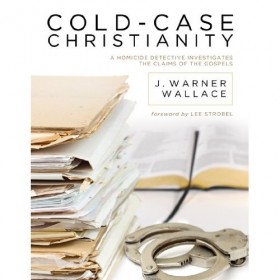
Cold-Case Christianity by J. Warner Wallace

Earlier, I wrote a post about the evidence for the divinity of Jesus in the earliest New Testament documents. And now I’ve found a wonderful follow-up to that post from J. Warner Wallace, author of “Cold-Case Christianity“, the book I am currently reading. I am on chapter 14.

He lists quotations from all of these early church fathers about the divinity of Jesus:

  • Barnabas, companion of Paul (c. 70-130AD)
  • Ignatius, Bishop of the Church at Antioch (c. 110AD)
  • Clement of Rome, Bishop of the Church at Rome (c. 120AD)
  • Irenaeus, Bishop of the Church at Lyons, Modern Day France (c. 180AD)
  • Clement of Alexandria, Renowned Christian Teacher in Egypt (c. 195AD)
  • Hippolytus, Leading Presbyter at the Church in Rome (c. 205AD)
  • Tertullian, Passionate Christian Apologist in Carthage, North Africa (c. 207AD)
  • Origen, Famous Pupil of Clement of Alexandria (c. 225AD)

This post is actually very similar to material in chapter 13 of Wallace’s book. Have you read it yet?

One of the most thorough reviews that I’ve seen of the book was on Luke Nix’s blog, in case you want to take a closer look.

A quote from Cold Case Christianity, by J. Warner Wallace

Cold-Case Christianity by J. Warner Wallace

Here it is, from page 51:

As I speak around the country, I often encounter devoted, committed Christians who are hesitant to embrace an evidential faith. In many Christian circles, faith that requires evidential support is seen as weak and inferior. For many, blind faith (a faith that simply trusts without question) is the truest, most sincere, and most valuable form of faith that we can offer God. Yet Jesus seemed to have a high regard for evidence. In John 14:11, He told those watching Him to examine “the evidence of miracles” (NIV) if they did not believe what He said about His identity. Even after the resurrection, Jesus stayed with His disciples for an additional forty days and provided them with “many convincing proofs” that He was resurrected and was who He claimed to be (Acts 1:2-3 NIV). Jesus understood the role and value of evidence and the importance of developing an evidential faith. It’s time for all of us, as Christians, to develop a similarly reasonable faith”.

So far, the book is written in a very engaging tone with lots of detective stories and crime scenes. He focused so far on 1) the role of presuppositions, especially naturalism, 2) the abductive method of reasoning, 3) the minimal facts (he chose death, empty tomb, appearances, transformed lives/resurrection proclamation), and 4) a list of naturalistic scenarios and what is wrong with them.

One concern I have so far is that he quoted Matthew 27 (the guard at the tomb) to support the empty tomb. That is one of the least defensible parts of the New Testament. You cannot just use that to refute a naturalistic theory without qualifying it. It worries me that he used that passage without qualifying it. But his general approach is a minimal facts approach, so that’s good and defensible.

Oh, don’t panic all of you, I am an inerrantist. But you can’t argue like that with non-Christians.

Peter J. Williams lectures on the historical reliability of the gospel narratives

Peter J. Williams
Peter J. Williams

This is a lecture I found from British historian Dr. Peter J. Williams.

Here’s the main lecture: (54 minutes)

And here’s the Q&A: (9 minutes)

About Peter Williams:

Peter J. Williams is the Warden (CEO) of Tyndale House and a member of the Faculty of Divinity in the University of Cambridge. He received his MA, MPhil and PhD, in the study of ancient languages related to the Bible from Cambridge University. After his PhD, he was on staff in the Faculty of Divinity, Cambridge University (1997–1998), and thereafter taught Hebrew and Old Testament there as Affiliated Lecturer in Hebrew and Aramaic and as Research Fellow in Old Testament at Tyndale House, Cambridge (1998–2003). From 2003 to 2007 he was on the faculty of the University of Aberdeen, Scotland, where he became a Senior Lecturer in New Testament and Deputy Head of the School of Divinity, History and Philosophy. In July 2007 he became the youngest Warden in the history of Tyndale House. He also retains his position as an honorary Senior Lecturer in Biblical Studies at the University of Aberdeen.

Summary of the lecture:

  • What if the stories about Jesus are legendary?
  • were the gospels transmitted accurately?
  • were the gospels written in the same place as where the events happened?
  • do the gospel authors know the customs and locations where the events happened?
  • do the gospels use the right names for the time and place where the events took place?
  • do the gospels disambiguate people’s names depending on how common those names were?
  • how do the New Testament gospels compare to the later gnostic gospels?
  • how do the gospels refer to the main character? How non-Biblical sources refer to Jesus?
  • how does Jesus refer to himself in the gospels? do the later Christians refer to him that way?
  • how does Jesus teach? do later Christians teach the same way?
  • why didn’t Jesus say anything about early conflicts in the church (the Gentiles, church services)?
  • did the writers of the gospels know the places where the events took place?
  • how many places are named in the gospels? how about in the later gnostic gospels?
  • are the botanical details mentioned in the gospels accurate? how about the later gnostic gospels?

And here are the questions from the audience:

  • how what about the discrepancies in the resurrection narratives that Bart Ehrman is obsessed with?
  • what do you think of the new 2011 NIV translation (Peter is on the ESV translation committee)?
  • how did untrained, ordinary men produce complex, sophisticated documents like the gospels?
  • is oral tradition a strong enough bridge between the events and the writers who interviewed the eyewitnesses?
  • what does the name John mean?
  • why did the gospel writers wait so long before writing their gospels?
  • do you think that Matthew and Luke used a hypothetical source which historians call “Q”?
  • which gospel do critical historians trust the least and why?

I really enjoyed watching this lecture. He’s getting some of this material from Richard Bauckham’s awesome book “Jesus and the Eyewitnesses”, so if you aren’t familiar with it, you can get an idea of what’s in it. Peter Williams is a lot of fun to listen to – an excellent speaker.

You can read an interview with Peter Williams here on Between Two Worlds.

And you can listen to the Peter Williams vs Bart Ehrman debate. That link contains a link to the audio of the debate as well as my snarky summary. It’s very snarky.

And Apologetics 315 also posted Peter Williams’ assessment of Bart Ehrman’s “Misquoting Jesus”.