Tag Archives: Follow Your Heart

Eat, Pray, Love author divorces man she married after leaving her first husband

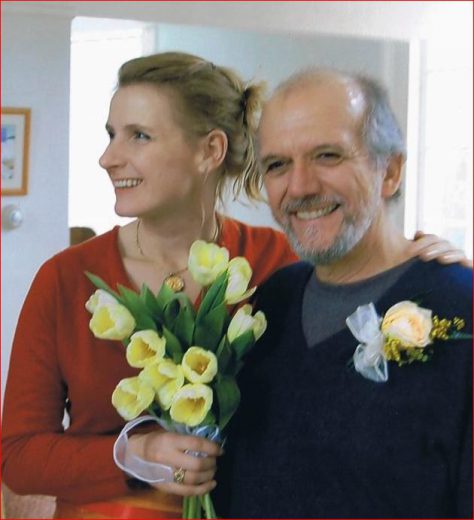
Eat, Pray, Love: Elizabeth Gilbert and her Brazilian stud Felipe
Eat, Pray, Love: Elizabeth Gilbert and her Brazilian stud

Does abandoning your marriage in order to travel the world indicate that a woman has the character necessary for a life-long married love? Let’s look at a case in which a famous feminist abandoned her husband to travel to have adventures.

The New York Times writes:

Elizabeth Gilbert, whose best-selling 2006 memoir, “Eat Pray Love,” traced a journey of self-discovery around the world that continues to resonate with fans, announced a new chapter on Friday.

[…]Ms. Gilbert, speaking directly to her readers in a Facebook post, said that after 12 years she was separating from José Nunes, the Brazilian importer whom she met during her travels and later married, and who was a central character in the book.

“I am separating from the man whom many of you know as ‘Felipe,’ ” she wrote of her husband, referring to his pseudonym in the book. “Our split is very amicable. Our reasons are very personal.” She also asked for privacy, saying she would be “a bit absent from social media during this sensitive moment.”

“Eat Pray Love,” a sumptuous tale of escape, self-discovery and romance, quickly became a cultural phenomenon, though not one without criticism, with some noting that not every woman who wished to escape would have the privilege to live as sumptuously as Ms. Gilbert did on her sojourn through India, Italy and Bali.

The book, however, drew praise from Oprah Winfrey and was made into a 2010 film starring Julia Roberts and Javier Bardem. The tale also resonated with fans, mostly women, who either identified with being in an unhappy relationship or had managed to artfully escape one.

The phenomenon has endured over the past decade: The travelogue touched so many readers that it eventually spawned a book, “Eat, Pray, Love Made Me Do It,” comprising 47 essays from inspired fans who had written their own tales of escape and discovery. That book was released in April.

[…]In April, Ms. Gilbert said that she missed travel: “I’ve never been to Japan, Iceland, South Africa and other places that it would be a pity to come to this earth and miss.”

Adventures, escape and discovery – that’s what young women want today. Not marriage, and not motherhood. They believe that they can find lasting happiness through travel and adventures. Even if they change their minds later, and want to marry, repeated acts of self-centered behavior do not prepare a woman for life-long self-sacrificial married love. Promiscuity and hedonism do not prepare a woman’s character to be content with the roles of wife and mother.

Here is Gilbert writing in the New York Times about her priorities:

It started with a boy I met at summer camp and ended with the man for whom I left my first husband. In between, I careened from one intimate entanglement to the next — dozens of them — without so much as a day off between romances. You might have called me a serial monogamist, except that I was never exactly monogamous. Relationships overlapped, and those overlaps were always marked by exhausting theatricality: sobbing arguments, shaming confrontations, broken hearts. Still, I kept doing it. I couldn’t not do it.

[…]If the man was already involved in a committed relationship, I knew that I didn’t need to be prettier or better than his existing girlfriend; I just needed to be different.

[…]Soon enough, and sure enough, I might begin to see that man’s gaze toward me change from indifference, to friendship, to open desire. That’s what I was after: the telekinesis-like sensation of steadily dragging somebody’s fullest attention toward me and only me. My guilt about the other woman was no match for the intoxicating knowledge that — somewhere on the other side of town — somebody couldn’t sleep that night because he was thinking about me. If he needed to sneak out of his house after midnight in order to call, better still. That was power, but it was also affirmation. I was someone’s irresistible treasure. I loved that sensation, and I needed it, not sometimes, not even often, but always.

[…]In my mid-20s, I married, but not even matrimony slowed me down. Predictably, I grew restless and lonely. Soon enough I seduced someone new; the marriage collapsed. But it was worse than just that. Before my divorce agreement was even signed, I was already breaking up with the guy I had broken up my marriage for.

[…][I]f you asked me what I was up to, I might have claimed that I was a helpless romantic — and how can you judge that? If really cornered, I might have argued that I was a revolutionary feminist, taking brazen agency over my own sexuality…

She didn’t want to commit and love others self-sacrificially. That’s boring! She wanted to get attention and drama. Men liked her because she was easy to use and easy to throw away. She wasn’t anyone’s “irresistible treasure”, because she didn’t have enough value for any of these men to commit to her for life and take care of her as she aged. The men she chose wanted sex, but they were not going to actually provide for her or protect her when she reached her 70s, 80s and 90s.  The question that we need to ask is whether a woman like this can stay married. Is she capable of doing the work that ordinary wives and mothers do in a married home – the work that wins a man’s loyalty for life? Is she capable of behaving in a way that leads a man to commit to caring for her when she is no longer young and pretty?

Let’s review what happened after Elizabeth Gilbert divorced her first husband for travel and adventures.

Christian men’s rights blogger Dalrock explains:

Having written a book on divorce, Elizabeth decided to write a book on marriage titled Committed.

From the Publishers Weekly review on Amazon:

How did a woman who didn’t want children land the only Latino hottie with a vasectomy in all of Indonesia?

[…][I]t turns out he needed a visa to get into the US, so he asked Elizabeth to marry him.  After a year of bickering and unhappiness together, she finally said yes after he explained it to her.

From the Publishers Weekly book review on Amazon.com:

When are you going to understand? As soon as we secure this bloody visa and get ourselves safely married back in America, we can do whatever the hell we want.

You couldn’t make stuff this romantic up!

That was 6 years ago, Elizabeth is about 47 now and divorced again. I wonder how well her plan of “seducing” men and getting no commitment in return will work over the next 40 years? Tramp stamps and belly-button rings seem fun when you are 17, but are not so fun when you are 71. Hooking up, cohabitating, traveling and having adventures seems to make sense when you are 17, but they don’t result in a man standing by you when you are 71. A woman needs to invest in a marriage-minded man early, and sustain this investment if she expects him to stick around when she loses her youth and beauty. Not every man will respond to this investment, but it is her job to choose one who will – with the help of wise advisers.

UPDATE:

In early September 2016, it emerged that she is now in a relationship with her best female friend.

Women tells ex-boyfriend their baby was aborted so she could sell it to a gay man

Is it OK to tell women they are wrong?
Is it OK to tell women when they are wrong?

This is from the UK Daily Mail.

It says:

A pregnant mother allegedly conned her lover into thinking she had undergone an abortion so she could sell his newborn baby to a gay friend, a jury has been told.

The 29-year-old woman, from Perth, Perthshire, who cannot be named for legal reasons, allegedly wanted to pocket up to £300 by selling her unborn daughter to the 35-year-old man.

The court heard how the woman and the gay man allegedly orchestrated an elaborate story in order to dupe the biological father into thinking the child had never been born.

But the court heard how the mother had given birth to the child in February 2011, before claiming the father was her gay friend.

After putting his name on the birth certificate, the pair allegedly duped the NHS, the local registrar and council officials in an alleged scam which rumbled on for nearly three years.

The court heard how, initially, the woman had pretended that she did not give birth to the child at all.

Instead, the pair allegedly set up a fake Facebook profile for a fictional woman known as Clare Green, who was described as the child’s surrogate mother.

The bogus profile claimed that the woman had been a surrogate for the gay man and that she had gone on to give him full custody of the child.

But the mother later admitted to council officials that she had been pregnant with her former lover but terminated the pregnancy. She claimed she then fell pregnant for a second time with her friend after sleeping together on his birthday.

The mother and the man are now on trial accused of carrying out the elaborate hoax over the baby girl’s parentage.

She claimed she had been in a relationship with the biological father from the end of 2009 to early 2010 and had fallen pregnant with him but had lost the baby.

She said that, once they had split up, she ended up sleeping up with her co-accused, an old friend, following a pub crawl to mark his birthday.

[…]The woman insisted that the other man could not have been the father as she had not seen him prior to falling pregnant.

But the court heard how doctors said the baby could not have been conceived in April 2010 and had instead been conceived at least one month later.

It was not until a second police interview that the woman finally conceded that the baby might have been her ex-partner’s because she had ‘slept with both of them’, the court heard.

And the UK Daily Mirror says that in fact her ex-boyfriend was the father:

The court had earlier heard that she and her co-accused duped the biological dad out of knowing he had a child by putting the other man’s name on the birth certificate.

A joint minute was lodged with the court which stated as fact that the duo registered their names as mother and father of the child at the registry office in Perth.

The agreed statement said they had both signed the register but it was a matter of fact, discovered subsequently, that another man was the biological father of the child.

Now remember, children do better when growing up in a stable home with their biological mother and biological father.

But think about the situation this little kid is going to find herself in. What kind of environment can a single gay man offer a child?

A Family Research Council paper cites 4 different studies thus:

In The Sexual Organization of the City, University of Chicago sociologist Edward Laumann argues that “typical gay city inhabitants spend most of their adult lives in ‘transactional’ relationships, or short-term commitments of less than six months.”[5]

A study of homosexual men in the Netherlands published in the journal AIDS found that the “duration of steady partnerships” was 1.5 years.[6]

In his study of male homosexuality in Western Sexuality: Practice and Precept in Past and Present Times, Pollak found that “few homosexual relationships last longer than two years, with many men reporting hundreds of lifetime partners.”[7]

In Male and Female Homosexuality, Saghir and Robins found that the average male homosexual live-in relationship lasts between two and three years.[8]

Is that nice to do to a child? Do we even care any more what children need when deciding who to have sex with? Or is it all adult selfishness, all the time now… and pass the bill for the damages to the next generation of motherless, fatherless, children? Children need us to restrain our passions so that they can get what they need. They are weaker and more vulnerable than we are, and our feelings and desires have to give ground so that they get what they need. We have to get used to self-denial and self-sacrifice for their benefit, because we are the ones who are choosing to make them. They didn’t ask to be born. We are the ones who choose the behaviors that create them, and that puts obligations, expectations and responsibilities on us.

The global shift away from marriage and child-bearing

Nicholas Eberstadt explains what’s happening to marriage and parenting, in this Wall Street Journal article.

I just want to pull out the parts that seem interesting.

Why is it happening?

All around the world today, pre-existing family patterns are being upended by a revolutionary new force: the seemingly unstoppable quest for convenience by adults demanding ever-greater autonomy. We can think of this as another triumph of consumer sovereignty, which has at last brought rational choice and elective affinities into a bastion heretofore governed by traditions and duties—many of them onerous. Thanks to this revolution, it is perhaps easier than ever before to free oneself from the burdens that would otherwise be imposed by spouses, children, relatives or significant others with whom one shares a hearth.

People are rejecting responsibilities, expectations, and obligations because they are selfish.

When he talks about Europe, he offers an explanation for this:

Now consider Europe, where the revolution in the family has gained still more ground. European demographers even have an elegant name for the phenomenon: They call it the Second Demographic Transition (the First being the shift from high birth rates and death rates to low ones that began in Europe in the early industrial era and by now encompasses almost every society). In the schema of the Second Demographic Transition, long, stable marriages are out, and divorce or separation are in, along with serial cohabitation and increasingly contingent liaisons. Not surprisingly, this new environment of perennially conditional, no-fault unions was also seen as ushering in an era of more or less permanent sub-replacement fertility.

According to Eurostat, the European Union’s statistical agency, the probability of marriage before age 50 has been plummeting for European women and men, while the chance of divorce for those who do marry has been soaring. In Belgium—the birth-land of the scholars who initially detected this Second Transition—the likelihood of a first marriage for a woman of reproductive age is now down to 40%, and the likelihood of divorce is over 50%. This means that in Belgium the odds of getting married and staying married are under one in five. A number of other European countries have similar or even lower odds.

Europe has also seen a surge in “child-free” adults—voluntary childlessness. The proportion of childless 40-something women is one in five for Sweden and Switzerland, and one in four for Italy. In Berlin and in the German city-state of Hamburg, it’s nearly one in three, and rising swiftly. Europe’s most rapidly growing family type is the one-person household: the home not only child-free, but partner- and relative-free as well. In Western Europe, nearly one home in three (32%) is already a one-person unit, while in autonomy-prizing Denmark the number exceeds 45%. The rise of the one-person home coincides with population aging. But it is not primarily driven by the graying of European society, at least thus far: Over twice as many Danes under 65 are living alone as those over 65.

“Perenially conditional, no-fault unions”. That means that either party can leave at any time, for any reason.

Who is hurt most when marital stability declines?

Kids:

Our world-wide flight from family constitutes a significant international victory for self-actualization over self-sacrifice, and might even be said to mark a new chapter in humanity’s conscious pursuit of happiness. But these voluntary changes also have unintended consequences. The deleterious impact on the hardly inconsequential numbers of children disadvantaged by the flight from the family is already plain enough. So too the damaging role of divorce and out-of-wedlock childbearing in exacerbating income disparities and wealth gaps—for society as a whole, but especially for children. Yes, children are resilient and all that. But the flight from family most assuredly comes at the expense of the vulnerable young.

And the elderly:

That same flight also has unforgiving implications for the vulnerable old. With America’s baby boomers reaching retirement, and a world-wide “gray wave” around the corner, we are about to learn the meaning of those implications firsthand.

In the decades ahead, ever more care and support for seniors will be required, especially for the growing contingent among the elderly who will be victims of dementia, or are childless and socially isolated. Remember, a longevity revolution is also under way. Yet by some cruel cosmic irony, family structures and family members will be less capable, and perhaps also less willing, to provide that care and support than ever before.

I did a quick search for pro-marriage policies and came across an article from USA Today. The author wanted to bash a legislator’s pro-marriage ideas, and to do that she found a single mother to quote who disagrees with pro-marriage policies.

Look:

Indianapolis mother Amanda Louden, 46, has seen parenthood from both married and unmarried standpoints.

She had three sons with her former husband, deciding to marry to be traditional about it and for the convenience of everyone having the same last name. Louden later divorced her husband and had another son with her then-boyfriend.

And she says she doesn’t think marriage made that much of a difference in raising her children.

“It’s really an oversimplification to say that single parenting is bad,” Louden said. “Intact families where both parents are involved in their children’s lives, that’s good. I’m in favor of that. But let’s not demonize families that don’t have that. It’s demonizing people who are doing whatever they can.”

The father of her youngest son didn’t seem ready or interested in a live-in family role, she said. He became less involved and eventually stopped visiting.

Louden is now raising four sons on her own as a single mother. She disagrees that children with married parents are somehow automatically “better” than hers.

If we are serious about marriage, we are going to have to change attitudes like that. We have to get used to responding to people who say that marriage doesn’t matter with real, peer-reviewed evidence. Broken families arise when people think that there are no best practices that should affect their decision making beyond “follow your heart”. Following your heart get no disapproval at all from the culture. Young people often don’t have friends who will challenge them when they are about to make a bad decision. Young people will often seek out peers who agree with them, and avoid parents and other responsible adults who disagree. Peer-approval – that’s how disasters happen. The only way to stop people from messing up their lives is to tell them before they mess up their lives – and that means breaking through “follow your heart” as gently and effectively as possible.

One reason why so many marriages break up is recreational premarital sex.

CNS News explains:

The seeds of this sexual maturity are sown in early childhood, when a child’s married parents model faithful love of each other, guide him or her through modesty to a criteria of selecting a spouse and courting the right young man or woman, eventually leading to marriage and a family of their own. Without this guidance—without married parents who have modeled a healthy, monogamous relationship since the child’s birth—children generally get lost in pre-marital sex, leading to multiple sexual partners before marriage, in turn leading most into cohabitation and later divorce or permanent single parenthood. The culture has lost its sense of sexual morality.

[…][M]ost people do want marriage for themselves and for society; unfortunately, most have severed the connection between premarital chastity and later marriage stability, not knowing that the more sexual partners before marriage the greater the likelihood of divorce.  Ninety-five percent of those whose only sexual partner ever is their spouse are still in their first marriage after five years. This figure drops to 62 percent for women who had one sexual partner other than their husband (before they married), and drops down further to 50 percent for those who had two such sexual partners before marrying their husband.

Therefore, if the nation wants stable marriage, we first must reinvest in shepherding youth to be chaste.  This has become more and more difficult for parents as the sexual principles of radical feminism and sexual autonomy pervades our courts, schools, colleges and media, and sadly, even to some extent in our churches.

Yes, in our churches.

But there’s more to restoring marriage than just confrontation at the one-on-one level. From a policy point of view, we should be voting for policies that promote marriage and child-bearing within marriage. I think we should be giving rewards to married couples who stay together and have children, not to people who want to try any other crazy arrangement that isn’t as good for kids. Not every association of people is as stable and healthy as marriage, and the government shouldn’t be treating these alternatives as we treat the real thing.

You can look over a list of pro-marriage policy ideas here.