Tag Archives: Feminism

What’s behind the epidemic of false rape accusations on campus?

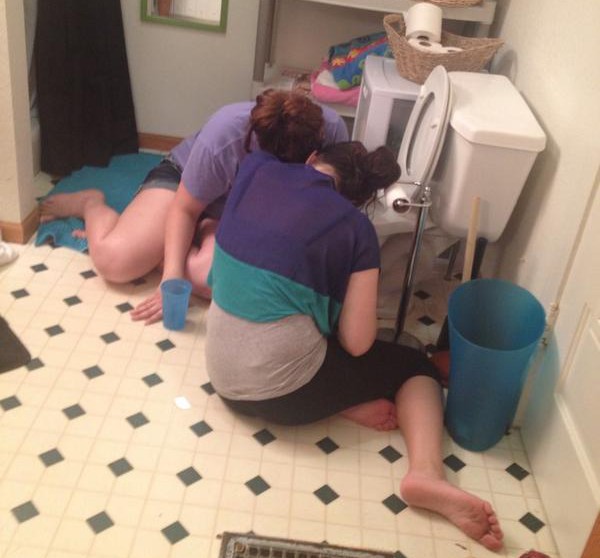
College students puking in toilet

Heather McDonald is concerned about the feminist left’s effort to undermine the presumption of innocence for men accused of rape. She makes an argument in the prestigious City Journal that there is actually a reason why we should not believe women’s rape claims, especially in an age of feminism, until we have the evidence that proves that the man being accused is guilty.

First, she gives an example of the fake rape charge made by the Columbia University student Emma Sulkowicz. I’ll omit the history of consent before, during, and after the sex and go straight to the reason for the false accusation:

It wasn’t until eight months after their August 2012 coupling that Sulkowicz filed a campus-rape charge, alleging that Nungesser had anally raped her while she struggled and told him to stop. She claims that she waited so long to file so as to avoid re-traumatizing herself. Nungesser argues that she was simply chagrined that they had not become an exclusive couple.

Reason magazine actually reported that she texted Nungesser to come over and “f*** me in the butt”. We have that text, and we know that this happened. So what happened? She had painful sex with a guy, and the relationship ended, and she wanted to shame him for breaking up with her after she gave him recreational sex. She felt she was entitled to a relationship after doing so much.

Here’s another one where the consent was documented before during and after the act, and the woman made a false accusation after because she was disappointed that the sex did not result in a relationship:

In September 2013, two freshmen at Occidental College in Southern California had sex after both had been on a 24-hour drinking binge.

Jane reported their coupling to campus authorities only after seeing that John was unaffected emotionally by it, whereas she, having lost her virginity, felt distracted and unable to concentrate.

He was found guilty of rape and expelled.

In another case:

In another case, a female student was caught by her boyfriend while cheating on him with another male student. She then filed a complaint of assault against that second male. The morning after their sexual encounter, they had exchanged texts. He wrote: “How do I compare with your boyfriend?” She responded to the boy she later accused of rape: “You were great.”

Saying no to the hot guy would have deprived her of a pleasurable experience. The rape charge got her out of being sanctioned by her boyfriend and judged by her peers. She probably couldn’t even understand why her boyfriend was angry, or why her friends thought less of her. After all, it’s her right to pursue happiness, and nobody should judge her.

So, what’s really happening? What’s really happening is that women are consenting to sex, sometimes after having chosen to get drunk, then when they sober up and realize how it makes them look to others – their boyfriends, their peers, their family, their pastors – they use rape charges as an excuse to rehabilitate their reputation. Regret over consensual sex is driving the rape accusations.

MacDonald explains:

Our booze-fueled hook-up culture has made relations between men and women messier than ever, leaving many girls and women with pangs of regret—but those regrets do not equal rape. If we were actually in the midst of an “epidemic of sexual assault,” as New Jersey senator Cory Booker asserted the evening of the Ford-Kavanaugh hearings, we would presumably have seen women and girls take protective actions, such as avoiding frat parties and flocking to single-sex schools. None of those protective actions has occurred, however. Either women are too clueless to avoid patent danger, or the epidemic of sexual assault is a fiction. All evidence points to the latter conclusion.

I have some thoughts about this, too.

In my experience dealing with women on college campuses, they tend to want a relationship, but the only men they are attracted to are hot bad boys who refuse to commit to them with marriage before having sex. So, the women give the hot non-committing bad boys the sex, thinking that the sex will be so good that it will lead to a relationship. The alcohol is used to provide an excuse later on, if the sex doesn’t result in a relationship. And if it doesn’t result in a relationship, they accuse the hot bad boy of rape in order to restore their reputation with their friends, (“I’m not a slut”), and punish the hot bad boy for not committing to them.

The more distrust there is between men and women, the fewer men and women will get married. What should we do? We should encourage women to stop drinking so much, to stop choosing men for fun and thrills, to stop having recreational sex, and to stop blaming their own poor choices on men.

UPDATE: Glenn found a great article at The Federalist which talks about women making poor choices, then blaming the bad men they freely chose:

But in the Me Too era and under the burgeoning expectation of enthusiastic consent, the first questions asked are something like, “What kind of horrible man would do this?” and, “How can we make him pay for this crime yucky way he behaved toward women?” Any attempt to ask why a woman would invite a man into her bedroom late into the evening if she didn’t want to have sex with him, accept the offer of a third date after she really didn’t enjoy the first two, or continue a years-long sexual relationship even though sometimes the sex made her feel bad, are considered victim blaming. It is as though we are to believe that the woman involved has no agency, no free will, and no control over her own choices.

A lot of harmful and costly social outcomes happen when women choose bad men, and do bad things with those men. Abortion, divorce, single mother welfare, fatherlessness, and deterring good men from having relationships (because women are seen as crazy and irresponsible). We’d better start holding women accountable to make better decisions about men, and prioritize marriage over fun and thrills.

Pro-abortion man assaults pro-life woman at peaceful demonstration

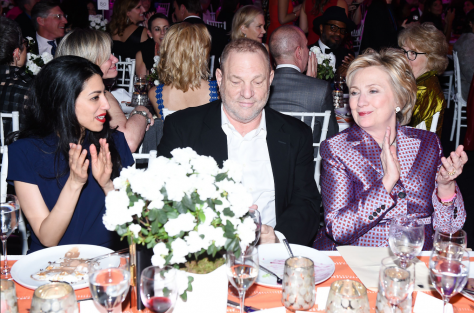
Huma Abedin (left), Harvery Weinstein (center), Hillary Clinton (right)

I’m getting a little annoyed at how pro-abortion men are widely perceived to be superior to pro-life men. These days, men without any moral boundaries are “better”, because they don’t tell women what’s right or wrong. Well, here’s the truth: if a man is willing to put recreational sex above the obligation to care for innocent human beings, then he’s not a good man.

Here’s the video of the assault:

And here’s the story that goes with it, from Fox News.

Excerpt:

Jordan Hunt has been identified as the culprit behind the attack after a video of him spin-kicking the woman went viral. He deleted his social media accounts after the backlash.

In the video, he is seen approaching a group of pro-life activists and engaging them in a discussion about abortion before suddenly kicking an activist and ripping a Campaign Life ribbon off her jacket and fleeing the scene.

[…]Marie-Claire Bissonnette, the 27-year-old woman involved in the incident, is the youth coordinator with Campaign Life Coalition and has since spoken out about the ordeal.

“He kicked me in the shoulder, my phone went flying,” Bissonnette told the Toronto Sun. “I start shouting for someone to call police and before he runs away, he goes up to me and I had a ribbon on my jacket indicating the leader, he tore it off my chest.”

She said that the kick left her with minor pain and those who saw the incident “were in shock.”

[…]“It’s not the first time I’ve experienced physical aggression from people who disagree with our message,” she told the newspaper. “I don’t think it’s acceptable to show any physical violence to anyone who disagrees with you. The perpetrator should know that.”

In the last week, I’ve been seeing a lot of tweets from pro-abortion men who are very angry that their right to have recreational sex “without consequences” might be impacted by the new Supreme Court Justice, Brett Kavanaugh. Although they make a big deal about being “pro-woman”, they are really thinking about their own ability to have sex without having to take responsibility for their actions.

Let’s think through what a woman should be looking for in a man, by working backwards.

Getting old alone is difficult. So women should be thinking about how to keep a man committed to them after they lose start to lose their youth and beauty. The simplest way to not grow old alone is to invest early and often in a man who does what he promises to do even when it doesn’t feel good. Pro-abortion men are not the kind of men who make commitments that require them to sacrifice their own interests. After all, if a man thinks that it is OK to kill an unborn child in order to maximize his own pleasure, then he can’t be relied upon to put the woman’s interests above his own selfishness.

A good man never tells a woman to put selfishness above moral obligations, either. A good man always builds a woman up, and doesn’t think about what he can get from her first. Good men want to build women up so that it’s safe to commit to them, and to have children with them. Good men know that women need to be encouraged and cared for so that they are able to do the right things. And that means telling women the truth, and telling women “no” if the woman wants to do something morally wrong or reckless. Telling a woman yes when she wants to do something morally wrong isn’t loving her. It isn’t setting her up to be the kind of woman a man can commit to, and build a life with.

Although pro-abortion men seem to be better to feminists today, because they don’t tell women what’s right and wrong, they are actually worse, in the long run. Such men are no good for self-sacrificial love. Women should choose to avoid them, no matter how good they make women feel “in the moment”.

I had no idea that there were so many people making decisions based on feelings

Brett Kavanaugh, his wife, and his two daughters

I’ve been reading about Christine Ford’s accusation against Brett Kavanaugh a lot. Ford hasn’t been able to provide any specific details about when and where this assault happened, or who was present, or how she got to and from the place where it happened.  I listened to a few debates on the facts of the case, and no one on Ford’s side could produce any evidence to back up her story.

Rob Tracinski posted an interesting article at The Federalist. He had been engaging with many people who “believed” in Ford’s story on Twitter.

He writes:

There is only one fundamental dividing line in the reaction to the televised hearings about accusations against Brett Kavanaugh, and it’s not solely a partisan one. It’s the line between those who judged the hearing based on emotions and those who judged it based on reason.

The testimony of Kavanaugh’s accuser, Christine Blasey Ford, added nothing of substance to the claims already reported. She was still unable to place her accusation at a specific time and place, to fill in many of the gaps in her recollections, or to find a single other person supposedly present who could confirm any aspect of her story. It remains a vague claim with no corroborating evidence.

Based on reason and evidence alone, you would have to conclude that we have gotten no farther in the case and are not likely to get any farther.

[…]But evidence and logic are not what we heard about in most of the reactions to the hearings. What we heard about is how the testimony made people feel.

The attack on logic began before the hearings, with commenters pointing to quotes saying the case against Kavanaugh is “plausible” and “believable”—but providing no actual evidence that it actually did happen—then describing this as “compelling.” But “plausible” is the opposite of compelling. Direct evidence compels belief, logically speaking. Someone’s speculations about what might have happened have no logical standing and compel nothing.

Or consider the phrase you probably heard a thousand times today: that Kavanaugh should not be confirmed because he is “credibly accused.” What does that mean? What makes the accusation “credible,” and what evidentiary status does that give it? A vague accusation with no independent corroboration from the very people the accuser herself described as witnesses doesn’t sound all that credible to me.

But you will look in vain for any clear standard of what is “credible.” It is not an evidentiary term but an emotional one. All it means is “this is something I feel like believing.”

People are not judging credibility based on evidence. They are judging based on how the two witnesses made them feel, which is to say that they base it on a purely emotional reaction—a reaction heavily influenced by partisan loyalties that prejudice you for or against the two witnesses.

So we get pure appeals to emotion like this one: “I can’t imagine how many thousands of women, around the world, are in tears as they listen to Christine Blasey Ford’s voice cracking.” Kavanaugh’s voice cracked, too. Does that mean we should also embrace his side of the story?

The ability to jerk tears in the audience does not constitute evidence, and if all important issues are to be resolved by the test of who is a more charismatic speaker, then impartial justice becomes impossible. On this issue, Conor Friedersdorf makes a highly relevant point: “I’ve studied too many criminal trials that sent innocents to jail or that acquitted the guilty to trust that a mass audience can distill whether anyone is telling the truth or not by consulting their gut while watching testimony.”

This was the problem from the very beginning. Everyone was talking about how each of the witnesses “looks” and about what’s “sympathetic”—as if it’s all about the feels, rather than evidence or logic.

One far-left feminist named Ana Marie Cox tweeted that she didn’t believe Kavanaugh’s tears because “the boyfriend that abused me cried a lot”:

When it’s all about feelings, the logic must be bent and twisted to fit. So when Kavanaugh became emotional while describing his young daughter’s reaction to this case, it wasn’t proof of a man who loves his daughter. No, it was proof that he was abuser. Why? Because “The boyfriend that abused me cried a lot.” Get the logic here? Because one man was abusive and cried in an attempt to get sympathy from his victim, then any man who cries is therefore an abuser. This line was repeated a lot, mostly by women citing an abusive man in their own lives, sometimes a father but usually an ex-boyfriend or ex-husband.

Note that whenever a woman has a defective father, that man was chosen by her mother. Her mother is responsible for the choice of this man and the choice to make babies with this man. Similarly, a woman who has a defective ex-boyfriend or ex-husband is responsible for her choice of this boyfriend or this husband. Although women often blame men for treating them badly, in almost every case, the harm results from a woman’s own choices. The choice to drink too much, the choice to go to parties, the choice to pursue an attractive irresponsible bad boy, etc.

NPR posted a poll on the trial, and the poll found that:

  • 32% of men believe Kavanaugh’s account, 28% believe Ford.
  • 35% of women believe Ford’s account, 20% believe Kavanaugh.

Why are so many women opposed to Kavanaugh?

Well, thanks to feminism, many women find it very hard to choose men who are good at commitment, self-sacrifice and marriage roles. Feminists consider the traditional male roles to be “sexist”, so they don’t choose men who can perform the traditional male roles. In pre-feminist times, women looked for men who were chaste, sober, good providers, good with children (e.g. pro-life), serious about religion, serious about moral character, and who put the needs of others first. They chose men who would be good at marriage. But because of feminism, choosing men based on “rigid gender identities” for a “sexist” institution like marriage is simply not done. Men who are good at marriage are “boring”, and the best men are the men who let women be as selfiish as they want to be. So, feminists marry men like Ted Kennedy, Anthony Weiner and Bill Clinton because those men are “feminists” who believe that recreational sex, abortion and no-fault divorce are good things.

I had a female friend who I used to work with in my last job who once showed me a web site filled with pictures of men’s faces. Some of them were normal people, and some of them were crazy. And she proudly told me that she was able to pick which ones were crazy with 100% accuracy. She was so proud of her ability to judge men based on appearances. She had complete confidence in her feelings and intuitions.  In fact, she got some kind of crazy thrill out of making decisions based on her feelings. The freedom to choose without having any evidence was intoxicating to her. Logic? Evidence? Those things were restrictive and would take away her freedom to make herself happy. She married an atheist devotee of Ayn Rand, despite being Catholic herself. And naturally, they divorced. Trying to think through whether a person who extols the virtue of selfishness can enter an institution like marriage is hard work. She decided to just make the decision based on appearances, feelings and intuitions. I’m sure that today she would tell me how untrustworthy, scary and evil all men are, too.

Feminists want to choose men based on how the man makes them feel, rather than by evaluating his suitability for commitment. This plan never works, and it makes these women very, very bitter. In fact, the same women who are believing Ford based on their feelings, without any evidence, are the ones choosing bad men based on their feelings, without any evidence that he is able to do the job of a husband and father. The problem is the same – making decisions with feelings instead of being bound by the evidence.