WWII is entering its last phase: Germany is in ruins, but does not yield. The US army lacks crucial knowledge about the German units operating on the opposite side of the Rhine, and decides to send two German prisoners to gather information. The scheme is risky: the Gestapo retains a terribly efficient network to identify and capture spies and deserters. Moreover, it is not clear that “Tiger”, who does not mind any dirty work as long as the price is right, and war-weary “Happy”, who might be easily betrayed by his feelings, are dependable agents. After Tiger and another American agent are successfully infiltrated, Happy is parachuted in Bavaria. His duty: find out the whereabouts of a powerful German armored unit moving towards the western front.
Pakistan, North Korea and a former weapons scientist from the Soviet Union reportedly all helped Iran with its nuclear weapons quest, according to an impending U.N. nuclear watchdog report expected to show the Islamic regime has mastered the science of building a bomb.
The International Atomic Energy Agency’s report due out this week will lay out findings collected over years of intelligence gathering. It is expected to reinforce concerns that Iran didn’t actually abandon its weapons-related research in 2003, as indicated by a 2007 National Intelligence Estimate given to then-President George W. Bush.
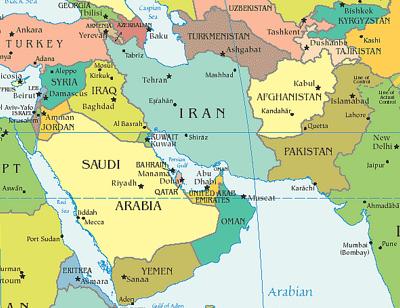
U.S. intelligence agencies reported in 2007 that they believed Tehran halted its experiments in response to international and domestic pressures. But an ongoing investigation by the Fox News Specials Unit concludes that more than 600 entities were working inside Iran to support its program, and at least 40 sites where the work is taking place are suspected to exist across the country.
For British, French and American investigators, one of the most concerning sites is the Qom uranium enrichment construction site, hidden deep in the mountains. The latest intelligence shows that security walls have doubled around the site. Its scale cannot be explained by any known civilian nuclear energy use.
David Albright, a former IAEA official and president of the Washington-based Institute for Science and International Security who reviewed the intelligence files, told The Washington Post that Iran’s nuclear weapons program “never really stopped” and also concluded that Iran “has sufficient information to design and produce a workable implosion nuclear device.”
Western diplomats and nuclear experts briefed on the findings in the IAEA report also told the Post that foreign scientists offered assistance in overcoming key technical hurdles.
The documents reportedly show that a former Soviet weapons scientist named Vyacheslav Danilenko allegedly tutored Iranians for several years on building high-precision detonators needed to trigger a nuclear chain reaction. The Post reported that Pakistani and North Korean officials also gave to Iran mathematical formulas and codes as well as a so-called neutron initiator, which shoots a stream of atomic particles into the weapon’s fissile core at the start of the chain reaction.
There are two things to point out about this story. The first thing is that it was a strategic disaster for us to back out of Iraq, because that’s where we need to be to be able to gather intelligence, mount covert ops, run interdiction on attempts to transfer WMDs to Syria, etc. We really need to be in theater in order to deal with Iran, Syria and groups like Hezbollah, Iran’s Quds force and Muqtada Al Sadr’s Mahdi Army.
Three years, two abject failures. The first was the administration’s inability, at the height of American post-surge power, to broker a centrist nationalist coalition governed by the major blocs — one predominantly Shiite (Maliki’s), one predominantly Sunni (Ayad Allawi’s), one Kurdish — that among them won a large majority (69 percent) of seats in the 2010 election.
Vice President Biden was given the job. He failed utterly. The government ended up effectively being run by a narrow sectarian coalition where the balance of power is held by the relatively small (12 percent) Iranian-client Sadr faction.
The second failure was the SOFA [Status of Forces Agreement] itself. U.S. commanders recommended nearly 20,000 troops, considerably fewer than our 28,500 in Korea, 40,000 in Japan and 54,000 in Germany. The president rejected those proposals, choosing instead a level of 3,000 to 5,000 troops.
A deployment so risibly small would have to expend all its energies simply protecting itself — the fate of our tragic, missionless 1982 Lebanon deployment — with no real capability to train the Iraqis, build their U.S.-equipped air force, mediate ethnic disputes (as we have successfully done, for example, between local Arabs and Kurds), operate surveillance and special-ops bases, and establish the kind of close military-to-military relations that undergird our strongest alliances.
The Obama proposal was an unmistakable signal of unseriousness. It became clear that he simply wanted out, leaving any Iraqi foolish enough to maintain a pro-American orientation exposed to Iranian influence, now unopposed and potentially lethal. Message received. Just this past week, Massoud Barzani, leader of the Kurds — for two decades the staunchest of U.S. allies — visited Tehran to bend a knee to both President Mahmoud Ahmadinejad and Ayatollah Ali Khamenei.
The second thing to point out is the question of what we should be doing to restrain Iran’s nuclear ambitions. Click here for a run-down of some of our options. There are a lot of things we could do short of all-out war, but that would require that we had a statesman in the White House – someone who takes foreign policy seriously and treats it as more than a political issue.
A previous post I wrote showed how arms that China sells to Iran make their way to Hezbollah to be used against Israeli assets. That’s what we can expect will happen with nuclear weapons that Iran develops. Are we willing to accept that? There is also the matter of the Mexican drug cartels, the Quds force, Hugo Chavez in Venezuela and our porous border with Mexico. Are we willing to risk that?
We need to take the gloves off our national security agencies, especially the CIA, and do what has to be done.
My favorite espionage TV show is “Danger Man” with Patrick McGoohan, which later morphed into “Secret Agent”. The show takes place during the 1960s, right at the height of the Cold War.
Main character John Drake worked for NATO as a special security agent and was free to travel the world working on special problems for free world governments. The story lines set an early precedent for non-violence, preferring to have Drake use his wits and his fists rather than a gun. McGoohan influenced the program from the start.
The themes of morality and individuality fit in with his personal philosophy as well as his vision of what the character John Drake was supposed to be.
As both a moral and opinionated man, McGoohan held strong views and was forceful about seeing that they were carried out. He had insisted at the very first meeting on the script for the first episode that the bedroom scene be cut out. In fact, he stipulated that romantic involvements would have to be eliminated if he were to play the role, and consequently none appeared in either this series or the ‘Secret Agent’ series that followed.
[…]It should come as no surprise that when McGoohan was offered the role as the first James Bond, he turned it down – several times – as being incompatible with the type of role he wanted to play. He says it was a decision he has never regretted.
[…]As an actor, McGoohan had now carved out a voice all his own…. John Drake was a loner, an individual, and a moral character.
[H]e was offered the roles of James Bond and Simon Templar (The Saint). He turned both down.
He once recalled: “When we started Danger Man the producer wanted me to carry a gun and to have an affair with a different girl each week. I refused. I am not against romance on television, but sex is the antithesis of romance. Television is a gargantuan master that all sorts of people watch at all sorts of time, and it has a moral obligation towards its audience.”
Here are four of my favorite episodes.
Episode 1 of 4: “Time to Kill”
Drake is tasked with eliminating an East German assassin.
Episode 2 of 4: “The Key”
Drake is sent to Vienna to find out who is leaking secrets from the American Embassy.
Episode 3 of 4: “Colonel Rodriguez”
Drake travels to the Carribean to free a journalist who has been arrested for espionage.
Episode 4 of 4: “The Trap”
Drake travels to Venice to investigate the disappearance of a cipher clerk.
Danger Poll
If you watch ALL FOUR episodes, you can vote in the poll:

 WINTERY KNIGHT