
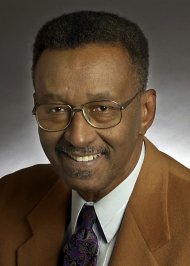
This is from Walter Williams, my second most favorite economist after Thomas Sowell.
Excerpt:
Why is it that Egyptians do well in the U.S. but not Egypt? We could make that same observation and pose that same question about Nigerians, Cambodians, Jamaicans and others of the underdeveloped world who migrate to the U.S. Until recently, we could make the same observation about Indians in India, and the Chinese citizens of the People’s Republic of China, but not Chinese citizens of Hong Kong and Taiwan.
[…]Much of Egypt’s economic problems are directly related to government interference and control that have resulted in weak institutions vital to prosperity. Hernando De Soto, president of Peru’s Institute for Liberty and Democracy (www.ild.org.pe), laid out much of Egypt’s problem in his Wall Street Journal article (Feb. 3, 2011), “Egypt’s Economic Apartheid.” More than 90 percent of Egyptians hold their property without legal title.
De Soto says, “Without clear legal title to their assets and real estate, in short, these entrepreneurs own what I have called ‘dead capital’ — property that cannot be leveraged as collateral for loans, to obtain investment capital, or as security for long-term contractual deals. And so the majority of these Egyptian enterprises remain small and relatively poor.”
Egypt’s legal private sector employs 6.8 million people and the public sector 5.9 million. More than 9 million people work in the extralegal sector, making Egypt’s underground economy the nation’s biggest employer.
Why are so many Egyptians in the underground economy? De Soto, who’s done extensive study of hampered entrepreneurship, gives a typical example: “To open a small bakery, our investigators found, would take more than 500 days. To get legal title to a vacant piece of land would take more than 10 years of dealing with red tape. To do business in Egypt, an aspiring poor entrepreneur would have to deal with 56 government agencies and repetitive government inspections.”
Poverty in Egypt, or anywhere else, is not very difficult to explain. There are three basic causes: People are poor because they cannot produce anything highly valued by others. They can produce things highly valued by others but are hampered or prevented from doing so. Or, they volunteer to be poor.
Some people use the excuse of colonialism to explain Third World poverty, but that’s nonsense. Some the world’s richest countries are former colonies: United States, Canada, Australia, New Zealand and Hong Kong. Some of the world’s poorest countries were never colonies, at least for not long, such as Ethiopia, Liberia, Tibet and Nepal. Pointing to the U.S., some say that it’s bountiful natural resources that explain wealth. Again nonsense. The two natural resources richest continents, Africa and South America, are home to the world’s most miserably poor. Hong Kong, Great Britain and Japan, poor in natural resources, are among the world’s richest nations.
What is necessary for wealth is a capitalist economy, that emphasizes the rule of law, private property, judicial restraint, limited government, etc. Egypt has none of those, and that’s why Egypt is poor. India and Chile used to be like Egypt, but then they revamped their societies to be more like America. Now India and Chile are more prosperous. Economics is not rocket science.
Capitalism creates wealth, and raises the standard of living of the poor and the wealthy. It doesn’t matter what rung of the social ladder someone is on – as long as they can keep what they earn, instead of having it redistributed by socialists, then they will work hard to create something of value to share with others. Poverty is caused by economic ignorance.
More Walter Williams stuff here, and more Thomas Sowell stuff here. These are the clearest-thinking economists operating today.
 WINTERY KNIGHT