Tag Archives: Economy

New jobs report: unemployment rises and 70% chance of recession

James Pethokoukis of the American Enterprise Institute explains:

The May jobs report was a complete and utter disaster for the economy and, perhaps, President Obama’s chances for reelection.

Employers created just 69,000 jobs last month, the Labor Department said on Friday. That’s the fewest since May of last year. Economists had been expecting nonfarm payrolls to increase by 150,000. (In fact, the result was lower than what any economist polled by Reuters had predicted.)

Moreover, companies added 49,000 fewer jobs than previously estimated in March and April. Talk about a slowdown. The average monthly gain was 226,000 in first quarter vs. an average of just 73,000 in April and May.

Oh, and the U-3 unemployment rate rose to 8.2% from 8.1%. The broader U-6 gauge, which also measures underemployment, rose to 14.8% from 14.5%. The labor force participation rate did, finally, tick up to a still-low 63.8%, lending credence to the idea that the shrinking workforce reflects discouraged workers and not just demographics.

And here’s the forecast: WE’RE DOOMED.

So what is the true state of the labor market?

– If the size of the U.S. labor force as a share of the total population was the same as it was when Barack Obama took office—65.7% then vs. 63.8% today—the U-3 unemployment rate would be 10.9%. (Now, this doesn’t take into account the aging of the Baby Boomers, which should lower the participation rate due to rising retirements. But is that still a valid assumption given the drop in wealth since 2006?)

–  If you take into account the aging of the Baby Boomers, the participation rate should be trending lower. Indeed, it has been doing just that since 2000. Before the Great Recession, the Congressional Budget Office predicted what the participation rate would be in 2012, assuming such demographic changes. Using that number, the real unemployment rate would be 10.5%.

– Of course, the participation rate usually falls during recessions. Yet even if you discount for that and the aging issue, the real unemployment rate would be 9.5%.

– We continue to be stuck in the longest period of 8% unemployment or higher since the Great Depression, 40 consecutive months.

– And, as the above chart shows — originally from Obama economists Christina Romer and Jared Bernstein in January 2009 –the current 8.2% unemployment rate is 2.5 percentage points above where Team Obama predicted it would be right now if Congress passed his trillion-dollar stimulus plan.

–  The median duration of unemployment rebounded to 20.1 weeks in May, and 42.8% were unemployed for longer than a half year.

– Total hours worked fell 0.2% on weakness in the work week.

– Average hourly earnings rose just 0.1%. Coupled with a very stable overall inflation rate, real wages were likely flat in May.

The big question now: Does this report suggest the U.S economy is heading into recession, especially given the sharp slowdown in global economic activity from Europe to India to, perhaps most worrisome, China?

Consider this: Last year, the U.S. grew at just a 1.7% pace. Research from the Federal Reserve finds that that since 1947 when year-over-year real GDP growth falls below 2 percent, recession follows within a year 70 percent of the time. We are firmly within the Recession Red Zone.

Facebook friend WGB pointed me to this story in CNS News:

The number of American women who are unemployed was 766,000 individuals greater in May 2012 than in January 2009, when President Barack Obama took office, according to data released today by the Bureau of Labor Statistics.

In January 2009, there were approximately 5,005,000 unemployed women in the United States,according to BLS. In May 2012, there were 5,771,000.

[…]The number of women employed in the United States peaked at 68,102,000 in April 2008, according to BLS.  The number of women employed in the United States today is 1,216,000 less than that.

Remember, the Democrats got control of Congress in January 2007, and had control of spending in the 2008 fiscal year. My take is that the hiring is still going on in places like Canada and Chile and Sweden, where government isn’t taxing and regulating job creators into oblivion. Companies are still hiring and expanding and drilling for oil – just not here.
GAO: Green River Formation has more oil than the rest of the world combined

Remember when Obama said that we have “2 percent of the world’s oil reserves”?

This is an excerpt from his own speech:

As a country that has 2 percent of the world’s oil reserves, but uses 20 percent of the world’s oil — I’m going to repeat that — we’ve got 2 percent of the world oil reserves; we use 20 percent.  What that means is, as much as we’re doing to increase oil production, we’re not going to be able to just drill our way out of the problem of high gas prices.  Anybody who tells you otherwise either doesn’t know what they’re talking about or they aren’t telling you the truth.

Now let’s find out who doesn’t know what they’re talking about and who isn’t telling the truth.

The Government Accountability Office – a department of the federal government – tells us the facts.

Excerpt:

The Green River Formation, a largely vacant area of mostly federal land that covers the territory where Colorado, Utah and Wyoming come together, contains about as much recoverable oil as all the rest the world’s proven reserves combined, an auditor from the Government Accountability Office told Congress on Thursday.

The GAO testimony said that the federal government was in “a unique position to influence the development of oil shale” because the Green River deposits were mostly beneath federal land.

[…]It also noted that developing the oil would have an environmental impact and pose “socioeconomic challenges,” that included bringing “a sizable influx of workers who along with their families put additional stress on local infrastructure” and “making planning for growth difficult for local governments.”

“The Green River Formation–an assemblage of over 1,000 feet of sedimentary rocks that lie beneath parts of Colorado, Utah, and Wyoming–contains the world’s largest deposits of oil shale,”Anu K. Mittal, the GAO’s director of natural resources and environment said in written testimony submitted to the House Science Subcommittee on Energy and Environment.

“USGS estimates that the Green River Formation contains about 3 trillion barrels of oil, and about half of this may be recoverable, depending on available technology and economic conditions,” Mittal testified.

“The Rand Corporation, a nonprofit research organization, estimates that 30 to 60 percent of the oil shale in the Green River Formation can be recovered,” Mittal told the subcommittee. “At the midpoint of this estimate, almost half of the 3 trillion barrels of oil would be recoverable. This is an amount about equal to the entire world’s proven oil reserves.”

In her oral statement before the subcommittee, Mittal said that developing the shale oil would create wealth and jobs for the country, but also challenges for government.

“Being able to tap this vast amount of oil locked within this formation will go a long way to help to meet our future demands for oil. The U.S. Geological Survey, as you noted, estimates that the formation contains about 3 trillion barrels of oil of which half may be recoverable,” she said.

“As you can imagine having the technology to develop this vast energy resource will lead to a number of important socioeconomic benefits including the creation of jobs, increases in wealth and increases in tax and royalty payments for federal and state governments,” she said.

[…]In her written testimony, Mittal noted that three-fourths of the Green River shale oil is under federal land.

Is Barack Obama a good President? Does he know how to be President? Does he understand economics?

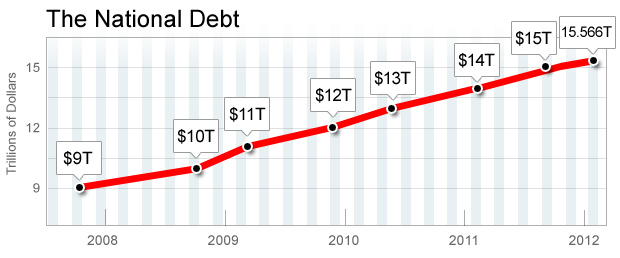
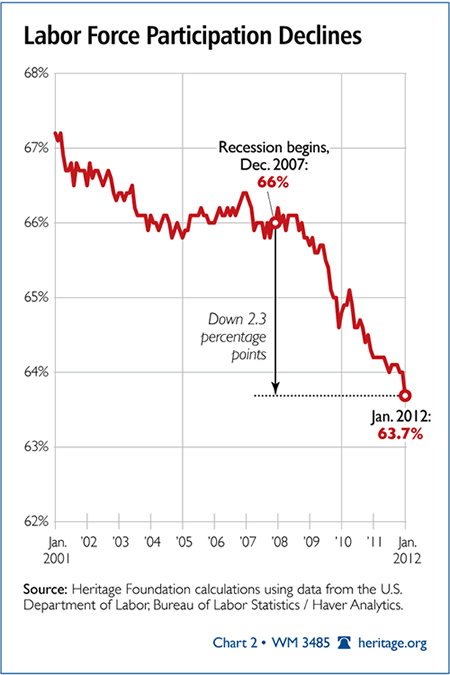
Let’s look at the national debt and the labor force participation rates in Obama’s first term. Recall that the Republicans lost the House and Senate in January of 2007. At the time of the Pelosi/Reid takeover, the national debt was $8 trillion. It is now almost double that at $16 trillion.

Obama added 5 trillion dollars to the debt since he took office
US Labor Force Participation down 4.9 million people

If these numbers seem bad to you, then I don’t think you should vote for Obama.

Twenty years of fiscal conservatism in Sweden: has it worked?

Map of Europe
Map of Europe

From Investors Business Daily, a story about about a nation that changed course – and won big.

Excerpt:

The turnaround has been driven in no small part by the election of Fredrik Reinfeldt as prime minister in 2006. He took office in October of that year and by January of 2007, tax-cutting had begun. The Reinfeldt government also cut welfare spending — a form of austerity — and began to deregulate the economy.

[…][A]s Finance Minister Anders Borg told the Spectator, the Reinfeldt government was simply continuing the last 20 years of reform.

[…]Sweden fell into recession in 2008 and 2009, as did many developed nations. But it’s pulled strongly out of the decline, posting GDP gains of 6.1% in 2010 and 3.9% last year, when it ranked at the top in Europe’s list of fastest-growing economies.

[…]Under Borg, Sweden handled the downturn in the most un-European way. “While most countries in Europe borrowed massively, Borg did not. Since becoming Sweden’s finance minister, his mission has been to pare back government. His ‘stimulus’ was a permanent tax cut,” Fraser Nelson wrote last month in the Spectator.

Borg strongly opposed the Keynesian solution, which the left continues to advance while it inveighs against an austerity that has yet to be implemented.

He also refused to resort to the trickery of a stimulus, instead cutting the taxes that he knew were hindering entrepreneurs from giving the economy the kick it needed.

The country needed innovators and capitalists — “the source of job creation,” says Borg — and he did what he had to, to attract new ones and to keep those already there from leaving.

During Sweden’s decline into a welfare state, it became, as Borg told the Spectator, “a textbook case of European economic sclerosis” punished by “very high taxes and huge regulatory burden.”

That lasted until the 1990s, when the nation realized it had to return to the market policies that had made it rich prior to the onset of its cradle-to-grave coddling.

How much further can Borg and Reinfeldt take their reforms? Will voters ask them to come back and complete the job?

After all, it’s not over. Though it continues to fall, Sweden’s government debt as a share of GDP is still too high at 38.4%. And while it’s dipped below 45% for the first time in decades, the country’s tax-to-GDP ratio is still far too steep.

Despite this unfinished business, Sweden is still moving in the right direction. We might be able to say that about America after the 2013 Inauguration Day. But we can’t say that now.

If liberals are so smart, why can’t they take time off from taxing, spending and buying votes, in order to look at countries that are having economic success? Isn’t it “smart policy” to do what works? Why listen to Hollywood celebrities and people with journalism degrees when we can just do what has been proven to work? It’s not like what we are doing now is working.