Tag Archives: Economics

Should a man go into full-time apologetics ministry if he intends to marry?

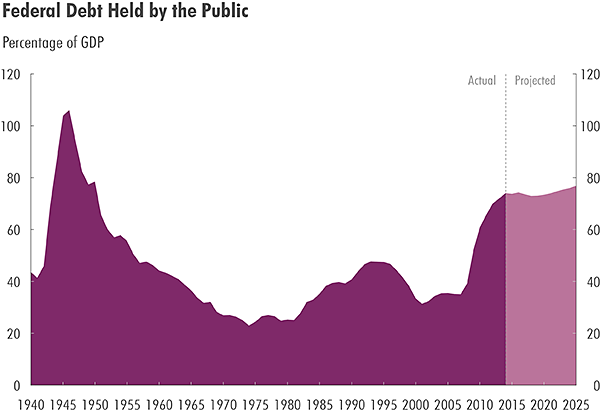
Congressional Budget Office: Debt to GDP ratio

Lydia McGrew has a post up at What’s Wrong With the World blog that is just excellent.

Excerpt:

Apologetics is wonderful and incredibly important. It’s a wonderful thing that a revival of specifically evidentialist apologetics is happening in the United States and even, to some extent, in the Anglophone world at large.

Unfortunately, this revival of interest in apologetics and in being Christian philosophers is coming at a very bad time, economically. Even if you are a genius, your chances in 2013 and following of getting a stable job by the route of going to graduate school in philosophy (or almost any area of the humanities) are pretty darned slim. If you’re not a genius, fuhgetaboutit. Nor were there ever all that many jobs in philosophy. It was always an iffy proposition, but it’s much worse now than it was even twenty years ago.

As for starting ministries, a poor economy makes it extremely hard to do that, too, because people don’t have as much disposable income to donate. Moreover, even in a more robust economy, if all the eager young apologists were to flock to start apologetics and/or campus ministries, they would be competing among themselves for a finite number of available dollars from donors. So that’s not the best idea either.

Let me speak very bluntly here: In my opinion, God doesn’t need a whole raft of impractical idealists out there getting themselves into debt or half starving (or really starving) with no idea of how in the world they are ever going to support even themselves, much less a family, out at the other end of their education. That just burdens the church with a large number of able-bodied but needy Christians who are in a seemingly unending stage of transition, “getting an education for the kingdom” or “hoping to do work for the kingdom” without a viable plan in mind or any fiscal light at the end of the tunnel.

Instead, I believe that we need an army of tentmakers. If you have a job or a marketable skill, for heaven’s sake (literally), don’t quit that job and join the ranks of starving students. Keep your day job, but enrich your mind and prepare yourself to answer people’s questions about Christianity by studying on your own time. If you have entrepreneurial abilities and the capital, start a business. That will support not only yourself but others you employ, and if successful, you will have more money to give to Christian ministries.

But even if you aren’t the entrepreneurial type or don’t have that opportunity, at least make sure (to the extent that one can in today’s world) that you can pay the rent and put food on your own table as well as supporting whatever number of additional people you plan to take on. (In other words, if you are a guy who would like to get married and have children, bear that in mind.) This will inevitably mean spending time at all that distasteful stuff like networking and making a resume. Bookish types don’t enjoy that stuff, because it seems bogus, but it can’t be helped. It will undoubtedly mean, for most people, not being full-time students beyond the undergraduate level, especially not in the humanities, not trying to become full-time academics as a life work, and not going into full-time ministry, even if you would ideally like to do one or more of those three things.

In the end, if we can have this army of tentmakers, there will be (Lord willing) money to allow some people to work in full-time ministry. But it’s going to be quite a small proportion of those who are interested or would ideally like to do so.

[…]Inevitably, the course of action I am suggesting will mean a bifurcation for many between their day job and what they are most passionately interested in. So be it. Indeed, so it has ever been in the world. What proportion of people at any moment in human history have been blessed enough to spend most of their time working on what they are most passionately interested in? The question answers itself. So I think that bifurcation has to be accepted by a great many people and that doing so will lead to what I might call a healthier “Christian economy” among committed Christians than what we could otherwise end up with.

So let’s see her advice in bullet-point form:

  • The job market for philosophers is very bad
  • A bad economy means less support money is available
  • It’s important to have a plan to fund your  ministry
  • Leverage your full-time job to fund your ministry

So I want to make two comments.

Making bad decisions because you think God is telling you to

I often find that when I talk to Christians, there is this sort of hyper-spiritualized way of deciding what to do, and I’ve written about this in one of my favorite posts. Hyper-spiritual Christians read the Bible, which is good, but then they don’t tend to also look at practical things like economics, science and public policy when making their decisions. The Bible doesn’t say much about what to study or what job to get, but there is an example of Paul working at tent-making in order to fund his ministry. So there is precedent for the idea of learning a trade and working to earn enough money to support our families, our ministry and even other people’s ministries.

I think we have an obligation to take the Bible seriously when it tells us what we can do to please God, but coming up with a plan to please God most effectively is our job. We have to make the plans to serve God. Our plans must be within the bounds of Biblical morality, but they should also reflect our knowledge of how the world really works, too. We’ll be more successful with a good plan and some hard work. It’s very easy to be deceived by our feelings about what we would like to do with our lives. And many people who listen to their feelings and find other impractical people to echo and affirm those feelings make many mistakes in life. I would advise people to be very careful about calling their feelings the voice of God speaking to them, then getting into trouble when their lack of wisdom blows up in their faces.

Christian men who want marriage without having to get a job

So that brings me to the concern that I have that I’ve been thinking about for the last week or so. I have been thinking about a couple of Christian apologists I know who are interested in marriage, but unwilling to prepare themselves to prepare for a wife and children. They are both very unaware of the economic and political challenges that they are likely to face, which makes the need to prepare financially even more pressing.

One of the Christian men is getting a BA and is in his early 30s. He says that marriage would have to come second to his ministry. He has never worked a full-time job his entire life, and considers getting a full-time job to be beneath him. The other one is in his late 20s and is in a PhD program. He wants marriage right away, but he has never worked in a real job his entire life, either. Both of these Christian apologists are in debt – they have zero assets and negative net worth. How can it be that they can even be considering marriage? Don’t they realize what a man’s role in marriage is? He is the provider, and that means that he has to have a record of steady work, saving money and being generous at sharing with others. Neither of these men have shown any ability in those areas. Neither of them seems willing to get started on a regular, full-time, private sector job. And neither seems to want to take Lydia’s advice and finance their ministry / marriage from a regular, full-time job. Neither of these students can even afford a wedding or even a wedding ring. Do they even understand what a woman needs from her husband?

So what’s the problem? I talked this over with a wise friend and she said that feminism has become so widespread in this society that a lot of men think that they can contemplate marriage without having a record of earning and saving. They don’t see that men have any distinct “provider” role in a marriage. They sort of expect to get the benefits of marriage with none of the “provider” responsibilities. Many women have also been taken in by feminism, and cannot evaluate men to see which ones are able to work and save and provide, and which ones aren’t. I don’t think young people are being taught how to apply the Bible to the practical challenges of marriage, or how to recognize the challenges of the times we live in.


Desiring God asks: is socialism in conflict with Christianity?

Bible study that hits the spot

My friend Kevin sent me this amazing article about socialism, which appeared at Desiring God (!!!), of all places. It was authored by Phillip Holmes, who – I see from his picture -has dark skin like me, which is awesome!

In the past, I have given Desiring God and John Piper a lot of heat for not connecting Christianity to the real world. This was especially annoying to me during elections, or when legislation of interest to conservatives was being debated. But I’ve noted that Piper is now much better than he was before.

Anyway, here’s the intro to the article:

Socialism is trending in the minds of many Americans. Some love it, some hate it, and others are indifferent to it. Some Christians argue that it’s evil, while others argue that it’s morally good or neutral. Those that argue for its wickedness often fail to condemn the crony capitalism and corporate welfare that is widespread in the United States; therefore, their arguments often fall on deaf ears with socialist sympathizers. The arguments for its moral good or neutrality typically appeals to emotion, rather than evidence, which is considered insufficient for those that oppose it.

Then they quote John Piper for the definition of socialism – and it’s a great definition, it really captures what is interesting for us as Christians about socialism:

A social and economic system that through legal or governmental or military coercion — in other words, you go to jail if you don’t do this — establishes social ownership at the expense of private or personal ownership and/or you could say where coercion is used to establish social control — if not ownership, at least control of the means of production in society. And thus, through control, you effectively eliminate many of the implications and motivations of private ownership.

In other words, Socialism borrows the compassionate aims of Christianity in meeting people’s needs while rejecting the Christian expectation that this compassion not be coerced or forced. Socialism, therefore, gets its attractiveness at certain points in history where people are drawn to the entitlements that Socialism brings, and where people are ignorant or forgetful of the coercion and the force required to implement it — and whether or not that coercion might, in fact, backfire and result in greater poverty or drab uniformity or, worse, the abuse of the coercion as we saw in the murderous states like USSR and Cambodia.

F. A. Hayek says that the rule of law and private property are the foundations for all other rights, even religious liberty. So, Piper’s focus on property rights is right on the money. This is what we should care about when it comes to socialism, because it impacts our other liberties. The more free the free market is, the most Christians can follow their consciences. But the more the government takes hold of private industry, the harder it is for Christians to earn a living without toeing the secular government’s line. Take a look at what is happening to doctors and nurses in socialist countries like Canada. They are forced to perform abortions, they are forced to assist with assisted suicide. Why? Because government is running the health care system, and there is no other company you can run to that will respect your views. There is no escape when a secular government takes over large parts of the private sector.

This part is my favorite part, the author quotes my favorite economist, Thomas Sowell:

Despite the good they seem to do in some cases, I can’t in good conscience embrace them as a necessary means to escaping poverty. In my experience, I’ve witnessed it hinder more families than it has helped. We give social programs too much credit and the importance of family and faith too little. As a matter of fact, some economists assert that it was during the welfare state the condition of a particular group of its recipients began to decelerate. As the black economist Thomas Sowell pointed out:

The black family, which had survived centuries of slavery and discrimination, began rapidly disintegrating in the liberal welfare state that subsidized unwed pregnancy and changed welfare from an emergency rescue to a way of life.

Sowell continues to attack the myth that social programs improved the conditions of blacks in America:

The economic rise of blacks began decades earlier, before any of the legislation and policies that are credited with producing that rise. The continuation of the rise of blacks out of poverty did not — repeat, did not — accelerate during the 1960s.

The poverty rate among black families fell from 87 percent in 1940 to 47 percent in 1960, during an era of virtually no major civil rights legislation or anti-poverty programs.

Evidence seems to suggest that the families that have eliminated the poverty cycle while on social programs would have very likely done the same without the programs. While there have been numerous instances of grave injustices towards minority groups in our country that have hindered progress (slavery, Jim Crow), social programs don’t seem to be the cause of any significant improvements. Therefore, I want to humbly provide three practical reasons, based on my Christian worldview, why more social programs could actually substitute the family, empower the government, and hinder the church.

This is correct. Attempts to help the poor by redistributing wealth from those who produce to those who cannot or will not actually make things worse – by drawing more people “on the margin” into dependency.

One last snip:

Social programs are a slippery slope that could lead to unjust governments, more broken homes, and dead churches. Therefore, I simply can’t embrace them. A free society under a just government gives us plenty of options. We love our neighbors by starting non-profits, building hospitals, and opening schools that address the needs of the people without using the force of the government. What I’m proposing is not easy, but it is a biblical alternative that will require sacrifice, vision, newfound conviction, and a radical shift in how we view church, family, and government.

See, he sees private, voluntary charity as an option to government-run redistribution. An option that encourages economic growth, while safeguarding liberty and conscience for Christians.

I really love this article. The problem with me is that I don’t think enough about how to make my views palatable to well-meaning people on the other side. The author of this article does know how to defuse potential objections gently and graciously.

How well does socialism work in countries and cities that adopt it?

Socialism in Venezuela

I noticed this article by Frank Luntz in USA Today, which talks about the political views of young people.

Excerpt:

If you want to understand today’s young Americans, consider this: 58% of them think “socialism” is the most compassionate political system, compared with just 33% who pick “capitalism.”  Heck, 9% even voted for “communism.”

That’s right: Two-thirds in a poll I did last month say socialism or communism is more compassionate than capitalism.

[…]In our recent national survey of 1,000 first- and second-time voters ages 18 to 26, Republicans weren’t just off on the wrong track. They were barely on the radar with this Snapchat generation, as it is sometimes called.

[…]The younger generation and the Republican Party simply see the world, and America, very differently. For instance, 58% in our poll say that “America isn’t any better or worse than most other countries,”compared with a 42% minority that believes “America is exceptional. It’s better than every other country in the world.

So how to respond to this? Well, I think it is important for us to be aware of how other countries are doing, especially the ones that are implementing socialism.

Socialism abroad

Take Venezuela for example. They’ve had socialism for a good long time under Hugo Chavez, and now his socialist successor Nicolas Maduro.

The left-leaning The Economist explained what’s happening there:

The regime has greatly compounded the damage with policies that, though designed to favour the poor, end up impoverishing them and the state. Price controls—along with the shortage of foreign exchange—have led to acute shortages of basic goods, forcing people to queue for hours to buy necessities. Inflation is officially running at 141% as of September last year (the latest available figure). Analysts believe the true figure is at least 200% a year; some predict hyperinflation in 2016. The massive budget deficit, which the Central Bank finances by printing money, contributes to that risk.

[…]Recent surveys have shown that alongside the economy and shortages, security is a major concern. The government stopped publishing comprehensive crime statistics in 2005, though it does admit there is a problem. The attorney-general has said that Venezuela’s murder rate last year was 62 per 100,000 people, ten times the global average. The Venezuelan Violence Observatory, an independent research institute, says the rate is higher. The murder rate in Caracas is the highest in the region for a country’s biggest city. Countrywide, 90% of murders go unpunished.

Radically leftist NPR notes:

Last week, opposition lawmakers in Venezuela declared a “food emergency.” That’s because Venezuela is facing widespread shortages of milk, meat, bread and other staples. Critics blame the government’s socialist economic policies. But instead of changing course, President Nicolás Maduro is calling on Venezuelans to help feed themselves — by starting urban gardens.

[…]In addition, falling prices for oil — Venezuela’s main export — mean the government has fewer dollars to import food. There’s also a severe shortage of imported farm machinery and supplies, says Vicente Perez, director of FEDEAGRO, Venezuela’s main farm organization.

“There is nothing — just like there’s no food, there are no seeds, no herbicides … and no medicines to vaccinate farm animals,” says Perez.

Phil Gunson, who is based in Caracas for the International Crisis Group, warns of a pending humanitarian crisis.

“At least one in 10 people is eating two meals a day or less. There isn’t starvation. We are not talking about famine,” Gunson says. “But we are talking about malnutrition, particularly in the case of children.”

If you’re looking for a country that’s embraced socialism, you can’t do much better than Venezuela. Maybe Argentina, but they are also in serious economic trouble. Do you know any young people who are not being told about that?

Well, what about closer to home? How are the major cities in the United States doing?

Socialism at home

This article from Investors Business Daily takes a look at it.

Excerpt:

America is awash with troubled, dysfunctional cities that have been electing Democratic mayors for decades.

  • Detroit last elected a Republican mayor in 1957. It is now the model of urban failure — it’s recognized more for its poverty, crime, rot and bankruptcy than the great cars that it turned out into the early 1970s. It is the poorest big city in the nation, with almost 40% of the population living below the poverty line. The website Law Street actually ranks Detroit ahead of Flint as the country’s most dangerous city. Either way, it’s clear that both cities have institutionalized crime problems.

Detroit is also a pit of political corruption. Just in recent years, one mayor, Kwame Kilpatrick, was convicted of corruption and sent to federal prison for 28 years, while building inspectors have been indicted on federal felony bribery charges and a former city council member was investigated in a bribery and kickback scandal.

  • Chicago’s last GOP mayor was elected in 1927. The nation’s third-largest city is home to some of the worst inner-city violence imaginable. More than 2,300 people were shot there last year, and nearly 400 lost their lives to homicides.

Its finances are just as grim. “Chicago is so broke,” IBD contributor Stephen Moore explained months ago, “that its bonds are junk status, and Mayor Rahm Emanuel had to go hat in hand last week to the state capital, Springfield, for bailout money to pay the bills.” Things have been rotten enough, Moore said, to send “a record number of people … fleeing Cook County, home to Chicago.” Only a little more than half of the city’s pension liabilities are funded.

  • St. Louis has been electing Democratic mayors since 1949. The Gateway to the West has become the gateway for crime. Law Street says that it’s the fourth most dangerous city in the country, Forbes says it’s the second. It had the sixth-highest poverty rate among big cities in 2014.
  • The last GOP mayor of Philadelphia left office in 1952. A few years ago, Moore identified it as a favorite to follow Detroit into bankruptcy.
  • Both Baltimore and Oakland had Republican mayors as late as the 1960s. In the era of Democratic rule, both are now more well known for their crime and poverty problems than for their charm and character.
  • Newark, N.J., hasn’t had a GOP mayor in more than a century. It was ranked as the fifth-worst city to live in in 2015. Detroit, of course, was first.

When Democrats are in control, cities tend to go soft on crime, reward cronies with public funds, establish hostile business environments, heavily tax the most productive citizens and set up fat pensions for their union friends. Simply put, theirs is a Blue State blueprint for disaster.

If you want to know how well Democrats do at running things, why not look to the places where Republicans have been out of power for decades and decades?

If you don’t tell the young people you know about socialist countries and socialist cities, then how will they ever learn how socialism actually works in practice? They are learning that socialism is wonderful from their unionized public school teachers, Hollywood elites, the mainstream media, artists and musicians and Democrat politicians. Are you doing your part to educate them with real facts?