Tag Archives: Economics

Unemployment for young Americans surges to record high of 52 percent

Here’s a story from the New York Post. (H/T Gateway Pundit)

Excerpt:

“The unemployment rate for young Americans has exploded to 52.2 percent — a post-World War II high, according to the Labor Dept. — meaning millions of Americans are staring at the likelihood that their lifetime earning potential will be diminished and, combined with the predicted slow economic recovery, their transition into productive members of society could be put on hold for an extended period of time.”

“The number represents the flip-side to the Labor Dept.’s report that the employment rate of 16-to-24 year olds has eroded to 46.6 percent — the lowest ratio of working young Americans in that age group, including all but those in the military, since WWII.”

And they’ll have to pay for the trillions that Obama is adding to our national debt, too.

Remember, young people really liked Obama during the election:
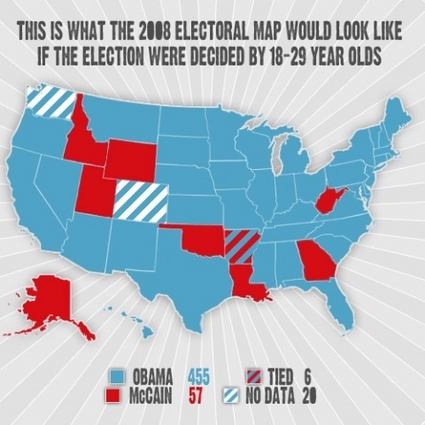
I’m thinking that those young people should be more careful about considering a politician’s voting record instead of listening to their government-funded public school teachers. It seems to be that government-run public schools will always indoctrinate children to vote for bigger government, and that means higher unemployment in the private sector, especially for entry-level job-seekers. Maybe the young people didn’t think that far ahead, but then they should be more cautious about forming opinions without asking their parents for input.

You may also be interested in a wonderful video linked here that shows several prominent Democrats assuring us that the stimulus bill was needed to create millions of jobs and keep unemployment below 8%. They don’t understand economics – they’re Democrats. The know less about economics than my keyboard. If young people want to learn about economics, then they need to read Thomas Sowell and Walter Williams. Those are the two greatest living economists, and they teach economics so that regular people like me can understand.
Can all opposition to secular socialist policies be dismissed as racism?

Story from the Weekly Standard. (H/T ECM)

Excerpt:

For years now, those on the left have conflated resistance to any item of their agenda–high taxes, extravagant spending, laxity on crime, what have you–with motives of a dark nature: racism, nativism, fear of “the other,” and various species of “hate.”

[…]As Obama’s grandiose plans created a predictable political reaction, which first took form in the tea party movement, his sympathizers in the media theorized that racism, which had been in abeyance for the six monthsaround the election, had re-reared its mean head.

[…]Time‘s Joe Klein looked at people protesting taxes and spending, bailouts and czars, deficits in the trillions, and discerned fear of Hispanics spreading like wildfire in the white working class. “They’re seeing Latinos .  .  . move into the neighborhoods. They’re seeing South Asians .  .  . running a lot of businesses. They’re seeing intermarriage .  .  . all these things that they find threatening. .  .  . They believe that the America that they knew, which was always kind of a myth, has disappeared.”

[…]Michael Lind, writing for Salon, said… “From the beginning, attempts to create a universal welfare state in the U.S. have been thwarted by the fears of voters that they will be taxed to subsidize other Americans who are unlike them in race. .  .  . Racial resentments undoubtedly explain the use of ‘redistribution’ and ‘socialism’ as code words by John McCain, Sarah Palin, and Republican working-class mascot ‘Joe the Plumber’ during the 2008 presidential campaign.”

But the problem is that there isn’t any evidence of racism:

The most conclusive rejoinder to the contention that “socialism” is a racist code word comes from a poll taken by the Democracy Corps (the firm founded by James Carville and Paul Begala), which delivered the verdict that while tea party protesters were insane by the partisan standards of Bill Clinton’s backers, the protesters’ concerns were what they said they were–taxes and spending; the expansion of government–and were not about race. The pollsters began discussions among older, white, and conservative voters and found “race was barely raised, [and] certainly not what was bothering them.”

Is it healthy for democracy for the secular left to demonize their opponents all the time instead of listening to their arguments? Doesn’t this shurt down dialogue and prevent us from listening to a diversity of opinions and perspectives? It seems to me that the only people who ever make race an issue are people on the left. I’m really questioning whether we should be voting in close-minded leftists to run the economy when they seem to be incapable of appreciating both sides of economic questions.

It’s the economy, stupid.

Cato Institute asks whether Sarah Palin was right on death panels

Story here at the libertarian Cato Institute. (H/T Caffeinated Thoughts health care round-up)

Excerpt:

What Palin wrote about death panels clearly had nothing to do with counseling or with any other specifics in seminal House bill. What she wrote was: “Government health care will not reduce the cost; it will simply refuse to pay the cost. And who will suffer the most when they ration care? The sick, the elderly, and the disabled, of course.”

How could anyone believe Palin’s sensible comment about rationing was, in reality, a senseless fear of counseling? To say so was no mistake; it was an oft-repeated big lie.

Rather than even mentioning the House bill, Palin linked to an interesting speech by “Rep. Michele Bachmann [which] highlighted the Orwellian thinking of the president’s health care advisor, Dr. Ezekiel Emanuel, the brother of the White House chief of staff.”

[…]Pending health care bills would make such government-mandated scarcity of health care much worse.  There would be massive shifting of money away from Medicare toward Medicaid.  But the extra Medicaid money would be spread around more thinly.  States would cut benefits to the poor in order to accommodate millions of new, less-poor people lured into Medicaid, at least half of whom (7 or 8  million by my estimate) currently have employer-provided health insurance.

The Senate health bill supposedly intends to slash Medicare payment rates for physicians by 21% next year and more in future years, with permanent reductions in payments to other medical services too.  It would also establish an Independent Payment Advisory Board which would be empowered to make deeper cuts which Congress could reject only with considerable difficulty.   If that’s not quite a “death panel” it would surely not be pro-life in its impact.

The Congressional Budget Office says, “It is unclear whether such a reduction in the growth rate could be achieved, and if so, whether it would . . .  reduce access to care or diminish the quality of care.”

Actually, it’s clear enough that the proposed Medicare cuts won’t be achieved, but that efforts in that direction will nonetheless reduce access to care and diminish its quality.  The government can’t boost demand and cut prices without creating excess demand.  And that, in turn, means rationing by longer waiting lines and by panels (rationing boards) making life-or death decisions for other people.

The Cato Institute says that Sarah Palin is right, and I agree. She is the one who understands the economics of supply and demand – her critics are ignorant of the facts.