

Tag Archives: Debater

If unborn babies don’t have consciousness or don’t feel pain, may we kill them?

Unborn baby scheming about pro-life apologetics

Was having a conversation by e-mail yesterday with a pro-abortion atheist, and he gave two reasons why he supported abortion in the first and second trimester. First, he said that unborn babies can’t feel pain, so it’s OK to kill them. Second, he said that unborn babies don’t have consciousness, so it’s OK to kill them. I thought it might be useful to link to something that answers both of these objections.

Frank Beckwith is the author of “Defending Life: A Moral and Legal Case Against Abortion Choice“. He wrote that book for Cambridge University Press, a top academic press. But before Cambridge University Press, Beckwith wrote four easy-to-understand essays for the Christian Research Journal. Part IV is the one that has the response to the two questions raised by my atheist friend.

Part I. The Appeal to Pity

Part II. Arguments from Pity, Tolerance, and Ad Hominem

Part III. Is The Unborn Human Less Than Human?

Part IV. When Does a Human Become a Person?

Excerpt:

Some ethicists argue that the unborn becomes fully human sometime after brain development has begun, when it becomes sentient: capable of experiencing sensations such as pain. The reason for choosing sentience as the criterion is that a being that cannot experience anything (i.e., a presentient unborn entity) cannot be harmed. Of course, if this position is correct, then the unborn becomes fully human probably during the second trimester and at least by the third trimester. Therefore, one does not violate anyone’s rights when one aborts a nonsentient unborn entity. [13]

There are several problems with this argument. First, it confuses harm with hurt and the experience of harm with the reality of harm. [14] One can be harmed without experiencing the hurt that sometimes follows from that harm, and which we often mistake for the harm itself. For example, a temporarily comatose person who is suffocated to death “experiences no harm,” but he is nevertheless harmed. Hence, one does not have to experience harm, which is sometimes manifested in hurt, in order to be truly harmed.

Second, if sentience is the criterion of full humanness, then the reversibly comatose, the momentarily unconscious, and the sleeping would all have to be declared nonpersons. Like the presentient unborn, these individuals are all at the moment nonsentient though they have the natural inherent capacity to be sentient. Yet to countenance their executions would be morally reprehensible. Therefore, one cannot countenance the execution of some unborn entities simply because they are not currently sentient.

Someone may reply that while these objections make important points, there is a problem of false analogy in the second objection: the reversibly comatose, the momentarily unconscious, and the sleeping once functioned as sentient beings, though they are now in a temporary state of nonsentience. The presentient unborn, on the other hand, were never sentient. Hence, one is fully human if one was sentient “in the past” and will probably become sentient again in the future, but this cannot be said of the presentient unborn.

There are at least three problems with this response. First, to claim that a person can be sentient, become nonsentient, and then return to sentience is to assume there is some underlying personal unity to this individual that enables us to say that the person who has returned to sentience is the same person who was sentient prior to becoming nonsentient. But this would mean that sentience is not a necessary condition for personhood. (Neither is it a sufficient condition, for that matter, since nonhuman animals are sentient.) Consequently, it does not make sense to say that a person comes into existence when sentience arises, but it does make sense to say that a fully human entity is a person who has the natural inherent capacity to give rise to sentience. A presentient unborn human entity does have this capacity. Therefore, an ordinary unborn human entity is a person, and hence, fully human.

Second, Ray points out that this attempt to exclude many of the unborn from the class of the fully human is “ad hoc and counterintuitive.” He asks us to “consider the treatment of comatose patients. We would not discriminate against one merely for rarely or never having been sentient in the past while another otherwise comparable patient had been sentient….In such cases, potential counts for everything.” [15]

Third, why should sentience “in the past” be the decisive factor in deciding whether an entity is fully human when the presentient human being “is one with a natural, inherent capacity for performing personal acts?” [16] Since we have already seen that one does not have to experience harm in order to be harmed, it seems more consistent with our moral sensibilities to assert that what makes it wrong to kill the reversibly comatose, the sleeping, the momentarily unconscious, and the presentient unborn is that they all possess the natural inherent capacity to perform personal acts. And what makes it morally right to kill plants and to pull the plug on the respirator-dependent brain dead, who were sentient “in the past,” is that their deaths cannot deprive them of their natural inherent capacity to function as persons, since they do not possess such a capacity.

These four essays are a very good introduction to common responses to pro-abortion arguments. I recommend that people get familiar with this, as once you look into it, you will see that the abortion issue can be debated with as much confidence as William Lane Craig defends Christian theism. You will have the same access to scientific evidence and rational arguments on this topic, and so you will have the upper hand. And that’s fun.

The best introductory book on the abortion / right to life issue is “The Case for Life” by pro-life debater Scott Klusendorf. The best comprehensive book is a tie between “The Ethics of Abortion” by Christopher Kaczor, and Frank Beckwith’s “Defending Life: A Moral and Legal Case Against Abortion Choice“.
Cruz breaks with Rubio, Bush and Christie: drafting women to fight is “nuts”

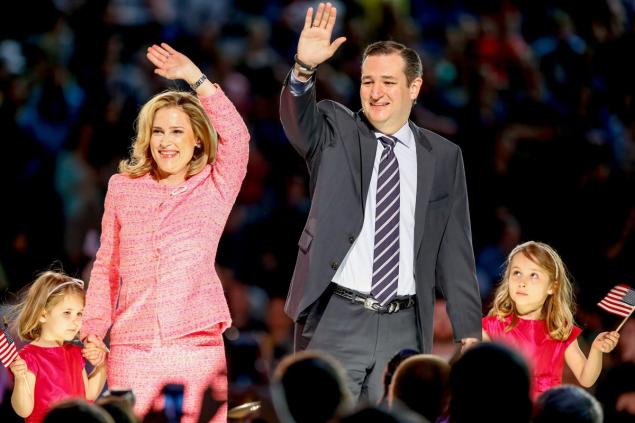
Texas senator Ted Cruz, his wife Heidi Cruz and their two daughters
Texas senator Ted Cruz, his wife Heidi Cruz, and their two daughters

There was a “should women register to be drafted to fight in a war?” question asked during the ABC News debate on Saturday. Surprisingly, only one candidate opposed it.

This is from the far-left Politico.

Excerpt:

Ted Cruz on Sunday said he opposes requiring women to register for a potential draft, breaking with Marco Rubio, Jeb Bush and Chris Christie, all of whom indicated support for opening up the Selective Service to women during Saturday night’s debate.

“I have to admit, as I was sitting there listening to that conversation, my reaction was, ‘Are you guys nuts?’” Cruz said Sunday, speaking at a town hall here. “Listen, we have had enough with political correctness, especially in the military. Political correctness is dangerous. And the idea that we would draft our daughters to forcibly bring them into the military and put them in close combat, I think is wrong, it is immoral, and if I am president, we ain’t doing it.”

To applause, Cruz went on to note that he is a father to two daughters, and he wants them to follow their dreams.

[…]The previous night, at the presidential debate, Rubio said he had no problem with women in combat, and added, “I do believe Selective Service should be opened up for both men and women in the case a draft is ever instituted.”

Now might be the time to point out that of all the candidates running in the GOP primary, Ted Cruz is the candidate who is the least politically correct, and the most opposed by the Washington establishment.

This is from the radically leftist CNN:

Republican Party leaders and prominent senators are sharpening their knives against Ted Cruz, expressing growing alarm over his candidacy as he continues to mount a serious threat in Iowa.

In interviews with CNN, a growing number of Republicans are beginning to echo remarks made by the likes of former Sen. Bob Dole and Iowa Gov. Terry Branstad…

[…][Cruz] famously led the charge to defund Obamacare in 2013, a battle that precipitated a 16-day government shutdown. He battled with his party’s strategy on immigration, the debt ceiling and the budget, even one time pulling GOP senators into session on a Saturday during Christmas season.

And Cruz’s accusation earlier this year that Senate Majority Leader Mitch McConnell is a liar over his deal-making on the Export-Import Bank angered many Republicans.

“Ted Cruz has burned some bridges with some fellow senators,” said Sen. Shelley Moore Capito of West Virginia. “You do see people coming out with more aggressive comments” ahead of Iowa.

I actually think it’s a good thing that Mitch McConnell and John McCain and Lindsey Graham don’t like Cruz.

Oddly enough, he is also the most qualified candidate running.

Young Conservatives explains:

  • Graduated valedictorian in 1988 from Second Baptist High School
  • Graduated cum laude from Princeton University in 1992
  • Graduated magna cum laude from Harvard Law School in 1995
  • 1992 U.S. National Debate Champion representing Princeton
  • 1995 World Debating Championship semi-finalist representing Harvard
  • Served a law clerk to Chief Justice William Rehnquist, making him the first Hispanic ever to clerk for a Chief Justice of the United States
  • Served as Solicitor General of Texas from 2003 to 2008, making him the first Hispanic Solicitor General in Texas, the youngest Solicitor General in the entire country and the longest tenure in Texas history
  • Partner at the law firm Morgan, Lewis & Bockius, where he led the firm’s U.S. Supreme Court and national appellate litigation practice
  • Authored over 80 SCOTUS briefs and presented over 40 oral arguments before The Court
  • Adjunct Professor of Law at the University of Texas School of Law in Austin, where he taught U.S. Supreme Court litigation

Smart guy.

Here are the specifically conservative achievements:

  • In the landmark case of District of Columbia v. Heller, Cruz assembled a coalition of 31 states in defense of the principle that the 2nd Amendment guarantees an individual right to keep and bear arms
  • Presented oral arguments before the United States Court of Appeals for the District of Columbia Circuit
  • Defended the Ten Commandments monument on the Texas State Capitol grounds,
  • Defended the recitation of the Pledge of Allegiance in public schools
  • Defended the State of Texas against an attempt by the International Court of Justice to re-open the criminal convictions of 51 murderers on death row throughout the United States

He’s 5 for 9 arguing cases before the Supreme Court. Cruz knows how to convince liberal scholars to come over to his side. That’s what he enjoys – persuading people who disagree with him.

Here’s some of the legislation he introduced:

  • ObamaCare Repeal Act
  • Disarm Criminals and Protect Communities Act
  • Defund Obamacare Act of 2013
  • A bill to amend the National Voter Registration Act of 1993 to permit States to require proof of citizenship for registration to vote in elections for Federal office
  • State Marriage Defense Act of 2014
  • A bill to amend title 18, United States Code, to prohibit the intentional discrimination of a person or organization by an employee of the Internal Revenue Service
  • A bill to prohibit the Department of the Treasury from assigning tax statuses to organizations based on their political beliefs and activities
  • American Energy Renaissance Act of 2014
  • A bill to deny admission to the United States to any representative to the United Nations who has been found to have been engaged in espionage activities or a terrorist activity against the United States and poses a threat to United States national security interests
  • SuperPAC Elimination Act of 2014
  • Free All Speech Act of 2014
  • A bill to prevent the expansion of the Deferred Action for Childhood Arrivals program unlawfully created by Executive memorandum on August 15, 2012
  • Sanction Iran, Safeguard America Act of 2014

He has done something to address so many of the things I’ve been writing about on this blog – voter fraud, IRS discriminating against conservatives, etc. I am a Cruz supporter because I like Cruz, not because I oppose Trump and Rubio.

Trump hasn’t got a single conservative achievement. I wrote before about how Rubio sponsors liberal legislation.

Although people present Cruz as a conservative firebrand, he actually got more legislation passed under a Democrat president than Marco Rubio, who rarely shows up to vote, much less introduce legislation.

If unborn babies don’t have consciousness or don’t feel pain, may we kill them?

Unborn baby scheming about pro-life apologetics

Was having a conversation by e-mail yesterday with a pro-abortion atheist, and he gave two reasons why he supported abortion in the first and second trimester. First, he said that unborn babies can’t feel pain, so it’s OK to kill them. Second, he said that unborn babies don’t have consciousness, so it’s OK to kill them. I thought it might be useful to link to something that answers both of these objections.

Frank Beckwith is the author of “Defending Life: A Moral and Legal Case Against Abortion Choice“. He wrote that book for Cambridge University Press, a top academic press. But before Cambridge University Press, Beckwith wrote four easy-to-understand essays for the Christian Research Journal. Part IV is the one that has the response to the two questions raised by my atheist friend.

Part I. The Appeal to Pity

Part II. Arguments from Pity, Tolerance, and Ad Hominem

Part III. Is The Unborn Human Less Than Human?

Part IV. When Does a Human Become a Person?

Excerpt:

Some ethicists argue that the unborn becomes fully human sometime after brain development has begun, when it becomes sentient: capable of experiencing sensations such as pain. The reason for choosing sentience as the criterion is that a being that cannot experience anything (i.e., a presentient unborn entity) cannot be harmed. Of course, if this position is correct, then the unborn becomes fully human probably during the second trimester and at least by the third trimester. Therefore, one does not violate anyone’s rights when one aborts a nonsentient unborn entity. [13]

There are several problems with this argument. First, it confuses harm with hurt and the experience of harm with the reality of harm. [14] One can be harmed without experiencing the hurt that sometimes follows from that harm, and which we often mistake for the harm itself. For example, a temporarily comatose person who is suffocated to death “experiences no harm,” but he is nevertheless harmed. Hence, one does not have to experience harm, which is sometimes manifested in hurt, in order to be truly harmed.

Second, if sentience is the criterion of full humanness, then the reversibly comatose, the momentarily unconscious, and the sleeping would all have to be declared nonpersons. Like the presentient unborn, these individuals are all at the moment nonsentient though they have the natural inherent capacity to be sentient. Yet to countenance their executions would be morally reprehensible. Therefore, one cannot countenance the execution of some unborn entities simply because they are not currently sentient.

Someone may reply that while these objections make important points, there is a problem of false analogy in the second objection: the reversibly comatose, the momentarily unconscious, and the sleeping once functioned as sentient beings, though they are now in a temporary state of nonsentience. The presentient unborn, on the other hand, were never sentient. Hence, one is fully human if one was sentient “in the past” and will probably become sentient again in the future, but this cannot be said of the presentient unborn.

There are at least three problems with this response. First, to claim that a person can be sentient, become nonsentient, and then return to sentience is to assume there is some underlying personal unity to this individual that enables us to say that the person who has returned to sentience is the same person who was sentient prior to becoming nonsentient. But this would mean that sentience is not a necessary condition for personhood. (Neither is it a sufficient condition, for that matter, since nonhuman animals are sentient.) Consequently, it does not make sense to say that a person comes into existence when sentience arises, but it does make sense to say that a fully human entity is a person who has the natural inherent capacity to give rise to sentience. A presentient unborn human entity does have this capacity. Therefore, an ordinary unborn human entity is a person, and hence, fully human.

Second, Ray points out that this attempt to exclude many of the unborn from the class of the fully human is “ad hoc and counterintuitive.” He asks us to “consider the treatment of comatose patients. We would not discriminate against one merely for rarely or never having been sentient in the past while another otherwise comparable patient had been sentient….In such cases, potential counts for everything.” [15]

Third, why should sentience “in the past” be the decisive factor in deciding whether an entity is fully human when the presentient human being “is one with a natural, inherent capacity for performing personal acts?” [16] Since we have already seen that one does not have to experience harm in order to be harmed, it seems more consistent with our moral sensibilities to assert that what makes it wrong to kill the reversibly comatose, the sleeping, the momentarily unconscious, and the presentient unborn is that they all possess the natural inherent capacity to perform personal acts. And what makes it morally right to kill plants and to pull the plug on the respirator-dependent brain dead, who were sentient “in the past,” is that their deaths cannot deprive them of their natural inherent capacity to function as persons, since they do not possess such a capacity.

These four essays are a very good introduction to common responses to pro-abortion arguments. I recommend that people get familiar with this, as once you look into it, you will see that the abortion issue can be debated with as much confidence as William Lane Craig defends Christian theism. You will have the same access to scientific evidence and rational arguments on this topic, and so you will have the upper hand. And that’s fun.

The best introductory book on the abortion / right to life issue is “The Case for Life” by pro-life debater Scott Klusendorf. The best comprehensive book is a tie between “The Ethics of Abortion” by Christopher Kaczor, and Frank Beckwith’s “Defending Life: A Moral and Legal Case Against Abortion Choice“.