Tag Archives: Darwinism

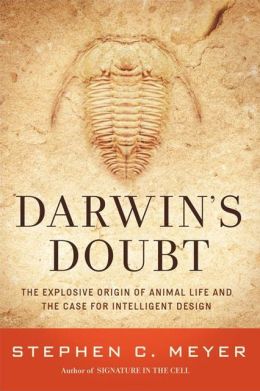
Darwin’s Doubt will debut at #7 on the New York Times Hardcover Nonfiction Bestseller List

Amazing news from Evolution News about the new book on the Cambrian explosion by Dr. Stephen C. Meyer.

Excerpt:

Judging the success of an idea in reaching and convincing a large audience is a tricky business. In putting your case to the public in books and articles, are you making progress, just holding steady, or losing ground to competitors? What you want is a solid, unambiguous metric. Hmm, as a measure of success in getting a particular argument before a large chunk of the thoughtful, book-reading public, how does a spot on the New York Times bestseller list sound?

That would do nicely. And in fact it is just what we are very pleased to report. As careful readers will already have discerned from the headline, Stephen Meyer’s new book, Darwin’s Doubt: The Explosive Origin of Animal Life and the Case for Intelligent Design, will debut this coming Sunday in the #7 place on the New York Times hardback nonfiction list. See it here.

[…]You’ll also see the book opening at #10 on the Publishers Weekly bestseller list. Find it here.

[…]We attribute these indications of really impressive progress to the scientific, philosophical and yes, cultural and even spiritual importance of Dr. Meyer’s book, the unprecedented rigor and scope of his argument, combined with a lucidly accessible style that bestselling novelist Dean Koontz has praised, saying that Meyer “writes beautifully” and “marshals complex information as well as any writer I’ve read.”

It doesn’t hurt either that this broadly interdisciplinary book has won accolades from scientists representing a variety of relevant fields, including Harvard geneticist George Church, Mt. Holyoke paleontologist Mark McMenamin, State University of New York biologist Scott Turner, Max Planck Institute for Plant Breeding Research biologist Wolf-Ekkehard Lönnig, and others, scientists whose own works are published by sources like Harvard University Press and Columbia University Press.

Excitement from the media has also played a role in getting out the word. Dr. Meyer has been on the Michael Medved Show several times, on the Dennis Prager Show, the Dennis Miller Show, and many other national and local talk-radio programs. Not trivial either is the decision by Barnes & Noble to feature the book with in-store displays in 300 of its bookstores across the country, likely due in part to the strong sales record of Meyer’s first book, Signature in the Cell.

The summary from the New York Times bestseller list web page is spot-on: “The theory of intelligent design best explains the appearance of animals in the fossil record without apparent ancestors.” That’s what the book is about, for certain.

Wow. It’s not every day that I link to the New York Times! But this isn’t surprising, considering that Dr. Meyer’s new book is picking up a lot of endorsements from mainstream scientists. Here’s the most recent one, by Dr. Mark C. Biedebach of California State University, Long Beach.

Recall that Dr. Stephen C. Meyer’s first book was one of the best books of 2009 according to the Times Literary Supplement.

Excerpt:

Stephen C. Meyer’s Signature in the Cell: DNA and the evidence for Intelligent Design (HarperCollins) is a detailed account of the problem of how life came into existence from lifeless matter – something that had to happen before the process of biological evolution could begin. The controversy over Intelligent Design has so far focused mainly on whether the evolution of life since its beginnings can be explained entirely by natural selection and other non-purposive causes. Meyer takes up the prior question of how the immensely complex and exquisitely functional chemical structure of DNA, which cannot be explained by natural selection because it makes natural selection possible, could have originated without an intentional cause. He examines the history and present state of research on non-purposive chemical explanations of the origin of life, and argues that the available evidence offers no prospect of a credible naturalistic alternative to the hypothesis of an intentional cause. Meyer is a Christian, but atheists, and theists who believe God never intervenes in the natural world, will be instructed by his careful presentation of this fiendishly difficult problem.

The person who nominated his first book to that list was non other than atheist philosopher Thomas Nagel. If you haven’t read the first book, get them both and read them both. These are the scientific issues that everyone who is considering theism versus naturalism should be reading about.
Stephen C. Meyer discusses his new book “Darwin’s Doubt” on the Michael Medved show

The Michael Medved show is a national radio show broadcast out of Seattle, Washington. According to Talkers magazine, he has the fifth largest radio audience. He has a regular weekly segment on science and culture featuring  scholars from the Discovery Institute.

Here is the segment from this past week, courtesy of the Intelligent Design: The Future podcast.

The MP3 file is available for download. (38 minutes)

The description is:

On this episode of ID the Future, the Michael Medved Show welcomes Dr. Stephen Meyer to talk about his new bestselling book, Darwin’s Doubt: The Explosive Origin of Animal Life and the Case for Intelligent Design. Listen in as Meyer and Medved discuss the mysteries of the Cambrian explosion and why this phenomenon continues to stump Darwinian evolutionists.

Each week, leading fellows from Discovery Institute will join Michael Medved to talk about the intersection of science and culture. Listen in live online or on your local Medved station, or stay tuned at ID the Future for the weekly podcast.

Topics:

  • Darwinism offers a materialistic account of where humans and animals came from, but is that all human beings are?
  • Darwin was the first to have doubt about his theory of evolution because of the sudden origin if many different animal forms in the Cambrian era
  • The book is about the sudden origin of these animal forms and more generally about how much information is needed to make an animal genome
  • An animal is not just the form or the organs it is also the information to make new proteins and the instructions to make proteins are in the DNA
  • At least 20 new phyla appear suddenly in the Cambrian fossils and the question is what is capable of creating all of that new information
  • Mathematicians and computer scientists are especially likely to doubt evolution as a way of making new features because they know that random changes to the code base of an application are more likely to break things and degrade performance
  • Naturalists have tried to explain the Cambrian explosion as being a case of the transitional fossils being not yet discovered
  • The consensus of science at this time is that there is no known naturalistic explanation for the sudden origin of these animal types
  • Caller: how abrupt are we talking about for the introduction of these new animal forms?
  • Meyer: We can calculate the amount of time that is needed to generate change, and the period of time that is needed to generate new forms of life exceeds the time available
  • Caller: is it possible that meteors, asteroids and comets could transport biological components to the Earth to shorten the development time?
  • Meyer: that’s related to my first book on the origin of the first living cell “Signature in the Cell”, and that life-from-space hypothesis would only get you building blocks, but not the bio-molecules that have the building blocks sequences – it’s the difference between a pile of Scrabble letters and a Shakespearean play – it’s the arranging of the components that is the problem
  • Medved: The book has a lot of endorsements from scientists who are working at good universities and institutions
  • Meyer: the strange thing about exploring the limits of evolution is that you can cite mainstream papers to criticize the Darwinian mechanisms, and then the proponents of Darwinism just assert that no criticism of Darwinian evolution is allowed
  • Caller Greg: are you saying that all the phyla came in during the Cambrian explosion?
  • Meyer: No, of the 26 phyla that we see in the fossil record, 20 come in during the Cambrian explosion
  • Caller Greg: But there are some sponges that existed before the Cambrian explosion, so maybe all the Cambrian phyla came from sponges?
  • Meyer: There are 3 phyla present in the pre-Cambrian but they are not ancestral to the 20 Cambrian phyla, the sponges are very simple – 6-10 cell types, arthropods have 60-90 cell types – you can’t go from sponges to compound eyes in just 5-10 million years
  • Meyer: even the sponges in the pre-Cambrian appear abrutly at the end of the pre-Cambrian
  • Caller Greg: but there are complex worms in the Pre-Cambrian as well, and maybe those are ancestral to the 20 new phyla that appear suddenly in the Cambrian explosion
  • Caller Greg: what you’re saying is that we scientists don’t understand what happened so an intelligence did it
  • Meyer: No, what I am saying is that the Cambrian explosion involves massive amounts of new biological information, and none of the naturalistic Darwinian mechanisms can create that much new information in that short of the time
  • Caller Greg: it’s magic!
  • Meyer: there are two points in the development of life forms where intelligence is needed: the origin of life and the Cambrian explosion, and this is because of the new information that is being added
  • Caller Greg: new information is added by Hox Gene duplication
  • Caller: don’t we have to look a bit more at epistemology when discussing these issues?
  • Meyer: Yes, we have to highlight that many people reject intelligent design because of a pre-supposition of naturalism that prevents them from seeing that intelligence explains anything regardless of the evidence
  • Caller: well if you define evolution as change over time, then evolution happened, and who cares about the details like the origin of life and Cambrian explosion?
  • Meyer: well there are many definitions of evolution: 1) change over time, 2) universal common ancestry, 3) undirected random process can explain the origin of life and the explosion of new animal forms in the fossil record
  • Meyer: I accept 1) and I am skeptical of 2) and 3)

You can read more about caller Greg and Hox gene duplication at Evolution News.

I subscribe to the ID the Future podcast, and I really recommend that you do as well!

Previous entries

Thinking Christian reviews “Darwin’s Doubt”, a new book by Stephen C. Meyer

Darwin's Doubt: The Explosive Origin of Animal Life and the Case for Intelligent Design
Darwin’s Doubt: The Explosive Origin of Animal Life and the Case for Intelligent Design

NOTE: you can tune in to the Dennis Prager radio show  at 2 PM Eastern today in order to hear Dr. Meyer discuss the new book.

I found a book review of the new book on intelligent design by Dr. Stephen C. Meyer. This book is concerned with the fossil record, and it is the sequel to the highly acclaimed “Signature in the Cell“, which dealt with the origin of biological information in the first living cell.

Excerpt:

The title of the book refers to the difficulty [Charles Darwin] had in explaining the “Cambrian Explosion,” the vast proliferation of new animal body plans (new “phyla” or major animal groupings) that appears in fossils in the Cambrian strata, deposited some 530 million years ago. These animals appear suddenly in the fossil record, without any plausible predecessor such as Darwin’s theory predicted. Darwin wrote,

The difficulty of understand the absence of vast piles of fossiliferous strata, which on my theory were no doubt somewhere accumulated before the Silurian [i.e., Cambrian] epoch, is very great. I allude to the manner in which numbers of species of the same group suddenly appear in the lowest known fossiliferous rocks.

Darwin saw this accurately as a challenge to his theory. It remains one still. The animals appear too quickly in the record to be explained through his gradualistic theory.

And it remains a challenge from the perspective of mainstream science. Various theories have been proposed in explanation of the suddenness with which these new phyla came on the scene. Perhaps selective fossilization caused their predecessors to disappear from paleontologists’ view. Mainstream science casts serious doubt on that view. Statistical paleontology renders it deeply improbable. The soft-body hypothesis appears unlikely to succeed, since the evidence shows soft-bodied organisms have been frequently fossilized.

Or maybe the Cambrian animals’ precursors really are there in the record, in the form of exotic Ediacaran fossils. But these organisms are not clearly animals of any sort, and what they are is so in confusion that they could hardly be considered evidence for anything. Further,

As Nature recently noted, if the Ediacaran fauna “were animals, they bore little or no resemblance to any other creatures, either fossil or extant.” … This absence of clear affinities has led an increasing number of paleontologists to reject an ancestor/dependent relationship between the Ediacaran and Cambrian fauna.

Scientists have proposed genetic histories for these phyla, but as Meyer pointedly puts it, these scenarios all “assume a gene.” And a lot more besides. That is to say, they beg the question of evolution’s explanatory adequacy by assuming that it must be true. From there they suggest pathways according to which genes “must have” evolved. But there’s no evidence of it in the record.

Now the exciting thing is that at the time of writing (Monday night), the book is number one on Barnes and Noble:

Darwin's Doubt #1 at Barnes and Noble
Darwin’s Doubt #1 at Barnes and Noble

And number ten on Amazon:

Darwin's Doubt #10 at Amazon.com
Darwin’s Doubt #10 at Amazon.com

Now is this a book for the layman? Well, I’ve met the guy who wrote the book review above face-to-face, and his background is not in biology. I think if he can struggle through it, then I could do it too. And so could you. I think that both of Dr. Meyer’s books are must-read books for anyone interested in knowing how well the presumption of naturalism succeeds when confronted with the latest scientific evidence. These are the books you need to buy and read if you are serious about integrating science and religion. The thing to realize is that naturalists and atheists and materialists have no answer to these books. None. Do you like winning? Then spend the money and time on the books that are unstoppable in a debate.