Tag Archives: Climate Change

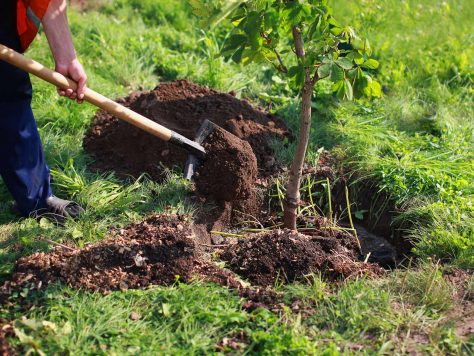
New study: the cheapest and most effective way to reduce carbon emissions is to plant more trees

What's the best solution to higher carbon emissions?
What’s the best solution to higher carbon emissions?

Many people favor Big Government solutions to the problem of carbon emissions. For example, the Green New Deal proposed by the Democrats would abolish all gas, oil and coal energy. That plan would raise taxes and require massive restrictions on free markets and individual consumers. But there is a better way, and it was just published in the prestigious peer-reviewed journal Science.

Economist Robert P. Murphy wrote a very interesting article about the new study for the Mises Institute.

He writes:

A recent article in the Guardian trumpeted the findings of a new study published in Science that found massive tree planting would be — by far — the cheapest and most effective approach to mitigating climate change. Ironically, the new thinking shows the pitfalls of political approaches to combating so-called “negative externalities.” The good news about tree planting disrupts the familiar narrative about carbon taxes that even professional economists have been feeding the public for years.

He quotes the Guardian article so:

Planting billions of trees across the world is by far the biggest and cheapest way to tackle the climate crisis, according to scientists, who have made the first calculation of how many more trees could be planted without encroaching on crop land or urban areas.

As trees grow, they absorb and store the carbon dioxide emissions that are driving global heating. New research estimates that a worldwide planting programme could remove two-thirds of all the emissions that have been pumped into the atmosphere by human activities, a figure the scientists describe as “mind-blowing”.

[…]“This new quantitative evaluation shows [forest] restoration isn’t just one of our climate change solutions, it is overwhelmingly the top one,” said Prof Tom Crowther at the Swiss university ETH Zurich, who led the research. “What blows my mind is the scale. I thought restoration would be in the top 10, but it is overwhelmingly more powerful than all of the other climate change solutions proposed.”

OK, so this plan will work, but will it cost less than the $52.6 to $93 trillion dollars over 10 years needed for the Green New Deal?

Yes:

Citing a figure that planting a new tree costs roughly 30 cents, Prof. Crowther remarked that we could plant the target of 1 trillion trees by spending about $300 billion.

Just FYI, the cost per household for the Green New Deal is between $361,010 and $653,010, according to the Washington Free Beacon.

As a conservative, I recognize that sometimes I have to be willing to spend taxpayer money on a small government solution in order to  avoid other big government solutions to a problem. The same thing is true for individual health savings accounts funded by a government voucher. I don’t like spending taxpayer money, but sometimes spending a little is better than creating a huge bureaucracy that will require spending a lot more.
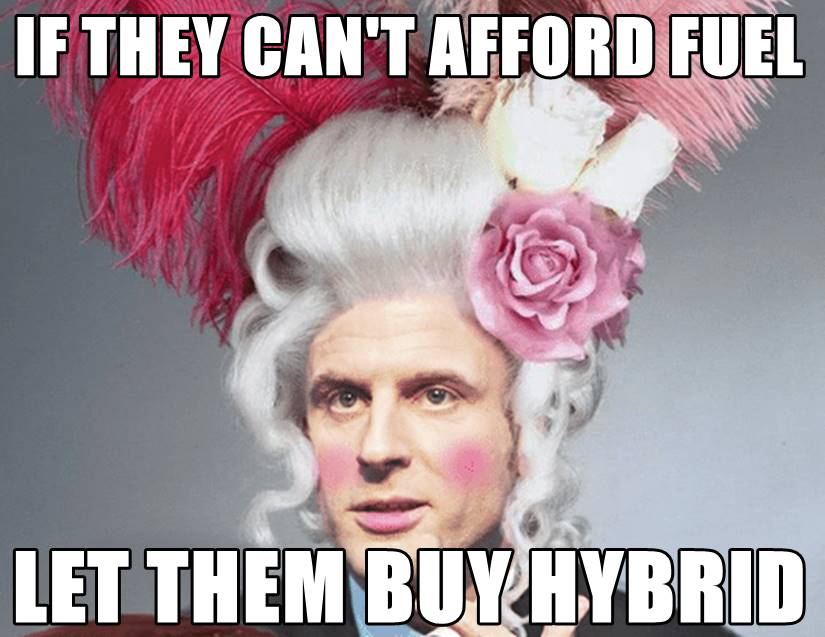

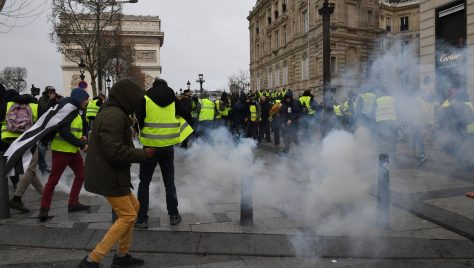
Socialist Macron attacks protesters in France: armored vehicles, tear gas, water cannons, riot police

The Queen of France tells the peasants what to do if they can't afford gas
The Queen of France tells the peasants what to do if they can’t afford gas

France’s socialist leader Macron raised gas taxes in order to encourage people to drive their cars less. His gas taxes were supposed to reduce carbon emissions, and “stop global warming”. The people who have to pay those taxes, many of whom voted for him, protested. So Macron decided to persuade them.

The radically leftist New York Times reported on what Macron did:

Vincent Picard describes himself as a “militant ecologist.” But when protesters took to the streets to express their rage over a planned increase in France’s fuel tax, Mr. Picard joined their ranks.

He acknowledges that the tax might encourage the conservation considered critical for a healthy planet. But with the nearest train station 35 minutes away, he has to drive to work every day.

“I am conscious that we have reached the end of fossil fuels and that we have to modify our habits,” said Mr. Picard, a 32-year-old pastry maker from northern France. But, he added, “You have to continue to live.”

The gas tax is part of an effort started by France in 2014 to regularly raise the tax on fossil fuels to fight global climate change.

The so-called Yellow Vest protests against the tax increase have become the biggest obstacle yet to such attempts to encourage conservation and alternative energy use.

[…]Mr. Picard, the pastry chef, for instance, earns €1,280 a month, or about $1,450, after payroll taxes. For him, the planned tax increase of 6 or 7 cents per liter of gas “is enormous,” he said.

Wow, the “ecologist” (pastry chef) wants to save the planet, but he doesn’t want to have to pay for it.

This tweet made me laugh out loud:

I would be willing to bet a pay check that she's not married
I would be willing to bet a pay check that she’s a single mother

She doesn’t like the socialism she voted for, either. Taxing the rich made her feel so good, until she found out that the government thinks she is rich, and taxed her.

But isn’t green energy working in Canada?

But France isn’t the only socialist country passing carbon taxes to stop the global warming monster. Canada is doing it too, especially in the province of Ontario, where they switched from nuclear power to wind power.

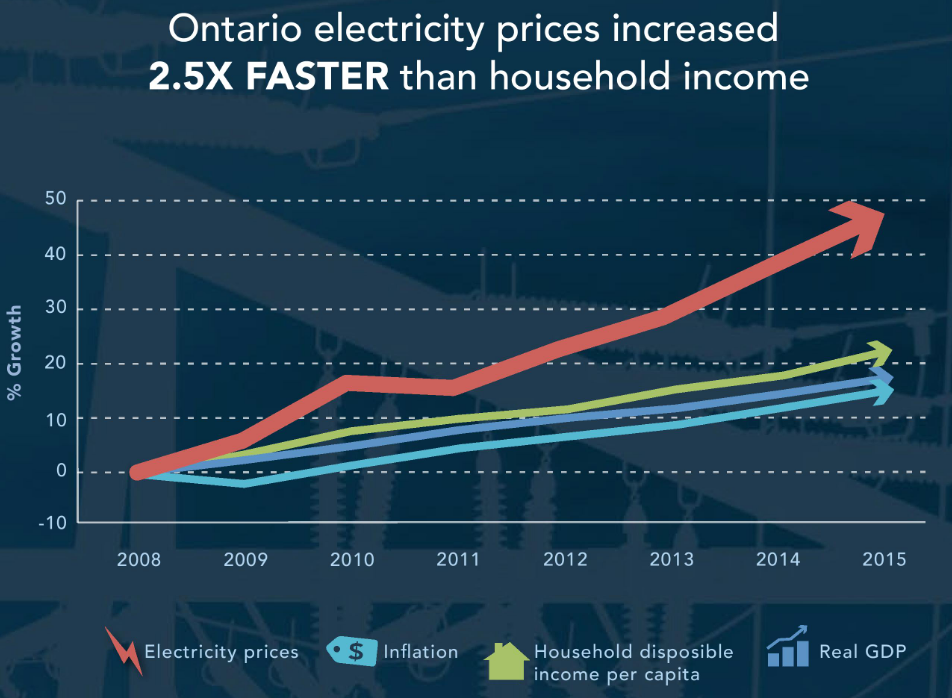
Here is a helpful graphic from the Fraser Institute, a Canadian think tank that focuses on fiscal policy:

Let's shutter the nuclear plants, and move to wind power!
Let’s shutter the nuclear plants, and move to wind power! It’s for the planet!

But it’s not just green energy, they wanted a carbon tax, too. Environmentally conscious Canadian voters handed their socialist leader Trudeau a majority government two years ago. But now that they are getting the carbon tax that they voted for, they’re having second thoughts about paying for it.

Far-left Bloomberg News reports:

Two years ago, Canadian Prime Minister Justin Trudeau announced a set of aggressive policies to reduce his country’s greenhouse gas emissions, centered on a nationwide price on carbon.

As that price is about to take effect, growing opposition has put Trudeau on the defensive and has provincial governments rolling back other measures, raising questions about the appetite of this oil-exporting country to tackle climate change.

[…]The growing backlash to Canada’s climate push reflects a number of changes, experts say. Those include widespread anger in Ontario as electricity prices soared in recent years, driven in part by a shift to renewables.

Canada’s environment minister “Climate Barbie” (she has no earned degrees in climate science, or any applied science, but she sure is glamorous and hawt) says they’re going ahead with the carbon tax:

Catherine McKenna, Canada’s minister of environment and climate change, said in an interview that the dangers associated with global warming meant her government had to cut emissions. She said the government would proceed with its plan in the face of provincial opposition.

Canadian socialists felt so good when they elected a socialist. They wanted their carbon tax, and they thought the rich would pay for it. But just like the socialist voters in France, they are learning that they are going to have to pay for it. It felt so good to save the planet by voting for socialism… voting didn’t cost a thing, and it felt so good. You can tell your friends “I voted socialist”, and they’ll think you’re compassionate and caring. But then the bill came, and you find out that you have to pay for what you voted for.

French voters voted for socialism, and now they are getting it good and hard
French voters voted for socialism, and they’re also getting fascism for free

The nice thing about consumption taxes (e.g. – gas taxes and carbon taxes),  is that everyone has to pay for it. Income taxes are only pad by people who earn money. But consumption taxes are paid by everyone. If France is any indication about what’s ahead for Canada, then we should soon see young Canadian socialists choking on tear gas. (Maybe they will think that’s an improvement from the pot they’re smoking now that they legalized it). It’s time for Canadian socialists to understand the price they have to pay for their belief in global warming mythology. Bring. It. On.

Ten scientific problems with global warming alarmism

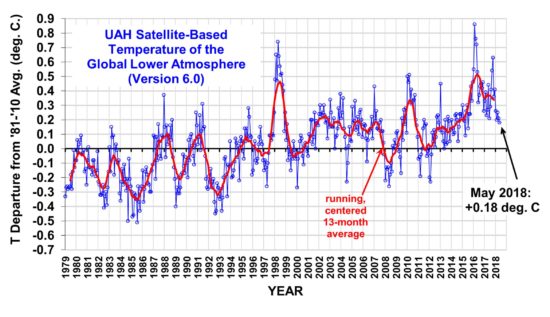
Satellite measurements of global climate from U of Alabama Huntsville

My friend Bruce posted this article from the the Daily Wire, and I think it’s a good summary of the scientific evidence against global warming alarmism. After we go over this, I’ll take a stab at explaining why so many non-scientists desperately want to believe that global warming is true, and why they try to push everyone else to believe it, too.

First, the list:

  1. Temperature records from around the world do not support the assumption that today’s temperatures are unusual.
  2. Satellite temperature data does not support the assumption that temperatures are rising rapidly
  3. Current temperatures are always compared to the temperatures of the 1980’s, but for many parts of the world the 1980’s was the coldest decade of the last 100+ years
  4. The world experienced a significant cooling trend between 1940 and 1980
  5. Urban heat island effect skews the temperature data of a significant number of weather stations
  6. There is a natural inverse relationship between global temperatures and atmospheric CO2 levels
  7. The CO2 cannot, from a scientific perspective, be the cause of significant global temperature changes
  8. There have been many periods during our recent history that a warmer climate was prevalent long before the industrial revolution
  9. Glaciers have been melting for more than 150 years
  10. “Data adjustment” is used to continue the perception of global warming

So, we can’t look at all of these in one post. Obviously, the satellite measurements are the best thing to look at, since they cannot be tampered with as easily as the ground measurements, and they show no warming for 18 years.

But let’s look at number 8 instead:

Even in the 1990 IPCC report a chart appeared that showed the medieval warm period as having had warmer temperatures than those currently being experienced.  But it is hard to convince people about global warming with that information, so five years later a new graph was presented, now known as the famous hockey stick graph, which did away with the medieval warm period.  Yet the evidence is overwhelming at so many levels that warmer periods existed on Earth during the medieval warm period as well as during Roman Times and other time periods during the last 10,000 years.  There is plenty of evidence found in the Dutch archives that shows that over the centuries, parts of the Netherlands disappeared beneath the water during these warm periods, only to appear again when the climate turned colder.  The famous Belgian city of Brugge, once known as “Venice of the North,” was a sea port during the warm period that set Europe free from the dark ages (when temperatures were much colder), but when temperatures began to drop with the onset of the little ice age, the ocean receded and now Brugge is ten miles away from the coastline.  Consequently, during the medieval warm period the Vikings settled in Iceland and Greenland and even along the coast of Canada, where they enjoyed the warmer temperatures, until the climate turned cold again, after which they perished from Greenland and Iceland became ice-locked again during the bitter cold winters.  The camps promoting global warming have been systematically erasing mention of these events in order to bolster the notion that today’s climate is unusual compared to our recent history.

That’s right, the world was much warmer than it is now during the Medieval Warming Period… so warm that you could actually farm on Greenland. But now it’s all frozen over.

Bruce also posted this article from Forbes magazine about the so-called consensus about global warming among scientists.

It says:

It is becoming clear that not only do many scientists dispute the asserted global warming crisis, but these skeptical scientists may indeed form a scientific consensus.

[…]Only 36 percent of geoscientists and engineers believe that humans are creating a global warming crisis, according to a survey reported in the peer-reviewed Organization Studies. By contrast, a strong majority of the 1,077 respondents believe that nature is the primary cause of recent global warming and/or that future global warming will not be a very serious problem.

The survey results show geoscientists (also known as earth scientists) and engineers hold similar views as meteorologists. Two recent surveys of meteorologists (summarized here and here) revealed similar skepticism of alarmist global warming claims.

According to the newly published survey of geoscientists and engineers, merely 36 percent of respondents fit the “Comply with Kyoto” model. The scientists in this group “express the strong belief that climate change is happening, that it is not a normal cycle of nature, and humans are the main or central cause.”

The authors of the survey report, however, note that the overwhelming majority of scientists fall within four other models, each of which is skeptical of alarmist global warming claims.

[…]Taken together, these four skeptical groups numerically blow away the 36 percent of scientists who believe global warming is human caused and a serious concern.

Most people who get excited about the threat of global warming have something to gain financially from the hysteria. For example, Democrat campaign donors who own stock in solar or wind power companies that get fat government subsidies. Solyndra was one example of that.

Why do people believe weird things?

So why do people believe these things? People believe these things for the same reason that primitive people would sacrifice animals in order to get a bountiful harvest or be spared being struck by lightning. They fear the future, and they want to believe that they are doing something in order to save themselves from doom. There is something credulous in us that seeks to know and control the future. When we are told a noble lie by grant-seeking, attention-craving academics, we believe it because we want to believe it. We want to believe that the future is going to be OK, especially when all we have to do to make it OK is recycle cans and turn off our lights when we are not using them.

This is the real psychological motivation behind the desperate desire to believe in the global warming myth. We are scared, and we want someone to save us from the future. And we jump at the chance of controlling the future, especially when it means recycling cans, rather than having to deal with our own sinfulness. We invent a new morality that justifies us rather than having to comply with the old morality. Freedom to commit adultery, as long as we recycle cans to save the planet. Sanctification through purchasing carbon credits, instead of  sanctification through chastity, sobriety and self-control.